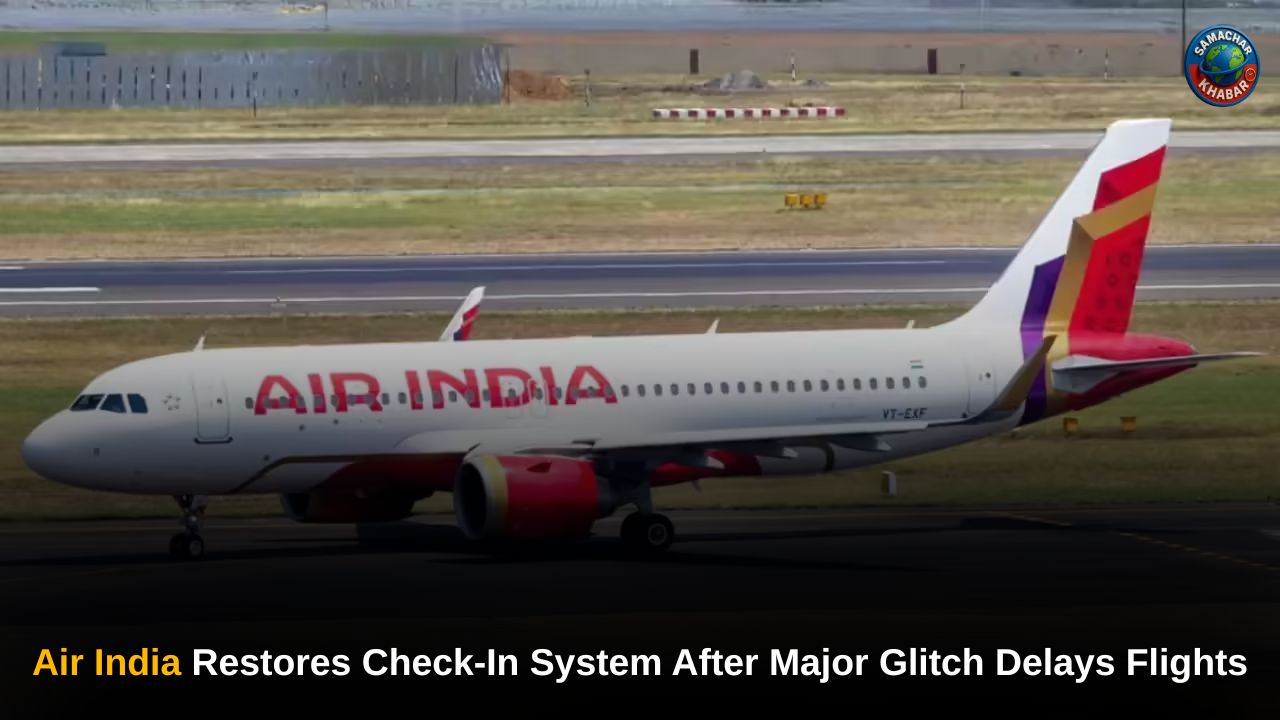
Air India on Tuesday confirmed the full restoration of its third-party check-in system after a sudden outage disrupted operations at several major airports and triggered delays across multiple airlines. The glitch, which affected airports nationwide, slowed down check-in processes and forced carriers to issue urgent advisories asking passengers to check their flight status and arrive early.
Although the system gradually stabilised, some flights continued to face residual delays. The incident comes just weeks after a large-scale technical failure at Delhi’s Indira Gandhi International Airport caused massive disruptions, highlighting recurring technological vulnerabilities across India’s aviation network.
Key Takeaways: Air India Check-In System Glitch and Restoration — Complete Breakdown
- Air India confirmed a third-party system glitch that disrupted check-ins across multiple airports on Tuesday.
- The outage produced delays for several airlines, not just Air India.
- The system was restored fully within approximately 45 minutes (between 2015–2100 hrs).
- After restoration, all Air India flights returned to schedule, but some residual delays persisted.
- The affected system was linked to the Amadeus Departure Control System, integrated with the SITA network.
- FlightRadar24 showed the Departure Delay Index at Level 4 at Delhi Airport, signalling heavy congestion.
- The disruption echoes a major AMSS failure last month at Delhi’s IGIA, where over 400–800 flights were delayed depending on the time frame cited in multiple reports.
- Manual processing by air traffic controllers during the earlier AMSS failure increased delays significantly.
- The government recently acknowledged incidents of GPS spoofing and GNSS interference near major Indian airports.
Air India Issues Advisory After Nationwide Check-In Disruption
Air India was among the first carriers to alert passengers on Tuesday evening after a technical malfunction in a third-party system disrupted check-in operations at several Indian airports. The carrier highlighted that the glitch was not limited to its services but extended to multiple airlines reliant on the same operational networks.
In its initial statement posted on X, the airline acknowledged that passengers might experience delays at airports due to slowed check-in processes. Airport teams, it said, were “working diligently” to support travellers and maintain movement despite the technical bottleneck.
Air India also urged all passengers to verify flight status through its official portal before heading to the airport and to allocate additional travel time until operations returned to normal.
Third-Party System at Fault, Not Airline Infrastructure
Industry sources confirmed that the disruption originated from the Amadeus Departure Control System (DCS), a vital platform that handles check-ins and interfaces with the SITA network used by numerous airlines worldwide.
According to operational inputs, the system remained dysfunctional for nearly 45 minutes, from 2015 hrs to 2100 hrs, affecting Air India across multiple airports. This short but critical outage caused delays to some flights as queues built up and check-in counters slowed significantly.
The airline clarified that this was a third-party system failure, not an internal Air India infrastructure issue—an important distinction given the shared dependency of many carriers on such software ecosystems.
Full Restoration Announced: Flights Back on Schedule
Approximately an hour after its initial alert, Air India confirmed that the third-party system had been fully restored.
In its update on X, the airline stated:
“The third-party system has been fully restored, and check-in at all airports is functioning normally. All our flights are operating as per schedule. We thank our passengers for their understanding.”
While operations stabilised quickly, Air India noted that some flights may continue to experience delays until overall traffic flow normalises. Such residual delays are common after large-scale disruptions, as aircraft rotations, crew schedules, and gate availability readjust.
FlightRadar24 Shows High Delay Levels at Delhi Airport
Data from the flight-tracking platform FlightRadar24 revealed that the Departure Delay Index at Delhi’s Indira Gandhi International Airport (IGIA) spiked to Level 4, indicating significant congestion, delays, and isolated cancellations shortly after the glitch was reported.
Delhi Airport, one of the busiest aviation hubs in Asia, often experiences cascading delays during system outages due to the volume of aircraft movements, limited “on-ground” parking space, and high dependency on synchronised digital systems.
A Repeated Pattern: Delhi’s ATC Faced Major Breakdown Just Weeks Ago
This latest disruption follows a far more severe technical breakdown at Delhi Airport on November 7, when the Aeronautical Message Switching System (AMSS) malfunctioned. The AMSS feeds essential data to the Auto Track System (ATS), which prepares flight plans.
The malfunction forced air traffic controllers to enter flight details manually, significantly increasing workload and slowing down aircraft movements at India’s busiest airport.
Across various reports, the extent of delays varied:
- Over 150 flights were affected by 9 am on the day of the incident.
- More than 400 domestic and international flights were delayed overall.
- Some assessments noted disruptions crossing 800 flights within the wider time frame.
Major airlines including Air India, IndiGo, and SpiceJet issued advisories, warning passengers to expect extended wait times, both on the ground and onboard.
A high-level review meeting was held involving the Civil Aviation Secretary, AAI leadership, and senior ANS (Air Navigation Services) officials, following which corrective actions were initiated.
Government Confirms GPS Spoofing & GNSS Interference Incidents
Adding to aviation safety concerns, the Centre recently informed Parliament that flights operating near Delhi and several major airports across India have reported instances of GPS spoofing and GNSS interference over the past year.
Civil Aviation Minister Ram Mohan Naidu shared this data in a written response in the Rajya Sabha, underscoring that technological disruptions are being closely monitored and addressed.
Operational Stability Returns, But Industry Demands System Resilience
As flights return to their scheduled operations following the latest glitch, industry experts emphasise the importance of strengthening third-party operational systems, particularly those forming the backbone of airline check-ins, communications, and ATC data processing.
With recurring disruptions—AMSS failures, DCS outages, and navigation interference—the aviation ecosystem is under pressure to enhance redundancy, cybersecurity, and backup capabilities to minimise passenger inconvenience.
Spiritual Insight: Understanding the Unique Knowledge Shared by Saint Rampal Ji Maharaj
In times of uncertainty and recurring disruptions, many people seek deeper clarity and stability in life. Saint Rampal Ji Maharaj emphasizes the importance of true spiritual knowledge that brings inner peace, discipline, and understanding of the Supreme God. His teachings—based on sacred scriptures—encourage individuals to rise above temporary challenges, adopt righteous living, and experience lasting calm through devotion.
Followers believe that this authentic spiritual guidance not only resolves worldly anxieties but also helps align one’s actions with divine principles.
Ensuring Smooth Air Travel: The Larger Perspective
The swift restoration of Air India’s check-in systems marks a positive outcome, but the recurring nature of aviation-related technical disruptions remains a concern. From the recent AMSS failure at Delhi Airport to nationwide reports of GPS spoofing and system outages, India’s aviation infrastructure is facing increasing operational pressures.
Airlines and authorities now recognise the need for stronger digital resilience and quicker fallback mechanisms. As travel demand surges, ensuring uninterrupted, secure, and reliable systems will be essential to avoid cascading delays and maintain passenger confidence across the country’s expanding aviation network.
FAQs on Air India Check-In System Glitch and Restoration
1. What caused the Air India check-in disruption on Tuesday?
A third-party system glitch affecting the Amadeus Departure Control System disrupted check-ins at multiple airports, causing delays across several airlines, including Air India.
2. How long did the Air India system outage last?
The outage lasted about 45 minutes, between 2015 and 2100 hours, before the third-party system was fully restored at all airports.
3. Are Air India flights operating normally now?
Yes. Air India confirmed that the system is fully restored and all flights are operating as per schedule, though minor residual delays may continue temporarily.
4. How were passengers advised during the disruption?
Passengers were asked to check their flight status, arrive early at airports, and expect possible delays while the system was being progressively restored.
5. Was this the only recent major aviation glitch in India?
No. Last month, Delhi Airport’s AMSS failure delayed over 400 flights, forcing manual flight-plan entry and affecting multiple airlines, including Air India, IndiGo, and SpiceJet.