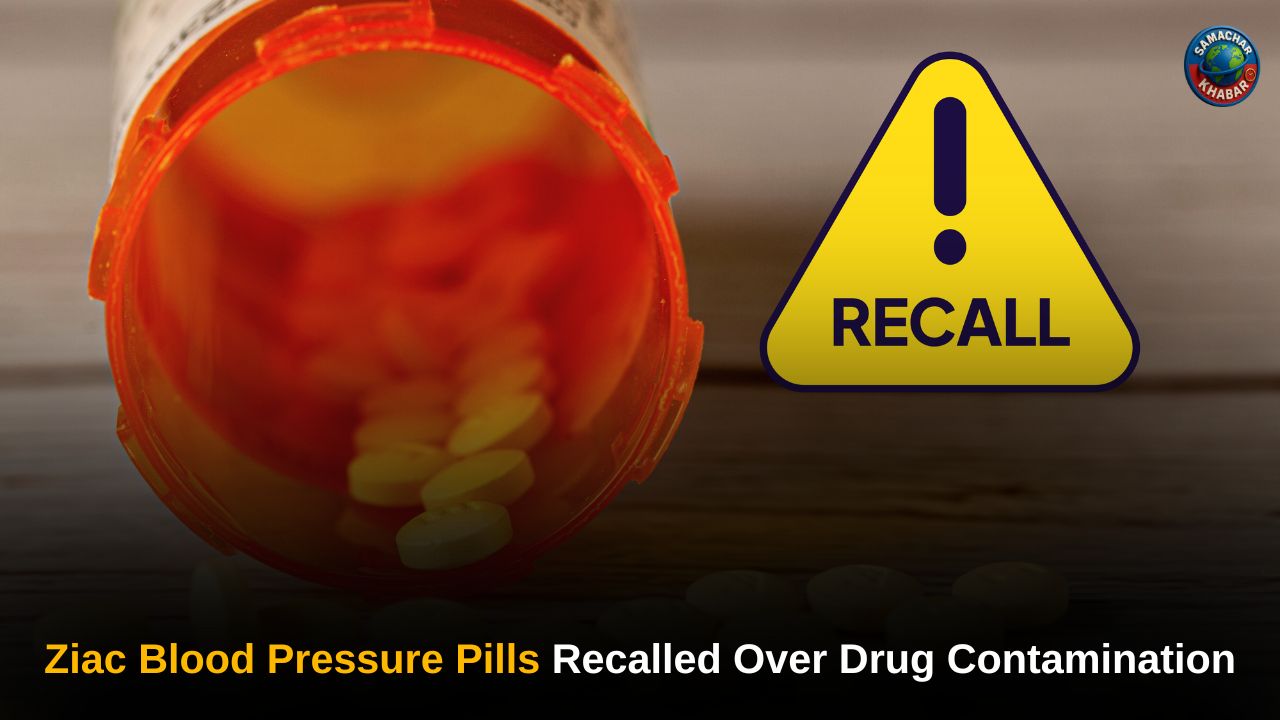
A nationwide Class III recall has been issued for more than 11,000 bottles of Ziac, a commonly prescribed blood pressure medication, after testing detected trace amounts of ezetimibe—a cholesterol-lowering drug—within certain lots. The tablets, manufactured by Glenmark Pharmaceuticals, were distributed across the U.S. in multiple bottle sizes and dosages between 2.5 mg and 6.25 mg.
While the FDA states that the contamination is unlikely to cause harmful health consequences, patients are urged to check their medication lot numbers and consult healthcare professionals before making any changes. No adverse events have been reported so far.
Key Takeaways: Nationwide Recall of Ziac Blood Pressure Medication
- Over 11,000 Ziac tablets recalled nationwide after trace contamination with cholesterol drug ezetimibe was detected during reserve sample testing.
- Affected bottles include 30-count, 100-count, and 500-count sizes with NDC codes 68462-878-30, 68462-878-01, and 68462-878-05.
- Two lot numbers—17232401 (exp. Nov 2025) and 17240974 (exp. May 2026)—are confirmed to be contaminated across multiple reports.
- FDA classified the recall as Class III, meaning the affected product is not likely to cause adverse health consequences.
- Patients advised to consult healthcare providers before stopping or discarding the medication; sudden discontinuation may be risky.
- No official instructions from Glenmark or FDA yet, though pharmacists and prescribers recommend verifying lot numbers and seeking guidance.
Nationwide Recall Announced After Cross-Contamination Concerns Surface
The U.S. Food and Drug Administration (FDA) has announced a nationwide recall involving thousands of bottles of Ziac, a blood pressure medication combining bisoprolol fumarate and hydrochlorothiazide. The recall was initiated after routine reserve sample testing revealed trace amounts of ezetimibe, a cholesterol-lowering drug also manufactured by Glenmark Pharmaceuticals.
Testing conducted at Glenmark’s manufacturing facility, including its site in Madhya Pradesh, India, confirmed the presence of ezetimibe in specific lots of Ziac tablets. Following the discovery, the recall was publicly listed on December 1 and categorized under the FDA’s Class III recall level, indicating that use of the affected product is unlikely to pose significant health risks.
The recall had originally begun on November 21, before being reclassified and publicly documented by FDA enforcement reports.
Which Ziac Products Are Affected? Complete List of Recalled Tablets
Federal recall notices and multiple national reports confirm that 11,100+ bottles of Ziac tablets are included in the recall. Some detailed listings identify 11,136 bottles in total.
Below is the FDA-confirmed breakdown of affected medication:
| Bottle Size | NDC Code | Lot Numbers | Expiration Dates |
| 30-count | 68462-878-30 | 17232401 | 11/2025 |
| 100-count | 68462-878-01 | 17232401 | 11/2025 |
| 500-count | 68462-878-05 | 17232401, 17240974 | 11/2025, 05/2026 |
Some reporting also notes expiration dates extending into late 2026, though the consistent verified ranges across FDA notices and media reports remain November 2025 to May 2026.
The affected tablets include 2.5 mg and 6.25 mg dosages, both commonly prescribed together to manage hypertension by regulating heart rhythm, removing excess fluid from the body, and lowering blood pressure to reduce the risk of heart attacks and strokes.
Why the Contamination Occurred and How Serious It Is
Glenmark Pharmaceuticals, headquartered in Elmwood Park, New Jersey, manufactures both Ziac and ezetimibe. According to multiple reports, the contamination likely occurred during production, when traces of ezetimibe inadvertently mixed with certain batches of the blood pressure tablets.
The FDA’s Class III designation indicates that the contamination poses minimal clinical risk, and no adverse reactions have been reported to date. However, the issue is still significant enough to require a nationwide recall, given the importance of medication purity and patient trust.
What Patients Should Do: Expert Recommendations and FDA Guidance
While the FDA and Glenmark Pharmaceuticals have not yet issued specific consumer instructions, health experts strongly advise patients to:
1. Verify the lot number on their medication bottle.
Matching the NDC code and lot number with the recall list is the first step.
2. Do NOT stop the medication abruptly.
Experts, including medication safety specialists, warn that suddenly discontinuing blood pressure medicine can be more dangerous than the contamination itself.
3. Consult healthcare providers immediately.
Doctors, pharmacists, and prescribers can determine whether a replacement is necessary and whether the patient’s medication is part of the recall.
4. Discard the medication only if instructed by a professional.
GoodRx guidance echoed across multiple reports recommends disposing of recalled medication only after consulting a pharmacist or clinician.
For additional support, Glenmark’s customer service can be contacted via email at GlobalCustomerService@glenmarkpharma.com or by phone at 1-888-721-7115.
Glenmark Pharmaceuticals Responds as FDA Monitoring Continues
As of the latest reporting, neither Glenmark nor the FDA has provided detailed public instructions for consumers. The FDA’s recall classification remains active, and additional enforcement updates may be issued depending on ongoing evaluations.
Despite the contamination concerns, experts emphasize that the detected ezetimibe levels were minimal and are not expected to cause harmful effects, based on current evidence.
A Comprehensive Look at Why This Recall Matters
This recall underscores the importance of rigorous quality control within pharmaceutical manufacturing. Even minor cross-contamination can lead to widespread recalls, affecting thousands of patients nationwide. While the FDA has assured the public that this particular case poses low risk, the incident highlights the need for continued oversight—especially when manufacturers produce multiple medications at shared facilities.
A Spiritual Insight: Understanding Health Awareness Through the Teachings of Saint Rampal Ji Maharaj
In times of public health concerns—such as nationwide drug recalls—Saint Rampal Ji Maharaj’s spiritual teachings remind society of the importance of conscious living and mindful decision-making.
His guidance emphasizes that human life is precious and must be safeguarded through both physical awareness and spiritual understanding. The unique knowledge shared by Saint Rampal Ji Maharaj encourages individuals to remain informed, avoid panic, and choose actions rooted in clarity and wisdom.
As countless followers have experienced, integrating spiritual discipline with everyday responsibilities helps people stay balanced, focused, and better prepared to navigate uncertainties like medication recalls.
Staying Informed: The Essential Steps for Patients and Providers
Although the recall has been classified as low-risk, the responsibility now shifts to consumers and healthcare providers to ensure safe medication use. Checking lot numbers, seeking professional guidance, and staying aware of FDA updates remain the most important steps until further instructions are released.
FAQs on the Ziac Blood Pressure Medication Recall
1. Why was the Ziac blood pressure medication recalled?
Ziac was recalled after testing found trace amounts of ezetimibe, a cholesterol drug, in certain lots of bisoprolol fumarate and hydrochlorothiazide tablets.
2. Which Ziac lots and bottle sizes are affected?
Affected lots include 17232401 and 17240974 in 30-count, 100-count, and 500-count bottles with NDC codes 68462-878-30, 68462-878-01, and 68462-878-05.
3. Is the Ziac recall considered dangerous?
The FDA classified the recall as Class III, meaning the affected tablets are not likely to cause adverse health consequences.
4. What should patients do if they have the recalled medication?
Patients should check lot numbers and contact their healthcare provider or pharmacist before stopping, replacing, or discarding the medication.
5. How many Ziac bottles are included in the recall?
More than 11,000 bottles—approximately 11,136—of Ziac tablets were recalled nationwide due to potential cross-contamination.