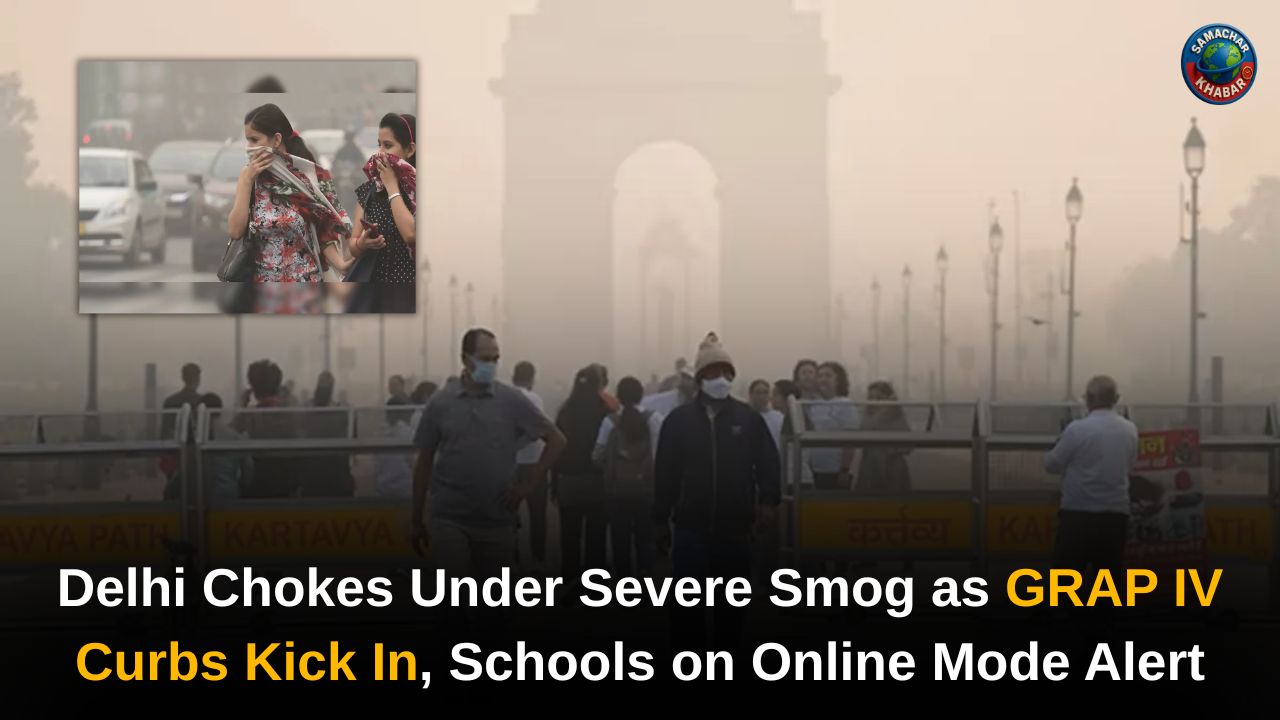
GRAP IV: Delhi and the National Capital Region (NCR) woke up to a dense layer of smog on Sunday, December 14, as air quality deteriorated sharply and slipped into the ‘severe’ category. According to official data, pollution levels crossed critical thresholds, prompting authorities to invoke the strictest measures under Stage IV of the Graded Response Action Plan (GRAP). Visibility dropped across key locations, residents reported breathing discomfort, and concerns resurfaced over students’ health, with schools closely monitoring a possible shift to online classes. Authorities, meanwhile, tightened curbs across construction, industry and transport to prevent further deterioration.
Delhi Air Pollution Crisis: Key Developments and Immediate Impact
- Delhi AQI touched 462 at 6 am, falling in the ‘severe’ category, as per Central Pollution Control Board data
- All 40 air quality monitoring stations turned ‘red’, indicating hazardous air conditions
- GRAP Stage IV invoked across Delhi-NCR by the Commission for Air Quality Management (CAQM)
- Visibility dropped sharply across major locations including India Gate, AIIMS, ITO, Delhi Airport and Anand Vihar
- Schools placed on alert, with the option of online or hybrid classes under GRAP-IV provisions
Air Quality Slips to ‘Severe’ as Smog Blankets Delhi-NCR
Residents of Delhi-NCR woke up to a thick blanket of smog on Sunday morning as pollution levels surged to alarming levels. According to the Central Pollution Control Board, the city’s Air Quality Index stood at 462 at 6 am, placing it firmly in the ‘severe’ category.
All 40 air quality monitoring stations across the capital recorded ‘red’ readings, indicating toxic air conditions. Northwest Delhi’s Rohini emerged as the most polluted area with an AQI of 499, followed closely by Jahangirpuri and Vivek Vihar at 495, as reported by News18.
The smog significantly affected visibility across large parts of the city, including India Gate, AIIMS, Connaught Place, Akshardham, Ghazipur, Anand Vihar, ITO, Patparganj and the Delhi airport area, causing discomfort and concern among commuters and residents alike.
Also Read: Delhi’s Toxic Air : Every 10 μg/m³ Rise in PM2.5 Increases Diabetes Risk by 10%, Studies Warn
GRAP Stage IV Enforced as Authorities Respond to Worsening Pollution
In response to the rapid deterioration in air quality, the Commission for Air Quality Management announced the enforcement of all measures under Stage IV of the Graded Response Action Plan across Delhi-NCR on Saturday, December 13.
The decision was taken after a sub-committee on pollution held a review meeting at 6:30 pm, examining the worsening pollution levels along with weather forecasts provided by the India Meteorological Department and IITM, according to news agency PTI.
Notably, GRAP-IV was invoked within a day of Stage III being implemented earlier, highlighting the speed at which air quality declined under unfavourable winter meteorological conditions.
Also Read: दिल्ली की हवा फिर ज़हरीली: AQI गंभीर स्तर पर, जानिए बचाव के उपाय
What GRAP IV Means: Strict Curbs on Construction, Industry and Transport
Under GRAP Stage IV, sweeping restrictions have been imposed across sectors to curb pollution sources. All non-essential construction and demolition activities have been halted. The operations of stone crushers, brick kilns, hot mix plants and mining units have also been suspended.
Industries operating on coal, furnace oil or other non-approved fuels have been ordered to shut down temporarily. On roads, the entry of diesel-powered medium and heavy goods vehicles into Delhi has been barred, except for those transporting essential commodities.
Delhi-registered heavy commercial vehicles that are BS-IV or below have also been stopped, with limited exemptions for essential services. Additionally, the use of older BS-III petrol and BS-IV diesel four-wheelers has been restricted, and non-essential inter-state diesel buses that are not BS-VI compliant have been taken off the roads.
Schools Monitor Situation as Online Classes Come Back Into Focus
With air quality slipping into the ‘severe-plus’ range, the possibility of schools shifting fully or partially to online classes has resurfaced. While no blanket order has been issued so far, authorities and education departments are closely monitoring the situation.
Under GRAP Stage IV provisions, states and local administrations have the flexibility to allow online or hybrid classes, particularly for younger students, if pollution levels remain high. Officials indicated that if conditions fail to improve, a broader shift to online schooling cannot be ruled out.
Also Read: GRAP-3 Enforced in Delhi-NCR as Air Quality Turns ‘Severe’ and Restrictions Tighten
Earlier, schools had been permitted to conduct classes in hybrid mode to limit students’ exposure to hazardous air, a measure that could again be expanded if the toxic air persists.
Public Reaction: Residents Raise Health Concerns
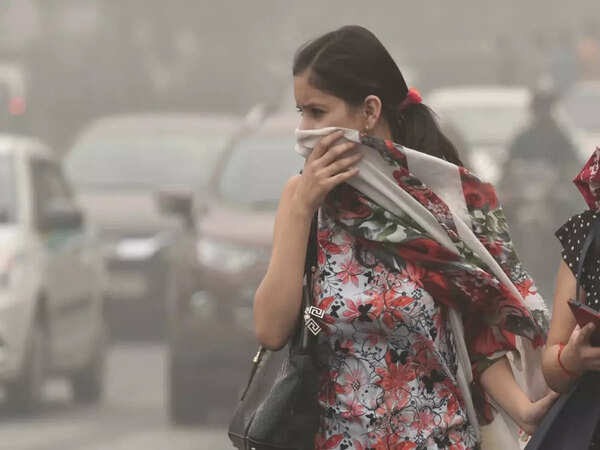
Delhi residents voiced serious concerns over the worsening pollution, urging authorities to take stronger action. Speaking to news agency ANI, a resident named Harsh Vardhan said pollution levels had only increased and breathing had become difficult while commuting from Dwarka.
He welcomed the implementation of GRAP Stage IV and suggested that the odd-even vehicle scheme should also be considered. Another visitor to the national capital highlighted the health risks, stating that a healthy AQI should ideally be around 100–120, whereas Delhi’s air quality often remains above 300. He pointed out that elderly people and young children face the maximum difficulties under such conditions.
What Continues Despite Restrictions
Despite the strict curbs, essential services have been exempted. Infrastructure projects linked to public utilities such as metro rail, highways, airports, defence, healthcare and sanitation are allowed to continue under strict dust-control norms.
Public transport services, including buses and the metro, remain operational. Electric, CNG, LNG and BS-VI compliant vehicles are permitted on roads. Offices have been advised to reduce physical attendance and promote work-from-home wherever possible. Diesel generator sets can be used only for critical services such as hospitals, telecom networks, data centres and emergency operations.
Delhi’s Smog Emergency: What Lies Ahead
With winter conditions and unfavourable meteorology continuing to trap pollutants, authorities remain on high alert. Residents have been advised to stay indoors as much as possible and strictly follow health advisories. Schools, parents and workplaces are bracing for further measures if air quality fails to improve. As monitoring continues around the clock, the coming days will be crucial in determining whether the capital can breathe easier or must endure prolonged emergency curbs under GRAP Stage IV.
Spiritual Perspective: Inner Balance Through True Devotion
According to the unique spiritual knowledge shared by Tatvadarshi Sant Rampal Ji Maharaj , when human beings live under the refuge of the Supreme God and follow true, scripturally guided devotion, nature itself remains balanced. It is explained that true bhakti brings harmony—rainfall occurs at the right time, environmental imbalance reduces, and crises like excessive pollution do not arise.
In earlier ages, especially during Satyug, people devoted more time to spiritual practice rather than running endlessly after material pursuits. In contrast, today’s human life is largely consumed by an unending race for wealth and status, leaving no time for inner reflection. This imbalance reflects externally in social and natural disturbances. Tatvadarshi Sant Rampal Ji Maharaj Ji teaches true devotion based on scriptures, through which devotees gain physical, mental, and economic benefits, and move towards a more balanced, meaningful life.
- Website: www.jagatgururampalji.org
- YouTube: Sant Rampal Ji Maharaj
- Facebook: Spiritual Leader Saint Rampal Ji
- ‘X’ handle: @SaintRampalJiM
FAQs on Delhi Air Pollution and GRAP Stage IV Curbs
1. Why was GRAP Stage IV imposed in Delhi-NCR?
GRAP Stage IV was imposed after Delhi’s AQI entered the severe category, crossing critical limits, as confirmed by Central Pollution Control Board data.
2. What was Delhi’s AQI when GRAP IV was invoked?
Delhi’s AQI was recorded at 462 at 6 am, placing air quality in the ‘severe’ category.
3. Are schools in Delhi-NCR shifting to online classes?
No blanket order has been issued, but authorities may allow online or hybrid classes under GRAP IV if pollution levels remain high.
4. Which activities are banned under GRAP Stage IV?
Non-essential construction, demolition, polluting industries, and entry of non-essential diesel heavy vehicles have been restricted under GRAP IV.
5. Which vehicles are allowed during GRAP Stage IV?
Electric, CNG, LNG, BS-VI vehicles and trucks carrying essential goods are permitted during GRAP Stage IV restrictions.