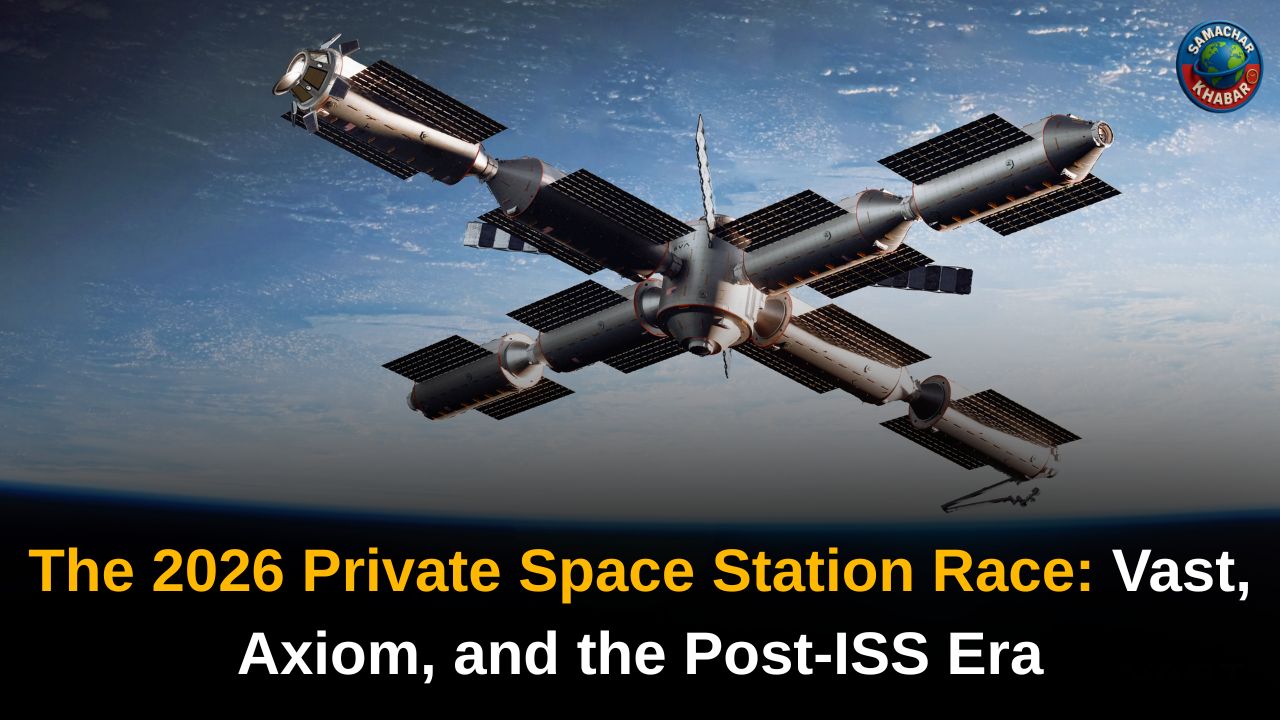
Humanity’s journey into space is entering its most critical chapter. As the International Space Station (ISS) prepares for its 2030 deorbit via SpaceX’s US Deorbit Vehicle, a new commercial race is reaching its boiling point. From Vast’s final launch preparations for Haven-1 to Starlab’s recent influx of venture capital, the shift from government labs to private orbital “business parks” is no longer a future concept-it is happening now.
The Dawn of Private Space Stations
The 21st-century space landscape has shifted. NASA is no longer the sole landlord of Low Earth Orbit (LEO); it is becoming the “anchor tenant.” With the ISS nearing retirement, the focus has pivoted to Commercial LEODestinations (CLD)-privately owned platforms designed for research, manufacturing, and global tourism.
The ISS has been humanity’s orbital home for over 25 years, continuously hosting astronauts and groundbreaking science experiments. But with its planned retirement around 2030, the future of human presence in low Earth orbit (LEO) depends increasingly on private space stations – orbiting platforms built, owned, and operated by commercial companies.

Why the Private Race Matters
The shift from government to commercial space stations reflects broader trends in:
Commercialization of LEO
Governments are stepping back from owning and operating space infrastructure and instead becoming customers of private operators.
Innovation & Competition
Private firms accelerate technological innovation, offering new research platforms, manufacturing opportunities, and even space tourism.
Sustainable Space Presence
Commercial stations aim to keep humans continuously in orbit as the ISS nears its end of life.
Major Players in the Private Space Station Race
Haven-1: First True Commercial Space Station
Vast Space’s Haven-1 is one of the world’s most talked-about commercial space station projects. Designed as a single-module platform, it is slated to launch in 2026 on a SpaceX Falcon 9 rocket. Haven-1 could become the first privately developed orbital station capable of hosting astronauts for research, manufacturing, and technology testing in microgravity.
Vast Space is currently the frontrunner to put the first private station in orbit.
- Current Status: As of January 2026, Vast has completed primary hull welding and life-support scrubbing tests at NASA Glenn.
- Launch Window: Confirmed for May 2026 aboard a SpaceX Falcon 9.
- Crew Mission: The first crewed mission (Vast-1) is scheduled for late June 2026, where four astronauts will live aboard for 10 days.
- Unique Feature: Unlike the utilitarian ISS, Haven-1 features a luxury interior with “earth-tone” soft surfaces and a 1.1-meter domed window for unparalleled views.
Axiom Space Station: Modular Commercial Hub
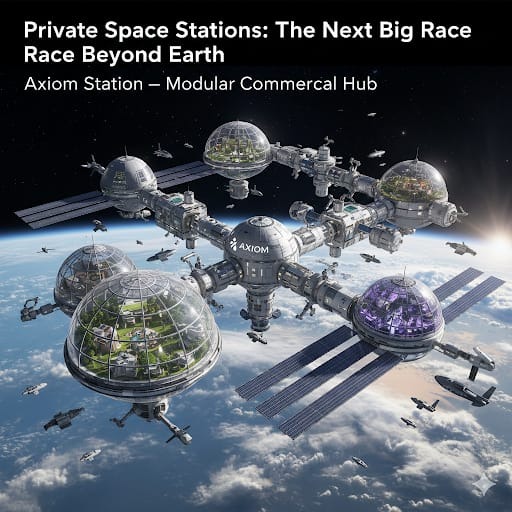
Axiom Space, based in Houston, is building a modular commercial station that will initially launch modules attached to the ISS and later separate to operate independently.
Before the private station launches, Axiom has already successfully demonstrated its capabilities through crewed missions to the ISS. The Axiom Mission 4 (Ax-04), which launched successfully in June 2025 with Indian astronaut Shubhanshu Shukla onboard, is a significant milestone in public-private space collaboration.
The Axiom station strategy involves:
- Attaching habitat modules to the ISS before detaching.
- Expanding capabilities until it operates as a free-flying commercial station.
This modular station promises research labs, commercial facilities, and space tourism opportunities in LEO.
Orbital Reef & Other Commercial Concepts
Another notable contender is Orbital Reef, an ambitious multi-module station designed by Blue Origin with Sierra Space and Boeing, aiming to be a space business park for research, manufacturing, and tourism. Additional projects like Starlab, planned by Voyager Space and Airbus, further diversify the commercial station landscape. These ventures highlight how the orbit is transforming – not just as a scientific platform, but as a commercial ecosystem.
The ISS Retirement and Commercial Gap
The ISS has been a cornerstone of human space presence since 2000. However, maintaining this aging platform is costly, and its operational life is nearing its end. NASA’s Commercial LEO Destinations program is designed to promote this transition to commercial stations while ensuring no disruption in orbital presence. If commercial stations are not operational by 2030, the risk is that only other government stations (like China’s Tiangong) remain inhabited, raising geopolitical implications in space.
2026-2030: The Critical Transition Timeline
- May 2026: Target launch of Haven-1 (Vast).
- June 2026: First private crewed mission to a commercial station.
- Late 2026: NASA to award Phase 2 CLD contracts worth up to $1.5 billion.
- 2027: Axiom’s first module (PPTM) launches to the ISS.
- 2028: Axiom Station separates to become a free-flying outpost.
- 2030: Scheduled retirement and controlled deorbit of the ISS.
What This Means for Humanity
Private space stations are not just engineering marvels; they represent humanity’s commercial future in space. From microgravity research to space tourism and manufacturing products that benefit Earth – the implications are vast.
Balance Between Modern Progress and Social Responsibility
In today’s fast-paced life, humans are rapidly advancing in science, technology, and modern achievements, but in this race, social welfare and human responsibilities are often left behind. At such a time, the “Annapurna Muhim” led by Sant Rampal Ji Maharaj sends a clear message that true progress is only when no one goes hungry and every needy person receives food and assistance with dignity.
According to Sant Rampal Ji Maharaj, mere material advancement is not enough; until development is accompanied by service, compassion, and selfless acts, a balanced society cannot be achieved. Today, as the world moves toward private space stations and new scientific heights, initiatives like the “Annapurna Muhim” remind us that without humanity and social service, no progress is complete. This balance lays the foundation for a peaceful, prosperous, and ethical society.
FAQ on Private Space Stations
Q1: What are private space stations?
Private space stations are commercial orbital platforms being built by companies to host research, tourism, and industry beyond Earth.
Q2: When is the first private space station launching?
The first expected launch is Haven-1 in 2026, developed by Vast Space.
Q3: Will private stations replace the ISS?
Yes – by around 2030, commercial stations are expected to succeed the ISS as operational orbital outposts.
Q4: Which companies are building private space stations?
Major players include Vast Space, Axiom Space, and projects like Orbital Reef with Blue Origin and Sierra Space.
Q5: Can civilians visit space stations?
In the future, private stations aim to host tourists and private astronauts, but access will depend on training and cost.