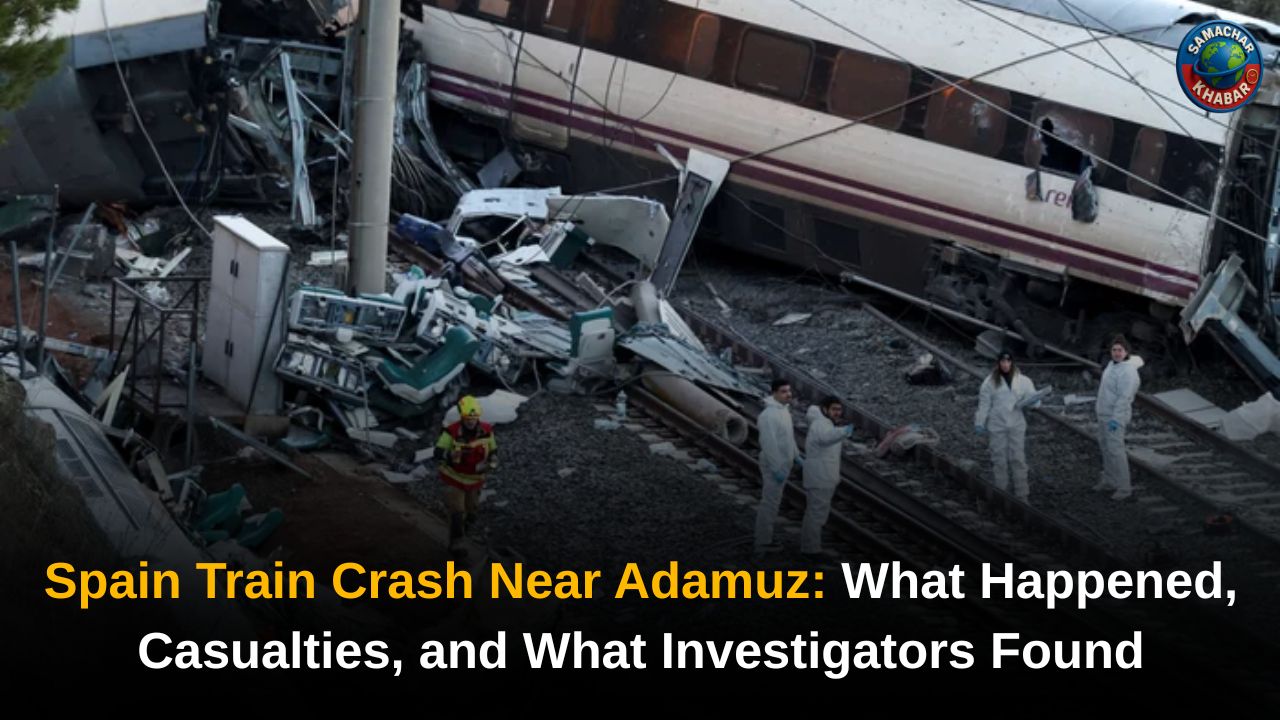
At least 40 people were killed and dozens injured after two high-speed trains collided near the town of Adamuz, close to Córdoba in southern Spain, late on Sunday. The northbound train, operated by private company Iryo, derailed and crossed onto a neighbouring track before being struck by a southbound Renfe train. The crash was described by Spain’s transport minister as “extremely unusual” and is among the deadliest rail accidents in the country in more than a decade. Investigators later identified a broken rail joint as a key focus of the probe, while senior officials said human error was largely ruled out.
Key Takeaways on the Spain Train Crash
- Two high-speed trains collided near Adamuz, about 360 km south of Madrid
- At least 40 people were killed and dozens injured, many seriously
- The northbound Iryo train derailed before being hit by a Renfe train
- Investigators identified a broken rail joint, or fishplate, at the site
- Authorities said both trains were travelling below the speed limit
- Prime Minister Pedro Sánchez pledged full transparency in the investigation
How the Crash Happened
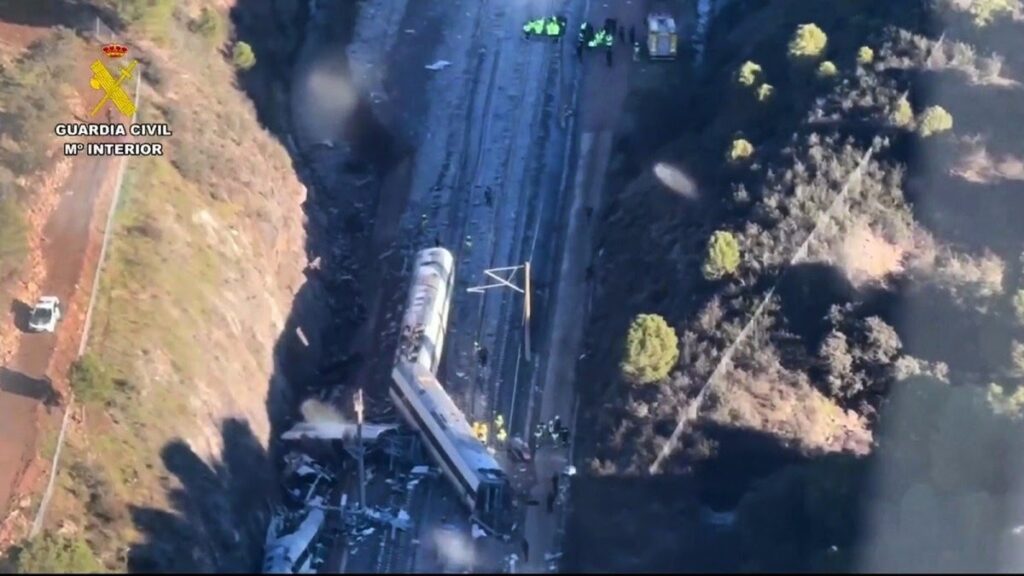
According to an initial report cited by CNN, the rear coaches of a northbound high-speed train derailed and crossed onto the neighbouring track. The train was then struck by a southbound train travelling in the opposite direction.
The northbound train was operated by private company Iryo, while the southbound train was run by state operator Renfe. The impact caused both trains to overturn, with the front carriages of one train falling down an embankment.
Spain’s transport minister, Óscar Puente, said the crash was “extremely unusual” because it occurred on a straight stretch of track that had recently been upgraded. “It is truly strange,” he told Spanish television.
Location and Timing of the Collision
The collision took place late on Sunday near the town of Adamuz, in the southern province of Córdoba, approximately 360 kilometres south of Madrid. Emergency services worked through the night to rescue survivors and recover victims from the wreckage.
Spain’s Prime Minister Pedro Sánchez visited the crash site on Monday morning. He announced three days of national mourning and said authorities would provide full transparency once the cause was established.
“We will find the answer, and when it is known, with absolute transparency and clarity, we will inform the public,” Sánchez said.
Deaths, Injuries, and Hospital Response
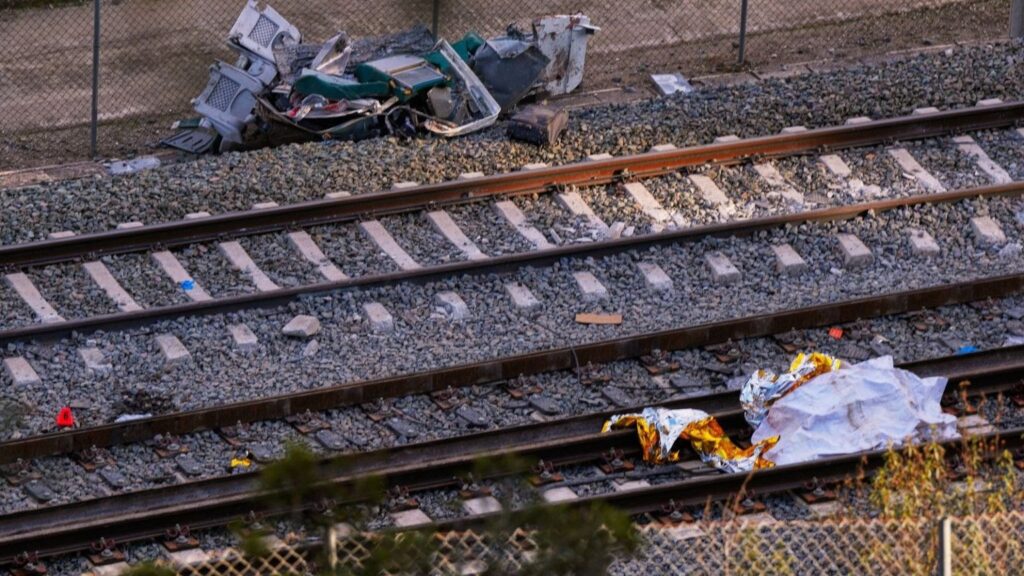
The head of the Andalusia regional government said at least 40 people were killed in the crash. Dozens of others were injured, many of them seriously, and were taken to hospitals in Córdoba and nearby areas.
Families gathered at hospitals seeking information about missing relatives. One man told CNN he was searching for a friend, a military doctor recently returned from Iraq, who had not been heard from since the accident.
The crash was described as one of the deadliest railway accidents in Spain in more than a decade.
Accounts From Survivors and Local Residents
Passengers described scenes of panic, with damaged carriages, screams for help, and people escaping through windows and over the roofs of the trains.
A passenger on the southbound train told CNN: “We were thrown through the air. Thank God I’m okay; there were many people worse off than me.”
Another survivor said the train tipped over before everything went dark. “All I heard was screams,” she said, according to Reuters.
Residents of Adamuz assisted emergency teams by transporting injured people and providing blankets and food. “The whole town rallied to help,” one local resident told CNN.
Initial Investigation and Rail Safety Claims
Renfe’s president said both trains were travelling below the speed limit and that safety systems were in place to prevent overspeeding. Spain’s train drivers’ union has previously raised concerns about high speeds and track wear.
Engineers and investigators began examining whether a fault with the train or the track caused the derailment. Spain’s Institute of Engineering said it was too early to draw conclusions.
Messages of sympathy came from European leaders, while the King and Queen of Spain offered condolences to the families of those killed.
Broken Rail Joint Identified as Key Focus
According to a source briefed on initial investigations and cited by Reuters, experts probing the cause of the derailment found a broken joint on the rails at the crash site.
Technicians analysing the track identified wear on the joint between sections of rail, known as a fishplate. The source said the fault appeared to have been present for some time and created a gap between rail sections that widened as trains continued to pass.
The source, who declined to be identified due to the sensitivity of the issue, said investigators believed the faulty joint was key to identifying the precise cause of the accident.
Details of the Derailment Sequence
The source said the first carriages of the Iryo-operated train passed over the gap, but the eighth and final carriage derailed, pulling the seventh and sixth carriages with it. The derailed carriages then smashed into the oncoming train, pushing it off the tracks and down an embankment.
Photographs showing the vertical gap in the rail were included in a handout shared by Spain’s Guardia Civil and were marked by police incident numbers as forensic inspectors examined the area.
Official Responses and Statements
Spain’s Commission of Investigation of Rail Accidents (CIAF), which was tasked with the overall investigation, did not immediately respond to requests for comment. The Spanish rail operator Adif and the transport ministry, which oversees the CIAF, also did not immediately comment.
Álvaro Fernández Heredia, president of Renfe, told Cadena Ser radio it was too early to determine the cause but said the accident occurred under “strange conditions” and that “human error is practically ruled out.”
Train and Track Background Information
Transport Minister Óscar Puente said the Iryo train involved in the crash was less than four years old and that the railway track had been completely renovated last May.
The train manufacturer, Hitachi Rail, carried out a routine inspection of the train on January 15 and found no anomalies, according to the source cited by Reuters.
Iryo is a private rail operator majority-owned by the Italian state-controlled railway group Ferrovie dello Stato.
Prime Minister Sánchez cancelled his planned trip to the World Economic Forum in Davos, Switzerland, following the crash.
What Lies Ahead in the Spain Train Crash Investigation
As investigators continue examining the broken rail joint and surrounding infrastructure, authorities have said it remains too early to draw final conclusions. Officials stressed that safety systems were in place and that both trains were operating within permitted speeds at the time of the collision. With national mourning underway, the focus remains on determining the precise technical cause of the derailment, supporting victims and their families, and ensuring transparency in the investigation. Spain’s government has pledged to make all verified findings public once the inquiry reaches definitive conclusions.
Reflections on Faith and Protection
Moments of large-scale tragedy often lead communities to reflect on deeper questions of protection, destiny, and spiritual strength. Across different societies, many people hold the belief that a Higher Power safeguards humanity in ways that are not always immediately visible. Within this spiritual understanding, followers of Tatvdarshi Sant Rampal Ji Maharajbelieve that the Supreme God Kabir Sahib protects His children, even when they are not consciously engaged in devotion in a particular lifetime.
Devotees cite numerous personal experiences in which individuals who received Naam Diksha through Sant Rampal Ji Maharaj Ji survived severe accidents without major harm, attributing this protection to the power of true devotion. Such reflections emerge naturally during times of loss, offering spiritual contemplation while respecting the factual realities of the event.
FAQs on Spain Train Crash Near Adamuz
1. Where did the Spain train crash occur?
The crash occurred near Adamuz in southern Spain, about 360 kilometres south of Madrid.
2. How many people were killed in the crash?
At least 40 people were killed, according to Andalusia’s regional government.
3. Which companies operated the trains involved?
The northbound train was operated by Iryo, and the southbound train was operated by Renfe.
4. What did investigators find at the crash site?
Investigators found a broken rail joint, known as a fishplate, showing long-term wear.
5. Has human error been identified as the cause?
Renfe’s president said human error was practically ruled out at this stage.