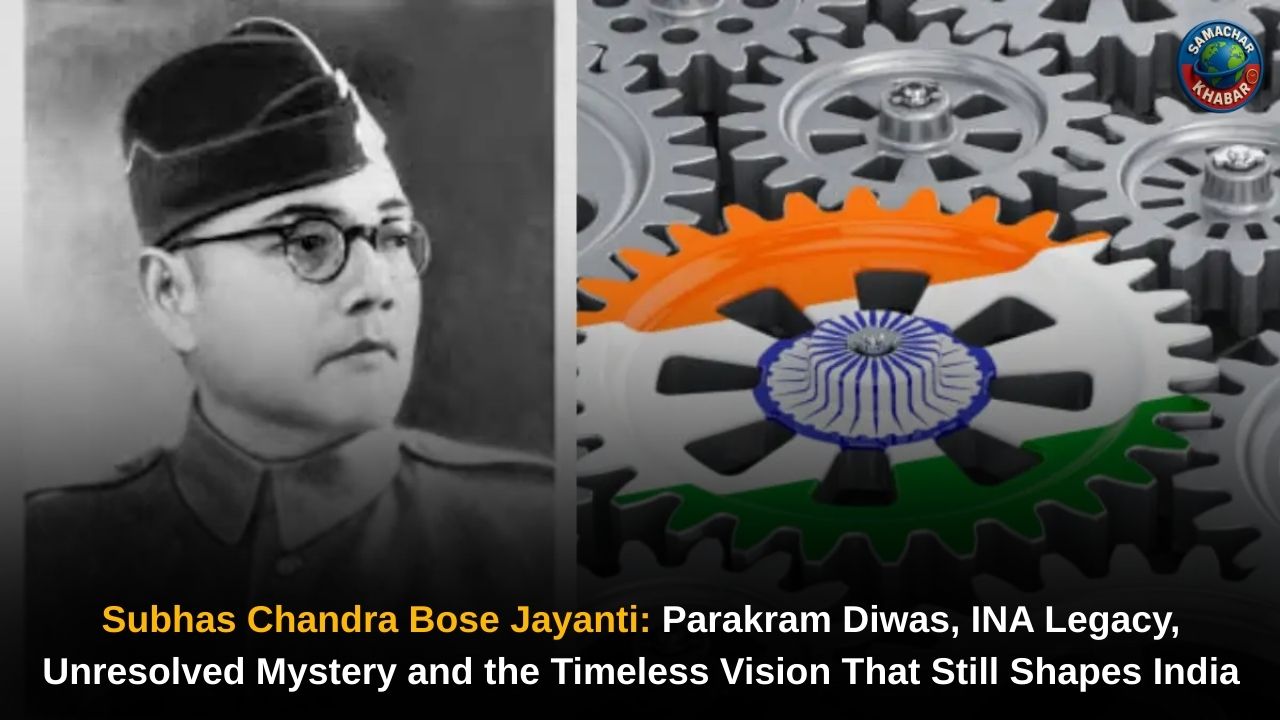
India will observe Parakram Diwas on January 23, 2026, to mark the 129th birth anniversary of Subhas Chandra Bose, one of the most courageous and influential leaders of the freedom movement. Remembered for founding the Indian National Army (INA) and challenging British rule with unmatched resolve, Netaji remains a symbol of valour, sacrifice and national pride.
From his powerful calls for freedom and the enduring mystery surrounding his disappearance to his progressive ideas on work, dignity and spiritual fulfilment, Parakram Diwas 2026 revisits every dimension of a leader whose relevance has only deepened with time.
Key Highlights of Subhas Chandra Bose Jayanti 2026 and Parakram Diwas
- Parakram Diwas 2026 will be observed on Friday, January 23, marking Netaji’s 129th birth anniversary
- The day honours his courage, discipline, nationalism and sacrifice
- Netaji’s leadership of the Indian National Army (INA) transformed India’s freedom struggle into an international movement
- His iconic slogan “Give me blood, and I will give you freedom” continues to inspire generations
- The mystery surrounding his disappearance after 1945 remains unresolved despite three official commissions
- Parakram Diwas is celebrated nationwide through educational, cultural and patriotic programmes
- Netaji’s early ideas on balanced work, human dignity and spiritual purpose resonate strongly amid modern debates on extreme work culture
Why January 23 Is Observed as Parakram Diwas
Subhas Chandra Bose was born on January 23, 1897, in Cuttack, Odisha, to Janakinath Bose and Prabhavati Dutt. Known for academic brilliance, he cleared the Indian Civil Service examination in England but resigned from the prestigious post to dedicate his life to India’s freedom struggle.
Recognising his extraordinary courage and contribution, the Government of India declared January 23 as Parakram Diwas in 2021, with “Parakram” meaning valour. The day is devoted not to a changing annual theme, but to celebrating Netaji’s unwavering bravery, national identity and revolutionary spirit.
Netaji’s Role in India’s Freedom Struggle and the INA
When constitutional and conventional methods appeared insufficient, Netaji charted his own path. He reorganised the Indian National Army, mobilising Indians across Southeast Asia and turning the freedom struggle into a global movement.
Under his leadership, the INA and the Azad Hind Government symbolised defiance against colonial rule. Netaji firmly believed that freedom was a birthright and could not be denied indefinitely. His words and actions inspired soldiers, students, workers and women alike, breaking barriers of caste, region and gender.
Powerful Quotes That Continue to Inspire the Nation
Netaji’s words remain among the most quoted lines of India’s freedom movement. Some of his most enduring quotes include:
- “It is blood alone that can pay the price of freedom.”
- “Freedom is not given, it is taken.”
- “No real change in history has ever been achieved by discussions.”
- “One individual may die for an idea, but that idea will incarnate itself in a thousand lives.”
These statements continue to define courage, resistance and the moral price of liberty.
The Unresolved Mystery of Netaji’s Disappearance
One of the most debated chapters of Indian history is what happened to Netaji after 1945. To uncover the truth, the Government of India constituted three inquiries:
| Commission | Period | Key Findings |
| Shah Nawaz Committee | 1956 | Concluded Netaji died in a plane crash in Taihoku on August 18, 1945; dissent by Suresh Chandra Bose |
| GD Khosla Commission | 1970–74 | Endorsed the plane crash theory; rejected survival claims |
| Justice Mukherjee Commission | 1999–2006 | Rejected plane crash theory and Renkoji ashes; found no conclusive evidence |
Despite decades of investigation, the mystery remains unresolved, continuing to intrigue historians and citizens alike.
How Parakram Diwas 2026 Is Celebrated Across India
Parakram Diwas is observed nationwide through a range of programmes. Schools and universities organise essay writing, debates, quizzes and poster-making competitions to introduce students to Netaji’s ideals.
Major cities such as Kolkata, Delhi and Cuttack host seminars, cultural performances and patriotic gatherings. Tributes are paid at Netaji’s statues and memorials, while his birthplace in Cuttack witnesses flag hoisting and special commemorative events.
In recent years, celebrations have expanded to include exhibitions of rare photographs, films, and immersive AR/VR experiences showcasing his life and legacy.
Parakram Diwas 2026: Major Government-Led Events
Following previous patterns, the Ministry of Culture is hosting three-day celebrations from January 23 to 25, 2026. Events are centred around locations such as Barabati Fort in Cuttack and the Andaman and Nicobar Islands, which have been symbolically renamed in Netaji’s honour.
Also Read: Indian Army Day: Date, Theme, Jaipur Parade, Traffic Advisory and Full Details
Highlights include national exhibitions, drone shows, cultural performances, painting camps and Odia cultural showcases, reflecting both national pride and regional heritage.
Netaji’s Vision on Work, Dignity and Human Fulfilment
A lesser-known yet striking aspect of Netaji’s legacy is his forward-looking vision on work and human life. In 1924, he argued that no human being should be reduced to a machine through excessive labour. He believed meaningful work should allow time for creativity, thought, love and spiritual growth.
In the context of modern debates around 70–90 hour workweeks, Netaji’s emphasis on balance and dignity appears remarkably contemporary, reinforcing his belief that true freedom goes beyond political independence.
A Legacy That Continues to Guide India’s Path
Netaji believed that independence was only the beginning and that the real task lay in building a strong, united and self-reliant nation grounded in justice and dignity. His ideals of courage, discipline and selfless service continue to shape national discourse, from education and governance to labour and social equity.
Saint Rampal Ji Maharaj’s Spiritual Perspective: True Freedom Beyond the Body and the Nation
According to the unique spiritual knowledge of Saint Rampal Ji Maharaj, true freedom is not limited to political independence or social rights, but liberation of the soul from birth–death bondage. While Netaji Subhas Chandra Bose fought fearlessly for India’s physical freedom, Saint Rampal Ji Maharaj explains that lasting peace, equality and justice in society are possible only when human beings attain Tatvagyan (true spiritual knowledge) as given in sacred scriptures.
Saint Rampal Ji Maharaj teaches that a nation can progress sustainably only when its citizens are spiritually awakened, morally disciplined and free from ignorance-driven exploitation. This spiritual vision complements Netaji’s belief in dignity, sacrifice and human fulfilment, reminding society that real parakram (valour) lies not only in struggle, but in attaining complete salvation (moksha) through true devotion.
Why Parakram Diwas Remains a Living Reminder of Courage
Parakram Diwas is not merely a ceremonial tribute but a reminder of the shared sacrifices that forged India’s freedom. Netaji Subhas Chandra Bose’s life, ideas and unresolved story compel each generation to reflect on courage, responsibility and national purpose. As India marks his 129th birth anniversary in 2026, his call for fearless action and moral strength continues to echo, urging the nation to transform valour into progress and ideals into action.
FAQs on Subhas Chandra Bose Jayanti 2026 & Parakram Diwas
Q1. When is Subhas Chandra Bose Jayanti 2026 observed?
Subhas Chandra Bose Jayanti 2026 is observed on January 23, marking the 129th birth anniversary of Subhas Chandra Bose and celebrated nationwide as Parakram Diwas.
Q2. Why is January 23 celebrated as Parakram Diwas in India?
January 23 is celebrated as Parakram Diwas to honour Netaji’s courage, sacrifice and leadership, and to inspire citizens with values of valour and patriotism.
Q3. What was Netaji Subhas Chandra Bose’s contribution to India’s freedom struggle?
Netaji founded the Indian National Army, led the Azad Hind Government, and transformed India’s freedom movement into an international fight against British colonial rule.
Q4. What did the official commissions conclude about Netaji’s disappearance?
Three commissions investigated Netaji’s fate; while earlier panels supported the plane crash theory, the Mukherjee Commission rejected it and found no conclusive evidence.
Q5. How is Parakram Diwas 2026 celebrated across India?
Parakram Diwas 2026 is marked with tributes, educational programmes, cultural events, exhibitions and government-led celebrations highlighting Netaji’s life, ideals and legacy.