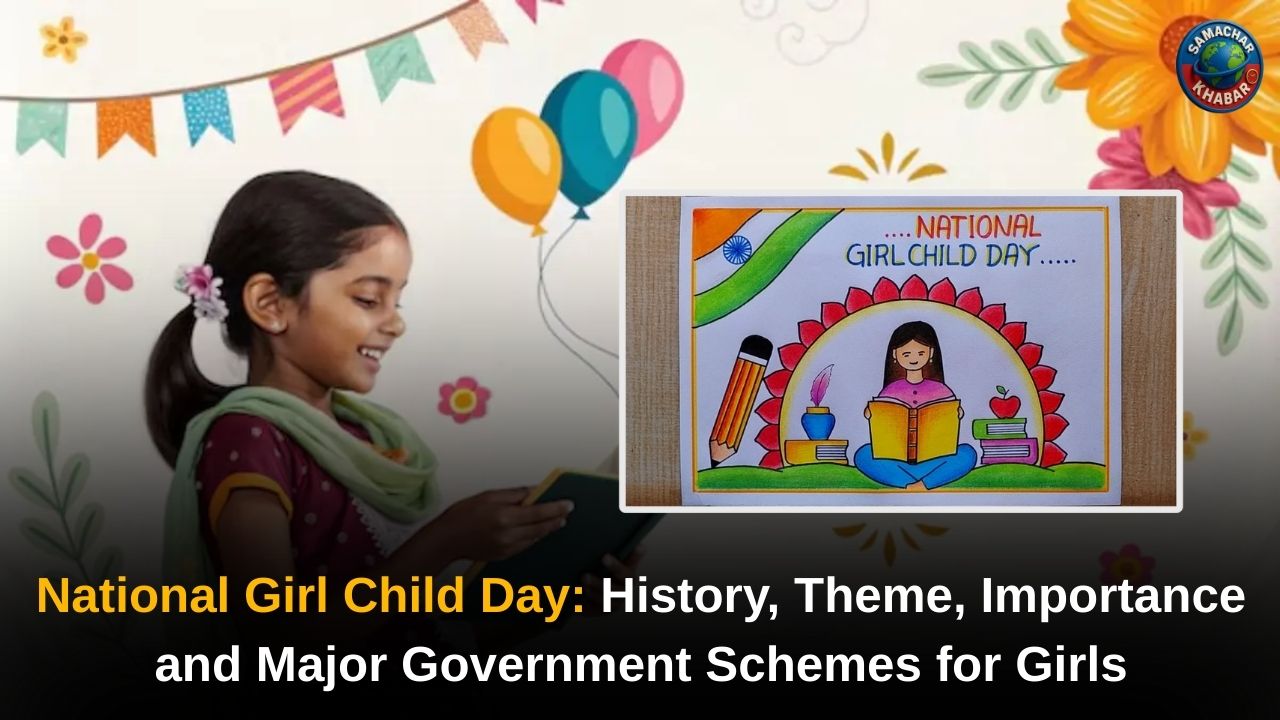
National Girl Child Day 2026, observed across India on January 24, highlights the urgent need to promote the rights, education, health, safety and overall welfare of girls. Instituted to address deep-rooted social challenges such as gender discrimination, child marriage, declining sex ratio and unequal access to opportunities, the day serves as a national platform for awareness and action.
With strong backing from government policies, legal safeguards, welfare schemes and community initiatives, National Girl Child Day reinforces the message that empowering girls is central to India’s social progress, economic growth and inclusive development.
Key Highlights of National Girl Child Day 2026: Date, History, Importance and Government Support
- National Girl Child Day is observed every year on January 24 across India
- The observance was initiated in 2008 by the Ministry of Women and Child Development
- It focuses on girls’ rights, education, health, nutrition, safety and dignity
- The official theme for National Girl Child Day 2026 has not yet been announced
- Major government schemes like Beti Bachao, Beti Padhao and Sukanya Samriddhi Yojana play a key role
- The day addresses issues such as gender bias, female foeticide, child marriage and declining sex ratio
What Is National Girl Child Day and Why Is It Observed?
National Girl Child Day is a national awareness initiative dedicated to recognising the challenges faced by girls in Indian society and promoting equal opportunities for their growth and development. The observance aims to change long-standing social attitudes that have historically disadvantaged girls, particularly in areas such as education, healthcare, nutrition, safety and decision-making.
By highlighting the importance of valuing girls as equal members of society, the day encourages families, institutions and communities to support girls in realising their full potential and participating actively in nation-building.
History of National Girl Child Day in India
National Girl Child Day was first observed in 2008, following its launch by the Ministry of Women and Child Development. The initiative was introduced to create long-term awareness about the importance of the girl child and to highlight the inequalities faced by girls across different sections of society.
The observance aligns with broader global and national commitments to gender equality and women’s empowerment. Over the years, it has become a key reminder of the need to address structural barriers that limit girls’ access to education, healthcare and equal opportunities.
Why January 24 Is Significant
January 24 holds symbolic importance in India’s history of women’s leadership. The date is associated with Indira Gandhi, India’s first woman Prime Minister, who assumed office on January 24, 1966. The observance on this date reinforces the idea that women and girls can lead at the highest levels when given equal opportunities and support.
National Girl Child Day 2026 Theme: What Is Known So Far
The official theme for National Girl Child Day 2026 has not yet been announced by the Ministry of Women and Child Development. However, in recent years, the observance has consistently focused on empowerment, education and equal opportunities for girls.
Also Read: Indian Army Day: Date, Theme, Jaipur Parade, Traffic Advisory and Full Details
For reference, the theme for National Girl Child Day 2025 was “Empowering Girls for a Bright Future”, emphasising education, leadership, digital access and participation in national development. Similar focus areas are expected to guide awareness campaigns in 2026.
Importance of National Girl Child Day
National Girl Child Day holds significance for several reasons. It draws attention to persistent social challenges such as gender-based discrimination, unequal access to education, health and nutrition disparities, and violence against girls. The day also highlights the importance of improving school enrolment and reducing dropout rates among girls.
By promoting awareness and dialogue, the observance encourages society to value girls equally and to create environments where they can grow safely, confidently and with dignity.
Major Government Schemes for Girl Child Welfare
Beti Bachao, Beti Padhao
Launched in 2015, Beti Bachao, Beti Padhao focuses on preventing gender-biased sex selection and promoting girls’ education. The programme aims to improve the Child Sex Ratio and change societal mindsets through awareness campaigns such as “Selfie with Daughter” and initiatives like Guddi-Gudda Boards.
Sukanya Samriddhi Yojana
Sukanya Samriddhi Yojana is a government-backed savings scheme designed to encourage long-term financial planning for a girl child’s education and future needs. The scheme offers attractive interest rates and tax benefits, making it a popular choice for parents.
Other Key Welfare Initiatives
Several other programmes strengthen the welfare framework for girls, including the National Scheme of Incentives to Girls for Secondary Education, Mission Vatsalya, POSHAN Abhiyaan, and the Scheme for Adolescent Girls. These initiatives focus on education retention, child protection, nutrition and health support.
Legal Measures Supporting Girls’ Rights and Safety
In addition to welfare schemes, strong legal frameworks have been implemented to protect and empower girls. The Prohibition of Child Marriage Act, 2006 seeks to eliminate child marriage, while the Protection of Children from Sexual Offences (POCSO) Act, 2012, with strengthened rules, addresses sexual abuse of children.
The Juvenile Justice (Care and Protection of Children) Act, 2015 ensures care and rehabilitation for children in need, while initiatives like the Track Child Portal and Child Helpline support missing and vulnerable children.
National Leadership Message on Girl Child Empowerment
On the occasion of National Girl Child Day, Union Home Minister Amit Shah extended greetings and emphasised that girls are not merely responsibilities but represent sheer strength and an invaluable force in nation-building.
Highlighting the government’s focus on women-led development, he noted that women are increasingly leading India’s progress across sectors.
Role of NGOs, Schools and Communities
Non-governmental organisations and civil society groups play a crucial role in supporting girl child empowerment at the grassroots level. Their efforts include education and mentoring programmes, health and nutrition services, awareness campaigns and advocacy for girls’ rights.
Schools and colleges observe the day through debates, workshops, essay competitions, rallies and felicitation events, encouraging students to challenge stereotypes and support gender equality.
Spiritual Perspective on Girl Child Empowerment: The Transformative Teachings of Saint Rampal Ji Maharaj
Beyond policies, laws and welfare schemes, spiritual awareness has long played a role in shaping social values in India. The teachings of Saint Rampal Ji Maharaj emphasise that discrimination based on gender has no place in true spirituality. According to his unique spiritual knowledge, women and men are equal creations of the Supreme Power, and respecting the girl child is not merely a social duty but a moral and spiritual responsibility.
Saint Rampal Ji Maharaj consistently highlights that social evils such as female foeticide, dowry, child marriage and denial of education arise from ignorance of true spiritual principles. His teachings advocate a society where girls are valued, educated and protected, not out of fear of law, but out of understanding, compassion and righteous conduct.
This spiritual outlook reinforces the broader message of National Girl Child Day — that empowering girls is essential for building a just, harmonious and enlightened society.
Strengthening India’s Future Through Girl Child Empowerment
National Girl Child Day 2026 serves as a reminder that empowering girls is essential for building a more inclusive, equitable and progressive India. Through sustained government initiatives, legal safeguards, community participation and awareness campaigns, the country continues its efforts to bridge gender gaps.
Recognising and nurturing the potential of every girl child is not only a moral responsibility but a vital investment in India’s social and economic future, ensuring that girls grow up with dignity, confidence and equal opportunities to lead and succeed.
FAQs on National Girl Child Day 2026
1. When is National Girl Child Day 2026 celebrated in India?
National Girl Child Day 2026 is celebrated on January 24 across India to promote awareness about girls’ rights, education, health, safety and overall empowerment.
2. What is the theme of National Girl Child Day 2026?
The official theme of National Girl Child Day 2026 has not yet been announced by the Ministry of Women and Child Development.
3. Why is National Girl Child Day observed in India?
National Girl Child Day is observed to address gender discrimination, promote girls’ education and health, prevent child marriage, and encourage equal opportunities for girls.
4. When was National Girl Child Day started in India?
National Girl Child Day was initiated in 2008 by the Ministry of Women and Child Development to highlight challenges faced by girls and promote their empowerment.
5. Which government schemes support the girl child in India?
Key schemes include Beti Bachao Beti Padhao, Sukanya Samriddhi Yojana, Mission Vatsalya, POSHAN Abhiyaan, and incentives for girls’ secondary education.