
The University Grants Commission (UGC) has notified the University Grants Commission (Promotion of Equity in Higher Education Institutions) Regulations, 2026 to address caste-based discrimination across Higher Education Institutions (HEIs) in India. The rules mandate the creation of Equal Opportunity Centres and equity committees, expand the legal definition of discrimination, and bring Other Backward Classes (OBCs) within the scope of caste-based protection after their exclusion in the draft version drew criticism.
The final regulations drop a proposed clause discouraging false complaints and establish national monitoring mechanisms, reporting obligations, and strict penalties for institutions that fail to comply.
Key Takeaways on UGC’s 2026 Anti-Discrimination Regulations
- UGC notified the Promotion of Equity in Higher Education Institutions Regulations, 2026 on Tuesday, January 14, 2025.
- OBCs were included after criticism of the draft rules issued in February last year.
- Equal Opportunity Centres and equity committees were mandated in every institution.
- Definitions of caste-based discrimination and discrimination were expanded.
- A national-level monitoring committee was created.
- Institutions face penalties, including debarment from UGC schemes or loss of recognition.
- A 2019 IIT Delhi study and the Thorat Committee (2007) were cited on the scale and nature of campus discrimination.
UGC Issues Updated Regulations Covering All HEIs
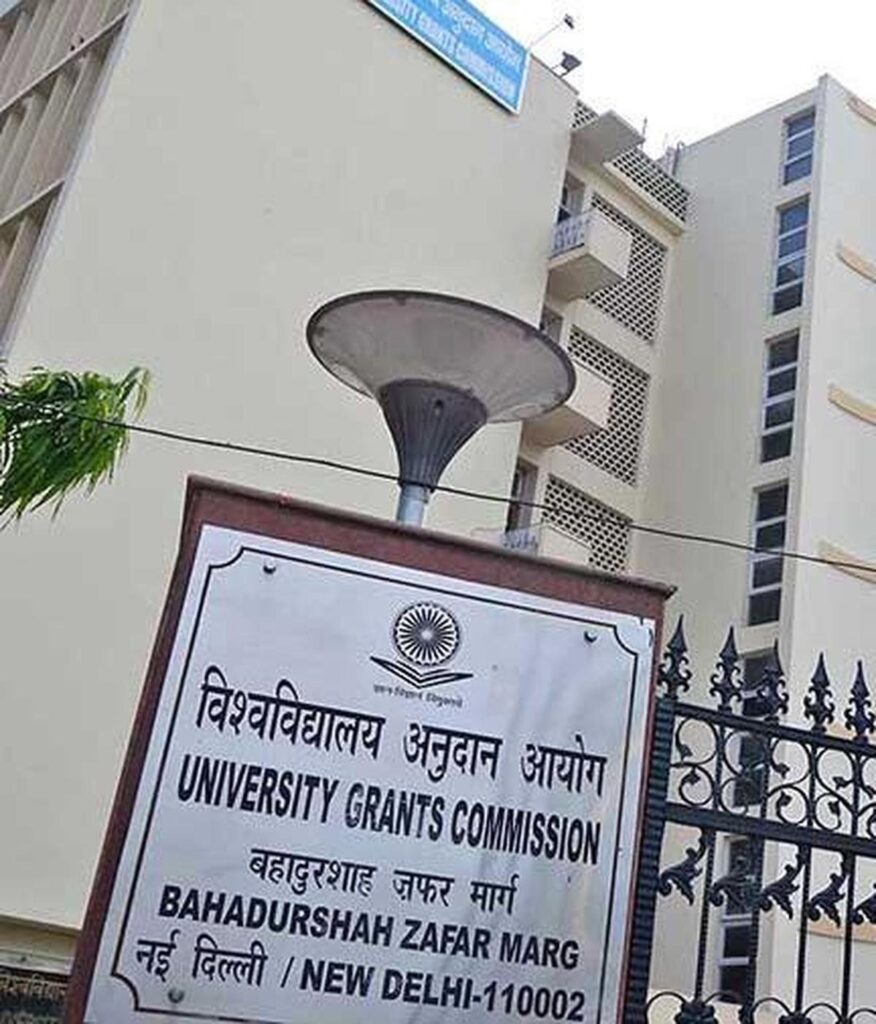
The University Grants Commission notified new regulations to tackle caste-based discrimination in Higher Education Institutions across the country. The UGC (Promotion of Equity in Higher Education Institutions) Regulations, 2026 updated the anti-discrimination framework that has been in place since 2012.
A draft version of the updated rules was released in February last year for public suggestions. It attracted widespread criticism for keeping the Other Backward Classes outside the ambit of caste-based discrimination and for proposing a clause to “discourage” false complaints through possible fines.
In the final notified version, the UGC included OBCs within the definition of caste-based discrimination and dropped the provision on discouraging false complaints. The definition of discrimination was also expanded slightly by borrowing language from the 2012 regulations.
How the Regulations Define Discrimination
Under the new framework, the UGC stated that caste-based discrimination meant discrimination on the basis of caste or tribe against members of the Scheduled Castes (SCs), Scheduled Tribes (STs), and Other Backward Classes.
“Discrimination” was defined as:
- Any unfair, differential, or biased treatment, explicit or implicit,
- On grounds only of religion, race, caste, gender, place of birth, disability, or any of them,
- Including acts that nullify or impair equality of treatment in education or impose conditions incompatible with human dignity.
The regulations retained language from 2012 stating that discrimination included any distinction, exclusion, limitation, or preference that affected equality in education.
However, the new rules did away with the specific 2012 provision preventing institutions from establishing or maintaining separate educational systems for students based on caste, creed, religion, language, ethnicity, gender, or disability. They also omitted eight earlier provisions that detailed manifestations of discrimination against SC and ST students during admissions and acceptance into institutions.
Equal Opportunity Centres and Equity Committees Mandated
Every higher education institution was required to establish an Equal Opportunity Centre (EOC) to promote equity, social inclusion, and equal access on campuses and to handle complaints related to discrimination.
Under each EOC, institutions must form an equity committee chaired by the head of the institution. The regulations specified mandatory representation from:
- Scheduled Castes
- Scheduled Tribes
- Other Backward Classes
- Persons with disabilities
- Women
The EOCs were directed to submit bi-annual reports on their functioning. Equity committees must meet at least twice every year, while institutions were required to send an annual report to the UGC detailing equity-related measures.
National-Level Oversight and Institutional Responsibility
The regulations placed a clear duty on institutions to eradicate discrimination and promote equity. The head of each institution was vested with the authority and responsibility to ensure compliance.
Read More: UGC New Rules 2026: Rules Applicable Nationwide, Students and Teachers Concerned
To oversee implementation, the UGC said it would establish a national-level monitoring committee comprising representatives from statutory professional councils and commissions and from civil society. This body was mandated to meet at least twice a year.
Its responsibilities included:
- Reviewing the progress of implementation,
- Examining complaints related to discrimination, and
- Suggesting preventive measures.
Penalties for Institutions That Fail to Comply
Unlike earlier advisory frameworks, the 2026 regulations specified enforceable penalties.
Institutions found violating the rules could face:
- Debarment from UGC schemes,
- Prohibition from offering degree programmes, distance learning programmes, or online mode programmes, and
- Removal from the UGC’s list of recognised higher education institutions.
These measures were designed to strengthen accountability and ensure institutional adherence to equity requirements.
Evidence Cited on the Scale of Campus Discrimination
The significance of the regulations was linked to previous findings on discrimination in higher education.
A 2019 IIT Delhi study reported that 75% of students from historically disadvantaged castes faced discrimination on campus.
The Thorat Committee (2007) documented segregation in hostels, dining halls, and sports facilities, noting that such practices isolated marginalised students and created “ghettos” within elite campuses. The committee also observed that while SC/ST Cells existed in many universities, they often lacked autonomy and effective legal authority.
Impact of Caste-Based Discrimination on Access to Education
The chunks stated that caste discrimination undermined constitutional values of equality, dignity, and fraternity, weakened faith in affirmative action policies, and contradicted India’s commitment to inclusive development.
Other impacts included:
- Poor schooling outcomes and entrenched prejudice that restricted SC, ST, and OBC representation in elite institutions,
- Limited educational access trapping communities in low-income occupations,
- Psychological exclusion caused by stigma attached to “reserved category” identity, and
- Higher dropout rates due to financial, social, and emotional pressures.
Measures Identified to Dismantle Institutional Casteism
The information provided listed several steps considered necessary to address caste-based bias in education, including:
- Annual “Zero Discrimination” social audits in Central Universities by the National Commission for Scheduled Castes,
- Curriculum reforms to include Dalit history and literature across disciplines,
- Mentorship initiatives such as the Sathi programme in some IITs,
- Mandatory faculty sensitisation workshops focused on identifying micro-aggressions, and
- Special recruitment drives to fill SC/ST faculty vacancies, often estimated at 30–40% in IITs.
Ensuring Equal Access in Higher Education
The regulations and associated measures were presented as part of a broader effort to strengthen legal and institutional safeguards against caste-based discrimination in higher education. By expanding definitions, mandating campus-level mechanisms, establishing national oversight, and introducing enforceable penalties, the framework sought to ensure that higher education institutions complied with equity obligations while addressing long-standing concerns highlighted by official committees and academic studies.
Spiritual Perspective on Human Equality
Tatvdarshi Saint Rampal Ji Maharaj has stated that living beings share one true identity, and that divisions such as caste are human-made rather than divinely ordained. According to His Teachings, all are equal in the eyes of the Supreme God, and discrimination has no moral or spiritual basis.
He emphasises that when people come under divine refuge, outcomes are guided beyond social labels, and every individual should be regarded as a child of the same Creator. His discourses highlight that education can gradually reshape attitudes, while spiritual instruction can prompt faster inner reform, encouraging humility, compassion, and respect for all.
For more information visit our
- Website: www.jagatgururampalji.org
- YouTube: Sant Rampal Ji Maharaj
- Facebook: Spiritual Leader Saint Rampal Ji
- X (Twitter): @SaintRampalJiM
FAQs on UGC New Rules Against Caste Discrimination
1. What are the new UGC regulations called?
They are titled the UGC (Promotion of Equity in Higher Education Institutions) Regulations, 2026.
2. When were the regulations notified?
They were notified on Tuesday, January 14, 2025.
3. Which groups are covered under caste-based discrimination?
Scheduled Castes, Scheduled Tribes, and Other Backward Classes are covered.
4. What penalties can institutions face for violations?
They may lose UGC schemes, programme approvals, or recognition.
5. Which studies were cited on campus discrimination?
A 2019 IIT Delhi study and the Thorat Committee (2007) were referenced.