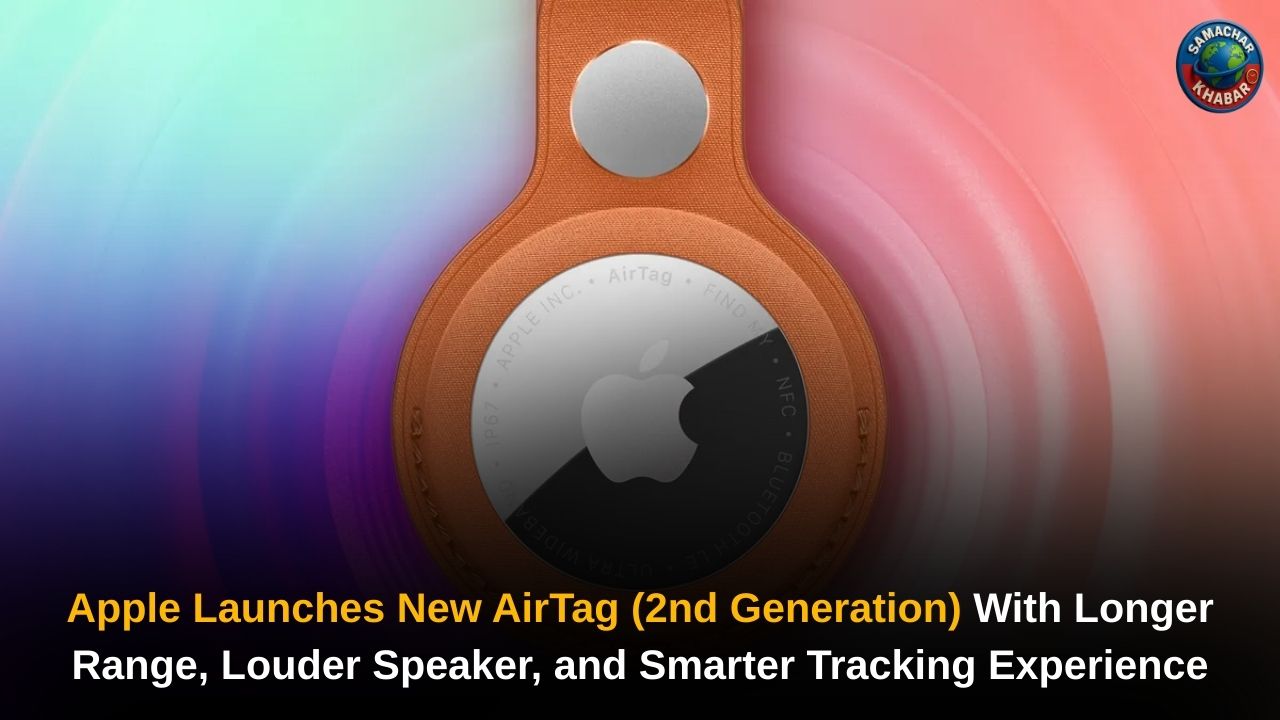
Apple has officially refreshed its popular item tracker with the launch of the new AirTag, also referred to as AirTag (2nd Generation). Nearly five years after the original AirTag debuted in 2021, the updated model focuses on meaningful improvements in tracking range, sound output, and overall findability, while keeping the familiar design and the same pricing.
Powered by Apple’s second-generation Ultra Wideband chip, the new AirTag offers enhanced Precision Finding, wider Bluetooth reach, and expanded Apple Watch support. The update also strengthens Apple’s ongoing focus on privacy, security, and environmental responsibility, while deepening airline integration through the Find My network.
Key Highlights of Apple’s New AirTag (2nd Generation)
- Apple introduces AirTag (2nd Generation) with second-generation Ultra Wideband chip
- Precision Finding now works up to 50 percent farther than the original AirTag
- For the first time, Precision Finding is available directly on Apple Watch
- Speaker volume increased by up to 50 percent, making alerts easier to hear
- Upgraded Bluetooth chip improves overall tracking range
- Integration with Share Item Location expands airline luggage recovery support
- Strong privacy safeguards remain central to AirTag’s design
- Same pricing as the original AirTag, with free personalized engraving
A Familiar Design With Powerful Internal Upgrades
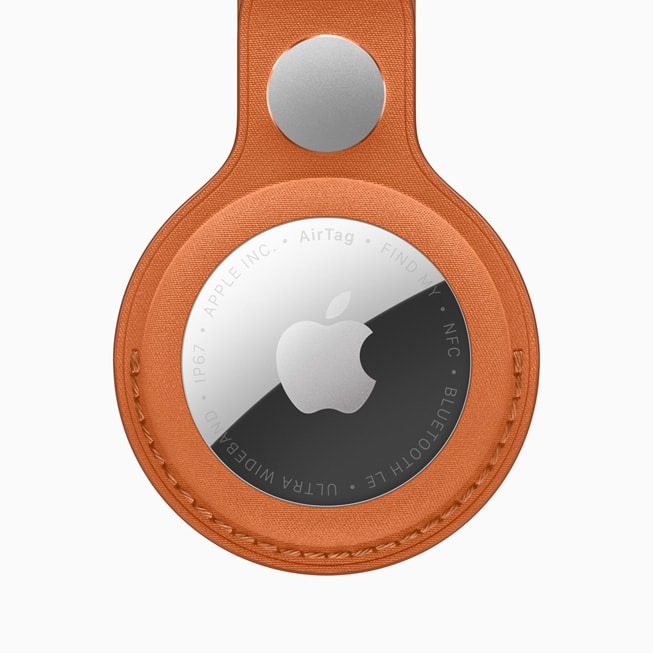
At first glance, the new AirTag looks almost identical to its predecessor. Apple has retained the same compact, circular metal design, ensuring compatibility with all existing AirTag accessories. However, internally, the tracker has been redesigned to accommodate improved components, including a louder speaker and upgraded wireless hardware.
The new AirTag weighs slightly more than the original at 11.8 grams, reflecting its revised internal structure. It continues to use a user-replaceable CR2032 coin cell battery and maintains IP67-rated water and dust resistance. Apple states that battery life remains “more than a year,” consistent with the earlier model.
Second-Generation Ultra Wideband Chip Extends Precision Finding
The most significant upgrade in the new AirTag comes from Apple’s second-generation Ultra Wideband chip. This is the same chip used in Apple’s latest iPhones and Apple Watch models. With this advancement, Precision Finding can now guide users to lost items from up to 50 percent farther away than before.
Precision Finding uses a combination of visual cues, haptic feedback, and sound to lead users directly to an AirTag when they are nearby. The improved range makes it easier to locate items hidden in difficult places, such as deep inside bags, between couch cushions, or under furniture.
Precision Finding Arrives on Apple Watch
For the first time, Apple has expanded Precision Finding beyond the iPhone. Users with Apple Watch Series 9 or later, as well as Apple Watch Ultra 2 or later, can now locate an AirTag directly from their wrist.
Also Read: Apple AI Pin: AirTag-Sized Wearable With Cameras, Siri and a 2027 Timeline
This update allows users to receive turn-by-turn guidance, vibration alerts, and directional cues without needing to pull out their phone. The feature requires watchOS 26.2.1 and is designed to make quick item recovery more convenient in everyday situations.
Louder Speaker Improves Findability and Safety
Apple has upgraded the AirTag’s built-in speaker, making it up to 50 percent louder than the previous generation. According to the company, the sound can now be heard from roughly twice the distance.
This enhancement helps users locate items that are covered, buried, or placed inside bags and drawers. The louder speaker also supports Apple’s anti-stalking measures, making it harder for unwanted tracking devices to remain unnoticed.
Enhanced Bluetooth and the Power of the Find My Network
Alongside Ultra Wideband improvements, Apple has introduced a newer Bluetooth specification in the new AirTag. This upgrade expands the range at which items can be detected outside of Precision Finding mode.
When an AirTag is out of Bluetooth range of its owner’s device, it relies on Apple’s Find My network. This crowdsourced system uses nearby Apple devices to anonymously relay an item’s location back to its owner, all while keeping user identities private.
Share Item Location and Airline Support
The new AirTag integrates seamlessly with Share Item Location, a feature designed to help recover misplaced belongings. Users can temporarily share an AirTag’s location with trusted third parties, including airline customer service teams.
Apple has partnered with more than 50 airlines worldwide to support this feature. According to data shared by SITA, airlines using location sharing have reported a 26 percent reduction in baggage delays and a 90 percent decrease in cases of unrecoverable luggage. Access to shared locations is time-limited, secure, and automatically expires after seven days.
Strong Privacy and Anti-Tracking Protections
Apple continues to emphasize that AirTag is designed exclusively for tracking objects, not people or pets. The new AirTag does not store location history on the device itself, and all communication within the Find My network is protected by end-to-end encryption.
Additional safeguards include cross-platform alerts, rotating Bluetooth identifiers, and industry-standard protections developed in collaboration with other technology companies. Apple states that it cannot access a user’s location data and does not know which devices help locate an AirTag.
Environmental Responsibility and Sustainability
The new AirTag reflects Apple’s broader environmental goals. The enclosure uses 85 percent recycled plastic, while all magnets contain 100 percent recycled rare earth elements. Apple-designed circuit boards now feature 100 percent recycled gold plating, and the packaging is entirely fiber-based and recyclable.
By maintaining the same form factor, Apple has also reduced waste by ensuring compatibility with existing accessories, including the FineWoven Key Ring, which is made from 68 percent recycled content.
Pricing, Availability, and Software Requirements
Apple has kept pricing unchanged. The new AirTag costs $29 for a single unit and $99 for a four-pack in the United States. In India, pricing stands at Rs 3,790 for one AirTag and Rs 12,900 for a four-pack. Free personalized engraving remains available through Apple’s online store and app.
The new AirTag requires an iPhone running iOS 26.2.1 or later, or an iPad with iPadOS 26. Precision Finding on Apple Watch requires watchOS 26.2.1. Apple has discontinued the original AirTag following the launch of the new model.
Why the New AirTag Matters
With its longer tracking range, louder speaker, Apple Watch support, and deeper airline integration, the new AirTag represents a refined evolution rather than a complete redesign. Apple has focused on practical improvements that directly enhance everyday usability, while maintaining strong privacy protections and environmental commitments.
For users who rely on AirTag to keep track of valuable belongings, the second-generation model delivers a smarter, more reliable tracking experience without increasing the price.
FAQs on Apple AirTag (2nd Generation)
1. What is new in Apple AirTag 2 compared to the original AirTag?
Apple AirTag 2 offers a longer Precision Finding range, a 50% louder speaker, improved Bluetooth connectivity, and Apple Watch Precision Finding support.
2. How far can Apple AirTag 2 track items using Precision Finding?
With the second-generation Ultra Wideband chip, Precision Finding works up to 50% farther than the original AirTag, improving accuracy and ease of locating items.
3. Does Apple AirTag 2 work with Apple Watch?
Yes, Apple AirTag 2 supports Precision Finding on Apple Watch Series 9 and later, and Apple Watch Ultra 2 and later, running watchOS 26.2.1.
4. What is the price of Apple AirTag 2 in India?
In India, Apple AirTag 2 costs Rs 3,790 for a single unit and Rs 12,900 for a four-pack, with free personalized engraving available online.
5. Is Apple AirTag 2 safe and private to use?
Yes, Apple AirTag 2 uses end-to-end encryption, rotating Bluetooth identifiers, and cross-platform alerts to prevent unwanted tracking and protect user privacy.