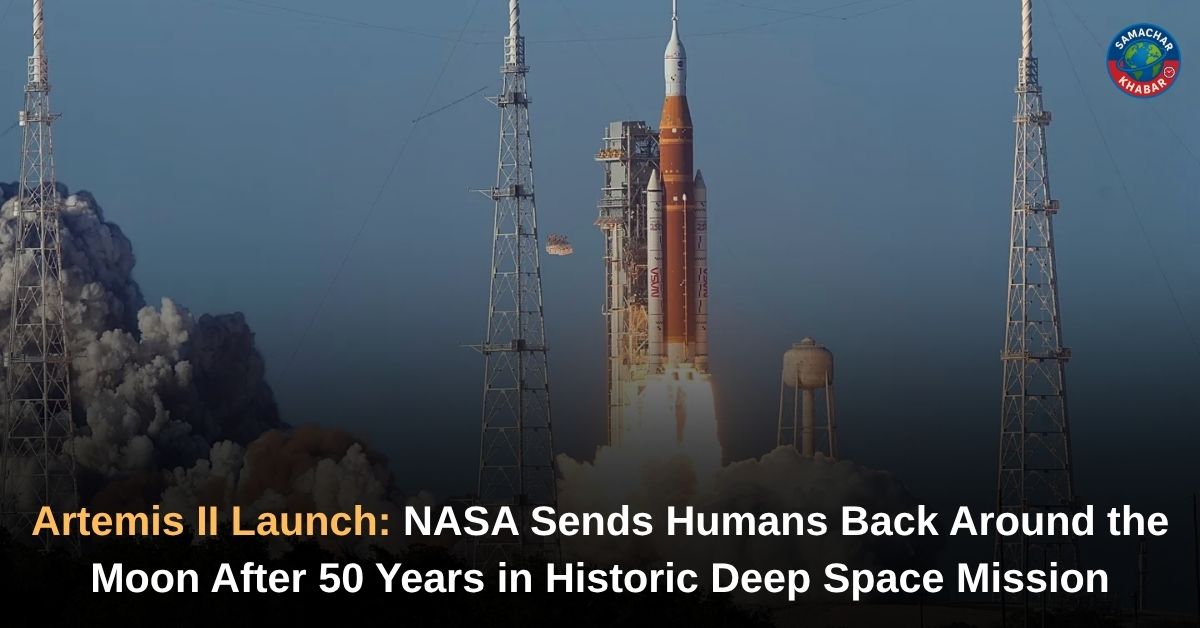
After more than five decades since humans last ventured toward the Moon, NASA has successfully launched the Artemis II mission, marking a historic return to deep space exploration. On April 1, 2026, a powerful rocket lifted four astronauts from Kennedy Space Center in Florida, sending them on a 10-day journey around the Moon and back.
This mission is not about landing but about testing whether humans can safely travel and operate in deep space again. Artemis II represents a critical step toward future lunar landings, long-term presence on the Moon, and eventual missions to Mars.
Key Highlights of Artemis II Moon Mission 2026
- First crewed mission to the Moon since Apollo 17 in 1972
- Four astronauts traveling aboard Orion spacecraft
- 10-day mission using Space Launch System (SLS) rocket
- Free-return trajectory ensures automatic return to Earth
- Closest approach to the Moon on April 6
- Splashdown expected in the Pacific Ocean around April 10
- Tests deep-space life-support, navigation, and communication systems
- Most diverse lunar crew in history
- Foundation for future Artemis missions and Mars exploration
Historic Launch: Artemis II Lifts Off After 50 Years
On April 1, 2026, Artemis II launched from Kennedy Space Center with a thunderous liftoff, marking the first time humans have been sent toward the Moon since 1972. The mission uses the Space Launch System rocket, which propels the Orion spacecraft carrying the crew into orbit.
After liftoff, the spacecraft entered Earth’s orbit, where astronauts began initial system checks. This phase is critical because it ensures that all onboard systems are functioning correctly before committing to the journey toward the Moon. The launch itself symbolized a renewed commitment to human space exploration and a continuation of the legacy of the Apollo missions.
Meet the Artemis II Crew: A Diverse Team Representing Humanity
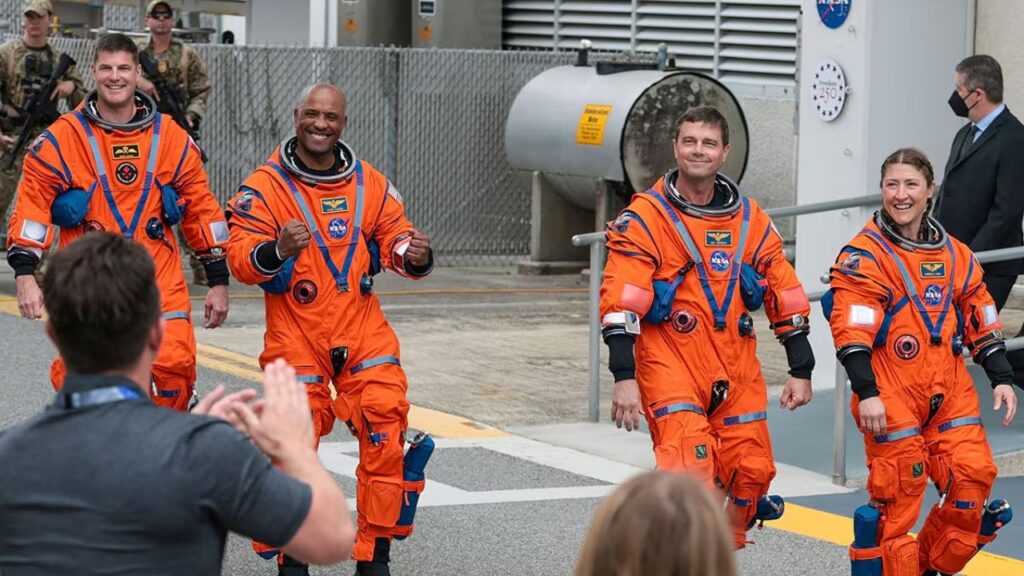
The Artemis II mission includes four astronauts:
- Reid Wiseman – Commander
- Victor Glover – Pilot
- Christina Koch – Mission Specialist
- Jeremy Hansen – Mission Specialist
This crew is historic in several ways. It includes the first woman, the first person of color, and the first non-American to travel beyond low Earth orbit toward the Moon. The astronauts have undergone extensive training, including simulations, docking exercises, and emergency procedures, to prepare for this mission.
They also carry personal items and mementos, symbolizing the human aspect of space exploration and connecting their journey to families back on Earth.
Mission Timeline: A Detailed Journey Around the Moon
| Phase | Description |
| First 24 Hours | Orion remains in high Earth orbit for system testing |
| Day 2 | Translunar injection burn sends spacecraft toward the Moon |
| Days 3–5 | Four-day transit across space |
| Day 6 (April 6) | Closest approach to Moon (~4,000 miles) |
| Days 7–9 | Return journey using Moon’s gravity |
| Day 10 (April 10) | Splashdown in Pacific Ocean |
During the first 24 hours, astronauts remain in orbit to test the spacecraft’s life-support and navigation systems. After successful checks, the spacecraft performs a major engine burn to leave Earth’s gravity and begin its journey to the Moon.
Science Behind the Journey: Why It Takes 6 Days to Reach the Moon
NASA has designed the mission to prioritize safety. The spacecraft travels at approximately 24,500 miles per hour, slightly below escape velocity. This ensures that Earth’s gravity continues to influence the spacecraft’s path.
The mission uses a free-return trajectory, meaning the Moon’s gravity will naturally redirect the spacecraft back toward Earth. This approach ensures that even in case of system failure, the crew can return safely.
If the spacecraft were to travel faster, it could escape Earth’s gravitational pull and miss the return path, making the mission significantly riskier.
Orion Spacecraft: Advanced Technology for Deep Space
The Orion spacecraft is equipped with advanced systems designed for deep-space missions:
- Environmental Control and Life Support System
- Navigation and communication technologies
- Radiation monitoring sensors
- Laser-based communication systems
- Docking simulation capabilities
Astronauts will conduct various tests, including manual piloting and docking exercises, to ensure the spacecraft can support future missions involving lunar landers.
Safety Systems: Protecting Astronauts at Every Stage
NASA has implemented multiple layers of safety:
- Orion Crew Survival System suits that are fire-resistant and provide oxygen
- Launch Abort System to quickly separate the crew from the rocket during emergencies
- Radiation sensors and personal monitoring devices
- Deep Space Network and Near Space Network for continuous communication
- Free-return trajectory as a built-in safety path
A communication blackout of about 41 minutes is expected when the spacecraft passes behind the Moon, temporarily cutting off contact with Earth.
Food and Daily Life in Space
Astronauts aboard Artemis II rely entirely on pre-packaged, shelf-stable food. The Orion spacecraft does not have refrigeration, so meals are carefully selected to remain safe throughout the mission.
Food types include:
- Ready-to-eat meals
- Rehydratable foods
- Thermostabilized and irradiated items
Astronauts can use onboard water systems to prepare meals and have limited beverage options. The menu is selected based on nutritional requirements and crew preferences.
Astronauts Carry iPhones for the First Time
For the first time, astronauts are allowed to carry personal smartphones into deep space. These devices will remain in airplane mode and will be used mainly for capturing photos and videos.
While onboard the International Space Station, astronauts can connect to Wi-Fi to send images and emails, though they cannot make calls.
Real-Time Tracking: Following Artemis II Live
NASA provides tools that allow the public to track the mission in real time. The Artemis Real-time Orbit Website (AROW) shows:
- Current position of the spacecraft
- Speed and trajectory
- Distance from Earth and the Moon
These tools make it possible for anyone to follow the mission as it unfolds.
Unexpected Challenge: Toilet Issue Successfully Resolved
During the mission, the crew encountered a technical issue with the spacecraft’s toilet system. A fault light was detected, and mission control worked with the astronauts to resolve the issue.
This incident highlights the importance of training, teamwork, and real-time problem-solving in space missions.
Why Artemis II Matters: Beyond a Lunar Flyby
Artemis II is not just a symbolic mission. It is a critical test of systems required for future deep-space exploration. The mission is expected to set records, including distance traveled by humans and high re-entry speeds of approximately 40,000 km/h.
Also Read: 7-Ton Asteroid Blasts Over Ohio: Sonic Boom Shakes Homes Across US and Canada
The success of Artemis II will determine the readiness of future missions, including lunar landings and Mars exploration.
Global Space Race and Strategic Importance of the Moon
Artemis II is part of a broader global effort to explore the Moon. The United States is competing with other nations, including China, which aims to land astronauts on the Moon by 2030.
The Moon’s south pole is of particular interest due to the presence of water ice. This resource can be converted into hydrogen and oxygen, providing fuel for future missions.
Additionally, the Moon contains rare earth elements and helium-3, which could play a role in future energy production and advanced technologies.
Future Artemis Missions: What Lies Ahead
- Artemis III (2027): Technology testing and preparation
- Artemis IV (2028): Planned human landing on the Moon
- Artemis V (2028): Continued exploration and development of lunar base
These missions aim to establish a long-term human presence on the Moon and pave the way for missions to Mars.
A Mission That Unites Humanity
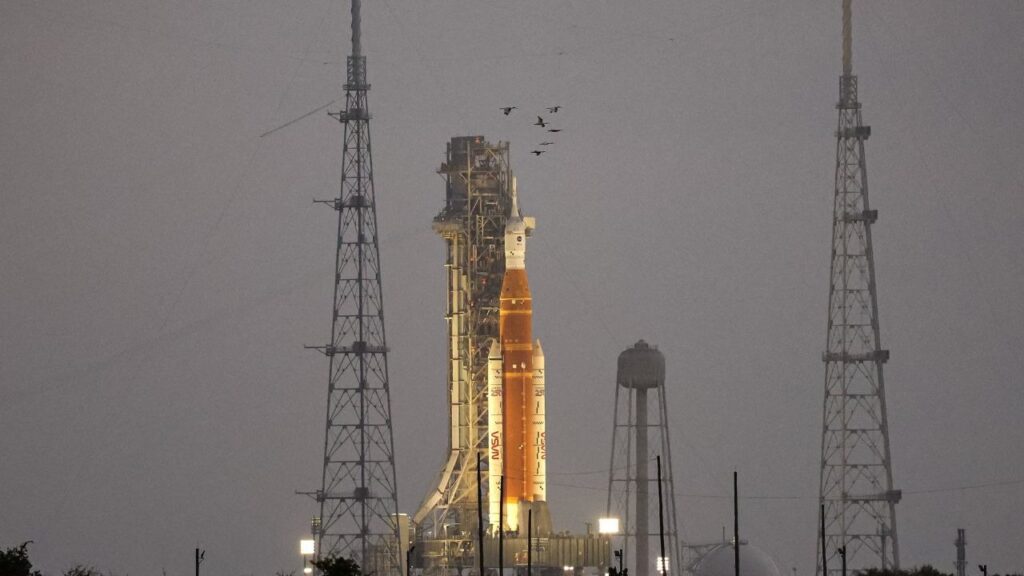
Artemis II represents international collaboration. More than 60 countries have signed agreements to participate in peaceful space exploration.
The mission reflects a shift from competition to cooperation, with astronauts representing humanity as a whole rather than individual nations.
A Defining Moment for the Future of Humanity
Artemis II marks the beginning of a new era in space exploration. By sending astronauts around the Moon after more than 50 years, NASA is demonstrating that deep-space travel is once again within reach.
This mission is not just about revisiting the Moon—it is about preparing for the future. With plans for lunar bases, resource utilization, and missions to Mars, Artemis II stands as a critical milestone in humanity’s journey beyond Earth.
Spiritual Perspective: Understanding True Knowledge and Human Purpose Through the Teachings of Saint Rampal Ji Maharaj
While missions like Artemis II reflect humanity’s extraordinary progress in exploring outer space, they also remind us of a deeper question—what is the ultimate purpose of human life beyond physical achievements? According to the teachings of Saint Rampal Ji Maharaj, true progress is not just measured by scientific advancement but by attaining complete spiritual knowledge.
He explains that while humans are striving to reach the Moon and planets, the real journey is to understand the eternal truth of existence, the nature of the soul, and the path to liberation. Scientific exploration can take us to distant worlds, but it cannot answer fundamental questions about life, death, and salvation.
Saint Rampal Ji Maharaj emphasizes that holy scriptures already contain complete knowledge about the creation of the universe and the ultimate goal of human life. By following true spiritual guidance, one can attain peace, freedom from suffering, and liberation from the cycle of birth and death.
In this context, as humanity looks toward the Moon and beyond, his teachings remind us that the greatest achievement is not just conquering space, but realizing the supreme power and attaining true spiritual enlightenment.
FAQs on Artemis II Moon Mission 2026
1. What is Artemis II mission and why is it important?
Artemis II is NASA’s first crewed Moon mission since 1972, testing deep-space systems to enable future lunar landings and human missions to Mars.
2. Who are the astronauts on the Artemis II mission?
The crew includes Reid Wiseman, Victor Glover, Christina Koch, and Jeremy Hansen.
3. Will Artemis II land on the Moon?
No, Artemis II will not land on the Moon. It is a test flight designed to orbit around the Moon and safely return to Earth.
4. How long is the Artemis II mission and when will it reach the Moon?
The mission lasts about 10 days. The spacecraft will reach its closest point to the Moon on April 6, 2026.
5. What is the main goal of NASA’s Artemis II mission?
The main goal is to test life-support, navigation, and communication systems with humans onboard to prepare for future Moon landings and deep-space exploration missions.