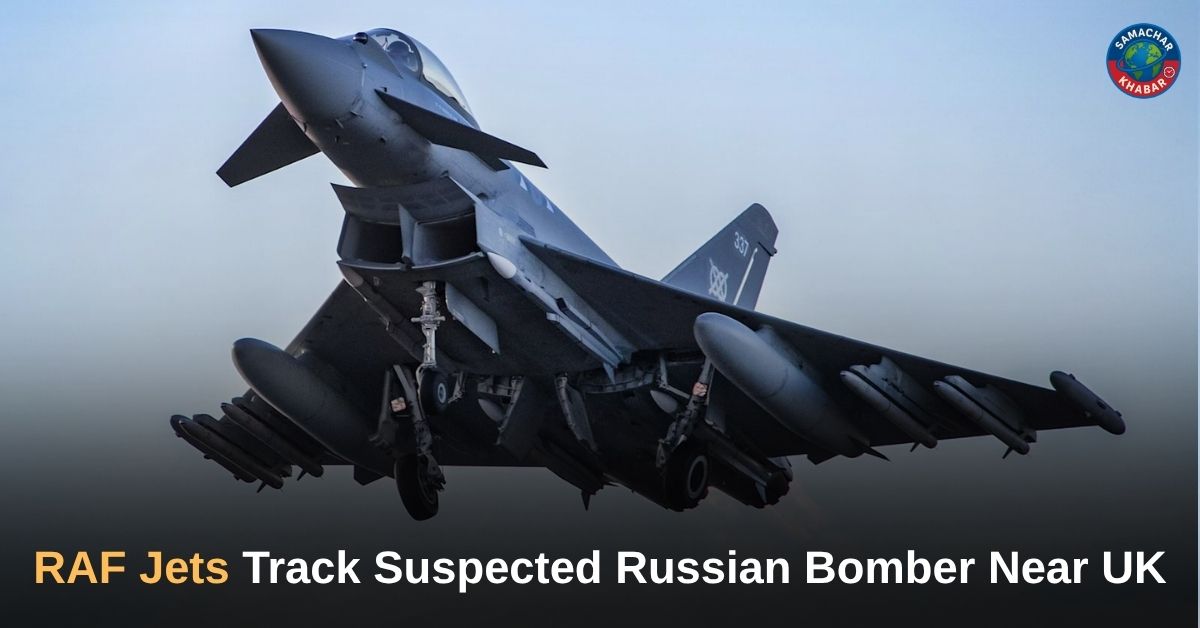
RAF Jets Scrambled as Suspected Russian Bomber: Two Royal Air Force (RAF) Typhoon fighter jets, supported by a Voyager refuelling aircraft, were scrambled on April 14, 2026, after an unidentified aircraft—reported to be a suspected Russian long-range bomber—approached British airspace. The aircraft remained outside UK territory, and no interception was required. The response formed part of a wider NATO operation amid heightened Russian military activity and ongoing geopolitical tensions linked to the Middle East crisis.
Key Takeaways: RAF Response to Suspected Russian Bomber
- RAF deployed two Typhoon jets from RAF Lossiemouth
- A Voyager refuelling aircraft from RAF Brize Norton supported the mission
- The aircraft was tracked near Shetland, northeast Scotland
- No interception occurred as it stayed outside UK airspace
- The incident is linked to increased Russian military activity
- NATO allies coordinated the response
- UK Defence Secretary John Healey highlighted ongoing Russian threats
RAF Scrambles Jets After Aircraft Approaches UK Airspace
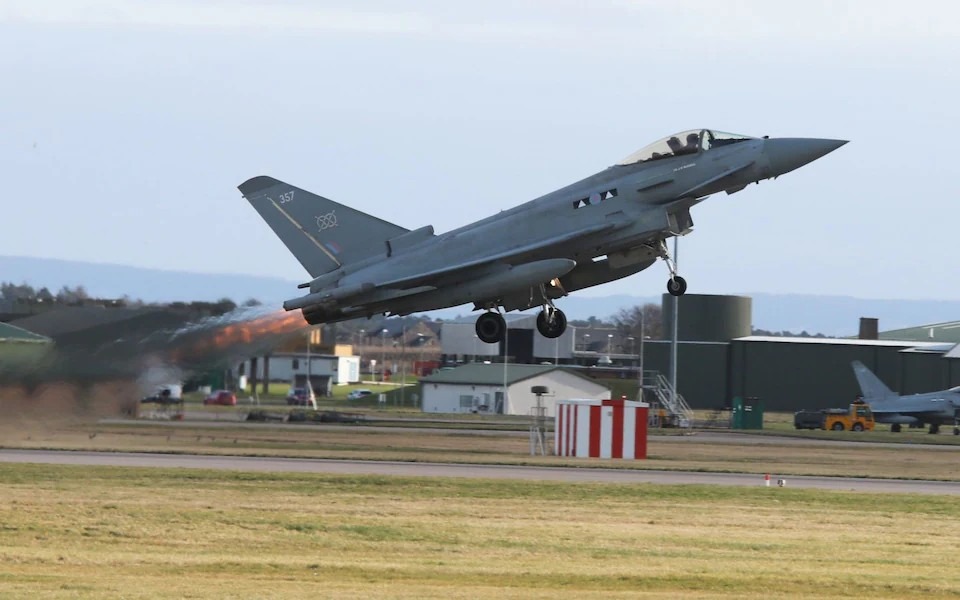
Two British Royal Air Force fighter jets were scrambled on Tuesday, April 14, 2026, after an unidentified aircraft was observed approaching British airspace. The aircraft did not enter the United Kingdom’s airspace, and therefore no interception took place.
The RAF deployed two Typhoon fighter jets from RAF Lossiemouth in Scotland. A Voyager refuelling aircraft from RAF Brize Norton in Oxfordshire supported the operation. The jets were directed towards the area near Shetland, located off the northeast coast of Scotland, where they were seen circling.
Also Read: Planning a trip this summer? How rising jet fuel prices could push up flight fares
An RAF spokesperson confirmed the response in an interview with ITV News, stating that “RAF Quick Reaction Alert Typhoon fighter aircraft were sent to respond to the unidentified aircraft that was approaching British airspace.” The spokesperson added that no interception occurred as the aircraft remained outside the area of interest.
Suspected Russian Long-Range Bomber Identified
While official details about the aircraft were not disclosed by the RAF, The Telegraph reported that the unidentified plane was a suspected Russian long-range bomber.
Defence sources confirmed that the British aircraft were deployed as part of a wider NATO response to track the foreign aircraft. The Typhoons later returned to base after completing the monitoring operation.
The incident reflects ongoing vigilance by UK defence forces amid increasing military activity in the region.
Wider NATO Coordination and Strategic Response
The deployment of RAF jets was not an isolated action but part of coordinated efforts by NATO allies. The tracking of the aircraft occurred within the framework of broader defensive measures responding to heightened Russian presence near UK territory.
Recent weeks have seen multiple instances of Russian naval and aerial activity close to British infrastructure and territorial boundaries. These developments have prompted increased readiness among UK and allied forces.
Rising Russian Military Activity Near UK Waters
UK Defence Secretary John Healey stated last week that British naval forces had tracked two Russian spy submarines and one attack submarine in the North Atlantic Ocean.
In a press conference held in Downing Street, Healey revealed that the UK, alongside Norway and other allies, had responded to “increased Russian activity” in the Atlantic north of the UK. This included:
- A Russian Akula-class nuclear-powered attack submarine
- Two specialist submarines linked to Russia’s deep-sea research programme GUGI
He further stated that the UK had thwarted a secret submarine mission that posed a threat to critical energy and data cables.
Healey emphasised that Russia remains the “primary threat” to the UK and NATO, and warned that any attempt to damage British infrastructure would face serious consequences.
Middle East Conflict Adds to Strategic Pressure
The incident also comes amid the ongoing U.S. war against Iran. The conflict has involved several drone attacks by Iran on U.S. bases and energy infrastructure in the Middle East, carried out in retaliation to U.S.-Israeli joint military strikes.
According to Healey, Russia may be attempting to take advantage of global attention on the Middle East. He stated that President Vladimir Putin wants the UK to be “distracted” by the crisis.
Despite this, Healey confirmed that the UK remains focused on both protecting national interests and supporting allies in the region.
Additional Russian Naval Movements Raise Concerns
Further developments have added to concerns over Russian activity. In recent weeks:
- A Russian warship escorted two sanctioned oil tankers through the English Channel
- The vessel involved was the Admiral Grigorovich, a Black Sea Fleet frigate
- A British naval ship, RFA Tideforce, followed the convoy
Prime Minister Sir Keir Starmer had previously threatened action against what has been described as a Russian “shadow fleet.” This included authorising British special forces to potentially seize such vessels.
However, no such action has been taken so far, leading to criticism from opposition leader Kemi Badenoch, who described the government’s stance as ineffective.
Heightened Alert Reflects Ongoing Security Challenges
The RAF’s response to the approaching aircraft highlights the current security environment facing the United Kingdom. Increased Russian military movements, combined with global geopolitical tensions, have reinforced the need for rapid response capabilities and international coordination.
Although the suspected bomber did not enter UK airspace, the swift deployment of RAF assets demonstrates continued vigilance and preparedness against potential threats.
Strategic Vigilance Amid Expanding Global Tensions
The April 14 incident underscores the complex and evolving security landscape confronting the UK. With rising Russian military activity and concurrent instability in the Middle East, defence authorities remain on high alert. The coordinated NATO response, alongside domestic preparedness measures, reflects a broader strategy aimed at safeguarding national interests and critical infrastructure. As geopolitical pressures continue to intersect, the UK’s ability to respond swiftly without escalation remains central to maintaining regional stability and security.
Spiritual Reflection on Vigilance and Awareness
The incident highlights the importance of constant vigilance in times of uncertainty and tension. In a broader sense, it reflects how awareness and preparedness are essential not only in defence but also in life.
According to the teachings of Tatvdarshi Saint Rampal Ji Maharaj, true security comes from right knowledge and awareness of reality. He explains that understanding truth enables individuals to remain alert, balanced, and free from fear, even in challenging situations. Such awareness fosters clarity and responsible action in an ever-changing world.
For more information visit our
Website:www.jagatgururampalji.org
YouTube: Sant Rampal Ji Maharaj
Facebook: Spiritual Leader Saint Rampal Ji
X (Twitter): @SaintRampalJiM
FAQs on RAF Jets Tracking Suspected Russian Bomber
1. Why were RAF jets scrambled on April 14, 2026?
RAF jets responded to an unidentified aircraft approaching British airspace as part of a precautionary security measure.
2. Did the aircraft enter UK airspace?
No, the aircraft remained outside UK airspace, so no interception was required.
3. What type of aircraft was suspected?
Reports suggested it was a suspected Russian long-range bomber.
4. Which RAF bases were involved?
RAF Lossiemouth deployed Typhoons, supported by a Voyager aircraft from RAF Brize Norton.
5. Was this part of a wider operation?
Yes, it was part of a coordinated NATO response to increased Russian military activity.