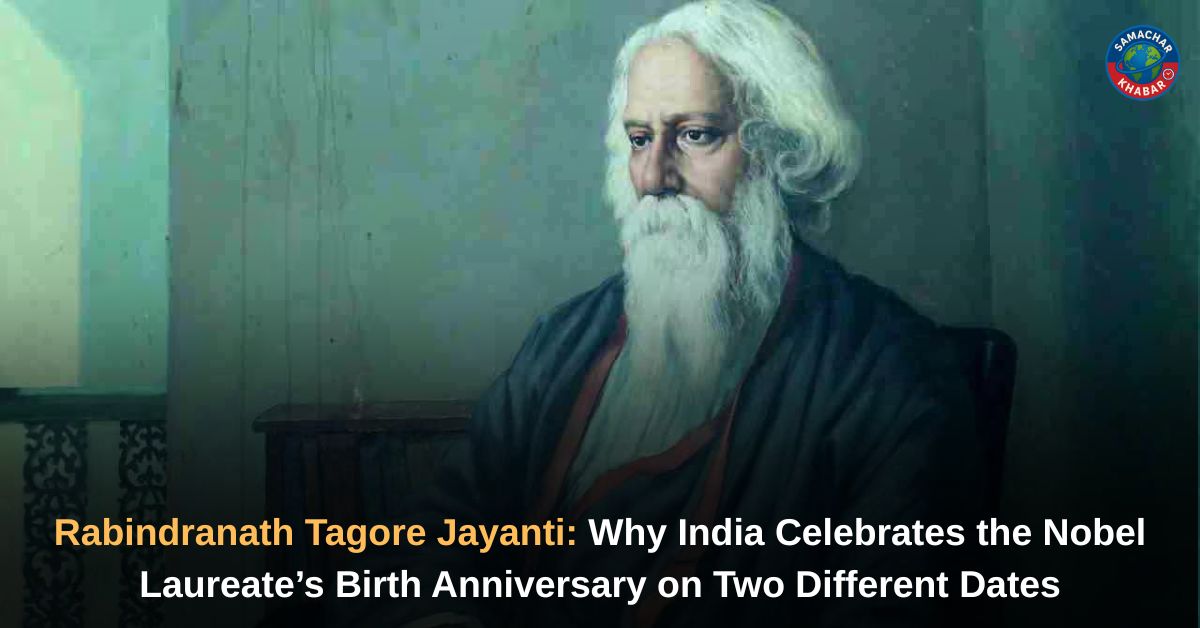
Rabindranath Tagore Jayanti 2026 marks the 165th birth anniversary of Rabindranath Tagore, one of India’s most influential literary and cultural figures. The occasion is observed on two separate dates due to the use of both the Gregorian and Bengali calendars. While most parts of India celebrate the day on May 7, West Bengal, Tripura, and Bangladesh observe it on May 9 as Pochishe Boishakh. The celebrations honour Tagore’s enduring contributions to literature, music, education, philosophy, and art.
Key Takeaways on Rabindranath Tagore Jayanti 2026
- Rabindranath Tagore Jayanti 2026 marks the poet’s 165th birth anniversary.
- The celebration is observed on May 7 and May 9 in 2026.
- May 7 follows the Gregorian calendar, while May 9 marks 25th Boishakh in the Bengali calendar.
- Tagore became the first non-European Nobel laureate in Literature in 1913.
- He wrote India’s national anthem, Jana Gana Mana, and Bangladesh’s Amar Sonar Bangla.
- Cultural events include Rabindra Sangeet, poetry recitations, dance dramas, and theatrical performances.
- The occasion is widely celebrated across India, especially in West Bengal and Kolkata.
Why Rabindranath Tagore Jayanti Is Celebrated Twice
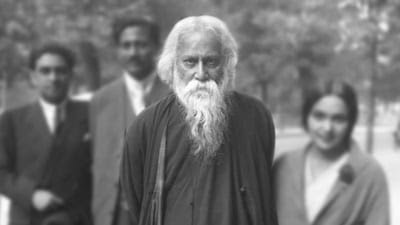
Rabindranath Tagore Jayanti is observed twice every year because of the coexistence of the Gregorian calendar and the traditional Bengali calendar. The internationally recognised birth date of Rabindranath Tagore is May 7, 1861, and this date is observed across most parts of India and internationally.
However, in West Bengal, Tripura, and Bangladesh, the celebration follows the Bengali calendar. Tagore was born on the 25th day of Boishakh, commonly known as Pochishe Boishakh. Since the Bengali calendar is lunisolar, the corresponding Gregorian date changes every year and generally falls on May 8 or May 9.
Also Read: Birsa Munda Jayanti: PM Modi to Unveil ₹9,700-Cr Tribal Projects in Gujarat
In 2026, the two observances will take place on:
| Occasion | Date |
| Gregorian Calendar Observance | May 7, 2026 |
| Bengali Calendar Observance (25th Boishakh) | May 9, 2026 |
The dual observance reflects both a nationwide tribute and a strong regional cultural tradition connected with Bengal and Bangladesh.
Rabindranath Tagore’s Early Life And Literary Legacy
Rabindranath Tagore was born on May 7, 1861, in Kolkata’s Jorasanko Thakurbari to Debendranath Tagore and Sarada Devi. He displayed literary talent from an early age and later emerged as one of India’s most celebrated cultural icons.
Tagore reshaped Bengali literature and introduced a modern perspective to Indian art and literature. His creative work extended beyond poetry into music, philosophy, education, and visual art. His literary contributions gained international recognition in 1913 when he became the first non-European to receive the Nobel Prize in Literature for Gitanjali.
Known as the “Bard of Bengal,” Tagore’s influence extended far beyond literature. His writings explored themes of humanity, creativity, freedom of expression, and cultural identity, continuing to inspire generations across the world.
Contributions Beyond Literature
Rabindranath Tagore’s contributions were not limited to poetry and storytelling. He played a significant role in education, music, philosophy, and visual arts.
Some of his major contributions include:
- Authoring India’s national anthem, Jana Gana Mana
- Writing Bangladesh’s national anthem, Amar Sonar Bangla
- Influencing Sri Lanka’s national anthem through his work
- Giving Mahatma Gandhi the title “Mahatma”
- Holding intellectual discussions with Albert Einstein
- Founding Visva-Bharati University to promote holistic education beyond rigid systems
Tagore also began painting at the age of 60 and later gained recognition for his artwork. His multidisciplinary contributions established him as one of the most influential cultural figures in Indian history.
Cultural Significance Of Pochishe Boishakh
In West Bengal and Bangladesh, Rabindranath Tagore Jayanti is closely linked with the cultural identity of Bengal. The celebration, popularly known as Pochishe Boishakh or Poncheeshe Boishakh in Kolkata, holds deep emotional and artistic significance.
The day is marked through cultural programmes organised by schools, colleges, cultural institutions, and communities. These events include:
- Rabindra Sangeet performances
- Poetry recitations
- Dance dramas
- Theatrical presentations inspired by Tagore’s works
- Literary gatherings and public tributes
The observance reflects a continuing admiration for Tagore’s creative legacy and intellectual contributions.
How Rabindranath Tagore Jayanti 2026 Will Be Observed
Rabindranath Tagore Jayanti 2026 will be celebrated through various cultural and educational programmes across India, particularly in West Bengal. Institutions and communities are expected to organise events that revisit his poetry, music, teachings, and philosophy.
The celebration continues to hold relevance because Tagore’s ideas remain closely associated with creativity, education, humanity, and freedom of thought. His songs, known as Rabindra Sangeet, continue to be an integral part of cultural life in Bengal and beyond.
Also Read: Rare Rainbow Clouds Over Indonesia Spark Global Attention as BMKG Explains Atmospheric Phenomenon
The atmosphere in Kolkata and other parts of West Bengal traditionally reflects pride and reverence for Tagore’s contribution to Indian and global culture.
A Continuing Influence On Literature, Music And Society
Rabindranath Tagore Jayanti remains more than a remembrance of the poet’s birth anniversary. The occasion highlights the continuing relevance of his literary works, educational philosophy, artistic expression, and cultural vision.
From poetry and music to education and visual art, Tagore’s legacy continues to influence generations across India and internationally. Whether observed on May 7 or Pochishe Boishakh, the celebration serves as a tribute to a literary genius and visionary whose contributions continue to shape cultural and intellectual thought worldwide.
Spiritual Values Through Literature
Rabindranath Tagore’s writings often reflected themes of humanity, inner peace, moral consciousness, and the search for truth. His contributions to literature, music, and philosophy continue to inspire discussions around spiritual awareness and human values.
Tatvdarshi Sant Rampal Ji Maharaj emphasises the importance of true spiritual Knowledge, peaceful living, and understanding life beyond material boundaries through Holy Scriptures. Such teachings continue to encourage people to reflect on humanity, harmony, and the deeper purpose of life in a changing world.
For more information visit our
Website: www.jagatgururampalji.org
YouTube: Sant Rampal Ji Maharaj
Facebook: Spiritual Leader Saint Rampal Ji
X (Twitter): @SaintRampalJiM
FAQs on Rabindranath Tagore Jayanti
1. Why is Rabindranath Tagore Jayanti celebrated on two dates?
It is observed according to both the Gregorian calendar and the Bengali calendar’s 25th Boishakh.
2. When will Rabindranath Tagore Jayanti 2026 be celebrated?
It will be observed on May 7 and May 9, 2026.
3. Why is Rabindranath Tagore important in Indian history?
He was a Nobel laureate, poet, philosopher, educator, and author of India’s national anthem.
4. What is Pochishe Boishakh?
Pochishe Boishakh refers to the 25th day of the Bengali month Boishakh, marking Tagore’s birth anniversary.
5. What are the main celebrations during Tagore Jayanti?
The day is marked by Rabindra Sangeet, poetry recitations, dance dramas, and cultural programmes.