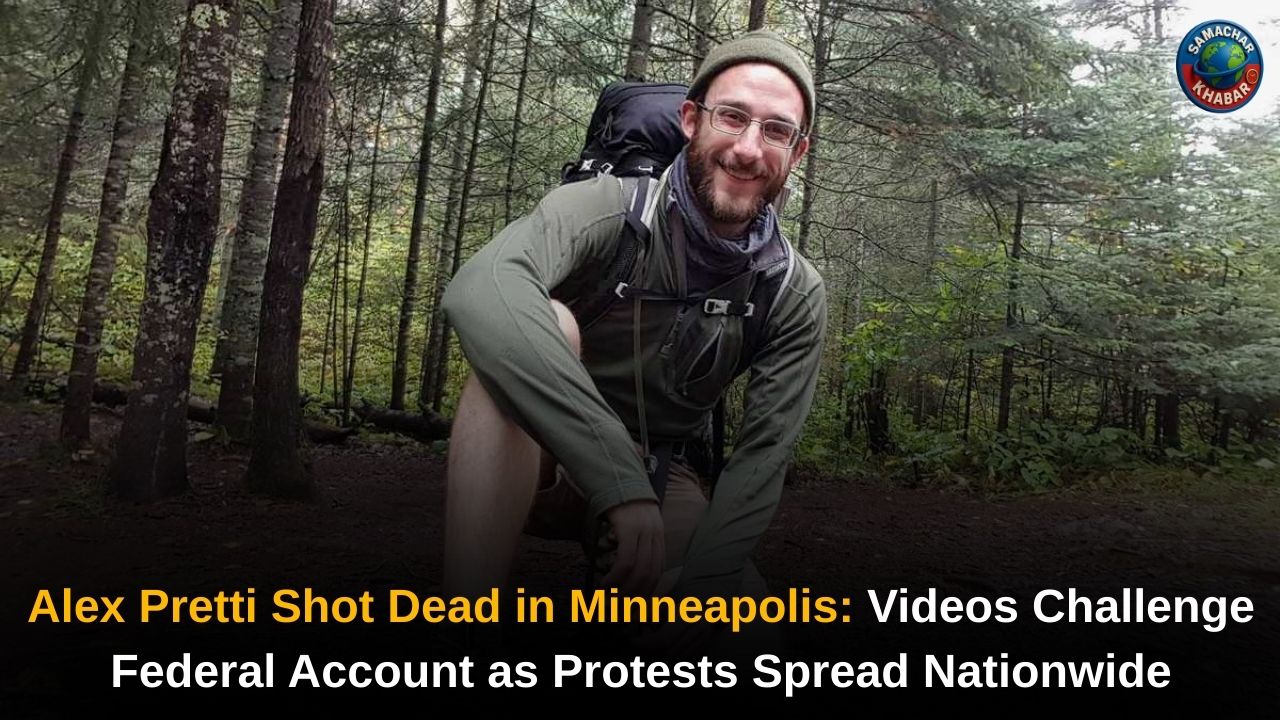
The fatal shooting of 37-year-old ICU nurse Alex Jeffrey Pretti by federal agents in Minneapolis has triggered nationwide protests and intense scrutiny of US immigration enforcement tactics. Pretti, a US citizen and lawful gun owner, was shot during a confrontation with Border Patrol agents amid a major federal crackdown.
While the Department of Homeland Security maintains that agents fired in self-defence, multiple videos, eyewitness accounts, family statements, and local officials dispute that version. The incident follows another fatal shooting earlier this month and has intensified political tensions, public outrage, and calls for accountability across the United States.
Key Takeaways on the Alex Pretti Minneapolis Shooting Case
- Alex Pretti, a Minneapolis-based ICU nurse and US citizen, was fatally shot by federal agents on January 24.
- The Department of Homeland Security claims Pretti approached agents with a handgun and violently resisted disarmament.
- Multiple bystander videos show Pretti holding a phone, not visibly wielding a weapon, moments before the shooting.
- Family members, eyewitnesses, and local officials have challenged the federal account of events.
- The killing sparked large-scale protests in Minneapolis, New York City, San Francisco, Boston, Providence, and Washington DC.
- The incident occurred during a broader federal immigration enforcement surge that local leaders describe as destabilizing and dangerous.
- Political leaders at the city, state, and federal levels remain sharply divided over responsibility and accountability.
Who Was Alex Pretti: Personal and Professional Background
Alex Pretti was a 37-year-old registered nurse working in the intensive care unit at the Minneapolis VA Health Care System. According to union officials from AFGE Professional Local 3669, Pretti dedicated his career to caring for American veterans. He held an active Minnesota nursing license issued in 2021 and valid through March 2026.
Before becoming a nurse, Pretti worked as a junior scientist at the University of Minnesota Medical School. Colleagues described him as warm, humorous, and deeply committed to helping others. Neighbors characterized him as quiet, kindhearted, and community-minded. He lived alone in south Minneapolis, about two miles from where he was killed.
Pretti was also an avid outdoorsman, competitive cyclist, and dog owner. Family members said he was deeply troubled by immigration enforcement practices unfolding in his city and had participated in protests earlier this month following the killing of another Minneapolis resident.
What Happened on the Morning of the Shooting
The shooting occurred around 9:05 a.m. near Nicollet Avenue and East 26th Street in south Minneapolis. According to Minneapolis Police Chief Brian O’Hara, officers responding to reports of gunfire found Pretti with multiple gunshot wounds. He was transported to a hospital, where he was pronounced dead.
Federal officials stated that Border Patrol agents were conducting a targeted immigration enforcement operation when Pretti approached them. DHS alleged that Pretti carried a 9mm semi-automatic handgun and violently resisted when agents attempted to disarm him, prompting an officer to fire what the agency described as “defensive shots.”
However, DHS later shared limited details, and local law enforcement said they were not provided with specific information about the encounter itself.
Video Footage and Eyewitness Accounts Challenge Official Claims
Multiple videos circulating online show the moments leading up to the shooting from different angles. In the footage, Pretti appears to be filming agents with his phone. Witnesses can be heard shouting and whistling as agents interact with bystanders.
Video analysis shows an agent pushing a woman to the ground. Pretti steps between her and the agent, after which he is sprayed repeatedly with a chemical irritant. He raises one open hand while holding a phone in the other. No weapon is visible in his hands.
At least five to six agents are seen pinning Pretti to the ground. One agent appears to strike him. Another agent emerges from the scuffle holding what appears to be a firearm. Seconds later, gunshots ring out. Approximately ten shots are heard as agents back away.
Some analysts and attorneys reviewing the footage suggested that a firearm may have been removed from Pretti before the fatal shots were fired. Federal officials have not publicly clarified whether agents were aware the gun had been taken before opening fire.
Gun Ownership, Legal Status, and Conflicting Statements
Minneapolis Police Chief Brian O’Hara confirmed that Pretti was a lawful gun owner with a permit to carry. Minnesota law allows public carry with a valid permit and does not require weapons to be concealed. O’Hara said Pretti had no criminal record beyond traffic and parking tickets.
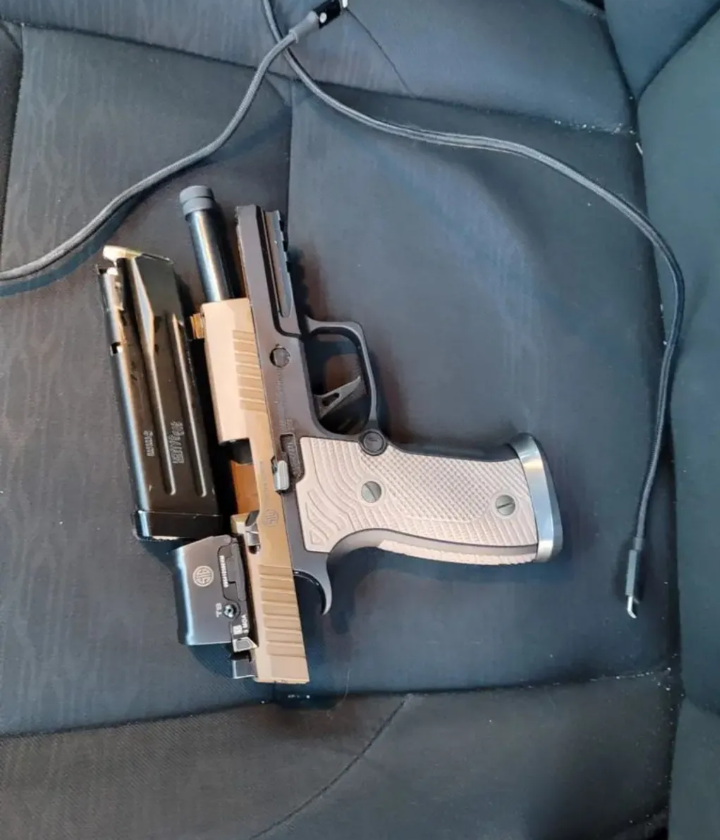
DHS stated that Pretti had two magazines of ammunition and no identification at the time of the encounter. Homeland Security Secretary Kristi Noem later defended the agents’ actions, saying officers responded according to their training.
Pretti’s family strongly disputed those claims, saying videos show their son holding a phone and attempting to shield a woman who was being pepper-sprayed. They accused the administration of spreading false and damaging narratives about his actions.
Family, Community, and Union Response
Pretti’s parents, Michael and Susan Pretti, said they first learned of their son’s death through media reports. They described themselves as heartbroken and angry, saying they struggled to obtain information from federal agencies after the shooting.
In a statement, the family said Alex Pretti was a kindhearted person who wanted to make a difference and cared deeply about veterans and vulnerable communities. They urged the public and officials to examine the video evidence and “get the truth out.”
The AFGE union said Pretti’s death did not occur in a vacuum and blamed inflammatory rhetoric and reckless policy choices for escalating tensions. Colleagues recalled Pretti’s compassion, work ethic, and ability to put people at ease.
Nationwide Protests and Political Fallout
Pretti’s killing sparked widespread demonstrations across major US cities, including Minneapolis, New York City, San Francisco, Boston, Providence, and Washington DC. Protesters chanted against ICE, held signs demanding justice, and gathered at memorials despite extreme cold.
Minneapolis Mayor Jacob Frey called on President Donald Trump to end the federal immigration operation in the city. Minnesota Governor Tim Walz described the surge of federal agents as a “federal occupation” and said footage of the shooting was “sickening.” Walz staged National Guard troops to protect federal buildings amid escalating unrest.
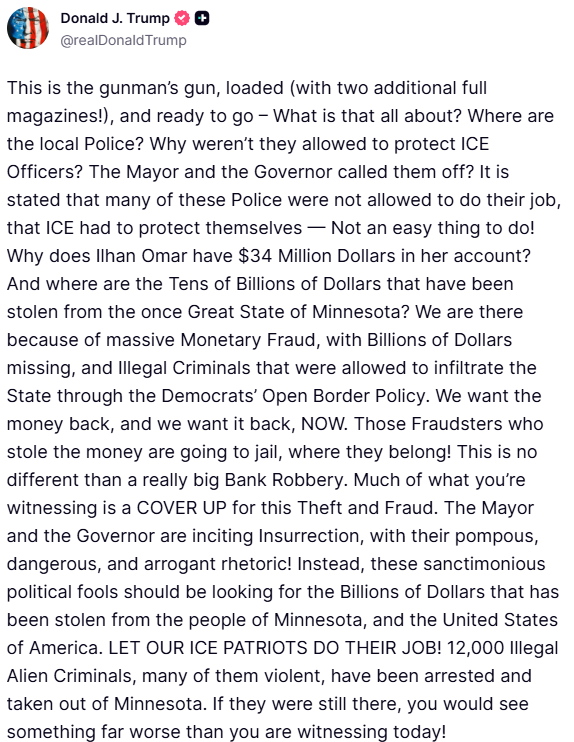
President Trump accused state and city leaders of inciting unrest and claimed federal agents were protecting public safety. Vice President JD Vance echoed that position, while Democratic lawmakers including Ilhan Omar and Alexandria Ocasio-Cortez described the shooting as an execution and demanded accountability.
Why the Alex Pretti Case Has Become a National Flashpoint
The killing of Alex Pretti marks the second fatal shooting by federal agents in Minneapolis this month, following the earlier death of Renee Good. Another individual was shot earlier in January but survived. Together, these incidents have intensified scrutiny of federal immigration enforcement, use-of-force standards, and transparency.
With conflicting accounts, extensive video evidence, and deep political divisions, the Pretti case has become a symbol of broader national debates over policing, immigration policy, and civil liberties.
A Spiritual Perspective on Justice, Non-Violence, and Truth: Insights from the Unique Knowledge of Saint Rampal Ji Maharaj
From a spiritual standpoint, the tragic killing of Alex Pretti raises deeper questions about justice, violence, and moral responsibility in society. According to the unique spiritual knowledge shared by Saint Rampal Ji Maharaj, true peace in any nation or community cannot be achieved through force, fear, or unchecked power, but only through adherence to truth, compassion, and righteous conduct.
Saint Rampal Ji Maharaj emphasizes that when systems operate without accountability and humanity, innocent lives suffer and social harmony collapses. His teachings highlight that violence—whether committed by individuals or institutions—creates cycles of suffering rather than solutions. He stresses that justice must be rooted in ethical governance, transparency, and respect for every human life, regardless of position or authority.
This perspective encourages society to look beyond political narratives and examine actions through the lens of moral law. Only when truth replaces deception and non-violence replaces aggression can lasting peace and trust be restored in communities facing fear, anger, and unrest.
A City and a Nation Demanding Answers
As investigations continue, Minneapolis remains on edge. Vigils and protests persist, while federal, state, and local authorities face growing pressure to explain what happened and why. For Pretti’s family, colleagues, and community, the focus remains on accountability and truth.
The outcome of this case may shape public trust in federal law enforcement and influence how immigration operations are conducted in American cities moving forward.
FAQs on Alex Pretti Killing in Minneapolis
Q1. Who was Alex Pretti and why was he in the news?
Alex Pretti was a 37-year-old Minneapolis ICU nurse and US citizen who was fatally shot by federal agents during an immigration enforcement operation, sparking nationwide protests.
Q2. Why did federal agents shoot Alex Pretti in Minneapolis?
Federal officials claim agents fired in self-defence after Pretti allegedly approached them with a handgun, a version disputed by video evidence, family members, and local officials.
Q3. What do videos show about the Alex Pretti shooting?
Bystander videos show Pretti holding a phone, being pepper-sprayed, restrained by multiple agents, and shot after a firearm appeared to be removed from him.
Q4. Was Alex Pretti legally allowed to carry a gun in Minnesota?
Yes. Minneapolis police confirmed Pretti was a lawful gun owner with a valid permit, and Minnesota law allows public carry with a permit.
Q5. Why did the Alex Pretti killing trigger nationwide protests?
The shooting followed another fatal incident involving federal agents, raising concerns over immigration enforcement tactics, use of force, transparency, and civil liberties across US cities.