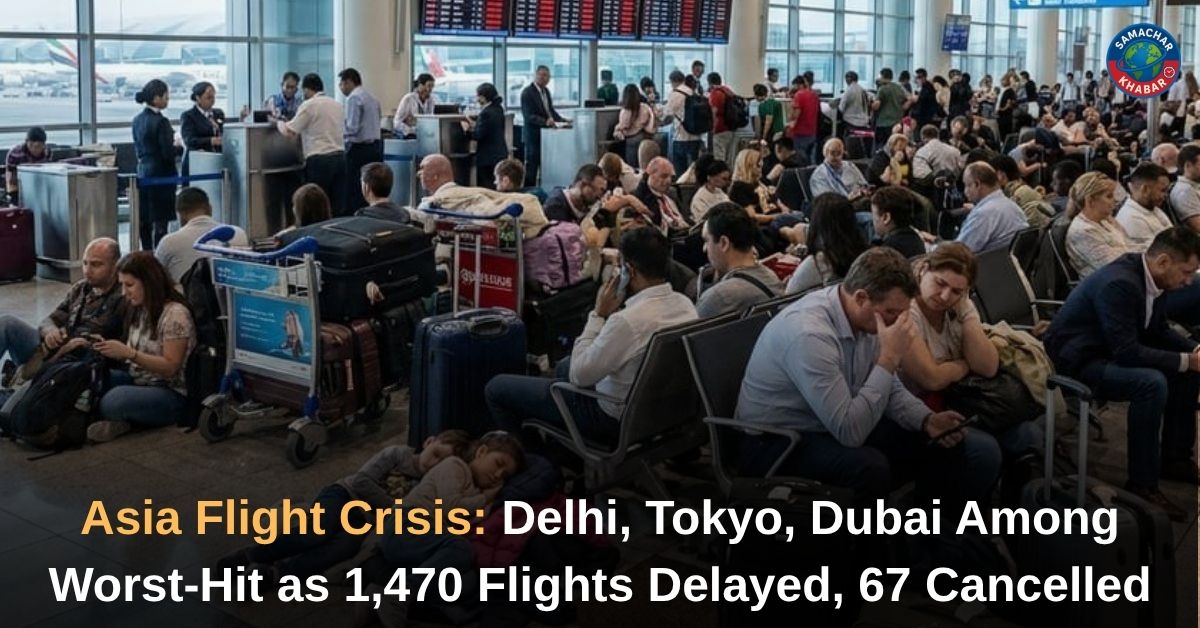
Air travel across Asia witnessed major disruption, with around 67 flights cancelled and nearly 1,470 delayed, affecting countries including India, Japan, Thailand, the UAE, Singapore, and Indonesia. Key airports such as Delhi, Tokyo, Dubai, Jakarta, and Bangkok faced intense operational pressure due to heavy passenger traffic and logistical challenges. Data from April 12 also indicates a wider regional disruption, with significantly higher cancellations and delays across Northeast Asia to the Gulf, leading to overcrowded terminals and schedule instability.
Key Takeaways: Asia Flight Crisis Disruptions Across Major Hubs
- Around 67 flights were cancelled and nearly 1,470 delayed across Asia
- Disruptions impacted India, Japan, Thailand, UAE, Singapore, Indonesia
- April 12 data recorded 445 cancellations and 3,839 delays across a wider region
- Major airports affected include Delhi, Tokyo, Dubai, Jakarta, Bangkok
- Soekarno-Hatta Airport recorded 216 delays and 13 cancellations
- Airlines like Batik Air and United Airlines reported highest cancellations
- Key causes include high air traffic, operational challenges, geopolitical tensions
Widespread Disruptions Across Asia’s Air Travel Network
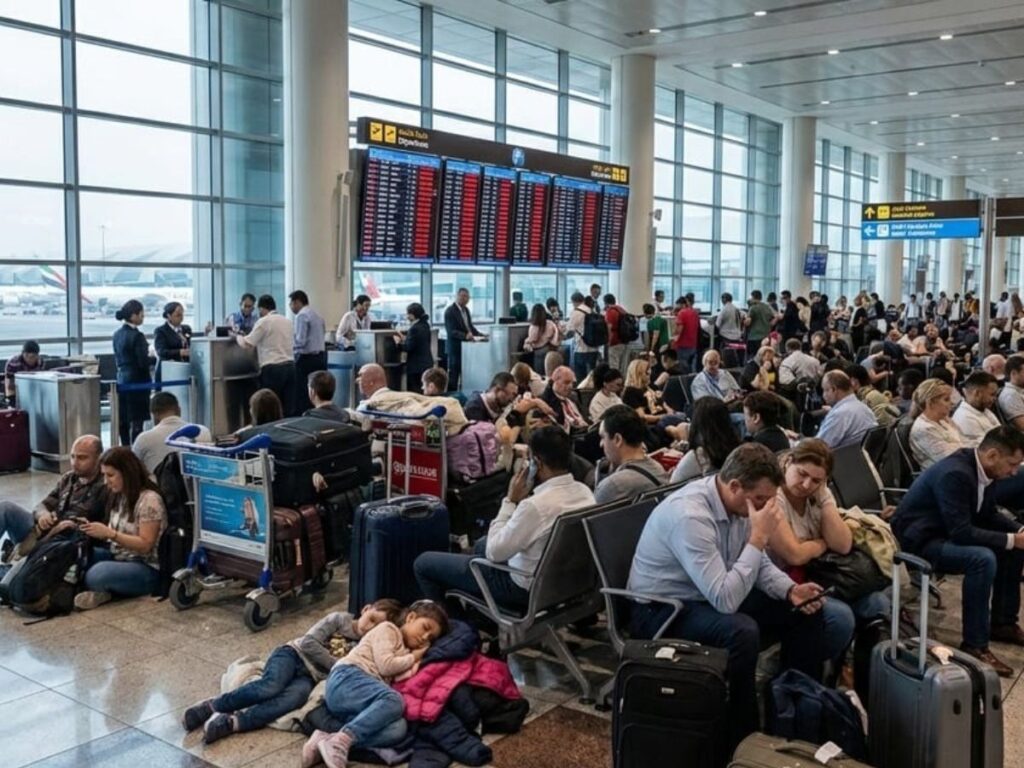
Air travel across Asia was severely disrupted, leaving thousands of passengers stranded as airlines struggled to maintain schedules. Around 67 flights were cancelled and nearly 1,470 delayed across multiple countries, including Thailand, Japan, Singapore, the United Arab Emirates, India, and Indonesia.
Airports across the region faced difficulty managing operations due to heavy passenger volumes and ongoing logistical issues. The disruption extended beyond isolated routes, affecting travel between Asia, the Middle East, and Europe, resulting in long layovers, last-minute route changes, and overnight delays.
Also Read: Planning a trip this summer? How rising jet fuel prices could push up flight fares
April 12 Data Reveals Larger Scale of Disruption
Data from April 12 indicates that the disruption was significantly larger across a wider region. Approximately:
- 445 cancellations
- 3,839 delays
were recorded across regions stretching from Northeast Asia to the Gulf, including China and Saudi Arabia.
This led to overcrowded airport terminals and widespread schedule disruptions, highlighting the scale of operational strain across international aviation networks.
Major Airports Under Operational Pressure

Several key airports emerged as major disruption hotspots, handling high volumes of delayed and cancelled flights.
| Airport | Delays | Cancellations |
| Soekarno-Hatta International Airport (Jakarta) | 216 | 13 |
| Suvarnabhumi Airport (Bangkok) | 199 | Not specified |
| Tokyo International Airport (Haneda) | 182 | Not specified |
| Narita International Airport | 90 | 10 |
| Indira Gandhi International Airport (Delhi) | 176 | Not specified |
In India, airports in Mumbai and Bengaluru also experienced major disruptions due to high domestic traffic.
These airports struggled to manage aircraft movement, passenger flow, and crew availability, contributing to further delays across connected routes.
Airlines Face Scheduling and Operational Challenges
Airlines across regions reported significant operational disruptions.
- Batik Air and United Airlines recorded the highest cancellations, with 10 each
- IndiGo reported 93 delays
- Air India recorded 4 cancellations and 74 delays
- All Nippon Airways logged 75 delays, mainly linked to Tokyo operations
Other airlines including Emirates, Singapore Airlines, Thai Airways, Lion Air, China Eastern Airlines, SpiceJet, and ANA Wings also experienced disruptions.
Airlines with extensive domestic and regional networks were particularly affected by delays, while cancellations remained limited to certain carriers.
Also Read: Artemis II Flight Day 5: Crew Prepares for Historic Lunar Flyby and Record-Breaking Milestones
Cities Most Affected by Flight Delays
Major cities across Asia and the Middle East faced heavy operational strain, including:
- Delhi
- Tokyo
- Dubai
- Jakarta
- Bangkok
- Mumbai
- Bengaluru
- Singapore
Among these, Jakarta and Bangkok recorded the highest delays, while Tokyo and Delhi also experienced significant disruptions due to heavy passenger traffic and busy air routes.
Key Causes Behind the Asia Flight Crisis
The disruptions were driven by multiple interconnected factors:
- High air traffic across major aviation corridors
- Operational challenges at busy hub airports
- Pressure on airline scheduling and crew availability
- Ongoing geopolitical tensions
- Airspace restrictions affecting flight routes
- Rising operational costs
These factors made it difficult for airlines to maintain smooth operations, particularly across high-density routes connecting Asia, the Middle East, and Europe.
Passenger Advisory Amid Ongoing Disruptions
Passengers have been advised to remain alert and take precautionary steps:
- Check real-time flight updates through airline apps or airport websites
- Contact airlines for rescheduling or compensation
- Reach airports early to avoid last-minute disruptions
- Keep travel documents ready
- Follow announcements for gate or schedule changes
These measures are essential as delays and operational challenges continue to affect travel plans.
Short-Term Outlook for Asia’s Aviation Network
Although the situation may improve, heavy passenger traffic and ongoing operational pressure suggest that disruptions could continue in the short term. Airports and airlines remain under strain as they attempt to manage schedules and restore normal operations.
Travellers are advised to plan ahead and stay updated before heading to airports, especially when travelling through major hubs experiencing high traffic volumes.
Spiritual Perspective on Uncertain Journeys
The recent disruptions in air travel across Asia reflect how uncertainty can impact even the most structured systems. In such situations, maintaining patience, awareness, and preparedness becomes essential. Spiritual understanding teaches the importance of inner stability during external disruptions.
According to the teachings of Tatvdarshi Sant Rampal Ji Maharaj, true Knowledge guides individuals to remain calm and composed in challenging circumstances. His Knowledge emphasises that while external conditions may fluctuate, inner clarity and discipline help individuals navigate uncertainty with balance and responsibility.
For more information visit our
Website: www.jagatgururampalji.org
YouTube: Sant Rampal Ji Maharaj
Facebook: Spiritual Leader Saint Rampal Ji
X (Twitter): @SaintRampalJiM
FAQs on Asia Flight Crisis
1. How many flights were delayed and cancelled in Asia?
Around 1,470 flights were delayed and 67 cancelled across multiple countries.
2. Which airports were most affected?
Jakarta, Bangkok, Tokyo, and Delhi airports recorded the highest disruptions.
3. What does April 12 data indicate?
It shows 445 cancellations and 3,839 delays across a wider region.
4. Which airlines faced the most disruptions?
Batik Air, United Airlines, IndiGo, Air India, and All Nippon Airways reported major disruptions.
5. What caused the flight disruptions?
High air traffic, operational challenges, geopolitical tensions, airspace restrictions, and rising costs contributed to the crisis.