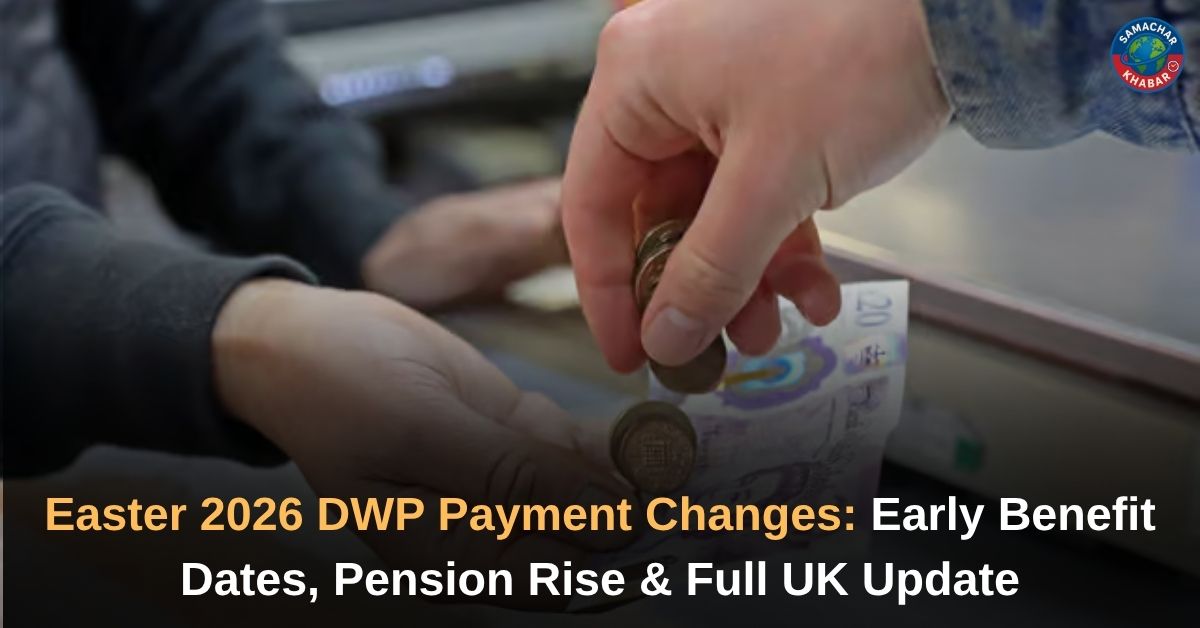
Millions of people across the UK will see changes to their benefit and pension payment dates in April 2026 due to the Easter bank holidays. With Good Friday falling on April 3 and Easter Monday on April 6, payments scheduled on these dates will be issued earlier than usual.
Alongside this timing shift, households will also experience benefit increases, pension rises, and ongoing cost of living pressures influenced by global economic conditions. This detailed report explains who is affected, what changes to expect, and how individuals can manage their finances effectively during this period.
Key Highlights: Easter 2026 DWP Payment Changes, Pension Rise & UK Benefit Updates
- Payments due on April 3 and April 6 will be paid early on April 2
- Applies to DWP, HMRC, and Social Security Scotland payments
- Around 24 million people in the UK claim benefits
- Payments are early, not extra
- State Pension increases by 4.8% from April 2026
- Most benefits rise by 3.8%, Universal Credit standard allowance rises by around 6.2%
- Early payments may create a longer gap until the next payment
- £24 billion worth of benefits remains unclaimed annually
- New Crisis and Resilience Fund introduced
- Energy price cap to fall by around 7% from April
- Two-child limit removal to expand Universal Credit eligibility
Why DWP and HMRC Payments Are Changing in April 2026
The Department for Work and Pensions (DWP), HM Revenue and Customs (HMRC), and Social Security Scotland have confirmed payment date changes due to the Easter bank holidays.
Because banks and government offices remain closed on Good Friday (April 3) and Easter Monday (April 6), payments scheduled for these dates cannot be processed. Instead, they will be issued on the previous working day, Thursday, April 2.
This follows standard government guidance:
If your payment date falls on a weekend or bank holiday, you are usually paid on the working day before.
Full List of Benefits and Payments Affected
DWP Benefits
- Universal Credit
- State Pension
- Personal Independence Payment (PIP)
- Disability Living Allowance (DLA)
- Employment and Support Allowance (ESA)
- Jobseeker’s Allowance (JSA)
- Pension Credit
- Attendance Allowance
- Carer’s Allowance
- Income Support
HMRC Payments
- Child Benefit
- Guardian’s Allowance
Social Security Scotland Payments
- Adult Disability Payment
- Child Disability Payment
- Scottish Child Payment
- Carer Support Payment
- Pension Age Disability Payment
- Scottish Adult Disability Living Allowance
Note: Payments not due on April 3 or April 6 will be paid as usual.
How Payments Will Be Processed
Benefits and pensions are typically paid directly into:
- Bank accounts
- Building society accounts
- Credit union accounts
Processing Details
- Most banks will credit payments overnight
- Funds are expected to be available on the morning of April 2
- Some banking apps may show pending balances before clearing
- Post Office card accounts and cash machine withdrawals may be affected by cut-off times
Operational Update
- DWP offices and helplines will be closed on April 3 and April 6
- Services will resume on April 7
- If payments do not arrive, claimants can contact DWP on 0800 328 5644 (when open)
State Pension Payment Schedule Explained
State Pension payments are based on the last two digits of a person’s National Insurance number:
| NI Number Ending | Payment Day |
| 00–19 | Monday |
| 20–39 | Tuesday |
| 40–59 | Wednesday |
| 60–79 | Thursday |
| 80–99 | Friday |
Those whose payments fall on the Easter bank holidays will receive them early on April 2, while others will receive payments as scheduled.
Some reports indicate that pensioners on the full new State Pension rate may receive higher payments depending on their entitlement.
Benefit and Pension Increases from April 2026
April marks the beginning of the new financial year with several key increases:
Key Changes
- State Pension: Increased by 4.8% (around £241.05 per week)
- Most benefits: Increased by 3.8%
- Universal Credit standard allowance: Increased by around 6.2%
Examples
- Single (25+): £92 → £98 per week
- Couple (25+): £145 → £154 per week
Important Reduction
- Universal Credit health element:
- Reduced from £105 to £50 for new claimants
- Frozen for existing claimants until 2029
Impact of Early Payments on Household Finances
Receiving payments earlier can be helpful, but it also means the money must last longer.
Key Financial Impact
- Longer gap before the next payment cycle
- Increased risk of overspending
Planning Tips
- List key expenses: rent, council tax, energy, mobile bills
- Adjust direct debits if needed
- Inform landlords, housing associations, or lenders in advance
- Maintain a short-term financial buffer
Economic Context: Cost of Living and Inflation
These changes come during ongoing economic pressure.
Current Situation
- Global conflict in the Middle East impacting oil supply
- Rising energy and food prices
Inflation Trends
- Inflation dropped to 3% (10-month low)
- Expected to reach 2% target
Household Reality
- 63% of households cutting essential spending
- 55% of households in poverty include working individuals
Universal Credit Changes and Policy Updates
The government aims to complete the transition of all legacy benefits to Universal Credit by March 2026, including:
- Tax credits
- Income Support
- Jobseeker’s Allowance
- Housing Benefit
Two-Child Limit Removal
The two-child limit will be removed from the new tax year, allowing families to claim support for all children.
Expected Impact
- Around 450,000 fewer children in relative poverty by 2030/31
- Around 150,000 fewer working-age adults in poverty
Additional Financial Support Available
Crisis and Resilience Fund
- New scheme replacing previous support funds
- Includes:
- Crisis payments (cash-first approach)
- Housing support
Budgeting Advance Loans
- Interest-free loans for emergencies
- Maximum:
- £348 (single)
- £464 (couple)
- £812 (with children)
- Repayment capped at 15% of Universal Credit allowance
Energy, Housing and Cost Support Measures
Energy Support
- Available from providers such as British Gas, EDF, E.ON, OVO and Octopus
- Some offer free devices like electric blankets
Energy Price Cap
- Reduced to £1,641 (April–June 2026)
- Down by around 7%
Social Tariffs, Grants and Council Tax Help
Social Tariffs
- Reduced rates for broadband and water bills
- Support varies depending on region
Council Tax Reduction
- Discounts of up to 100% available
- Additional discretionary support may be provided
Charitable Grants
- Available for:
- Disabled individuals
- Carers
- Bereaved individuals
- Students and unemployed
Childcare and Family Support
- Up to 30 hours of free childcare for working parents
- Tax-free childcare support available
- Eligibility must be reconfirmed every three months
Market and Financial Impact of Early Payments
Early payments may temporarily influence:
- Retail and grocery spending
- Utility bill payments
- Loan repayments and arrears levels
Lenders and financial institutions may monitor:
- Buy Now Pay Later repayments
- Short-term arrears trends
- Changes in repayment behaviour
What Claimants Should Keep in Mind
- Payments are early, not additional
- No action required for date changes
- Always verify payment dates with your bank
- Plan spending carefully to avoid financial strain
Spiritual Perspective: Lasting Security Through the Teachings of Saint Rampal Ji Maharaj Ji
While early payments and benefit increases offer temporary financial relief, true and permanent security cannot be achieved through money alone. Changing economic conditions remind us that material stability is uncertain.
According to the teachings of Saint Rampal Ji Maharaj Ji, real peace comes from true devotion (Satbhakti) and understanding the purpose of human life. His knowledge emphasizes that spiritual awareness leads to lasting happiness and freedom from suffering. Balancing financial planning with spiritual understanding can help individuals achieve both stability and inner peace.
Navigating April 2026 Payments with Smart Financial Planning
The Easter 2026 payment changes highlight the importance of understanding both timing and financial planning. While early payments ensure uninterrupted access to funds, they also require households to manage a longer gap before the next payment cycle. At the same time, increases in benefits and pensions offer some relief amid ongoing cost of living challenges.
With additional government support schemes, reduced energy costs, and policy changes such as the removal of the two-child limit, households have access to multiple forms of assistance. Careful budgeting, awareness of payment schedules, and use of available support can help individuals maintain stability during this transition period.
FAQs on Easter 2026 DWP Payment Changes, Benefit Dates & State Pension Increase
1. When will DWP payments be made during Easter 2026?
Payments due on April 3 or April 6 will be paid early on April 2 due to Easter bank holidays across the UK.
2. Which benefits are affected by Easter 2026 payment changes?
Universal Credit, State Pension, PIP, DLA, ESA, JSA, Pension Credit, Child Benefit and other DWP and HMRC payments are affected.
3. Will benefit amounts change due to early payment dates?
No, payment amounts remain the same. Only the payment date changes to ensure funds arrive before bank holidays.
4. How much will the State Pension increase in April 2026?
The State Pension will increase by 4.8% from April 2026, raising the weekly amount to around £241.05.
5. Why is early payment important for benefit claimants?
Early payment ensures access to funds before bank closures but requires careful budgeting as the gap until the next payment becomes longer.