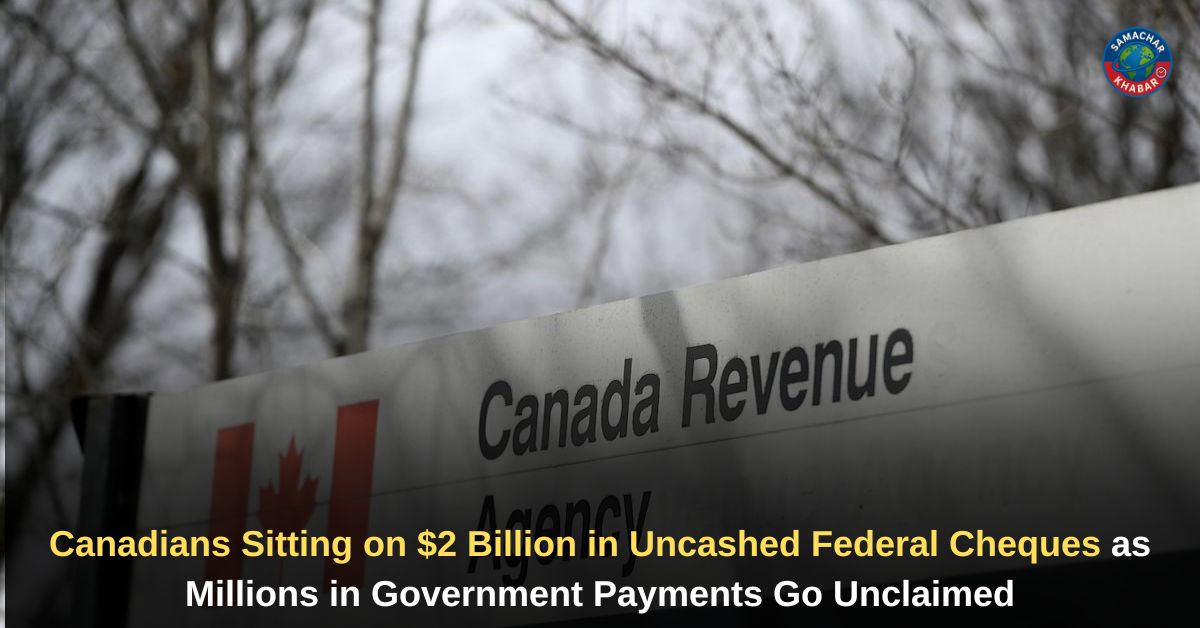
Millions of Canadians may be unaware that the federal government owes them money. Parliamentary documents and Canada Revenue Agency disclosures reveal that more than $2 billion worth of federal cheques issued over the past few years remain uncashed. These payments include tax refunds, pension cheques, and key benefit programs such as the Canada Child Benefit and Canada Carbon Rebate.
Despite the government’s push toward direct deposit, millions of paper checks continue to go unclaimed due to address changes, lost mail, or lack of awareness. Importantly, government-issued cheques never expire, meaning Canadians can still claim this money if they know where to look.
Key Takeaways on Canadians Sitting on $2 Billion in Uncashed Federal Cheques
- Over $2.15 billion in federal cheques issued in the last four fiscal years remain uncashed
- Approximately 3.9 million paper cheques were never deposited
- Tax refunds, pensions, and benefit payments make up the majority of unclaimed funds
- Canada Carbon Rebate and Canada Child Benefit cheques account for hundreds of millions of dollars
- Government cheques do not expire and can be reissued if lost or damaged
- The Canada Revenue Agency alone holds nearly $1.8 billion in unclaimed cheques
- Canadians can check for unclaimed payments through their CRA My Account
Parliamentary Documents Reveal Scale of Unclaimed Federal Payments
According to documents tabled recently in Parliament, Canadians have left more than $2.15 billion unclaimed by failing to cash paper cheques mailed out by the federal government. The data shows that roughly 3.9 million cheques issued over the past four fiscal years — valued at $2,159,665,155 — were never deposited.
These cheques were issued by the Canada Revenue Agency and other federal departments and include a wide range of payments such as income tax refunds, pension cheques, and government benefits. Despite being valid indefinitely, many of these payments remain untouched years after issuance.
Carbon Rebates and Climate Credits Among the Largest Unclaimed Amounts
A significant portion of the uncashed funds comes from now-cancelled climate-related programs. Canadians failed to deposit approximately $141 million in cheques from the Canada Carbon Rebate, which was designed to offset the cost of carbon pricing.
Also Read: Canada Visitor Visa: Eligibility, Requirements & FIFA World Cup Travel Guide
Additionally, residents of British Columbia left around $50 million in Climate Action Tax Credit cheques uncashed. While both rebate programs have ended, the federal government has confirmed that cheques issued under these programs never expire and can still be replaced upon request if lost or damaged.
Families Miss Out on Millions in Child Benefit Payments
Families across Canada also missed out on substantial benefit payments. Roughly $42.8 million in cheques issued under the Canada Child Benefit (CCB) went uncollected. The CCB is a tax-free monthly payment intended to help families manage the cost of raising children.
Unclaimed family benefits are particularly concerning, as CRA officials have noted that a large share of uncashed cheques belong to income-tested programs meant for lower-income households.
CRA Holding Nearly $1.8 Billion in Unclaimed Cheques
Separate but related data from the Canada Revenue Agency shows that unclaimed cheques extend far beyond the last four years. As of last October, the CRA reported holding 10,279,770 uncashed cheques valued at $1,752,004,000.
On average, each unclaimed CRA cheque is worth about $170, with some payments dating back as far as 1998. The CRA lists 42 different payment types that may remain unclaimed, ranging from standard income tax refunds and GST/HST credits to regional benefits such as the Newfoundland and Labrador Income Supplement and the Yukon Child Benefit.
Why So Many Government Cheques Go Uncashed
Lack of direct deposit remains one of the primary reasons these payments go unclaimed. Paper cheques can be lost, stolen, damaged, or mailed to outdated addresses when taxpayers move or pass away.
Although about 90 per cent of Canadians now file taxes electronically, not all are registered for direct deposit. As a result, some government payments are still issued by mail. The CRA also notes that it will not automatically reissue cheques, even though they never expire, unless a taxpayer actively requests it.
Daily Growth of Unclaimed Payments
The number of unclaimed cheques continues to rise. On average, nearly 1,700 federal cheques worth about $500,000 are added daily to the list of unclaimed payments. Since the CRA launched its online uncashed cheque tracking tool in February 2020, about 692,000 cheques worth $183 million were claimed in its early months.
Since 2020, Canadians have successfully claimed 4.96 million cheques valued at just over $1.8 billion, yet the total amount of unclaimed money reached a record high in 2024 before declining slightly.
How Canadians Can Check If the Government Owes Them Money
Canadians can check for unclaimed cheques by logging into their CRA My Account and selecting the “Uncashed cheques” option under related services. The system displays eligible payments and allows taxpayers to request reissued cheques or direct deposits.
However, the tool does not show cheques less than six months old, COVID-19 benefits, business or trust payments, or amounts issued via direct deposit. In such cases, taxpayers must contact the CRA directly.
Government Push Toward Direct Deposit and Rising Administrative Costs
The federal government prefers direct deposit, with only 8.51 per cent of total federal payments still made by cheque. Despite this, millions of cheques continue to be issued.
Each paper cheque costs the government about $1.83 to process. Between April 1, 2022, and September 30, 2025, issuing 121 million cheques likely cost taxpayers approximately $222 million. The government previously explored prepaid cards as an alternative but abandoned the idea due to high costs and public opposition.
Why Awareness Matters for Canadians
Unclaimed federal cheques do not disappear, but until claimed, the money remains in the government’s general accounts and is used for regular operations. For Canadians facing rising living costs, these forgotten payments could offer meaningful financial relief.
With billions still unclaimed, checking for outstanding government cheques may be one of the simplest ways for Canadians to recover money that is rightfully theirs.
FAQs on Canadians Sitting on $2 Billion in Uncashed Federal Cheques
Q1. Why do Canadians have $2 billion in uncashed federal cheques?
Millions of paper cheques for tax refunds, pensions, and benefits were never deposited due to lost mail, address changes, or lack of direct deposit registration.
Q2. Do federal government cheques in Canada expire?
No. Federal government cheques never expire and can be reissued if they are lost, damaged, or never deposited.
Q3. Which benefits make up most uncashed federal cheques?
Uncashed cheques include income tax refunds, Canada Child Benefit payments, Canada Carbon Rebate cheques, pension payments, and other income-tested federal benefits.
Q4. How can Canadians check if the government owes them money?Canadians can log into their CRA My Account and select “Uncashed cheques” to see and request any unpaid federal payments.
Q5. How much money does the CRA currently hold in unclaimed cheques?
The Canada Revenue Agency holds about $1.7 to $1.8 billion in unclaimed cheques, representing more than 10 million unpaid payments issued over several decades.