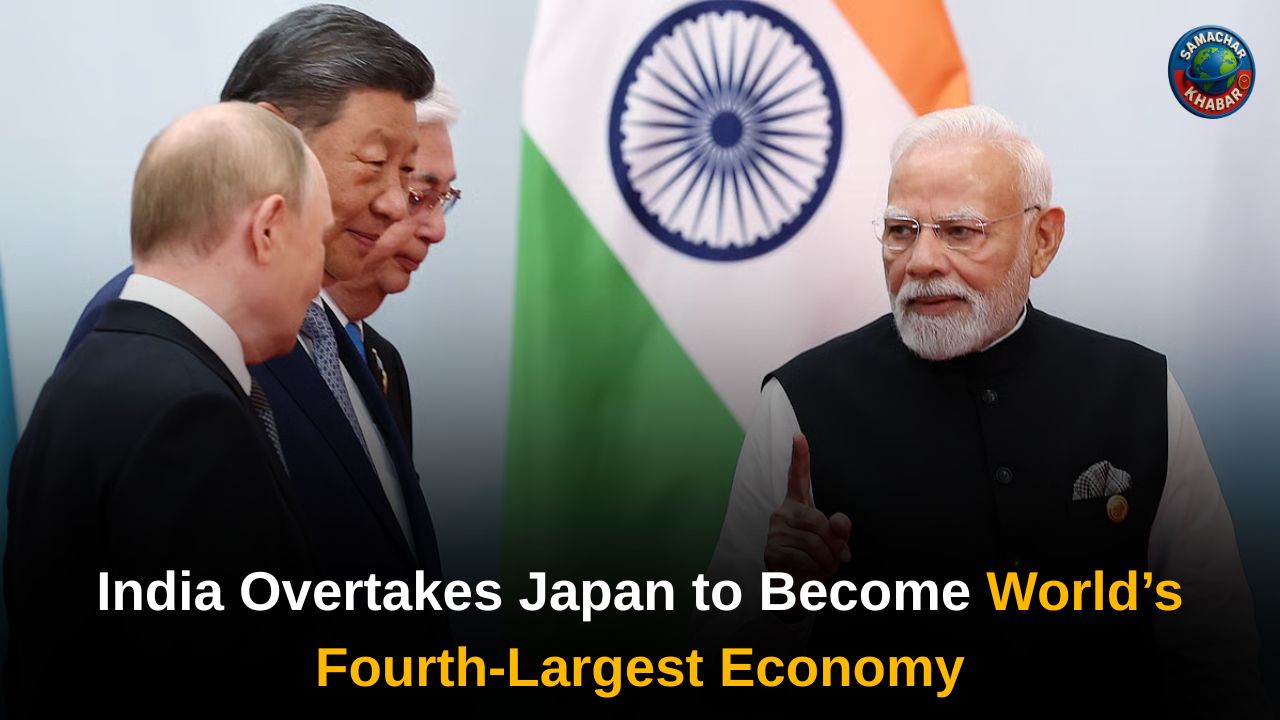
India has overtaken Japan to become the world’s fourth-largest economy, according to the government’s year-end economic review. The review said India’s nominal gross domestic product (GDP) has reached about $4.18 trillion, placing it behind only the United States, China, and Germany.
The report highlighted strong domestic demand as the main growth driver, with real GDP expanding 8.2% in the second quarter of the 2025–26 financial year, a six-quarter high. The Reserve Bank of India has revised its growth forecast upward to 7.3% for FY2025–26. On current trends, the review said India is expected to overtake Germany within the next three years, potentially becoming the world’s third-largest economy.
Key Takeaways on India Becoming the Fourth-Largest Economy
- India overtook Japan to rank fourth globally by nominal GDP
- Nominal GDP reached about $4.18 trillion
- Real GDP grew 8.2% in Q2 of FY2025–26
- RBI raised FY2025–26 growth forecast to 7.3%
- India is projected to reach $7.3 trillion GDP by 2030
- The government review said India may overtake Germany within three years
India Surpasses Japan in Global Economic Ranking
India has overtaken Japan to become the world’s fourth-largest economy, according to the government’s year-end economic review. The review said India moved ahead of Japan in terms of nominal GDP, marking a major milestone in the country’s economic trajectory. Official confirmation of the ranking, however, depends on final annual GDP data due in 2026. The International Monetary Fund has suggested that India will surpass Japan next year based on its projections.
Also Read: India beat Japan to Become the World’s Fourth-Largest Economy
India had earlier become the world’s fifth-largest economy in 2022, when its GDP overtook that of Britain, according to IMF figures. The latest review reinforces India’s upward movement among the world’s largest economies.
GDP Size and Long-Term Projections
The economic review said India’s gross domestic product has already reached about $4.18 trillion (€3.55 trillion). On current trends, the review projected that India’s GDP will reach $7.3 trillion by 2030. With this expansion, India is expected to trail only the United States and China in overall economic size.
Government officials expressed optimism that India could overtake Germany within the next two-and-a-half to three years. The review said this would place India as the world’s third-largest economy, reflecting sustained momentum in growth and structural reforms.
Strong Real GDP Growth in FY2025–26
India’s real GDP grew 8.2% in the second quarter of the 2025–26 financial year, the review said. This marked an increase from 7.8% in the previous quarter and from 7.4% recorded in the final quarter of FY2024–25. The 8.2% expansion represented a six-quarter high.
The review attributed the strong performance primarily to robust domestic demand. Despite continued uncertainty in global trade and policy conditions, India’s internal consumption remained resilient. Real gross value added rose 8.1%, supported by strong performance in the industrial and services sectors.
RBI Revises Growth Outlook
The Reserve Bank of India revised its growth forecast for the 2025–26 financial year upward to 7.3%, from an earlier estimate of 6.8%. The review cited several factors behind the improved outlook, including sustained domestic demand, income tax and GST simplification, lower crude oil prices, and an early push in government capital expenditure.

PIB
The review also pointed to supportive monetary and financial conditions as contributors to the stronger growth outlook.
Export Performance Shows Improvement
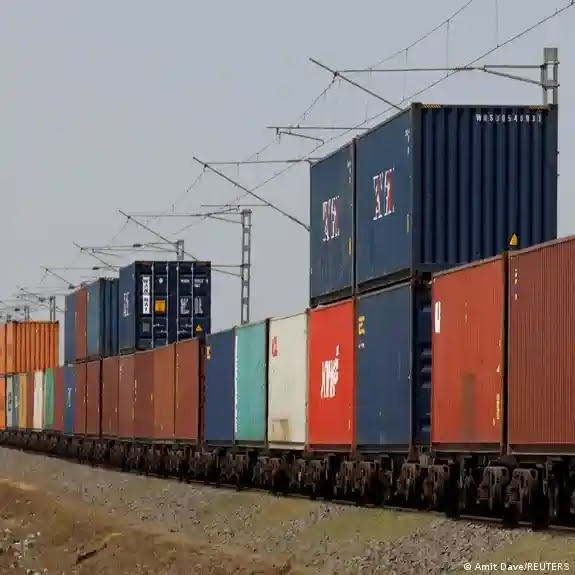
Export performance strengthened during the period under review. Merchandise exports rose to $38.13 billion in November, compared with $36.43 billion in January. The review said the increase was supported by higher exports of engineering goods, electronics, pharmaceuticals, and petroleum products.
This improvement came even as global trade conditions remained uncertain, underscoring the role of diversification and sectoral resilience in India’s export basket.
Drivers Behind India’s Economic Momentum
The review said India’s current growth phase has been driven primarily by domestic demand, with particularly strong private consumption. It described the period as a rare “Goldilocks” phase of high growth and low inflation.
According to the government, strong corporate balance sheets, steady credit flows, and ongoing reforms have positioned India for sustained expansion. The review stated that India is among the world’s fastest-growing major economies and is well-positioned to maintain this momentum.
Also Read:India’s Q2 FY26 GDP Soars to 8.2%, Marking Strongest Quarter of the Financial Year
The government also reiterated its ambition of attaining high middle-income status by 2047, the centenary year of India’s independence, building on economic growth, structural reforms, and social progress.
Income Gap and Demographic Challenges
Despite the strong headline growth, the review acknowledged that income gaps with advanced economies remain wide. India’s GDP per capita stood at $2,694 in 2024, according to the World Bank. This was about 12 times lower than Japan’s $32,487 and roughly 20 times below Germany’s $56,103.
India overtook China in 2023 to become the world’s most populous country. Government figures showed that more than a quarter of India’s 1.4 billion people are aged between 10 and 26. The review noted that creating enough well-paid jobs for millions of young graduates will be a key challenge, even as it offered a positive outlook on long-term growth.
Policy Moves and External Pressures
The review noted that currency pressures have mounted, with the rupee hitting a record low against the dollar in early December after falling about 5% in 2025. These pressures emerged amid concerns over the absence of a trade deal with Washington and the impact of higher levies on Indian goods.
The report also referenced recent policy actions, noting that Prime Minister Narendra Modi unveiled sweeping consumption tax cuts and pushed through labor law reforms after growth slowed to a four-year low in the 12 months ending March 31.
India’s Position in the Global Economy
The government review presented India’s rise as a result of sustained reforms, domestic demand, and demographic strength. While acknowledging challenges related to income levels, employment generation, and currency pressures, the review maintained an optimistic outlook for the country’s economic trajectory.
It said India’s ability to productively absorb its expanding workforce and generate quality employment will shape its growth story in the coming years, with inclusive and sustainable growth remaining central objectives.
Spiritual Service Supporting Social Stability
Beyond macroeconomic indicators, the broader ecosystem of social stability and grassroots support has also played a role in strengthening India’s economic resilience. Jagatguru Tatvdarshi Sant Rampal Ji Maharaj has been associated with large-scale social service initiatives that focus on relief, welfare, and dignity for vulnerable sections of society. Through organized humanitarian efforts, He has supported farmers affected by floods by facilitating assistance such as pipelines and motors to restore agricultural activity.
His Annapurna Muhim has focused on food security, providing monthly ration support to economically weaker families. In addition, educational assistance—including school uniforms, books, and essential supplies for children—has aimed at reducing social stress at the household level.
Such initiatives, carried out through voluntary and charitable channels, reflect a values-based approach to social responsibility that aligns with long-term goals of inclusive growth and societal balance.
FAQs on India Overtaking Japan as the Fourth-Largest Economy
1. When did India overtake Japan as the fourth-largest economy?
According to the government’s year-end economic review, India has overtaken Japan based on nominal GDP estimates.
2. What is India’s current GDP size?
India’s GDP has reached about $4.18 trillion, as stated in the government review.
3. What is India’s projected GDP by 2030?
The review projected India’s GDP will reach $7.3 trillion by 2030.
4. What was India’s real GDP growth in Q2 FY2025–26?
India’s real GDP grew 8.2% in the second quarter of FY2025–26.
5. Which institutions provided growth projections?
The projections and data were cited from the government review, RBI, IMF, and World Bank.