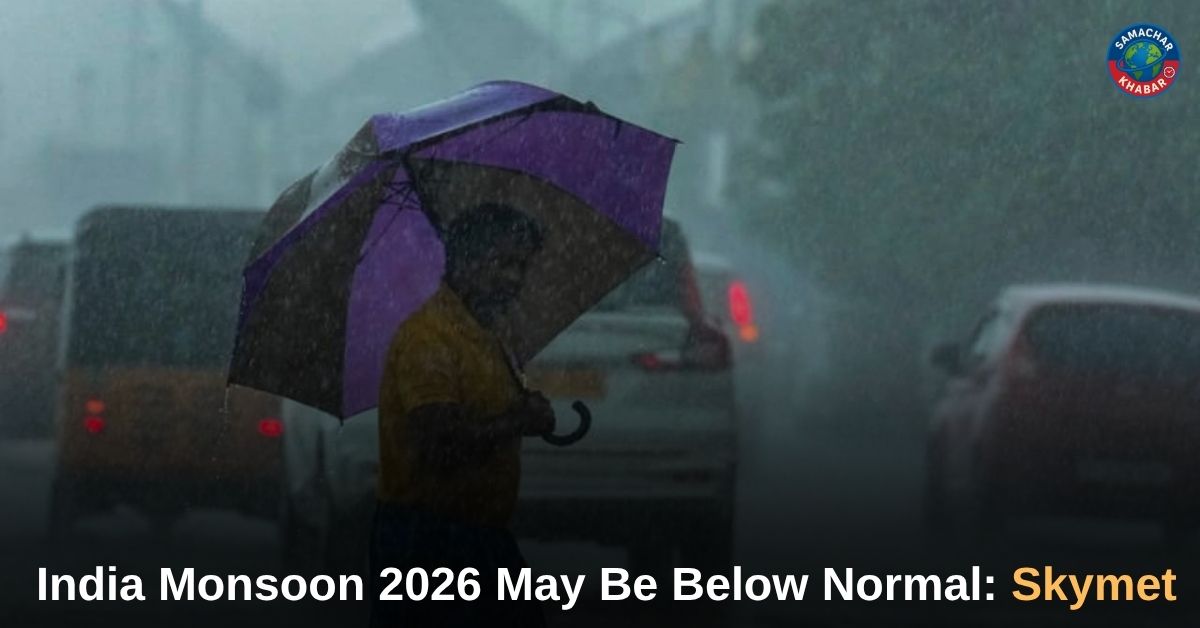
India Monsoon 2026 Forecast: India is expected to witness a below-normal monsoon in 2026, with private weather forecaster Skymet projecting rainfall at 94% of the long-period average (LPA). The forecast highlights the possible emergence of El Nino conditions, which could weaken rainfall, particularly during the latter half of the June–September season. While June may begin with near-normal precipitation, rainfall is likely to decline from July to September. The development raises concerns for agriculture, especially kharif sowing, as the monsoon contributes nearly 70% of India’s annual rainfall.
Key Takeaways: India Monsoon 2026 Forecast
- India likely to receive 94% of LPA rainfall in 2026
- Estimated average rainfall: 817 mm, with ±5% variation
- LPA benchmark cited at 868.6 mm for June–September
- 30% probability of drought conditions
- 40% chance of below-normal rainfall
- June may see 101% rainfall, followed by decline
- El Nino likely to develop during monsoon season
- Northwest India (Punjab, Haryana, Rajasthan) at higher risk
- Monsoon contributes 70% of India’s annual rainfall
- IMD expected to release its first forecast soon
Below-Normal Monsoon Forecast for 2026
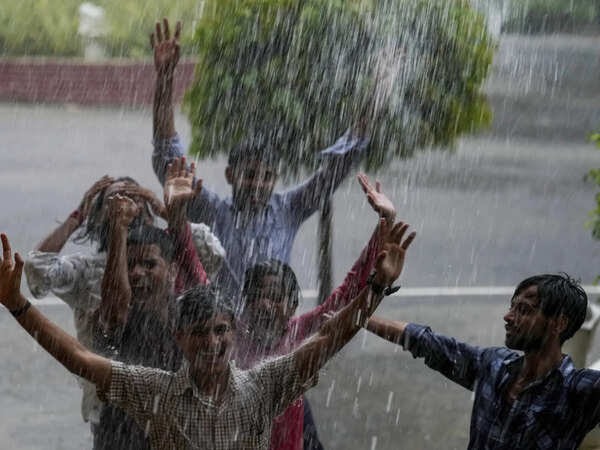
India is expected to receive below-normal monsoon rainfall in 2026, according to private weather forecaster Skymet. The agency has projected that rainfall during the June–September season will be 94% of the long-period average (LPA).
Skymet stated that the country may receive an average of 817 mm rainfall during the four-month monsoon period, with a possible variation of 5% above or below this estimate. The LPA for the same period is cited at 868.6 mm.
This forecast indicates a weaker monsoon compared to normal levels, raising concerns for multiple sectors dependent on seasonal rainfall.
El Nino Likely to Impact Rainfall Distribution
The forecast attributes the expected decline in rainfall to the likely development of El Nino conditions. El Nino refers to warmer-than-normal sea surface temperatures in the Pacific Ocean, which typically weakens monsoon rainfall in India.
According to Skymet, El Nino is expected to develop during the early phase of the monsoon and may strengthen in the latter half of the season. This could result in uneven rainfall distribution across the country.
The report also notes that the ongoing La Nina phase, which generally supports stronger monsoon activity, is now coming to an end. The Pacific Ocean is moving towards an ENSO-neutral state, creating conditions conducive for El Nino formation.
Monthly Rainfall Trend Shows Decline After June
Skymet’s forecast indicates that the monsoon may begin on a relatively strong note but weaken progressively:
| Month | Expected Rainfall (% of LPA) |
| June | 101% |
| July | 95% |
| August | 92% |
| September | 89% |
June is expected to record slightly above-normal rainfall at 101%. However, rainfall is projected to decline steadily from July onwards, with September likely to record the lowest precipitation at 89%.
This downward trend is particularly significant as August and September are crucial months for crop growth.
Regional Impact: Northwest India at Higher Risk
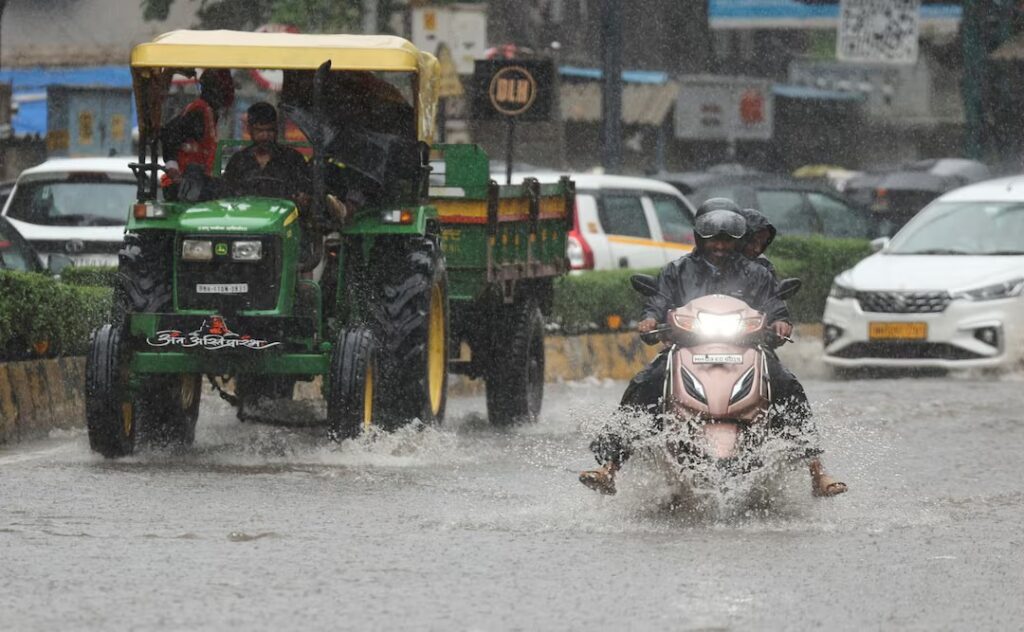
The forecast highlights regional disparities in rainfall distribution. Northwest states such as Punjab, Haryana, and Rajasthan are expected to face a higher risk of drought, with a 30% probability.
In contrast, eastern parts of India are likely to experience relatively better rainfall conditions.
The uneven distribution of rainfall could lead to localized agricultural challenges, particularly in regions already vulnerable to water stress.
Implications for Agriculture and Kharif Sowing
The monsoon season is critical for India’s agriculture sector, as it contributes nearly 70% of the country’s annual rainfall. It plays a vital role in kharif sowing, which typically takes place during June and July.
A decline in rainfall during August and September could impact crop yields, as these months are essential for crop development. Any irregularity in rainfall distribution may affect productivity and overall agricultural output.
With more than half of India’s population dependent on agriculture, the forecast has significant implications for livelihoods and the broader economy.
Monsoon Timeline and Importance
Under normal conditions, the southwest monsoon sets in over Kerala on June 1 and covers the entire country by July 15.
The timely arrival and even distribution of monsoon rains are crucial for ensuring stable agricultural activity. Any delay or deficiency in rainfall can disrupt sowing cycles and affect food production.
IMD Forecast Expected Soon
The state-run India Meteorological Department (IMD) is likely to issue its first official forecast for the 2026 monsoon season next week.
This forecast will provide further clarity on rainfall expectations and help policymakers and farmers prepare for the upcoming season.
Outlook: Monitoring Monsoon Patterns Remains Crucial
The 2026 monsoon forecast points to a below-normal rainfall scenario influenced by evolving oceanic conditions. With El Nino likely to play a significant role, attention remains focused on how rainfall patterns develop over the coming months. The progression from a strong start in June to weaker rainfall later in the season could shape agricultural outcomes. As official forecasts from IMD are awaited, the situation continues to be closely monitored for its broader impact.
Spiritual Perspective on Nature’s Balance
Weather patterns and natural cycles often reflect a deeper balance within nature. When disruptions occur, they remind us of the importance of harmony between human actions and the environment.
According to the teachings of Tatvdarshi Sant Rampal Ji Maharaj, true spiritual understanding guides individuals toward a balanced and disciplined life, which in turn contributes to overall well-being. His Knowledge emphasizes that when individuals live with righteousness and awareness, it creates a positive impact on society and nature alike. Such perspectives encourage a thoughtful approach to challenges, including those linked to climate and sustainability.
For more information visit our
Website:www.jagatgururampalji.org
YouTube: Sant Rampal Ji Maharaj
Facebook: Spiritual Leader Saint Rampal Ji
X (Twitter): @SaintRampalJiM
FAQs on India Monsoon 2026 Forecast
1. What is the monsoon forecast for India in 2026?
India is expected to receive 94% of the long-period average rainfall, indicating a below-normal monsoon.
2. What is causing the weaker monsoon in 2026?
The likely development of El Nino is expected to reduce rainfall, especially in the latter half of the season.
3. Which regions may face drought risk?
Northwest states like Punjab, Haryana, and Rajasthan have a 30% probability of drought conditions.
4. How does the monsoon affect agriculture?
The monsoon provides about 70% of annual rainfall and is crucial for kharif sowing and crop growth.
5. When will IMD release its forecast?
The India Meteorological Department is expected to issue its first monsoon forecast next week.