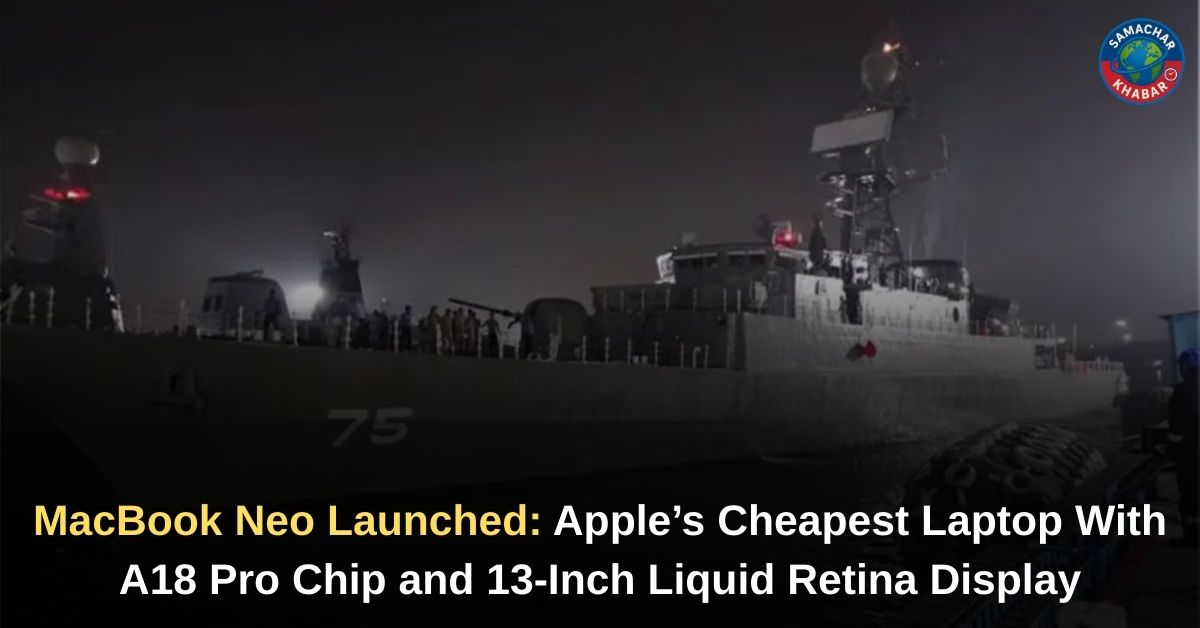
A major naval incident in the Indian Ocean has drawn global attention after an Iranian warship, IRIS Dena, was sunk by a torpedo fired from a United States submarine near Sri Lanka. The strike occurred while the vessel was sailing in international waters after participating in multinational naval exercises hosted by India in Visakhapatnam.
Sri Lankan rescue teams later recovered 87 bodies and rescued 32 sailors, while dozens remain missing. The attack has intensified concerns that the ongoing Iran-US conflict is spreading beyond the Middle East into the Indian Ocean — a region critical for global trade, energy routes and India’s maritime security.
Key Takeaways: IRIS Dena Sinking Near Sri Lanka and Its Strategic Significance
- US submarine strike: The Iranian frigate IRIS Dena was sunk by a Mark-48 torpedo fired from a US submarine in international waters near Sri Lanka.
- Heavy casualties: Sri Lankan authorities recovered 87 bodies and rescued 32 sailors, while others remain missing from an estimated 180 crew members on board.
- Recent visit to India: The vessel had recently participated in the MILAN 2026 multinational naval exercise and the International Fleet Review in Visakhapatnam.
- Rare naval incident: The attack is described as the first sinking of an enemy ship by a US submarine torpedo since World War II and one of very few such incidents in modern naval history.
- Regional security concerns: The strike demonstrates how the Iran-US conflict has expanded into the Indian Ocean, raising strategic questions for India and other countries dependent on maritime trade routes.
How the IRIS Dena Was Sunk in the Indian Ocean
The Iranian naval frigate IRIS Dena was struck by a torpedo fired from a US submarine during the early hours of March 4, while sailing in international waters off Sri Lanka’s southern coast.
US Defence Secretary Pete Hegseth confirmed the strike at a Pentagon briefing, stating that the Iranian vessel “thought it was safe in international waters” before being destroyed by a torpedo. He described the incident as a “quiet death” and said the attack involved a single Mark-48 heavyweight torpedo, a powerful submarine-launched weapon designed to disable large naval vessels.
Pentagon footage released later reportedly shows a massive underwater explosion striking the rear of the ship. The blast lifted part of the vessel out of the water before it began sinking from the stern within minutes.
The strike occurred amid intensifying military operations between the United States, Israel and Iran, signalling that the conflict had expanded far beyond the Persian Gulf.
Sri Lanka Launches Rescue Operation After Distress Call
Sri Lanka’s navy launched a large-scale rescue mission after receiving a distress signal from the Iranian warship early Wednesday morning.
According to Sri Lanka’s foreign affairs minister Vijitha Herath, the distress call was received at around 5:08 a.m., prompting naval vessels and aircraft to be dispatched immediately to the site near Galle, a port city on Sri Lanka’s southern coast.
However, by the time rescue teams reached the location, the warship had already sunk.
Sri Lankan navy spokesman Commander Buddhika Sampath said rescuers found oil slicks, floating debris and life rafts at the scene, along with sailors drifting in the water.
| Rescue Status | Details |
| Bodies recovered | 87 |
| Sailors rescued | 32 |
| Estimated crew onboard | Around 180 |
| Location of sinking | About 40 nautical miles off Galle |
Authorities confirmed that rescue operations continued in search of additional survivors.
Recovery Efforts and Emergency Response in Galle
The National Hospital in Galle became the main centre for treating survivors and handling casualties following the sinking of the IRIS Dena.
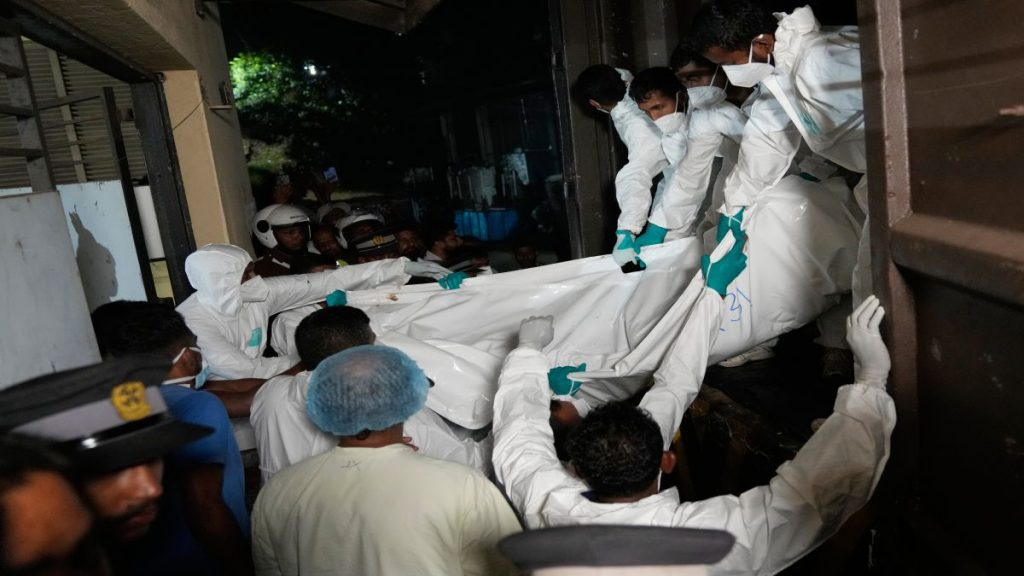
Authorities reported that bodies of Iranian sailors were transported to the hospital in trucks and placed in a makeshift mortuary prepared to manage the sudden influx of casualties. Security around the hospital was tightened, with Sri Lankan police and naval personnel guarding the facility while medical teams worked to treat the injured.
Health officials said that among the rescued sailors, one remained in critical condition, several required emergency treatment and others were being treated for less serious injuries.
What We Know About the Iranian Warship IRIS Dena
The IRIS Dena was one of the newest frigates in Iran’s navy and operated as part of the country’s Southern Fleet, which is responsible for deployments in the Strait of Hormuz and the Gulf of Oman.
The vessel was launched in 2015 and designed for deep-water patrol missions. It carried multiple advanced weapons and surveillance systems.
| Feature | Details |
| Type | Iranian Navy frigate |
| Launch year | 2015 |
| Fleet | Iran’s Southern Fleet |
| Crew capacity | About 180 personnel |
| Weapons | Surface-to-air missiles, anti-ship missiles, torpedoes |
| Other capabilities | Heavy guns, radar tracking systems, helicopter deck |
The warship had previously been sanctioned by the US Treasury Department in February 2023, along with executives of an Iranian drone manufacturer accused of supplying weapons used in other conflicts.
US military officials have also said that at least 17 Iranian naval vessels have been sunk during the ongoing war, highlighting the scale of maritime confrontations linked to the conflict.
Why the Iranian Warship Was in the Indian Ocean
The presence of an Iranian warship in the Indian Ocean initially raised questions among observers because such deployments in the region are relatively uncommon.
However, the IRIS Dena had recently participated in MILAN 2026, a multinational naval exercise organised by the Indian Navy. It also took part in the International Fleet Review held in Visakhapatnam, which brings together warships and naval forces from dozens of countries.
More than 70 countries and over 80 ships were involved in the event aimed at promoting maritime cooperation and security.
Following the exercise, the Iranian warship docked in Visakhapatnam, where its crew visited local attractions and interacted with residents before departing for its return journey to Iran.
Residents of the city later recalled how sailors from the ship had visited tourist locations such as Kailasagiri and shopping centres shortly before the vessel sank in the Indian Ocean.
Heavy Presence of the US Navy in the Indian Ocean
The sinking of the IRIS Dena also highlights the strong presence of the United States Navy in the Indian Ocean region.
Much of the western and central Indian Ocean falls under the operational responsibility of the US Fifth Fleet, headquartered in Bahrain. The fleet oversees naval operations across the Persian Gulf, Arabian Sea, Red Sea and parts of the Indian Ocean.
The Fifth Fleet typically deploys between 15 and 35 major warships, including aircraft carriers, destroyers, logistics vessels and nuclear-powered attack submarines such as Virginia-class and Los Angeles-class submarines.
These submarines are regularly rotated through the region to conduct missions involving intelligence gathering, deterrence and precision strike operations.
Why the Attack Near Sri Lanka Matters for India
Although the strike took place in international waters, its proximity to India has sparked debate among security experts and defence analysts.
Former Indian Navy Chief Admiral Arun Prakash (Retd.) warned that the sinking of the Iranian warship demonstrates how the Iran-US conflict has effectively reached India’s maritime neighbourhood.
Strategic analysts have also highlighted the Logistics Exchange Memorandum of Agreement (LEMOA) signed between India and the United States in 2016. The agreement allows both countries to access each other’s military facilities for refuelling, repairs and logistical support during joint operations or emergencies.
However, commentators also emphasised that the attack occurred outside India’s maritime jurisdiction, even though it was geographically close to the Indian Ocean region where India maintains significant strategic interests.
Iranian Military Tanker Busheir Now Under Watch Near Colombo
Following the sinking of the IRIS Dena, attention has also shifted to another Iranian vessel — the military tanker Busheir, which was reported to be anchored about 10 nautical miles off the outer anchorage of Colombo Port.
Unlike the IRIS Dena, which was attacked in international waters, the tanker is located within Sri Lanka’s territorial waters, making any potential military action far more sensitive from a diplomatic perspective.
Security analysts say the presence of the tanker has added another layer of complexity to the already tense situation in the Indian Ocean.
Rare Submarine Warfare Incident in Modern Naval History
The sinking of the IRIS Dena is considered a rare event in modern naval warfare.
Defence experts note that only four warships have been sunk by submarines worldwide since World War II, making such incidents extremely uncommon.
While the United States described the attack as its first torpedo sinking of an enemy ship since 1945, other countries — including the United Kingdom and Pakistan — have used torpedoes to sink vessels in conflicts after the Second World War.
This rarity has further intensified global attention on the attack and its implications for maritime security.
Rising Conflicts Show the Need for True Spiritual Knowledge
The sinking of the Iranian warship IRIS Dena and the expanding conflict in global waters highlight a deeper issue facing humanity — the persistence of violence, rivalry and power struggles among nations. History repeatedly shows that military strength and political dominance cannot bring lasting peace to the world.
According to the unique spiritual knowledge explained by Saint Rampal Ji Maharaj, true peace can only be established when human beings understand the correct spiritual path described in the holy scriptures. His teachings emphasise that devotion to the Supreme God, along with living a life based on righteousness, compassion and moral discipline, can remove hatred and conflict from society.
Saint Rampal Ji Maharaj explains that when individuals follow true spiritual wisdom and abandon negative tendencies such as ego, anger and greed, harmony can emerge not only among individuals but also among nations. His spiritual guidance encourages humanity to move away from destruction and toward a future based on peace, unity and divine knowledge.
A Conflict That Has Reached the Indian Ocean
The sinking of the IRIS Dena illustrates how quickly regional conflicts can expand beyond their original geographic boundaries. What began as a confrontation centred in the Middle East has now reached the waters of the Indian Ocean — one of the world’s most critical maritime corridors.
For countries such as India, which rely heavily on sea routes for energy imports and trade, the development raises important strategic concerns. The incident also highlights the vulnerability of global shipping routes when geopolitical tensions escalate.
As the confrontation involving Iran, the United States and regional actors continues to evolve, governments and security experts are closely watching developments in the Indian Ocean. The events near Sri Lanka have already demonstrated that the consequences of the conflict are no longer confined to the Middle East but are now affecting the wider Indo-Pacific region.
FAQs on IRIS Dena Sinking Near Sri Lanka
1. What happened to the Iranian warship IRIS Dena near Sri Lanka?
The Iranian frigate IRIS Dena was sunk by a US submarine torpedo in the Indian Ocean about 40 nautical miles off Sri Lanka’s Galle coast, resulting in 87 deaths.
2. How many sailors died in the IRIS Dena submarine attack?
Sri Lankan authorities recovered 87 bodies after the IRIS Dena sank. Thirty-two sailors were rescued and taken to hospitals in Galle, while several others were reported missing.
3. Why was the Iranian warship IRIS Dena in the Indian Ocean?
IRIS Dena had recently participated in the MILAN 2026 naval exercise and International Fleet Review hosted by India in Visakhapatnam before beginning its return journey to Iran.
4. Why is the IRIS Dena sinking significant globally?
The attack is considered rare because it marks the first US submarine torpedo sinking of an enemy warship since World War II and signals the Iran-US conflict spreading into the Indian Ocean.
5. How does the IRIS Dena incident affect India’s security?
The sinking occurred near India’s strategic maritime region in the Indian Ocean, raising concerns about regional stability, shipping routes, and energy security for countries dependent on these sea lanes.