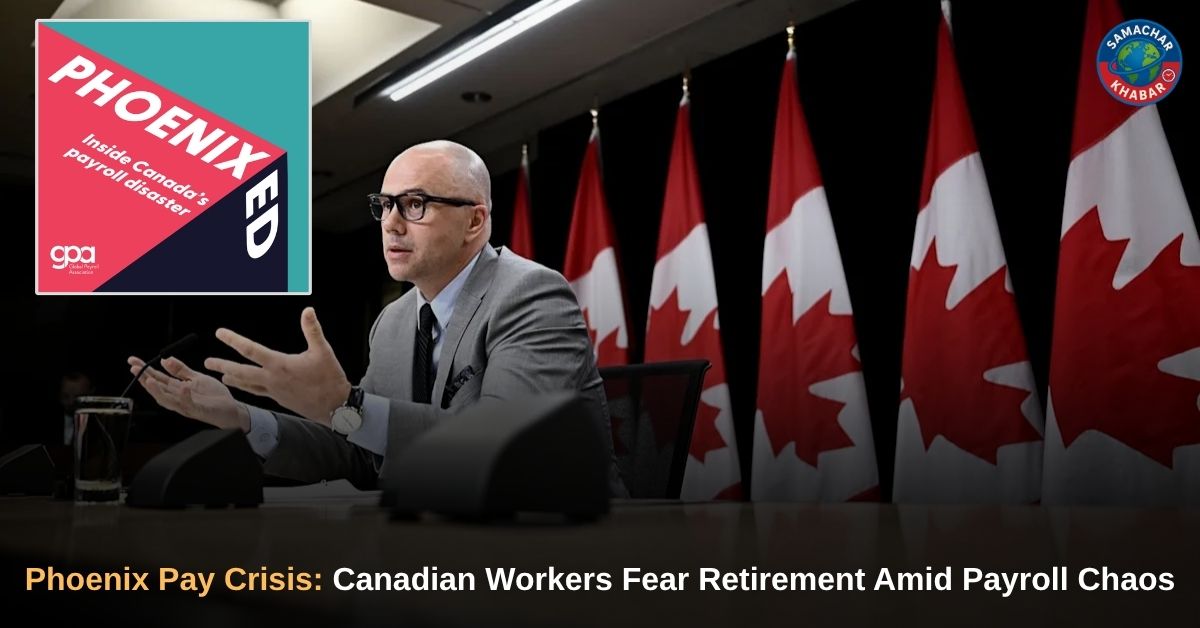
Nearly a decade after its rollout, Canada’s Phoenix pay system continues to disrupt the lives of federal public servants, turning a planned cost-saving reform into a prolonged administrative crisis. Thousands of employees are still dealing with incorrect salaries, delayed payments, and unexpected repayment notices linked to errors dating back years.
The situation has now reached a critical point where many workers are hesitant to retire, fearing unresolved payroll issues and future financial liabilities. Despite billions spent on fixes and the promise of a replacement system, the backlog remains significant and trust in the system has been deeply shaken.
Phoenix Pay Crisis: Key Facts, Figures and Ongoing Impact
- Phoenix system launched in 2016 to replace a decades-old payroll system
- Initially expected to save about $70 million annually
- Total cost has exceeded $5 billion, crossing $5.1 billion by 2025
- IBM received more than $851 million for development and support
- Nearly 80% of 290,000 federal employees were affected at one stage
- 483,130 employees received overpayments totaling $3.57 billion
- Backlog stands at 216,000 transactions as of February 2026
- 45% of pending cases are more than one year old
- 1,769 staff currently working to reduce backlog
- Government plans to cut 30,000–40,000 public service jobs
- Replacement system Dayforce to begin rollout around 2027 with long-term transition
Employees Fear Retirement as Payroll Errors Continue
For many Canadian public servants, retirement has become uncertain due to unresolved payroll issues.
Jennifer MacDougall said she is “scared” to accept early retirement after being told she owes approximately $10,500 due to a pay error. Her case dates back to between 2014 and 2018, when she was underpaid following a job reclassification. Although she later received retroactive pay in 2019, incorrect data entry in the Phoenix system resulted in a repayment demand.
“The whole thing is just so crazy,” she said, adding that the situation has caused anxiety for her and her family. Under the Crown Liability and Proceedings Act, the government has a six-year window to recover debts, raising fears that additional claims could surface even after retirement.
Associate Deputy Minister Alex Benay acknowledged these concerns, stating that employees considering retirement are “right to be concerned,” given the system’s track record. He added that a specialized service has been created within the pay centre to handle retirement-related cases, with trained staff ready to respond.
Real-Life Cases Reveal Financial and Emotional Struggles
The crisis has affected thousands of employees across Canada, with several cases highlighting the scale of impact:
Karine Chawla (Transport Canada)
Karine Chawla was told she owes $35,000 due to overpayments dating back to 2017. She said the situation has left her feeling “unsettled and trapped,” and her case has been referred to the Canada Revenue Agency.
“In the past year… I’ve been up at 3 a.m. most nights,” she said, fearing further repayment notices.
Sophie Charpentier (Quebec)
Sophie Charpentier estimates the government still owes her more than $50,000. Her payroll issues began around the same time she was battling colon cancer.
“I still talk about it and cry about it… it’s a nightmare,” she said.
She has spent years documenting errors, describing the process as “a second job.”
Jack Logan (Retired Public Servant)
After nearly 50 years of service, Jack Logan waited more than a year to receive his severance payment.
The delay caused an estimated loss of $25,000 due to missed investment growth and increased tax burden after his RRSP converted into an RRIF.
“It made it a little tighter… you put it on credit cards,” he said.
Retirees ‘Falling Between the Cracks’
The situation is particularly severe for retired public servants.
A 2024 survey found that about 43% of retirees experienced issues with their severance payments, with many waiting over a year to receive what they were owed.
Retirees often lack access to formal grievance mechanisms or union support, leaving them with limited options. In many cases, individuals have had to contact their Members of Parliament to resolve outstanding payments. Experts have described this situation as retirees “falling between the cracks.”
Backlog Remains a Major Challenge
Despite years of corrective measures, the backlog remains substantial:
| Category | Status |
| Pending transactions | 216,000 |
| Cases older than one year | 45% |
| Staff handling backlog | 1,769 |
The government has expanded the use of automation and artificial intelligence to reduce delays. However, progress remains slow, and many employees continue to wait for resolution.
Workforce Cuts May Add Pressure
The federal government is planning to reduce the public service by up to 40,000 positions from its recent peak. Around 70,000 employees have received letters indicating eligibility for early retirement incentives.
Also Read: Indian-Origin YouTuber Nancy Grewal Stabbed to Death in Ontario, Police Investigating Homicide
Union representatives warn that large-scale retirements and workforce adjustments could increase the volume and complexity of payroll transactions, potentially worsening existing delays.
“There’s a risk of pushing the system over the edge,” one union leader cautioned.
Why the Phoenix Pay System Failed
The failure of Phoenix has been linked to several systemic issues:
- System launched without proper end-to-end testing
- Cancellation of a pilot project in 2015
- Warnings from IBM and internal staff were ignored
- Reduction of experienced payroll staff before rollout
- Complex pay rules across more than 80 occupational groups
- Separation of human resources and payroll functions
- Weak oversight and accountability
The Auditor General described Phoenix as an “incomprehensible failure of project management and oversight.”
A Senate report later called it an “international embarrassment.”
Policy Context: Government Reform and Efficiency Push
The Phoenix crisis also comes at a time when the federal government is considering broader reforms. Prime Minister Mark Carney has outlined plans for a “quiet revolution” in government operations, including a goal to improve efficiency by 15 percent.
Experts suggest that the failures of the Phoenix system offer critical lessons for such reforms, particularly the need for proper testing, strong oversight, and realistic implementation timelines.
Deeper Structural Issues Behind the Crisis
Analysts point to deeper institutional challenges within the public sector:
- A culture of compliance where officials hesitate to challenge decisions
- Focus on avoiding blame and maintaining optics rather than outcomes
- The sunk cost fallacy, where continued investment was made to avoid admitting failure
These factors contributed to the continuation of the system despite early warning signs.
A Timeline of Decisions That Led to Crisis
- 2009: Payroll modernization initiative approved
- 2011: IBM awarded contract using PeopleSoft software
- 2012: Pay centre established in Miramichi; staff reductions begin
- 2015: Warnings issued; pilot project cancelled
- 2016: Phoenix launched in two rapid phases
- 2017–2018: Auditor General reports highlight major failures
- 2020: Compensation settlement announced for affected employees
- 2024: Backlog exceeds 400,000 cases
- February 2026: Backlog stands at 216,000 cases
Financial Impact Far Beyond Expectations
Instead of generating savings, Phoenix has resulted in significant financial costs:
- Total spending exceeded $5 billion
- Overpayments reached $3.57 billion
- IBM received over $851 million
- Ongoing expenses include consultants and system fixes
The government has effectively spent billions attempting to correct a system originally designed to save money.
Future Plans: Transition to Dayforce System
The government plans to replace Phoenix with a new payroll system, Dayforce.
Key details include:
- Gradual implementation starting around 2027
- Full transition expected in the coming years, with possible contract extension to 2049
- Testing to be conducted using employee data from three organizations
- Requirement that payroll data must be error-free before migration
Officials have stated that lessons from Phoenix are guiding the development of the new system.
A Crisis That Has Changed Trust in Public Systems
The Phoenix pay system has fundamentally altered how public servants view job security and financial stability. Employees who once relied on predictable salaries now face uncertainty, while retirement decisions are increasingly influenced by unresolved payroll concerns.
Even officials acknowledge the impact. As one noted, no one should have to know the name of their payroll system.
Spiritual Insight: True Security Lies Beyond Temporary Systems
The ongoing Phoenix pay crisis highlights a deeper truth — even advanced human systems can fail, leaving people stressed, uncertain, and financially insecure. Jobs, salaries, and administrative systems may appear stable, but they are temporary and imperfect.
According to the unique spiritual knowledge of Saint Rampal Ji Maharaj, true peace and security cannot be achieved through material systems alone. Wealth and career stability are short-lived, whereas Tatvagyan (true spiritual knowledge) connects a person with the Supreme God and provides lasting peace.
This situation reminds us that while worldly systems may collapse, spiritual wisdom offers permanent stability, fearlessness, and true inner peace.
When a Payroll System Fails, the Consequences Last for Years
The Phoenix pay system was introduced to modernize payroll and reduce costs, but it instead became a decade-long crisis affecting hundreds of thousands of public servants.
From employees fearing retirement to retirees waiting years for payments, the impact has been both financial and emotional. As the government prepares to transition to a new system, the lessons from Phoenix remain critical. Without proper testing, oversight, and accountability, large-scale reforms risk creating long-lasting consequences that extend far beyond their original intent.
FAQs on Phoenix Pay Crisis in Canada
1. What is the Phoenix pay system crisis in Canada?
The Phoenix pay system crisis refers to widespread payroll errors since 2016, causing underpayments, overpayments, delays, and financial stress for thousands of Canadian public servants.
2. Why are Canadian workers afraid to retire due to Phoenix?
Workers fear retirement because unresolved pay errors, repayment notices, and delayed benefits could impact their finances even after leaving government service.
3. How much has the Phoenix pay system cost Canada?
The Phoenix system has cost over $5 billion, far exceeding its original goal of saving $70 million annually.
4. How many Phoenix pay cases are still pending?
As of 2026, around 216,000 payroll transactions remain unresolved, with nearly 45% pending for more than a year.
5. What will replace the Phoenix pay system?
The Canadian government plans to replace Phoenix with the Dayforce payroll system, with rollout expected to begin around 2027.