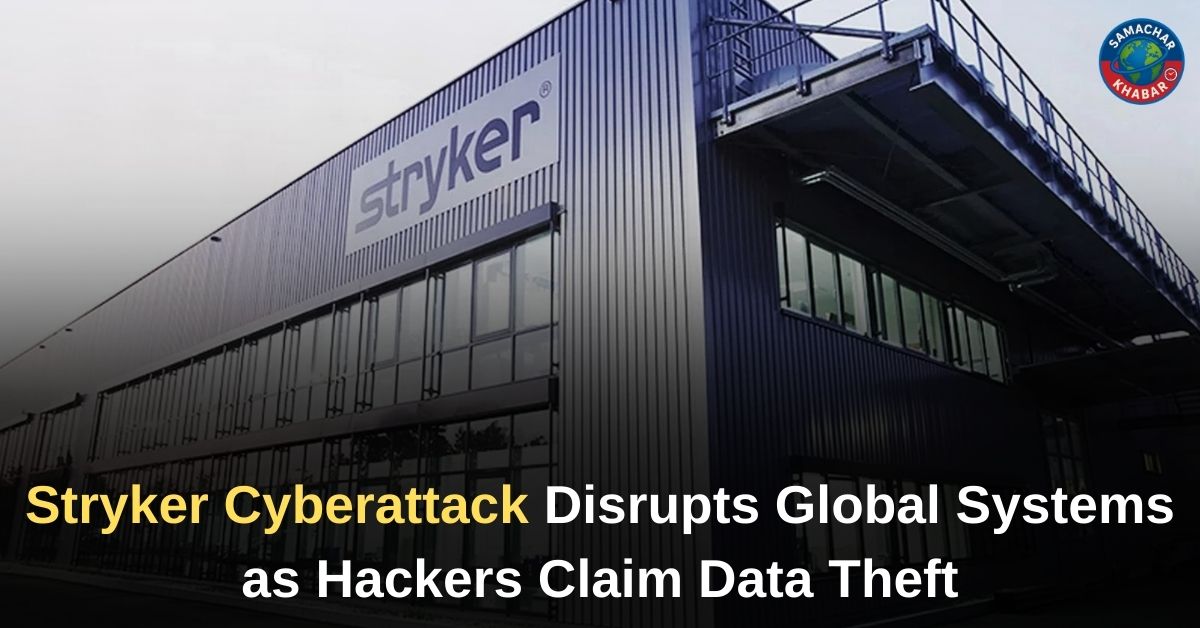
A cyberattack has disrupted the global network of Stryker Corporation, one of the largest medical device and services providers in the United States. According to a Reuters report and a filing with the Securities and Exchange Commission (SEC), the company experienced limitations in accessing some internal systems after the attack targeted its Microsoft environment. Stryker, which employs 56,000 people and operates in 61 countries, said it is continuing to resolve the disruption.
While investigators examine the incident, the company stated there is no indication of malware or ransomware. Meanwhile, a hacking group claimed responsibility online, alleging it wiped devices and extracted large amounts of data.
Key Takeaways on the Stryker Cyberattack
- Stryker confirmed a cyberattack disrupted its global network and limited access to some internal systems.
- The company said the incident affected its internal Microsoft environment.
- According to Stryker, there is currently no indication of malware or ransomware.
- The firm operates in 61 countries and employs about 56,000 people worldwide.
- Investigators say thousands of devices may have been wiped, with reports suggesting up to 200,000 systems and servers may have been impacted.
- A hacking group linked to the Handala group claimed responsibility, saying it extracted around 50 terabytes of data.
- Stryker stated its products, including Mako, Vocera and LIFEPAK35, remain safe to use.
- The company is working to restore system communications and its electronic ordering system.
Stryker Cyberattack: Global Systems Disrupted
US-based medical device and services provider Stryker confirmed that a cyberattack disrupted its global network, limiting access to some internal systems. According to a Reuters report, the company disclosed the incident in a filing with the Securities and Exchange Commission (SEC), stating that the attack caused disruptions across parts of its operations.
Stryker operates in 61 countries and employs about 56,000 people, making it one of the largest medical technology firms globally.
The company said the incident primarily affected its internal Microsoft environment, leading to disruptions in system communications. In an update published on its official website, Stryker said it was continuing to resolve the disruption resulting from the cyberattack.
Company Update on the Cyberattack
Stryker shared updates on its official website regarding the incident and its response.
In an update dated 03/12/2026 at 12:32 a.m. EST, the company said:
- The disruption affecting its global network was continuing to be addressed.
- There was no indication of malware or ransomware linked to the incident.
- The company believed the situation was contained to its internal Microsoft environment.
Stryker also assured customers that its products remained safe to use.
Also Read: A Parent’s Guide to Cyberbullying: Signs and Prevention
The company specifically stated that products such as Mako, Vocera and LIFEPAK35 were fully safe to use despite the network disruption.
It further noted that:
- Orders entered before the cyber incident remain visible and will be shipped once system communications are restored.
- Orders submitted after the incident are currently being examined.
- Teams are working to restore the electronic ordering system as quickly as possible.
Stryker also confirmed that communication with its employees and sales representatives through email and phone remains safe.
The company said it would continue providing updates through its newsroom page as it manages the situation.
Earlier Statement on the Incident
In a previous update dated 03/11/2026, Stryker said it was experiencing a global network disruption to its Microsoft environment due to the cyberattack.
The company stated that its teams were working quickly to understand the full impact of the attack on its systems.
Stryker added that it had business continuity measures in place to continue supporting customers and partners during the disruption.
The company also reiterated its commitment to transparency while providing updates to stakeholders.
Investigators Examine Destructive Malware Possibility
Investigators examining the cyberattack have pointed to the possibility of a destructive cyber technique known as wiper malware.
Wiper malware is a type of malicious software designed to erase or corrupt data permanently on affected systems.
Unlike ransomware, which encrypts files and demands payment, wiper malware focuses on destroying data rather than generating financial gain.
Also Read: 79% Travellers at Risk: UAE Warns of Rising Data Theft Through Unsafe Charging Ports
Once it enters a network, the malware may overwrite or delete important files and system components such as the Master Boot Record (MBR) or the operating system itself. When this occurs, affected devices may fail to start or become unusable.
Cybersecurity experts say such attacks can spread quickly within a network and delete files, databases and entire drives.
Reported Impact on Systems and Devices
Investigators said the cyberattack disrupted systems across the United States, Europe and Asia, preventing employees from accessing company networks or performing routine work.
Reports suggest that thousands of devices connected to Stryker’s network may have been wiped during the incident.
Some reports also indicate that as many as 200,000 systems and servers may have been impacted by the attack.
A hacking group linked to the Handala hacker group claimed responsibility for the cyberattack in online posts.
According to reports, the group posted messages on its Telegram channel, describing the incident as “the beginning of a new chapter in cyber warfare.”
The group also claimed it had seized approximately 50 terabytes of company data, stating that the information was “now in the hands of the free people of the world.”
The group reportedly described the operation as retaliation linked to geopolitical tensions, highlighting how cyber incidents are increasingly connected to global conflicts.
Why Wiper Malware Attacks Are Dangerous
Cybersecurity experts consider wiper malware attacks among the most damaging forms of cyber incidents.
Unlike ransomware attacks, where data may be recovered after payment or decryption, wiper malware can lead to permanent data loss.
Such attacks may:
- Destroy corporate data permanently
- Shut down critical business operations
- Disrupt supply chains
- Require long recovery periods
In the case of Stryker, disruption could have broader consequences because the company manufactures implants, surgical equipment and hospital devices used in healthcare facilities worldwide.
Recovery Challenges After a Wiper Malware Attack
Recovery from a destructive malware attack typically depends on whether companies maintain secure backups.
Cybersecurity experts say organisations may need to:
- Reinstall operating systems on affected devices
- Restore data from offline or cloud backups
- Conduct forensic investigations
- Strengthen cybersecurity before reconnecting systems
For large organisations with global infrastructure, the recovery process can take weeks or even months.
Wiper Malware and Cyber Warfare
Destructive malware has increasingly appeared in cyber conflicts.
Several strains of wiper malware — including CaddyWiper, HermeticWiper, IsaacWiper and FoxBlade — have been linked to cyber operations during the Russian invasion of Ukraine.
These incidents demonstrate how destructive cyber tools are increasingly used alongside broader geopolitical strategies and conflicts.
Global Cybersecurity Risks Highlighted by the Incident
The cyberattack on Stryker has highlighted the growing risks facing large multinational organisations that rely heavily on digital infrastructure.
While the company said its products remain safe to use and there is no indication of ransomware or malware in its systems, investigators continue examining the broader impact of the incident.
With operations spanning dozens of countries and thousands of connected systems, the attack illustrates how cyber incidents can disrupt global networks and business operations across multiple regions simultaneously.
Stryker said it remains focused on resolving the disruption, restoring its systems and keeping customers and stakeholders informed through ongoing updates.
Spiritual Perspective on Knowledge and Responsibility
In an increasingly digital world, incidents such as cyberattacks highlight the importance of responsibility, ethics and awareness in the use of technology. Spiritual teachings often emphasise the value of truthful knowledge and righteous conduct in every field of life. Tatvdarshi Sant Rampal Ji Maharaj explains that true Knowledge guides human beings to use their abilities for the welfare of society rather than causing harm.
According to His teachings, when individuals follow moral discipline and understand the deeper purpose of life, destructive actions decline and collective well-being improves. Such perspectives encourage reflection on how human knowledge, including technological progress, should always align with ethical responsibility.
For more information visit our
Website:www.jagatgururampalji.org
YouTube: Sant Rampal Ji Maharaj
Facebook: Spiritual Leader Saint Rampal Ji
X (Twitter): @SaintRampalJiM
FAQs on Stryker Cyberattack
1. What happened in the Stryker cyberattack?
A cyberattack disrupted Stryker’s global network, limiting access to internal systems and affecting operations across the United States, Europe and Asia.
2. Did Stryker confirm ransomware in the attack?
No. Stryker said there is no indication of ransomware or malware, and the incident appears contained to its internal Microsoft environment.
3. Which hacker group claimed responsibility?
The Handala hacker group claimed responsibility online and said it wiped devices and extracted around 50 terabytes of data.
4. How many systems may have been affected?
Reports suggest thousands of devices were wiped, with up to 200,000 systems and servers potentially impacted.
5. Are Stryker products safe to use?
Yes. Stryker confirmed that products including Mako, Vocera and LIFEPAK35 remain fully safe to use.