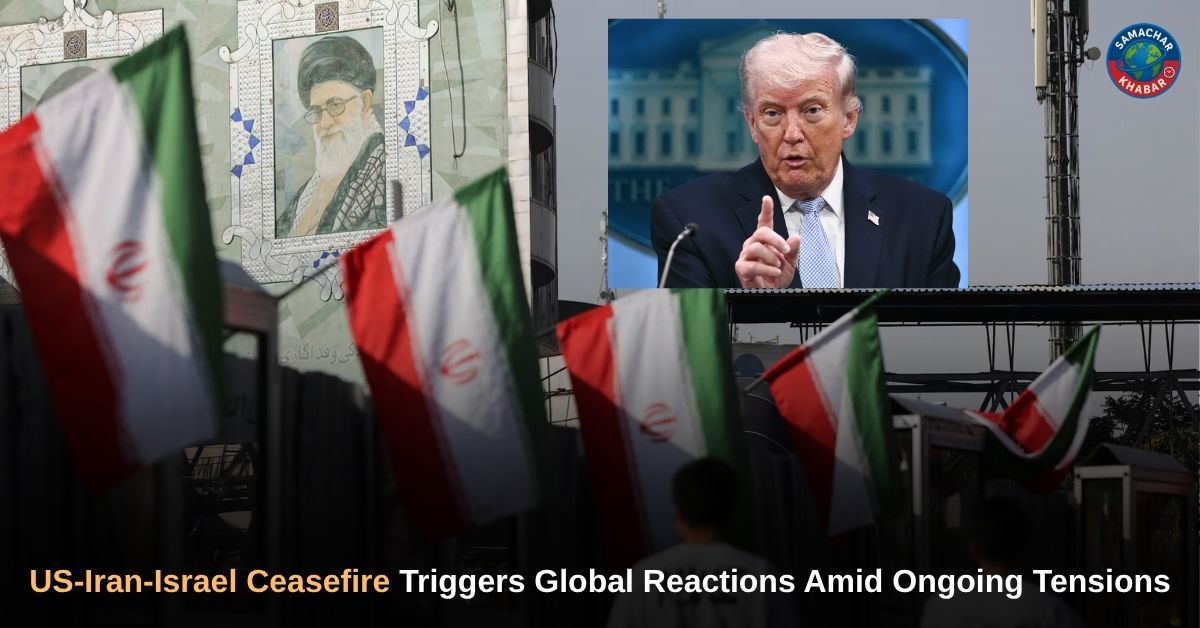
US-Iran Ceasefire: A tentative two-week ceasefire between the United States, Iran, and Israel has emerged as a critical development in the ongoing Middle East conflict. The agreement, reached in an 11th-hour effort to prevent large-scale destruction, has drawn mixed global reactions. While countries such as Indonesia and Japan have welcomed the truce, political criticism has surfaced within Israel, and tensions continue across the region. Pakistan has stepped forward as a mediator, hosting upcoming talks, while incidents like continued attacks and disputes over the Strait of Hormuz highlight the fragile nature of the ceasefire. The situation reflects a pause in conflict rather than a complete resolution.
Key Takeaways: US-Iran-Israel Ceasefire Developments
- A two-week ceasefire was agreed upon by the US, Iran, and Israel
- US President Donald Trump played a central role in brokering the truce
- Israel supported the ceasefire but excluded Lebanon from its scope
- Israeli opposition leader Yair Lapid called the ceasefire a “political disaster”
- Pakistan will host US-Iran talks on April 10 in Islamabad
- Global reactions include support from Indonesia and Japan
- Ukraine urged the US to apply similar decisiveness in its war with Russia
- Bahrain reported a fire due to alleged Iranian aggression with no injuries
- Disputes persist over the Strait of Hormuz and Iran’s nuclear program
- Confusion remains due to continued attacks despite ceasefire announcements
Ceasefire Agreement and Strategic Context
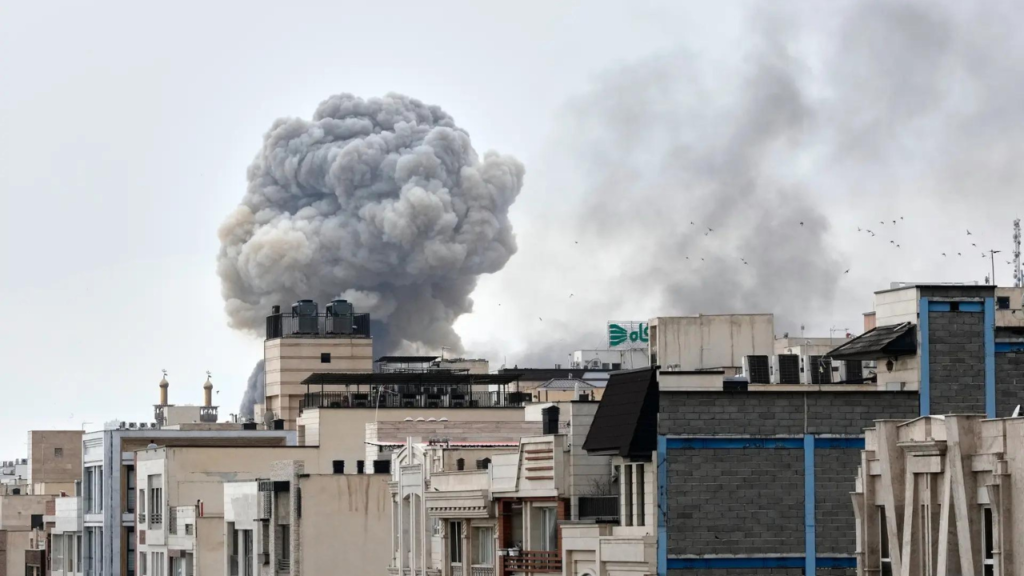
The United States and Iran agreed to a two-week ceasefire in an 11th-hour bid to avert all-out destruction of Iran, as threatened by US President Donald Trump. The agreement also involved Israel, which supported Trump’s decision to suspend bombing operations.
However, the ceasefire appeared limited in scope. Israel clarified that the agreement “does not include Lebanon,” where it has been engaged in conflict with Iran-backed Hezbollah since March, following rocket fire by the Lebanese group.
Also Read: Iran Missile Strike on Diego Garcia: Failed 4,000 km Attack Signals Major War Escalation
The ceasefire came after weeks of escalating conflict involving Iran, Israel, and regional actors, creating significant geopolitical instability.
Political Reactions and Internal Criticism in Israel
Israel’s main opposition leader, Yair Lapid, strongly criticised the ceasefire, calling it a “political disaster.” In a statement posted on X, Lapid accused Prime Minister Benjamin Netanyahu of failing to achieve the war’s core objectives.
Lapid stated that Israel “was not even close to the table” when critical decisions were made and added that Netanyahu failed politically and strategically. He emphasized that despite the army fulfilling its role and the public showing resilience, the government did not meet its stated goals.
Netanyahu had defined key objectives, including:
- Eliminating or significantly weakening Iran’s nuclear programme
- Neutralising Iran’s ballistic missile capabilities
- Weakening or toppling the Iranian regime
- Reducing Iran’s regional influence
Lapid warned that repairing the resulting political and strategic damage would take years.
Global Diplomatic Responses and Mediation Efforts
Several countries responded positively to the ceasefire. Indonesia, through foreign ministry spokesperson Yvonne Mewengkang, urged all parties to respect sovereignty, territorial integrity, and diplomacy.
Japan’s chief cabinet secretary Minoru Kihara described the ceasefire as a “positive move” and expressed hope for a final agreement.
Pakistan has taken a central diplomatic role by announcing it will host US-Iran talks on April 10. Prime Minister Shehbaz Sharif invited both nations to Islamabad, expressing hope that the discussions would lead to sustainable peace.
Pakistan’s involvement reflects its strategic position and its relations with both Tehran and Washington, including engagement with Donald Trump.
Ukraine’s Appeal and Broader Geopolitical Signals
Following the ceasefire announcement, Ukraine called on the United States to apply similar decisiveness in addressing the Russia-Ukraine conflict.
Ukrainian Foreign Minister Andriy Sybiga stated that “American decisiveness works” and urged Washington to pressure Moscow into ending its invasion of Ukraine.
This response highlights how the ceasefire is influencing broader geopolitical expectations beyond the Middle East.
Security Incidents and Continuing Tensions
Despite the ceasefire, tensions have not fully subsided. Bahrain reported that civil defence teams extinguished a fire caused by what it described as “sinful Iranian aggression.” No injuries were reported, and the fire affected a facility.
At the same time, reports indicated that Iran launched attacks on Gulf Arab states and Israel soon after the ceasefire announcement, raising concerns about its implementation.
Disagreements also persist regarding the Strait of Hormuz, a vital global energy route. Iran insisted it would control and charge ships passing through the strait and continue uranium enrichment. Meanwhile, Donald Trump suggested that US warships would remain present in the area.
Strategic Analysis: Defining Victory in Modern Warfare
Jonathan Schanzer, Executive Director at the Foundation for Defence of Democracies and former US Treasury counterterrorism analyst, provided insight into the evolving nature of warfare.
In a conversation with ANI, he noted that while the US and Israel achieved conventional military dominance, Iran claimed victory simply by surviving and responding asymmetrically.
Schanzer stated that Iran’s ability to close the Strait of Hormuz through limited asymmetric attacks allowed it to project strength despite losses. He described this as part of a broader trend in modern warfare, where traditional definitions of victory are being challenged.
Pakistan PM’s Draft Post Sparks Online Debate
An unusual incident involving Pakistan’s Prime Minister Shehbaz Sharif drew attention on social media. A “draft” version of his message on the ceasefire was briefly posted on X before being edited.
The original post included a preface reading “Draft – Pakistan’s PM Message on X,” which was later removed. Screenshots of the post circulated widely, with users questioning whether it revealed internal diplomatic messaging.
The draft message urged:
- Extension of the US deadline by two weeks
- Iran to reopen the Strait of Hormuz as a goodwill gesture
- A global two-week ceasefire to allow diplomacy
The incident sparked broader discussion about transparency and the role of digital communication in diplomacy.
Editorial Perspective: A Fragile Pause in a Complex Conflict
The two-week ceasefire between the United States, Iran, and Israel represents a significant but uncertain moment in an ongoing conflict marked by complexity and competing narratives. While diplomatic engagement has created an opportunity to pause hostilities, continued attacks, political disagreements, and unresolved strategic issues highlight the fragility of the agreement.
Global responses reflect cautious optimism, but the situation remains fluid. The involvement of multiple actors, including Pakistan as a mediator and reactions from countries like Ukraine, underscores the broader implications of the conflict. The coming days will determine whether this ceasefire evolves into lasting stability or remains a temporary interruption.
Spiritual Perspective on War and Peace
Amid ongoing conflict and fragile ceasefire efforts, spiritual perspectives highlight the deeper dimensions of peace and human existence. According to the teachings associated with Tatvdarshi Sant Rampal Ji Maharaj, true and lasting peace is not solely dependent on political or military decisions but is connected to spiritual understanding and alignment with the Supreme Power.
It is believed that Kabir Parmatma has manifested in the form of Sant Rampal Ji Maharaj, and through His Knowledge, individuals can seek a path toward inner stability and ultimate welfare. The emphasis remains on adopting Naam Diksha and living a disciplined life to overcome suffering, as spiritual guidance is viewed as essential in navigating uncertain times, including conflicts that impact humanity at large.
For more information visit our
Website:www.jagatgururampalji.org
YouTube: Sant Rampal Ji Maharaj
Facebook: Spiritual Leader Saint Rampal Ji
X (Twitter): @SaintRampalJiM
FAQs on US-Iran-Israel Ceasefire
1. What is the duration of the US-Iran-Israel ceasefire?
The ceasefire is a tentative agreement lasting two weeks.
2. Who criticised the ceasefire in Israel?
Opposition leader Yair Lapid called it a “political disaster.”
3. Which country is hosting peace talks?
Pakistan will host US-Iran talks in Islamabad on April 10.
4. Does the ceasefire include Lebanon?
No, Israel stated that the ceasefire does not include Lebanon.
5. What issue remains unresolved in the ceasefire?
Disputes over the Strait of Hormuz and continued regional tensions remain unresolved.