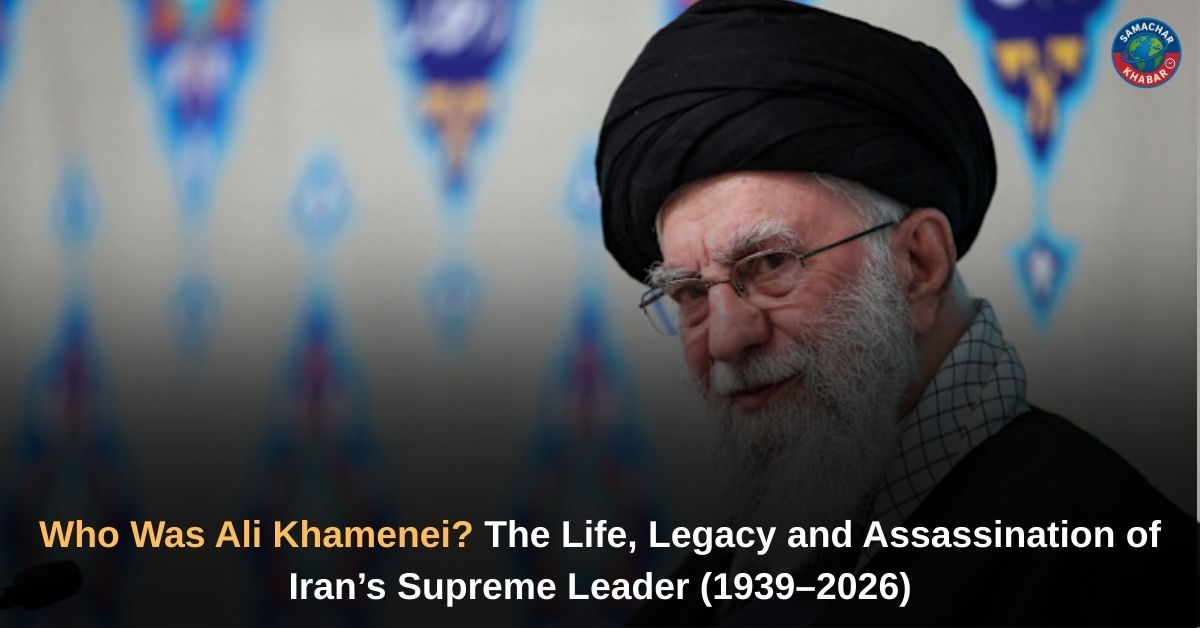
For more than three decades, Ayatollah Ali Hosseini Khamenei stood at the apex of Iran’s political and religious hierarchy. As the Islamic Republic’s Supreme Leader from 1989 until his death in 2026, he shaped Iran’s domestic governance, nuclear policy, regional alliances and confrontations with the West. To supporters, he was the guardian of the 1979 revolution. To critics, he was the architect of repression and prolonged isolation.
On 28 February 2026, Khamenei was killed in joint Israeli–United States airstrikes on Iran. His assassination ended 36 years and six months in power and marked one of the most consequential turning points in the modern Middle East.
Key Facts About Ali Khamenei’s Life, Rule and Death
- Born 19 April 1939 in Mashhad, Iran
- Arrested six times under Shah Mohammad Reza Pahlavi
- Survived a 1981 assassination attempt that paralyzed his right arm
- President of Iran (1981–1989) during the Iran–Iraq War
- Supreme Leader of Iran (1989–2026)
- Expanded the power of the Islamic Revolutionary Guard Corps (IRGC)
- Oversaw repeated crackdowns on nationwide protests
- Backed regional groups including Hezbollah and Hamas
- Supported civilian nuclear development while issuing a fatwa banning weapons of mass destruction
- Killed in Israeli–US strikes targeting Iranian leadership in February 2026
Early Life in Mashhad and Religious Formation
Ali Hosseini Khamenei was born into a clerical family in Mashhad, a major center of Shia scholarship. His father, Javad Khamenei, was a religious scholar of Azerbaijani origin; his mother was of Persian descent.
He began Quranic studies at the age of four and advanced through seminary education in Mashhad before moving to Qom in 1958. There, he attended lectures by Ayatollah Ruhollah Khomeini.
Khamenei became deeply involved in opposition to Shah Mohammad Reza Pahlavi. He was arrested six times and spent three years in exile before the 1979 Islamic Revolution.
The 1979 Revolution and the US Embassy Hostage Crisis
After the Islamic Revolution toppled the Shah, Khamenei rose within the new clerical establishment. He became Tehran’s Friday Prayer leader and held multiple posts in the emerging Islamic Republic.
In November 1979, militant students seized the US Embassy in Tehran, holding diplomats hostage for 444 days. Revolutionary leaders, including Khamenei, supported the action, which entrenched Iran’s anti-American posture for decades.
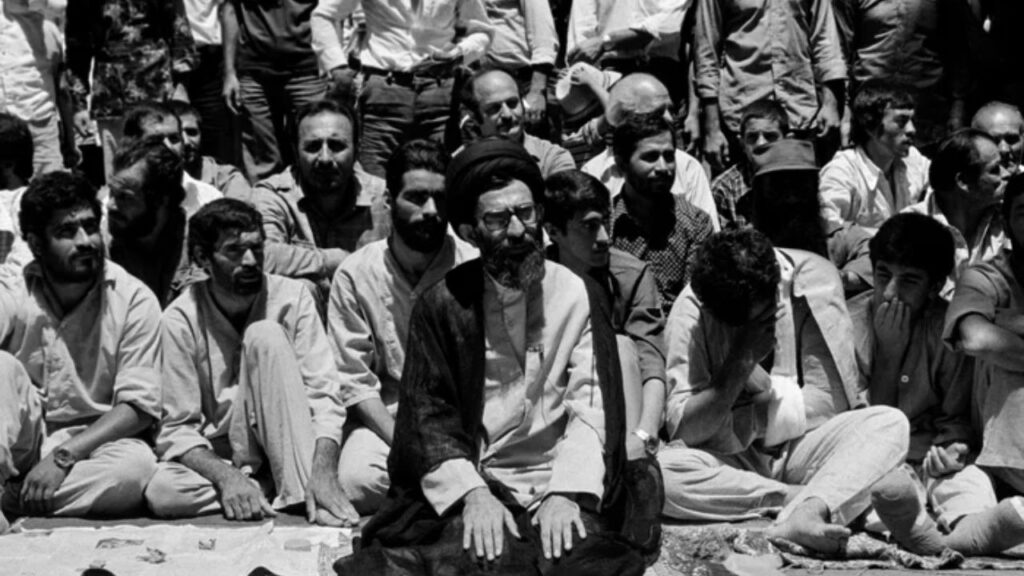
The 1981 Assassination Attempt
On 27 June 1981, a bomb hidden inside a tape recorder exploded during a lecture at Aboozar Mosque. He survived but permanently lost the use of his right arm and sustained lasting lung and vocal cord injuries.
Later that year, after President Mohammad-Ali Rajai was assassinated, Khamenei was elected President of Iran with 97 percent of the vote.
Presidency During the Iran–Iraq War (1981–1989)
As president, Khamenei governed during the eight-year Iran–Iraq War. The conflict included Iraqi chemical attacks on Iranian villages and missile bombardment of Tehran.
During this period:
- Revolutionary courts executed thousands of insurgent group members.
- Iran relied on human wave tactics with heavy casualties.
- The Islamic Revolutionary Guard Corps expanded institutionally.
The war shaped his distrust of the United States, which had backed Iraq.
Becoming Supreme Leader in 1989
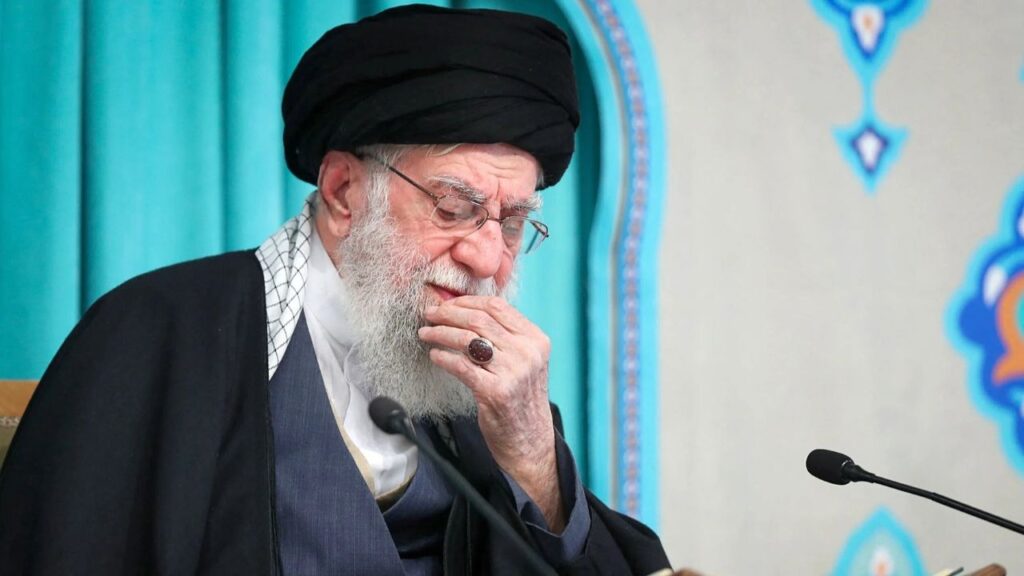
After Khomeini’s death in 1989, Iran’s Assembly of Experts appointed Khamenei Supreme Leader. Constitutional adjustments were made because he was not a senior marja’ at the time.
Over the next 36 years, he consolidated authority across:
- The military
- Judiciary
- Intelligence services
- Media
- Clerical institutions
He relied heavily on the IRGC, which evolved into both a military powerhouse and a vast commercial empire controlling significant sectors of Iran’s economy.
Also Read: US–Israel Military Operation Targets Iranian Government and Missile Sites Amid Nuclear Dispute
The Mykonos Assassinations and European Diplomatic Crisis
In 1997, a German court ruled that Iranian officials had ordered the Mykonos restaurant assassinations and stated the killings were conducted with knowledge of Khamenei and then-President Rafsanjani. Iran denied involvement. The ruling triggered a diplomatic crisis between Iran and several European countries.
Protests, Political Crackdowns and Internal Unrest
Iran experienced repeated protest waves under Khamenei:
| Year | Protest | Reported Impact |
| 1999 | Student protests | Suppressed |
| 2009 | Election protests | Dozens killed, hundreds arrested |
| 2019 | Fuel price protests | Amnesty reported machine gun fire |
| 2022 | Mahsa Amini protests | 550+ killed; 20,000 detained |
| Late 2025 | Nationwide unrest | 7,000+ killed (HRANA) |
| Jan 2026 | Mass protests | 6,488 killed; 53,700 detained |
He consistently endorsed security crackdowns, describing unrest as foreign-backed conspiracies.
Nuclear Policy and International Confrontation
Khamenei supported Iran’s civilian nuclear program while issuing a religious decree declaring nuclear weapons un-Islamic.
Iran signed the 2015 Joint Comprehensive Plan of Action (JCPOA), limiting enrichment in exchange for sanctions relief. After the United States withdrew in 2018, Iran resumed enrichment, reaching 60 percent purity – a short technical step from weapons-grade.
Diplomatic efforts resumed intermittently but stalled over ballistic missile disputes.
Regional Strategy and the “Axis of Resistance”
Under Khamenei, Iran strengthened regional alliances including Hezbollah, Hamas, the Syrian government under Bashar al-Assad and Houthi forces in Yemen.
After the October 7, 2023 Hamas attack on Israel, regional escalation intensified. Hezbollah’s leadership was targeted, including Hassan Nasrallah. Assad’s government collapsed in December 2024. Iran and Israel exchanged direct airstrikes in 2024 for the first time.
Escalation in 2025–2026 and His Assassination
In June 2025, Israeli forces struck Iranian nuclear facilities. The United States later bombed three enrichment sites. Retaliatory missile exchanges followed.
On 28 February 2026:
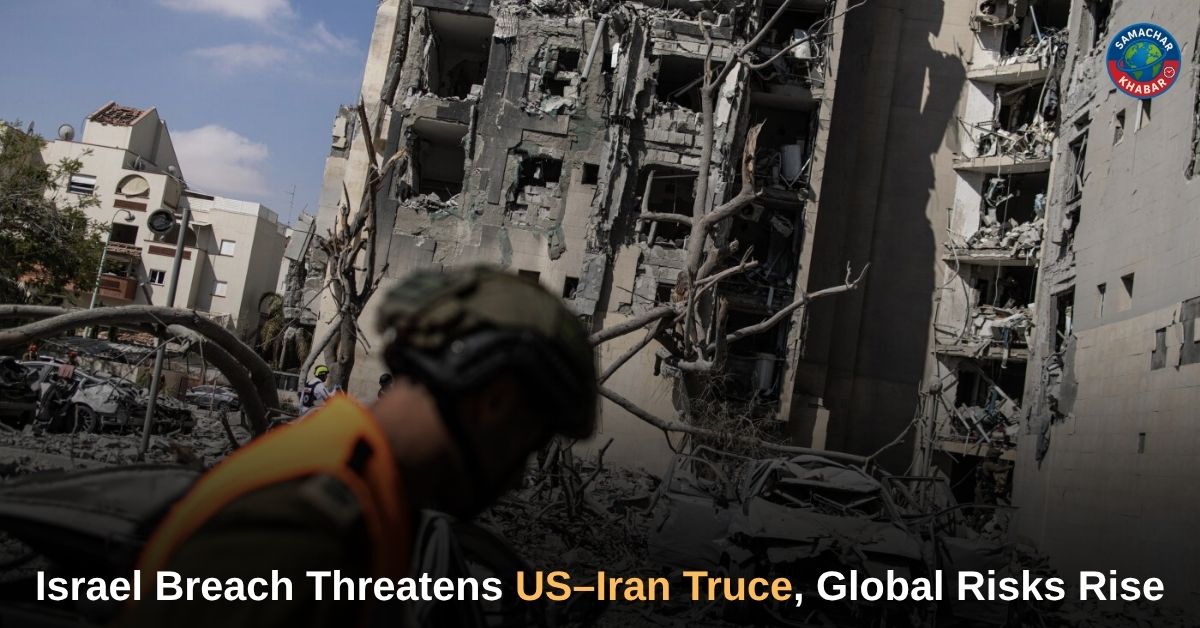
- Joint Israeli–US strikes hit 24 Iranian provinces.
- Iranian media reported at least 201 people killed.
- 108 girls died in a strike on Shajareh Tayyebeh school in Minab.
- Senior IRGC officials including Mohammad Pakpour were reported killed.
- Ali Shamkhani was also reported killed.
- Satellite imagery showed heavy damage to Khamenei’s compound.
Reuters cited a senior Israeli official saying his body was recovered. AFP reported photographic proof was shown to US President Donald Trump and Israeli Prime Minister Benjamin Netanyahu.
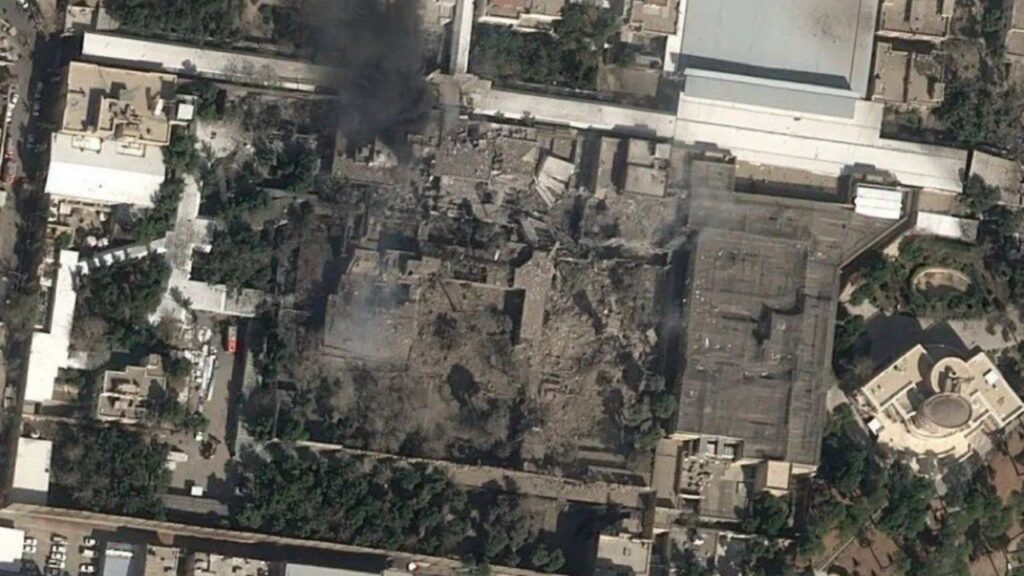
Iranian state media confirmed Khamenei was killed in his office while carrying out official duties. A 40-day mourning period was declared.
His daughter, son-in-law, granddaughter and daughter-in-law were also reported killed.
International Reaction
At the UN Security Council:
- Secretary-General António Guterres called for de-escalation.
- Iran’s ambassador described the strike as a war crime.
- The US ambassador defended the action as lawful.
- China expressed concern.
- Russia condemned the strikes.
The CIA reportedly assessed that hardline IRGC figures would likely dominate succession if Khamenei were killed.
A Spiritual Reflection on Power, Conflict and the Eternal Truth
The life and death of Ali Khamenei once again remind the world that political authority, military strength and global influence are ultimately temporary. History repeatedly shows that even the most powerful rulers cannot escape time, mortality or the consequences of human conflict.
According to the spiritual teachings of Saint Rampal Ji Maharaj, true peace cannot be established through force, dominance or retaliation. His unique spiritual knowledge emphasizes that lasting harmony in society can only come through understanding the Supreme God as described in the holy scriptures, adopting righteous conduct and abandoning violence and ego.
In a world shaped by wars, sanctions, protests and power struggles, spiritual wisdom offers a different path – one centered on truth, compassion and universal brotherhood. Political systems may rise and fall, but spiritual knowledge, when rooted in authentic scripture, is presented as the only enduring solution for global peace.
The End of an Era in Iran
Ali Khamenei’s rule reshaped Iran’s political system, expanded the IRGC’s reach, and entrenched confrontation with Israel and the United States. His leadership saw nuclear negotiations, sanctions, regional proxy conflicts, protest movements and harsh crackdowns.
His assassination closes one of the longest chapters of centralized clerical authority in modern Iran. What follows remains uncertain, but the era of Ali Hosseini Khamenei has definitively ended.
FAQs on Who Was Ali Khamenei?
1. Who was Ali Khamenei?
Ali Khamenei was Iran’s Supreme Leader from 1989 to 2026, previously serving as president (1981–1989). He shaped Iran’s nuclear policy, regional alliances, and internal security strategy.
2. How did Ali Khamenei die?
Ali Khamenei was killed on 28 February 2026 during joint Israeli–US airstrikes targeting Iranian leadership and nuclear facilities, according to Iranian state media confirmation.
3. How long was Ali Khamenei in power?
Khamenei ruled as Iran’s Supreme Leader for 36 years and six months, making him the country’s longest-serving leader since Shah Mohammad Reza Pahlavi.
4. What was Ali Khamenei’s role in Iran’s nuclear program?
He supported civilian nuclear development, approved the 2015 nuclear deal, and oversaw enrichment expansion to 60% after US withdrawal from the agreement in 2018.
5. What protests occurred under Ali Khamenei’s rule?
Major protests occurred in 1999, 2009, 2019, 2022 and 2025–2026, with security crackdowns resulting in thousands of reported deaths and mass detentions.
6. Who could succeed Ali Khamenei as Iran’s Supreme Leader?
Iran’s Assembly of Experts is constitutionally responsible for appointing a successor. Analysts suggest hardline figures linked to the IRGC could influence the transition.