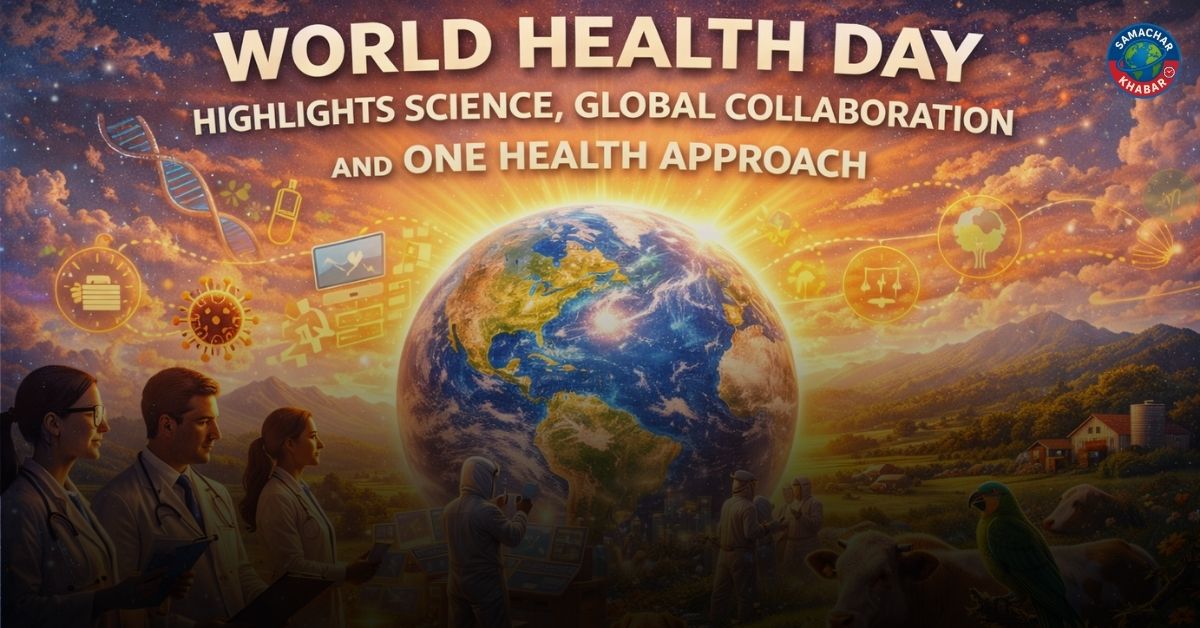
World Health Day 2026 is observed on April 7, marking the founding of the World Health Organization in 1948. This year’s campaign, themed “Together for health. Stand with science.”, focuses on the role of scientific collaboration and evidence-based decision-making in addressing global health challenges. Anchored by major international events, the initiative brings together governments, scientists, and institutions worldwide to strengthen global health systems and promote a unified approach to human, animal, and environmental well-being.
Key Takeaways: World Health Day 2026
- Observed annually on April 7 to mark WHO’s establishment in 1948
- Theme: “Together for health. Stand with science.”
- Focus on scientific collaboration and evidence-based health decisions
- Anchored by two major global events in April 2026
- Promotes the One Health approach linking humans, animals, and ecosystems
- Encourages global cooperation to address health challenges and misinformation
- Supported by WHO’s network of 800 collaborating centres
Understanding World Health Day and Its Global Relevance
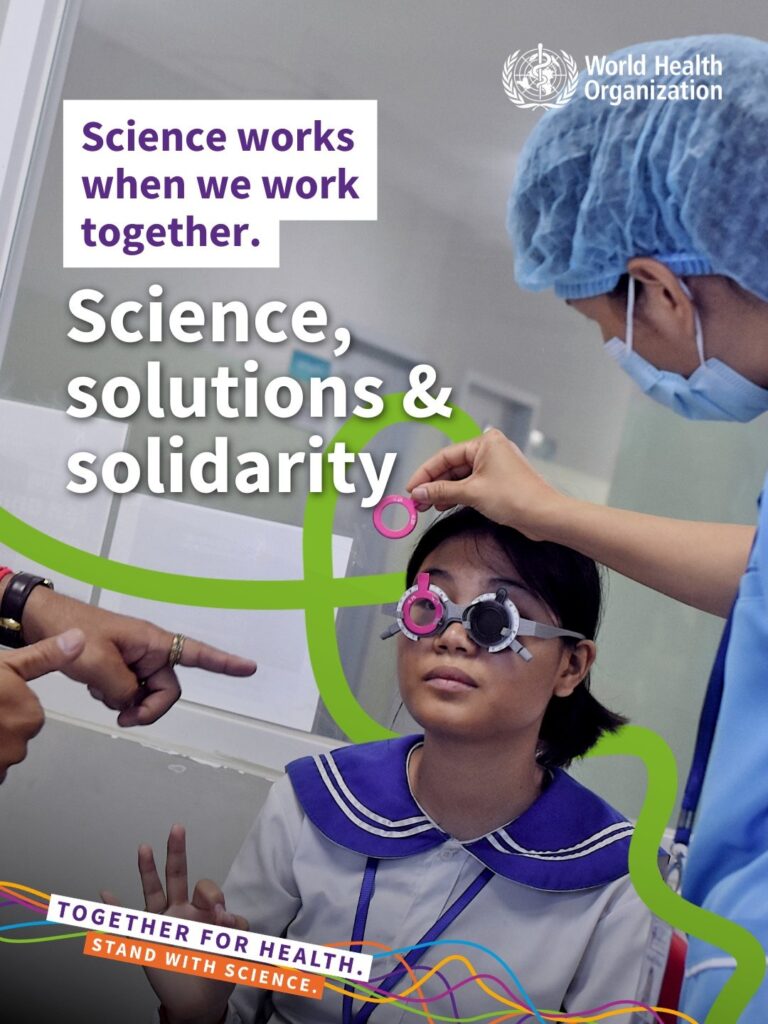
World Health Day is celebrated every year on April 7 to raise awareness about global health issues and promote well-being. It commemorates the establishment of the World Health Organization, an autonomous organization under the United Nations, which serves as the global leader in advancing health for all.
The day highlights the importance of addressing health challenges, improving access to quality healthcare, and strengthening public health systems worldwide. It also recognizes the efforts made by countries, organizations, and individuals in improving global health outcomes.
Theme 2026: Science and Collaboration at the Core
The theme for World Health Day, “Together for health. Stand with science.”, underscores the importance of scientific evidence in shaping health policies and actions.
The campaign calls on:
- Governments
- Scientists
- Health workers
- Partners
- The general public
to support science-based approaches that protect lives, rebuild trust, and ensure a healthier future.
It also emphasises the need to stand against health misinformation and to promote decisions grounded in reliable scientific data.
One Health Approach: Integrated Global Health Strategy
A central concept of the 2026 campaign is the One Health approach, which connects the health of people, animals, and the environment.
This approach recognises that:
- Human health is closely linked to animal health
- Environmental factors directly impact well-being
- Sustainable ecosystems are essential for long-term health outcomes
By adopting this integrated framework, the campaign aims to address complex global health challenges through coordinated and multidisciplinary efforts.
Also Read: World TB Day: India Launches 100-Day Campaign to Eliminate Tuberculosis
Major Global Events Anchoring the Campaign
Two key international events form the foundation of the 2026 campaign, highlighting large-scale scientific collaboration:
1. International One Health Summit (5–7 April 2026)
- Hosted by the Government of France under the French G7 Presidency
- Focuses on advancing the One Health agenda globally
2. WHO Collaborating Centres Global Forum (7–9 April 2026)
- Brings together scientific institutions from over 80 countries
- Represents WHO’s network of approximately 800 collaborating centres
Together, these events constitute the largest scientific network ever convened around a United Nations agency, demonstrating the scale of global cooperation in public health.
Science as a Foundation for Global Health
The WHO and its partners continuously work to generate scientific knowledge on key health priorities. This includes:
- Producing evidence-based research
- Sharing knowledge across countries
- Strengthening national research capacities
- Improving equitable access to healthcare systems
Scientific advancements play a critical role in shaping health systems and ensuring that policies are informed by reliable data and proven methodologies.
Historical Background of World Health Day
The origins of World Health Day can be traced back to 1945, when the United Nations was established with the aim of promoting peace, security, and improved living conditions globally.
Recognising the importance of public health, the World Health Organization was created. On April 7, 1948, its constitution was officially adopted, and the World Health Assembly was established to guide its work.
The WHO was formed by merging:
- The Health Organization of the League of Nations
- The International Office of Public Health
India was among the founding members, joining in January 1948. The organization began its global operations in 1951.
Significance in the Present Global Context
World Health Day serves as a reminder of ongoing global health challenges and the need for collective action. It highlights:
- The importance of universal health coverage
- Access to quality healthcare services
- The role of scientific progress in improving health outcomes
The campaign aligns with the United Nations’ Sustainable Development Goals by encouraging countries and institutions to collaborate in addressing pressing health issues.
By focusing on evidence-based decision-making and scientific collaboration, the initiative aims to:
- Strengthen global health systems
- Promote trust in public health institutions
- Encourage coordinated international responses
Global Solidarity Through Science
Progress in public health is built on global solidarity and cooperation. The WHO’s ability to connect science with real-world implementation is supported by its extensive network of collaborating centres worldwide.
These institutions play a vital role in:
- Translating scientific research into practical solutions
- Supporting countries in implementing health strategies
- Enhancing collaboration across borders
The 2026 campaign reinforces the idea that science-driven partnerships are essential for building a healthier and safer future for all.
Science-Led Cooperation Shapes Future Health Systems
The future of global health depends on how effectively science-led approaches are developed and applied. The World Health Day 2026 campaign highlights the need to integrate scientific knowledge into policies and community practices.
By bringing together governments, scientists, and institutions, the initiative seeks to ensure that health systems are resilient, inclusive, and capable of addressing evolving challenges. The emphasis on collaboration, evidence, and shared responsibility reflects a unified effort to secure long-term health outcomes for people, animals, and the planet.
Faith, True Worship and Healing
The message of global health and scientific collaboration also reflects a deeper spiritual perspective on well-being. True worship and inner faith are often seen as sources of strength during times of suffering. When individuals take refuge in the Supreme God, it is believed that many life challenges, including health-related difficulties, begin to ease through divine grace. Even in cases where medical science reaches its limits and doctors acknowledge their inability to cure certain illnesses, faith is considered to play a significant role.
According to the teachings of Tatvdarshi Sant Rampal Ji Maharaj, when a person comes under His refuge and follows true spiritual Knowledge, relief from suffering becomes possible. It is believed that incurable diseases, which remain beyond the reach of conventional treatment, can also be resolved through divine intervention. This perspective holds that where science concludes its scope, the power and wisdom of the Supreme God begin to work, offering hope and healing beyond material limitations.
For more information visit:
Website:www.jagatgururampalji.org
YouTube: Sant Rampal Ji Maharaj
Facebook: Spiritual Leader Saint Rampal Ji
X (Twitter): @SaintRampalJiM
FAQs on World Health Day 2026
1. What is World Health Day?
It is observed on April 7 each year to mark the founding of WHO and raise awareness about global health issues.
2. What is the theme for World Health Day 2026?
The theme is “Together for health. Stand with science.”
3. What is the One Health approach?
It links human, animal, and environmental health for integrated global health solutions.
4. Which events are part of the 2026 campaign?
The One Health Summit and WHO Collaborating Centres Global Forum.
5. Why is World Health Day important?
It promotes awareness, encourages collaboration, and supports evidence-based action to address global health challenges.