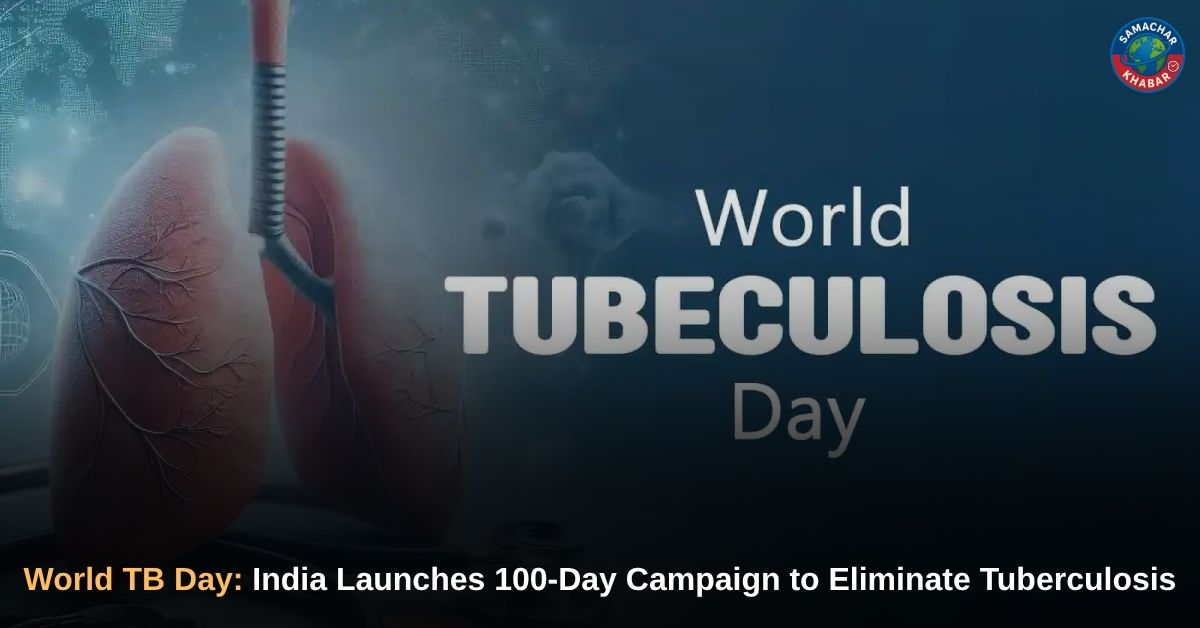
World Tuberculosis Day 2026 is being observed on March 24 with a renewed global push to eliminate one of the deadliest infectious diseases. This year’s theme, “Yes! We Can End TB!”, highlights the urgent need for stronger leadership, increased investment, and community-driven action.
India, which bears the highest tuberculosis burden globally, has intensified its fight through a nationwide 100-day campaign, new digital tools, and expanded healthcare strategies. While significant progress has been made in reducing cases and deaths, persistent challenges such as drug resistance, malnutrition, and delayed diagnosis continue to demand focused and sustained action.
Key Highlights of World TB Day 2026 and India’s TB Elimination Mission
- World TB Day is observed annually on March 24 to raise awareness about tuberculosis.
- It commemorates the 1882 discovery of the TB bacterium by Dr. Robert Koch.
- Theme 2026: “Yes! We Can End TB!” emphasizing commitment, investment, and action.
- India aims to eliminate TB by 2025 under the National Tuberculosis Elimination Programme (NTEP).
- A national event is being held at Gautam Buddha University, Greater Noida.
- India has launched a 100-day TB Mukt Bharat campaign along with new digital initiatives.
- South-East Asia accounts for 34% of global TB cases and nearly 40% of deaths.
- In 2024, the region recorded 3.68 million cases and 433,000 deaths.
- TB continues to kill over 1.2–1.3 million people annually, with around 4,100 deaths daily.
- Drug-resistant TB, poverty, malnutrition, and diabetes remain major challenges.
Understanding World TB Day: History, Theme, and Significance
World Tuberculosis Day is observed every year on March 24 to spread awareness about tuberculosis, a contagious disease caused by Mycobacterium tuberculosis that primarily affects the lungs but can also impact other parts of the body.
The day commemorates a historic scientific breakthrough made in 1882 when Dr. Robert Koch announced the discovery of the TB-causing bacterium. At that time, tuberculosis was responsible for the death of one in seven people in Europe and the Americas.
The 2026 theme, “Yes! We Can End TB!”, sends a strong global message that eliminating TB is achievable through coordinated efforts, scientific advancements, and sustained commitment. The theme also emphasizes country-led action, supported by communities, partners, and global organizations.
Historically, tuberculosis has been known by several names such as “phthisis,” “tabes,” “scrofula,” “white plague,” and “consumption,” reflecting its long-standing impact on human health.
Global TB Burden: Scale, Progress, and Persistent Challenges
Despite being preventable and curable, tuberculosis remains one of the world’s deadliest infectious diseases. Globally, around 10.7 to 10.8 million people fall ill with TB each year, and approximately 1.23 to 1.3 million people die annually.
Every day, nearly 27,000 people develop TB and about 4,100 lose their lives due to the disease.
The WHO South-East Asia region carries a disproportionately high burden:
- Accounts for approximately 34% of global TB cases
- Nearly 40% of global TB deaths
- Reported 3.68 million cases and 433,000 deaths in 2024
Encouragingly, the region has made measurable progress:
- 23% reduction in TB deaths since 2015
- 16% decline in TB incidence, outperforming global averages
- Treatment coverage exceeding 85%
- Over 3.1 million people initiated on treatment in 2024
However, the region remains off track to meet global TB elimination targets. Drug-resistant TB continues to pose a serious challenge, with around 150,000 MDR/RR-TB cases reported annually.
Additionally, nearly 44% of TB-affected households face catastrophic financial costs, highlighting the socio-economic burden of the disease.
India’s TB Elimination Goal: Strategy, Progress, and Challenges
India has set an ambitious goal to eliminate tuberculosis by 2025, five years ahead of the global target of 2030. This mission is being implemented under the National Tuberculosis Elimination Programme (NTEP), which focuses on a patient-centric and technology-driven approach.
The programme follows four key pillars:
- Detect
- Treat
- Prevent
- Build
India has made significant progress:
- TB incidence reduced by nearly 17.7% between 2015 and 2023
- Death rates declined from 28 to 22 per lakh population
- Missing TB cases reduced by 83%, from 15 lakh to 2.5 lakh
The country has also introduced advanced treatment regimens:
- Bedaquiline-based shorter, all-oral treatment
- mBPaL regimen with approximately 80% success rate for drug-resistant TB
Despite progress, India still accounts for nearly one-fourth of global TB cases. Structural challenges such as poverty, overcrowding, malnutrition, and delayed diagnosis continue to drive transmission.
Major Announcements on World TB Day 2026 in India
To mark World TB Day 2026, the Ministry of Health and Family Welfare is organizing a national-level event at Gautam Buddha University in Greater Noida.
The event is being presided over by Union Health Minister Jagat Prakash Nadda and attended by key leaders, including senior government officials, health experts, and community representatives.
Key initiatives launched include:
- TB Mukt Bharat Abhiyaan – 100 Days Campaign aimed at intensified case detection and improved treatment adherence
- TB Mukt Bharat App for digital patient monitoring and support
- TB Mukt Urban Ward Initiative targeting high-burden urban areas
These initiatives are designed to strengthen last-mile delivery of TB services and accelerate India’s progress toward TB elimination.
Government Schemes and Community-Led Initiatives
India’s TB elimination strategy combines healthcare services with social and community support.
Key Initiatives
| Initiative | Purpose |
| NTEP | Free diagnosis, treatment, and monitoring |
| Nikshay Portal | Digital patient tracking |
| Nikshay Poshan Yojana | ₹1000/month nutritional support |
| PM TB Mukt Bharat Abhiyaan | Community participation and support |
| Active Case Finding | Early detection in high-risk areas |
| UDST | Drug-resistant TB management |
The Pradhan Mantri TB Mukt Bharat Abhiyaan is also recognized as the world’s largest crowd-sourcing initiative for nutritional support to TB patients.
President Droupadi Murmu has highlighted that tuberculosis remains a major public health challenge and emphasized the progress made through early diagnosis, free treatment, and improved patient care under national programmes.
Causes, Symptoms, and Transmission of Tuberculosis
Tuberculosis is an airborne disease that spreads when an infected person coughs, sneezes, or speaks, releasing infectious droplets into the air.
Common Symptoms
- Persistent cough lasting more than two weeks
- Fever and night sweats
- Weight loss and fatigue
- Chest pain and coughing blood
Risk Factors
- Malnutrition (linked to about 40% of cases)
- Diabetes (linked to 3.2 lakh cases in India)
- HIV infection
- Weak immune system
TB is preventable and curable with timely diagnosis and proper treatment, usually involving a 6–9 month antibiotic regimen.
Hidden and Underdiagnosed Forms of TB
While pulmonary TB is the most common form, tuberculosis can also affect other parts of the body.
One such form is genital TB, which often presents with non-specific symptoms like chronic pelvic pain and infertility. Due to its silent progression and lack of clear symptoms, diagnosis is often delayed, leading to long-term complications.
Early clinical suspicion and combined diagnostic approaches are essential for identifying such cases.
Role of Nutrition and Support in TB Recovery
Proper nutrition plays a critical role in TB recovery and immune system strengthening.
Key supportive nutrients include:
- Vitamin D
- Vitamin C
- Zinc
- Iron
- Protein
However, supplements alone cannot cure tuberculosis. Strict adherence to prescribed anti-tubercular therapy is essential for successful treatment.
Global Efforts and Policy Push to End TB
Global efforts to eliminate tuberculosis are guided by the End TB Strategy, approved in 2014. The strategy focuses on reducing TB incidence, deaths, and financial burden on affected families.
Since 2000, around 83 million lives have been saved through effective TB treatment and prevention efforts.
Health organizations have called for:
- Stronger national leadership
- Increased investment
- Use of technology, including AI
- Addressing social determinants such as nutrition and poverty
The Stop TB Partnership has emphasized that ending TB is achievable if countries lead efforts and global partners support them with resources and innovation.
Global and Regional Efforts Beyond India
Countries across the world are strengthening their TB response. For example, Nepal has set targets to significantly reduce TB incidence and mortality, eliminate TB by 2035, and bring catastrophic costs to zero.
Such efforts reflect a growing global commitment to tackling tuberculosis through coordinated action and policy support.
Spiritual Insight: Teachings of Saint Rampal Ji Maharaj for a Healthy Life
While World TB Day 2026 highlights medical efforts to eliminate tuberculosis, it also points to the importance of overall well-being. According to Saint Rampal Ji Maharaj, true health depends on both physical care and spiritual awareness.
His teachings promote a pure lifestyle free from addictions and negative habits, helping improve immunity and mental strength. He also emphasizes Satbhakti (true worship), which brings inner peace and balance. Combining modern healthcare with such spiritual guidance can help individuals move toward a healthier and more disciplined life.
A Defining Moment in the Fight Against Tuberculosis
World TB Day 2026 marks a critical moment in the global fight against tuberculosis. India’s launch of a 100-day campaign and its continued focus on innovation, early detection, and community participation highlight a strong commitment to achieving a TB-free future.
While significant progress has been made, challenges such as drug resistance, socio-economic inequalities, and healthcare access remain. Sustained action, global cooperation, and public awareness will be essential to accelerate progress and turn the vision of ending tuberculosis into a reality.
FAQs on World TB Day 2026 and India’s TB Elimination Campaign
Q1. What is World TB Day 2026 and why is it important?
World TB Day, observed on March 24, raises awareness about tuberculosis and promotes global efforts to eliminate this deadly infectious disease through early diagnosis, treatment, and prevention.
Q2. What is the theme of World TB Day 2026?
The theme is “Yes! We Can End TB!”, emphasizing strong commitment, investment, innovation, and collective action by governments, communities, and global organizations to eliminate tuberculosis.
Q3. What new initiatives has India launched on World TB Day 2026?
India launched a 100-day TB Mukt Bharat campaign, TB Mukt Bharat App, and Urban Ward Initiative to improve case detection, treatment adherence, and healthcare delivery in high-burden areas.
Q4. What is India’s target to eliminate tuberculosis?
India aims to eliminate tuberculosis by 2025 under the National Tuberculosis Elimination Programme, ahead of the global target of ending TB by 2030.
Q5. What are the main causes and symptoms of tuberculosis?
TB is caused by Mycobacterium tuberculosis and spreads through air. Symptoms include persistent cough, fever, weight loss, night sweats, and fatigue, especially in people with weak immunity.