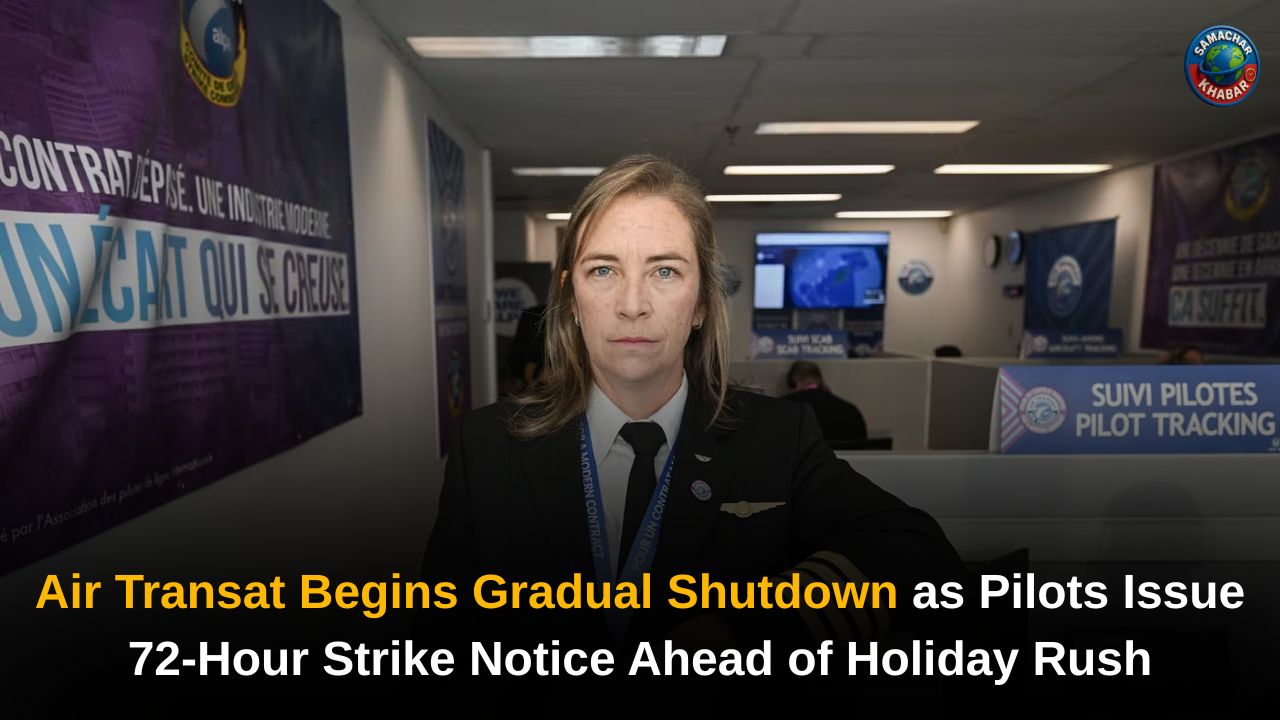
Air Transat has entered a critical phase of its operations after receiving a formal 72-hour strike notice from the Air Line Pilots Association (ALPA), triggering a gradual shutdown plan that will fully suspend flights by Tuesday. The move comes after nearly a year of stalled negotiations, raising urgent concerns for thousands of travellers during one of the busiest travel periods of the year. Both sides maintain that an agreement is still possible, yet the situation has rapidly escalated into one of the most significant aviation disruptions Canada has faced this season.
Key Takeaways on Air Transat’s Strike Notice and Gradual Shutdown (SEO-Optimized)
- Air Transat will begin suspending flights from Monday, with a complete shutdown expected by Tuesday in preparation for a possible pilots’ strike beginning early Wednesday.
- ALPA issued a 72-hour strike notice, with 99% of pilots voting in favour, citing months of unproductive bargaining and a decade-old agreement.
- The airline calls the strike notice “premature”, saying it has offered a 59% wage increase over five years and major improvements to working conditions.
- Passengers face major disruptions, though the airline has launched repatriation plans and flexibility policies.
- Industry experts warn of high holiday-season impacts, as Air Transat struggles financially and navigates internal boardroom tensions.
Pilots’ Strike Notice Sparks Immediate Shutdown Preparations
The labour dispute intensified when ALPA delivered a 72-hour strike notice, confirming that pilots could legally walk off the job as early as 3 a.m. ET on Wednesday. The union said the decision followed months of unproductive bargaining and an overwhelming strike mandate, with 98% of pilots voting and 99% supporting the strike if necessary.
Capt. Bradley Small, chair of the Air Transat Master Executive Council, reiterated that pilots “do not want to strike,” but insisted that management has left them “no choice.”
He stated:
“Unless significant progress is made at the bargaining table, we will strike if that’s what it takes to achieve a modern contract.”
The union’s demands include industry-standard pay, improved benefits, job security, quality-of-life enhancements, and updated work rules, replacing a contract signed in 2015.
Air Transat Calls Strike Notice ‘Premature,’ Offers Significant Wage Hike
Air Transat quickly responded, calling the notice “premature” and asserting that real progress had been made at the bargaining table. According to the airline, it has offered:
- 59% salary increase over five years
- Major improvements to working conditions
- A complete overhaul of standard clauses in the collective agreement
Julie Lamontagne, Chief Human Resources Officer, criticized the union’s timing, stating:
“It is regrettable that the union has expressed such indifference toward Transat, its employees and clients by choosing the path of a strike at this time of year — a reckless decision that does not reflect the state of negotiations.”
The airline stressed that it remains committed to reaching a negotiated settlement but must prioritize operational planning to prevent travellers and aircraft from being stranded abroad.
Immediate Operational Impact: Shutdown Over Three Days, Repatriation Begins
With the legal strike window approaching, Air Transat has activated a “gradual and orderly suspension” of operations.
Shutdown Timeline
- Monday – Progressive flight cancellations begin
- Tuesday – Full suspension of all flights
- Wednesday – Potential strike begins at 3 a.m. ET
To avoid stranding passengers overseas, Air Transat has begun a large-scale repatriation program, aiming to return travellers to their original departure points before Wednesday.
Dave Bourdages, VP of Flight Operations, confirmed that teams are executing a special plan to bring passengers, crew, and aircraft back to Canada safely.
The airline has also introduced a flexibility policy allowing travellers scheduled within the next five days to change or postpone flights at no charge. Refunds, credits, or rebooking solutions are being communicated directly to impacted customers.
Passengers React: Stress, Uncertainty, and Urgent Rebooking
Travellers at Toronto Pearson International Airport expressed mixed feelings. Some, like Clara Yoon, described feeling “scared and stressed,” worrying about their return flights from the Dominican Republic. Others attempted to adapt by securing return tickets with alternate carriers.
Meanwhile, some passengers took the situation more calmly, noting that travel disruptions remain part of the aviation landscape.
Advocacy group Air Passenger Rights emphasized that passengers may be eligible for up to $1,000 in compensation if their flights are cancelled before a strike actually begins. The group stressed that flight cancellations triggered by the airline — even in anticipation of labour action — remain within the carrier’s control under Canadian law.
Founder Gábor Lukács advised passengers to insist on rebooking through Air Transat or competitor airlines rather than accepting refunds prematurely.
Internal Pressures: Financial Strain and Boardroom Tensions Add Complexity
The strike notice arrives amid broader organizational challenges for Air Transat. The company has faced:
- Significant debt following the pandemic
- Annual losses, including $114 million in 2024
- Shareholder pressure, led by investor Pierre Karl Péladeau
- Internal disputes over refinancing and board restructuring
Péladeau criticized the airline’s leadership, calling the situation “deplorable” and offering to mediate negotiations. He argued that management must finalize the pilots’ contract renewal to “prevent the collapse of our tour operator.”
Additionally, the company warned in its annual report that competitive pilot contracts across the industry threaten retention. Since 2020, Air Transat has lost over 180 pilots, roughly one in four, many leaving for higher-paying competitors.
Government Response and Industry Outlook
Federal mediators continue to monitor the situation closely. With the holiday travel season at its peak, aviation experts describe the timing as particularly damaging.
McGill aviation lecturer John Gradek noted that full flights and high fares during December exacerbate the financial and operational consequences of a shutdown.
Other Canadian airlines — including Air Canada, WestJet, and Porter — have indicated they are monitoring developments but have not committed to adjusting operations.
How the Air Transat Shutdown May Shape the Days Ahead
As the Wednesday strike deadline approaches, thousands of passengers, hundreds of employees, and Canadian regulators remain on high alert. Negotiations are ongoing, yet both sides appear firm in their positions. The next 48 hours will determine whether Canada faces a major holiday-season aviation disruption or a last-minute breakthrough.
With nearly a year of negotiations, mounting financial pressures, passenger anxiety, and a tense labour environment, Air Transat now stands at a decisive moment — one that could reshape its operations, workforce relations, and long-term stability.
FAQs on Air Transat Pilots’ Strike Notice and Flight Shutdown
1. Why is Air Transat shutting down flights?
Air Transat is suspending flights because pilots issued a 72-hour strike notice after stalled negotiations on pay, benefits, job security, and working conditions.
2. When will the Air Transat strike begin?
The pilots’ strike may begin early Wednesday after the 72-hour notice ends, prompting flight cancellations starting Monday and full suspension by Tuesday.
3. What compensation can Air Transat passengers claim?
Passengers may receive up to $1,000 compensation if flights are cancelled before the strike begins, along with rebooking, meals, and accommodations.
4. What is Air Transat offering pilots in negotiations?
Air Transat proposed a 59% salary increase over five years plus major improvements to pilots’ working conditions, though the union says talks remain unproductive.
5. How will stranded passengers be assisted?
Air Transat is repatriating travellers, offering flexible rebooking, refunds, or credits, and must rebook passengers on partner or competitor airlines when required.