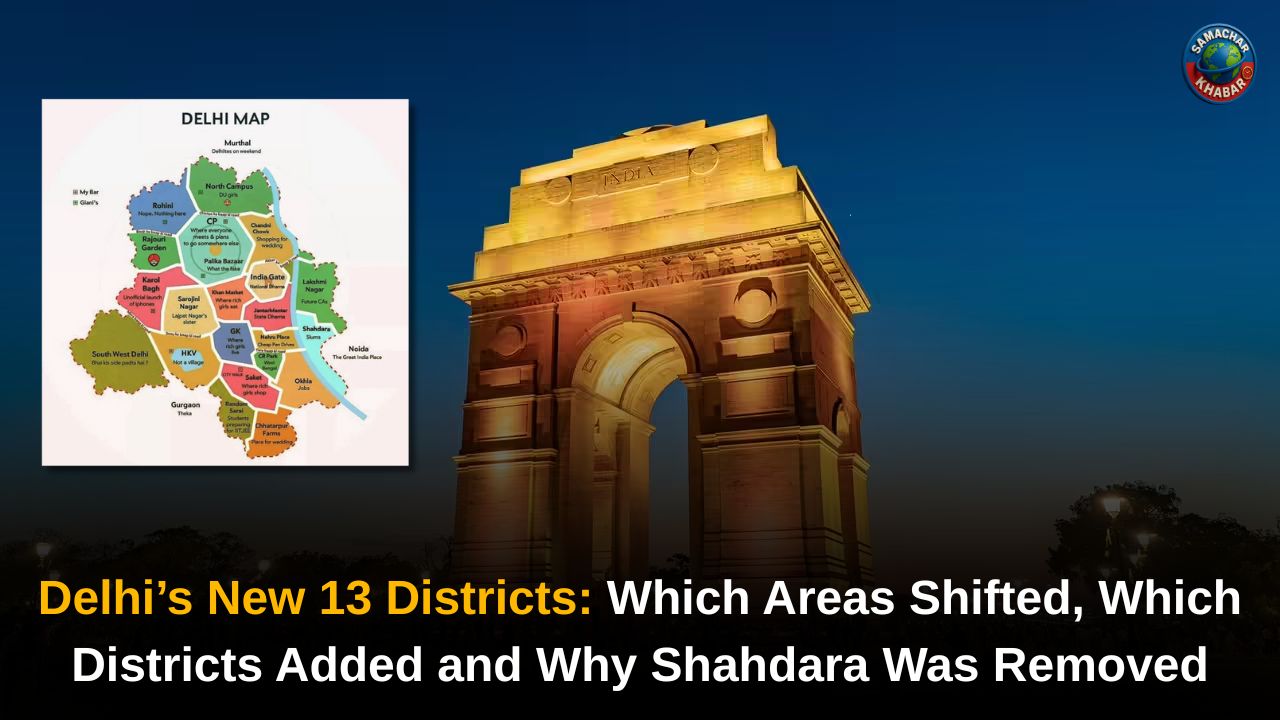
Delhi New Map 2026 (Delhi Redraws Map): In one of the most sweeping administrative reforms in recent decades, the Delhi government has approved a complete redraw of the capital’s revenue map, expanding the number of districts from 11 to 13. The overhaul seeks to eliminate long-standing jurisdictional confusion, align district boundaries with civic bodies, and make public services faster, clearer and more citizen-centric.
Cleared during a Cabinet meeting chaired by Chief Minister Rekha Gupta, the reform is backed by an initial budget of Rs 25 crore and is being described by officials as a “historic step” that finally resolves administrative issues pending for years.
A Quick Overview of Delhi’s Major Administrative Shift
The restructuring introduces three new districts—Old Delhi, Central North and Outer North—while completely dissolving Shahdara district. The number of subdivisions has increased from 33 to 39, and Sub-Registrar Offices from 22 to 39, enabling more focused oversight and quicker grievance redressal.
Crucially, this is the first time Delhi’s revenue boundaries will fully align with the Municipal Corporation zones, NDMC and the Delhi Cantonment Board. Officials say the result will be seamless coordination of services, improved land-record management, and fewer delays for citizens who often struggled between mismatched jurisdictions.
Key Takeaways: Delhi’s New District Layout, Boundary Shifts and Structural Changes
- Delhi now has 13 districts, with Old Delhi, Central North and Outer North added, and Shahdara removed entirely.
- All 13 districts will have Mini Secretariats, consolidating SDM, ADM, Tehsil, Registrar and civic services under one roof.
- Subdivisions rise from 33 to 39, balancing administrative workload and ensuring faster local governance.
- Sub-Registrar Offices jump from 22 to 39, each aligned with newly designed subdivisions for smoother property registration.
- Full alignment of revenue districts with 12 MCD zones, NDMC and Delhi Cantonment Board—a solution to decades of mismatched governance.
- Gazette notification is expected within two weeks, and complete implementation is targeted by December 2025.
- Overhaul addresses years of confusion where municipal and revenue jurisdictions overlapped or clashed.
- District Magistrates will now have stronger, clearer authority, similar to counterparts in other states.
Why Shahdara Was Removed and Why Delhi Needed a Redraw
Shahdara’s removal was not arbitrary—it stemmed from persistent misalignment between the district’s revenue boundaries and the MCD zones surrounding it. Many areas overlapping with Shahdara district fell under different municipal jurisdictions, causing long delays and unclear responsibility for issues like land records, registration, and building permissions. As part of the new structure, Shahdara’s areas have been redistributed among East and North East districts for better administrative coherence.
Officials pointed out that cases like Mayur Vihar clearly showed the problem: the area fell under the Shahdara MCD zone but under the East revenue district, forcing residents to navigate multiple offices. Removing these mismatches was essential to streamline public services.
Chief Minister Rekha Gupta said the reform brings “clarity, speed and predictability” to governance, calling district administration the backbone of public service delivery in a growing metropolis like Delhi.
Complete List of Delhi’s 13 Districts and Their Subdivisions
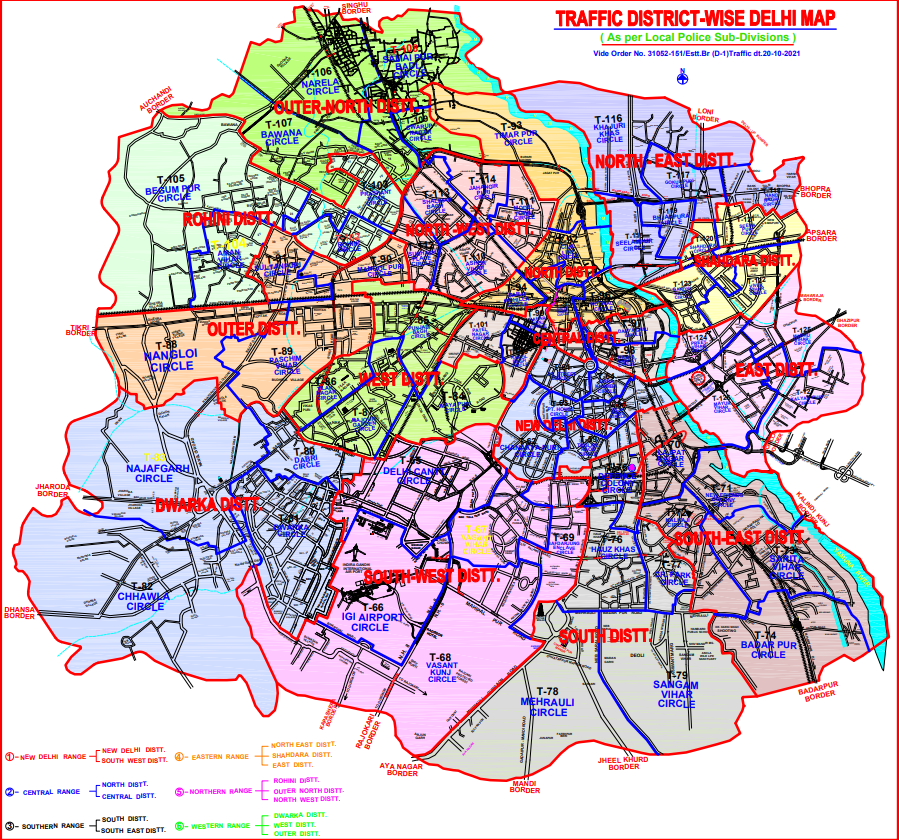
The government released the updated structure as follows:
| District Name | Sub-Divisions |
| South East | Jangpura, Kalkaji |
| Old Delhi | Badarpur, Sadar Bazar |
| North | Chandni Chowk, Burari, Adarsh Nagar |
| New Delhi | Delhi Cantt, New Delhi |
| Central | Patel Nagar, Karol Bagh, Shakur Basti |
| Central North | Shalimar Bagh, Model Town |
| South West | Najafgarh, Matiala, Dwarka, Bijwasan |
| Outer North | Mundka, Narela, Bawana |
| North West | Kirari, Nangloi Jat, Rohini |
| North East | Karawal Nagar, Gokal Puri, Yamuna Vihar, Shahdara |
| East | Gandhi Nagar, Vishwas Nagar, Patparganj |
| South | Chhatarpur, Malviya Nagar, Deoli, Mehrauli |
| West | Vikaspuri, Janakpuri, Rajouri Garden |
This structure aims to make district sizes more balanced and manageable, ensuring better supervision and improved citizen services.
Mini Secretariats: The New Nerve Centres of District Governance
Perhaps the most transformative part of the overhaul is the establishment of 13 Mini Secretariats. These multi-department complexes will host:
- Revenue Offices
- SDM and ADM offices
- Tehsil services
- Sub-Registrar Offices
- MCD Zonal teams
- Departments such as Delhi Jal Board, PWD, Social Welfare, and others
Currently, citizens travel between multiple buildings for different services. The Mini Secretariat model replaces this with a one-roof system, enabling simpler processes, faster approvals and coordinated decision-making. Former Delhi Chief Secretary Rakesh Mehta praised the model for bringing all essential services “from birth to death”—from permits to registrations—into a single location.
Smaller Districts, Bigger Efficiency: Why the City Needed Decentralisation
Delhi’s population density, rapid construction and increasingly complex civic needs have outgrown the existing 11-district model. Larger districts meant:
- Slower file movement
- Overburdened officials
- Uncoordinated land-record updates
- Confusion among residents about the right office for their grievance
- Delays in urban planning and approvals
By dividing the city into smaller, more efficient districts, the administration aims to improve localised decision-making, control workload and strengthen accountability. Officials say this will also reduce disputes over overlapping jurisdictions.
Strengthening the Role of District Magistrates
A significant feature of the reform is the empowerment of District Magistrates. After implementation, all major civic and administrative offices—including the Deputy Commissioner of MCD zones—will work in coordination under the DM’s supervision. This will enable:
- Faster grievance redressal
- Unified command structure
- Clearer responsibility mapping
- Reduction in inter-department conflicts
- More responsive public service delivery
Residents will be able to approach the DM directly, reducing bureaucratic delays and confusion.
Implementation Timeline: What Happens Next
The Delhi government has set a fast rollout plan:
- Gazette notification in 15 days
- Transition process already underway
- Departments preparing for realignment of land records, IT systems and staffing
- Aim for full operational status by December 2025
Governance experts note that the first 12 months will be crucial, as coordination between police districts, NDMC, the Cantonment Board and other agencies will determine whether the reform delivers on its promise of faster, cleaner administration.
A Defining Moment for Delhi’s Administrative Future
Delhi’s shift to 13 districts represents far more than a boundary change—it is an attempt to redefine how governance functions in India’s capital. By synchronising revenue and civic jurisdictions, empowering district officials and creating one-stop service hubs, the reform seeks to create a simpler, more transparent and more predictable administrative experience for nearly 20 million residents.
Whether the overhaul succeeds now depends on execution, coordination and the city’s ability to adapt to its new administrative identity.
FAQs on Delhi’s New 13 Districts and Administrative Reorganisation
1. What are the new districts added in Delhi’s 2025 administrative overhaul?
Delhi added Old Delhi, Central North and Outer North districts, expanding the total to 13 while dissolving Shahdara for better alignment with civic boundaries.
2. Why was Shahdara district removed in Delhi’s new map?
Shahdara was removed due to long-standing mismatches between its revenue boundaries and MCD zones, causing persistent citizen confusion and administrative delays.
3. How will the new Mini Secretariats benefit Delhi residents?
Mini Secretariats will centralise revenue, registration and civic services under one roof, reducing office visits, speeding file processing and improving coordination between departments.
4. How many subdivisions and Sub-Registrar Offices does Delhi have now?
Delhi now has 39 subdivisions and 39 Sub-Registrar Offices, enabling smaller administrative units and faster property registration services.
5. When will Delhi’s new 13-district structure become fully operational?
The government aims to complete the reorganisation by December 2025, with the official gazette notification expected within 15 days.