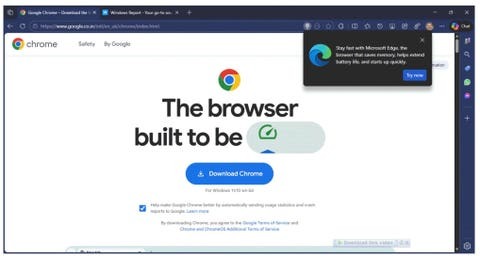
Microsoft is testing a new approach within Windows that may discourage users from downloading Google Chrome through its Edge browser. According to Windows Report, users who open Chrome’s download page in Microsoft Edge may now see a security-focused banner at the top of the page.
Rather than comparing browser performance, Microsoft emphasizes protection and online safety features built into Edge. The move has drawn criticism from the Browser Choice Alliance, which argues the messaging interferes with consumer choice. The development comes amid ongoing security concerns affecting Chromium-based browsers, including both Chrome and Edge.
Key Takeaways on Microsoft and Google Chrome Browser Competition
- Microsoft displays a new security banner when Chrome’s download page is opened in Edge
- The message emphasizes protection rather than performance comparisons
- Microsoft promotes Edge as an all-in-one browser with built-in safety features
- The Browser Choice Alliance criticizes the move as misleading
- Chrome and Edge share Chromium vulnerabilities, often patched at different speeds
Microsoft Tests a New Approach Inside Edge
Microsoft is once again experimenting with how Windows users encounter competing browsers. According to Windows Report, users who visit Google Chrome’s download page while using Microsoft Edge may now see a new banner displayed at the top of the screen.
This banner marks a shift from earlier campaigns. Instead of presenting side-by-side comparisons between Edge and Chrome, Microsoft now focuses on online safety and protection. The message encourages users to remain within Edge by highlighting security-related features rather than browser speed or compatibility.
Also Read: Perplexity Comet Browser: Can It Replace Chrome, Firefox, and Safari?
The change reflects a broader strategy by Microsoft to reinforce its own ecosystem, similar to approaches used by Apple to retain Safari users.
Protection Messaging Replaces Performance Comparisons
In earlier efforts, Microsoft often highlighted that Edge is built on the same Chromium base as Chrome, offering compatibility with Chrome extensions and websites while claiming improved performance or efficiency.
This time, those arguments are absent. The new messaging remains centered entirely on built-in safety features. Microsoft frames Edge as an “all-in-one option,” emphasizing capabilities such as:
- Private browsing
- Password monitoring
- Protection against online threats
Rather than positioning Edge as technically superior to Chrome, Microsoft presents it as a safer browsing environment.
New Online Safety Page Directs Users
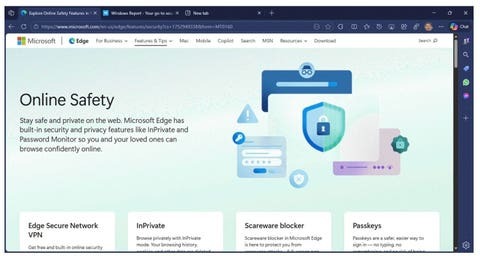
The banner includes a “Browse securely now” button. Clicking it redirects users to a dedicated Online Safety page hosted on Microsoft’s website.
Also Read: How to Write Powerful ChatGPT Prompts: Format, Examples, and Techniques
This page reinforces the security-first narrative, steering attention toward Edge’s built-in protections instead of Chrome’s features. Microsoft has explored similar safety-focused messaging in the past, but this iteration places stronger emphasis on protection while omitting references to Chromium parity.
Browser Choice Alliance Pushes Back
The move has drawn criticism from the Browser Choice Alliance, which includes Google Chrome among its members.
The group stated that Microsoft is “pushing misleading messages about browsing security to interfere with users’ choices over their downloads.” It further argued that Microsoft should “stand on the side of users instead of glossing up the same old pop-ups with new messaging,” and should end what it describes as a campaign that undermines consumer choice and limits competing browsers.
Chrome’s Security Headlines and Industry Context
Google Chrome continues to attract more security-related headlines than any other browser. According to Cybersecurity News, Google addressed a significant wave of actively exploited zero-day vulnerabilities this year.
Try this Tool: Master Your Search Strategy with the Google Ads Impressions Calculator
The report stated that Google patched eight critical flaws affecting Chrome, which threatened billions of users worldwide. These vulnerabilities were classified as high severity, with CVSS scores averaging 8.5.
Cybersecurity News also reported that Chrome has been targeted by sophisticated threat actors, including state-sponsored groups and commercial surveillance vendors.
Shared Chromium Risks Affect Edge as Well
- While Chrome faces frequent vulnerability disclosures, most of those issues also affect Microsoft Edge due to their shared Chromium foundation.
- This week, Google warned that two high-severity memory vulnerabilities left Chrome open to attack. On the same day, Microsoft issued a statement to Edge users acknowledging the situation.
- Microsoft stated: “Microsoft is aware of the recent Chromium security fixes. We’re actively working on releasing a security fix.”
- At the time of writing, Edge lagged behind Chrome by at least 48 hours in releasing fixes for those vulnerabilities.
Security Messaging Versus Security Reality
The timing of Microsoft’s campaign has raised questions among critics because security gaps often affect both browsers simultaneously. While Microsoft promotes Edge’s safety features, Chromium-based vulnerabilities frequently require coordinated fixes across platforms.
As a result, differences in patch timing can temporarily leave one browser more exposed than another, even when built on the same codebase.
This shared reality complicates claims that one Chromium browser is categorically safer than another.
A Familiar Debate Without Clear Answers
Microsoft’s latest move reflects an ongoing tension between platform control and consumer choice. Like Apple’s long-running Safari campaigns emphasizing privacy, Microsoft’s Edge messaging focuses on protection and trust.
However, with Chrome and Edge sharing core technologies and vulnerabilities, security claims remain complex and situational rather than absolute.
Also Read: The Biography of Bill Gates: From Microsoft Founder to a Global Philanthropist
As the browser landscape continues to evolve, the debate over user choice, transparency, and platform influence shows no signs of ending.
What This Means for Browser Choice
Microsoft’s latest Windows update does not block Chrome downloads, but it reshapes how users encounter the decision. By foregrounding security rather than comparison, Microsoft reframes the conversation around perceived risk instead of preference.
Whether users view the messaging as helpful guidance or unnecessary interference depends largely on how they interpret browser security and trust platform-provided warnings.
As the situation stands, none of the issues involved present a clear-cut answer.
Digital Choices and Inner Awareness
In an increasingly digital world, decisions about technology often extend beyond convenience and security to questions of awareness and discernment. While platforms and companies present information in ways that influence user behavior, thoughtful decision-making remains essential.
Spiritual perspectives emphasise that clarity, balance, and responsibility guide human choices, even in everyday matters like technology use. Tatvdarshi Sant Rampal Ji Maharaj explains through His Knowledge that true awareness and strength are possible through true devotion (Satya Bhakti), which He is providing as the Complete Guru.
He teaches that the Supreme God had already declared that when Kalyug completes 5,505 years, He Himself would come to impart True Knowledge, explain Tatva Gyan to His children, and make salvation possible for all.
From this perspective, even modern technology is seen as existing by the grace of God, and human wisdom lies in using it with consciousness, balance, and spiritual understanding so that external influences do not overshadow inner clarity and thoughtful choice.
FAQs on Microsoft Updates Windows to Discourage Google Chrome Downloads
1. What change did Microsoft introduce in Edge?
Microsoft displays a new security-focused banner when users open Chrome’s download page in Edge.
2. What does the banner emphasize?
It emphasizes protection and built-in safety features instead of browser comparisons.
3. Which source reported this development?
The update was reported by Windows Report.
4. Why is the Browser Choice Alliance critical?
It says Microsoft’s messaging interferes with user choice and is misleading.
5. Do Chrome vulnerabilities affect Edge?
Yes, most Chrome vulnerabilities also affect Edge due to their shared Chromium base.