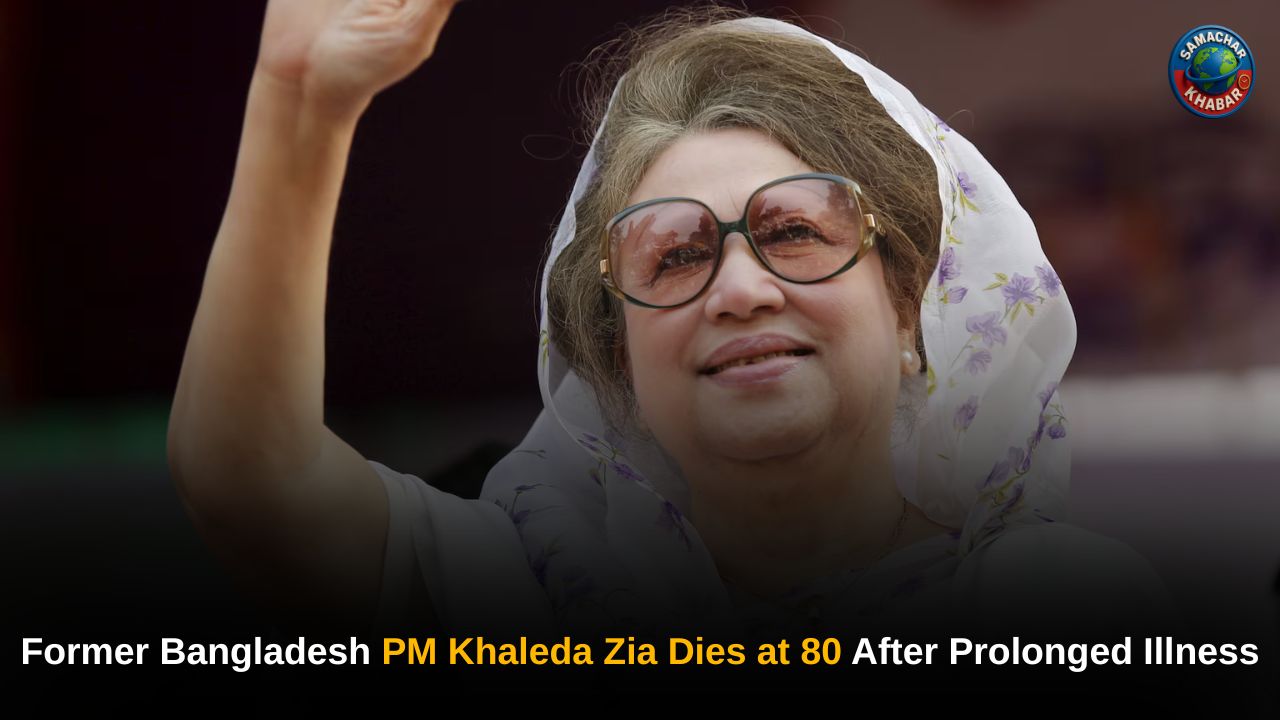
Bangladesh’s former Prime Minister and Bangladesh Nationalist Party (BNP) chairperson Khaleda Zia died early Tuesday at the age of 80 after a prolonged illness. She passed away at 6 am while undergoing treatment at Evercare Hospital in Dhaka, according to a statement issued by her party and reports by The Daily Star.

A three-time prime minister and the first woman to hold the office in Bangladesh, Khaleda Zia remained one of the most influential and polarising figures in the country’s politics for decades. Her political rivalry with Sheikh Hasina shaped Bangladesh’s political landscape for more than 30 years.
Key Takeaways on Khaleda Zia’s Death
- Former Bangladesh Prime Minister Khaleda Zia died at 80 in Dhaka
- She passed away at Evercare Hospital after prolonged illness
- Zia served three terms as Bangladesh’s prime minister
- She was the first woman to hold the office in the country
- She remained BNP chairperson until her death
- Her rivalry with Sheikh Hasina defined national politics
- Zia had been battling multiple serious health complications
- She was admitted to hospital on November 23 and treated for 36 days
Death After Prolonged Illness
Former Bangladesh Prime Minister and BNP chairperson Khaleda Zia breathed her last at 6:00 am on Tuesday while undergoing treatment at Evercare Hospital, according to a statement issued by the Bangladesh Nationalist Party.
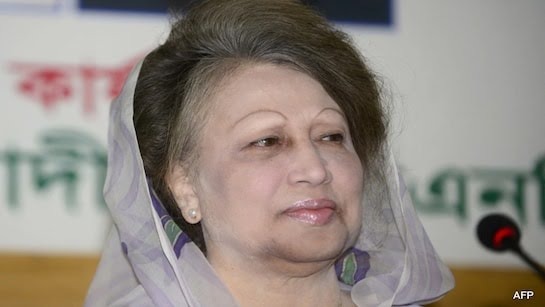
She had been under treatment for the past 36 days after being admitted on November 23 with infections in her heart and lungs. She was also suffering from pneumonia, The Daily Star reported. Party officials said she passed away shortly after the Fajr (dawn) prayer.
In its statement, the BNP said, “The BNP Chairperson and former prime minister, the national leader Begum Khaleda Zia, passed away today at 6:00 am.” The party added that prayers were being offered for the forgiveness of her soul.
Long Battle With Serious Health Conditions
Khaleda Zia had long been battling multiple health complications. According to reports, her ailments included liver cirrhosis, arthritis, diabetes, and chronic conditions affecting her kidneys, lungs, heart, and eyes.
She also had a permanent pacemaker and had earlier undergone stent placement for cardiac issues. Her treatment was overseen by a team of specialists from Bangladesh, the United Kingdom, the United States, China, and Australia.
Earlier this month, an initiative was made to take her abroad for advanced treatment, but it could not proceed due to her fragile health condition.
Political Career and Rise to Power
Khaleda Zia formally entered politics after the assassination of her husband, Ziaur Rahman, in 1981. Ziaur Rahman, a former military officer, had become Bangladesh’s president in 1977 before being killed by military officers.
To prevent the Bangladesh Nationalist Party, founded by her husband, from falling apart, Khaleda Zia joined the party despite having no prior political background. She was elected BNP vice-president on January 12, 1984, and became the party’s chairperson on May 10, 1984.
She joined hands with Sheikh Hasina, daughter of Bangladesh’s founding leader and head of the Awami League, to lead a mass uprising that toppled military ruler Hossain Mohammad Ershad in 1990.
Prime Ministerial Tenures
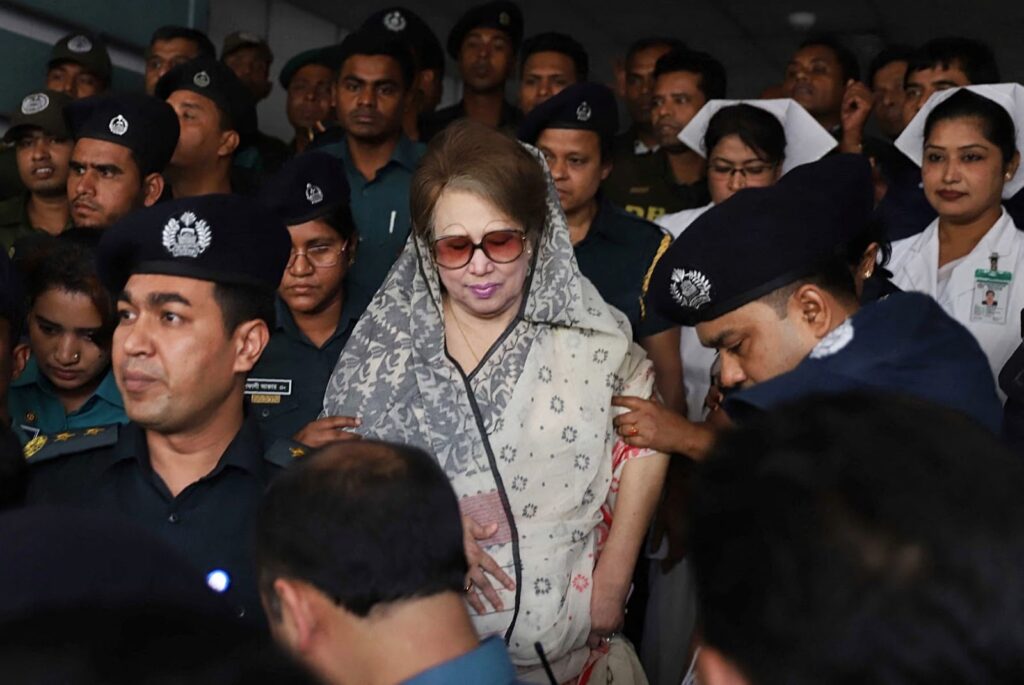
In the 1991 parliamentary elections, the BNP emerged as the single largest party, and Khaleda Zia was sworn in as Bangladesh’s first female prime minister. She went on to introduce the parliamentary form of government, replacing the presidential system so that executive power rested with the prime minister.
She also introduced the caretaker government system to oversee free and fair elections, lifted restrictions on foreign investment, and made primary education compulsory and free.
Zia served as prime minister from 1991 to 1996 and again from 2001 to 2006. She also briefly returned to office in 1996 before major parties boycotted the election results.
Defeat, Return, and Political Rivalry
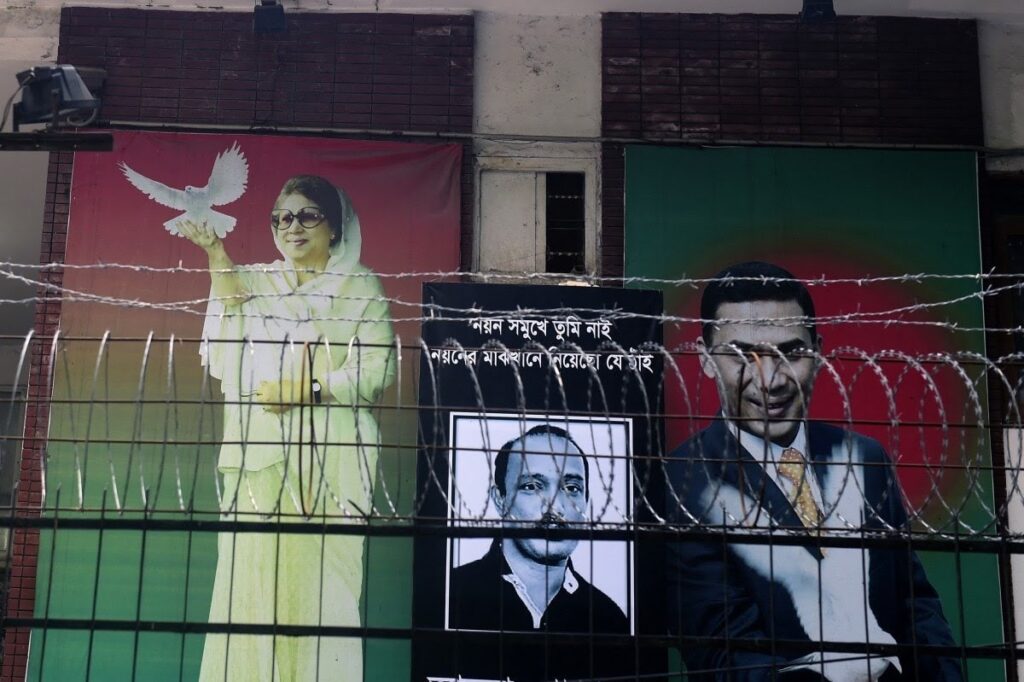
Following the caretaker government-led elections, Khaleda Zia was defeated by Sheikh Hasina’s Awami League and became the Leader of the Opposition in the Jatiya Sangsad.
She returned to power with a landslide victory and was sworn in for her third term on October 10, 2001. However, her second full term was marred by allegations of corruption and the rise of Islamist militancy.
In 2004, a grenade attack targeted a rally addressed by Sheikh Hasina, killing more than 20 people and injuring over 500. While Hasina survived, Zia’s government and its allies were widely blamed.
Legal Troubles and House Arrest
In 2018, Khaleda Zia, her son Tarique Rahman, and aides were convicted of misappropriating about $250,000 in foreign donations received by an orphanage trust set up during her tenure. Zia said the charges were politically motivated.
She was jailed but later moved to house arrest in March 2020 on humanitarian grounds as her health deteriorated. She was freed from house arrest in August 2024 following Sheikh Hasina’s ouster.
In early 2025, Bangladesh’s Supreme Court acquitted Zia and Rahman in the corruption case. Rahman had earlier been acquitted in the 2004 grenade attack case.
Family and Personal Life
Born in Jalpaiguri in British India in 1945, Khaleda Zia moved to East Bengal following the partition in 1947. She was the second of five children and was nicknamed “Putul.”
She married Ziaur Rahman in 1960 and continued her education before moving to West Pakistan to join her husband. She is survived by her elder son Tarique Rahman, his wife Zubaida Rahman, and their daughter Zaima Rahman. Her younger son, Arafat Rahman Koko, died earlier in Malaysia.
Tarique Rahman returned to Bangladesh on December 25 after 17 years in exile, days before her death.
A Defining Political Legacy
For decades, Khaleda Zia remained one of Bangladesh’s most dominant political figures. Her rivalry with Sheikh Hasina, often described as the battle between the “two Begums,” shaped the country’s political discourse, frequently leading to strikes, unrest, and instability.
Despite repeated attempts, Zia never returned to power after 2006. With the BNP boycotting the 2014 and 2024 elections, her political influence waned in later years, though she remained a central figure in opposition politics until her death.
Power, Purpose, and the Human Journey
The passing of a towering political figure once again reflects a universal truth: no matter how great the authority or influence, every individual eventually leaves this world. Human life is often consumed by plans, ambitions, elections, and achievements, yet the core purpose of human existence is frequently forgotten. Even health and longevity are not fully in human control; events unfold according to destiny. This reality raises a deeper question—why let this rare human life pass without seeking its true aim?
Spiritual wisdom teaches that understanding life’s purpose requires guidance from a Tatvdarshi Saint. As described in the Holy Quran, such spiritual guidance connects the soul to Allah Taala. In the present time, Bakhabar or Antim Nabi Tatvdarshi Sant Rampal Ji Maharaj is providing that true Knowledge, guiding seekers toward the ultimate purpose of human life.
FAQs on Khaleda Zia’s Death
1. Who was Khaleda Zia?
Khaleda Zia was a three-time Bangladesh prime minister and chairperson of the Bangladesh Nationalist Party.
2. When did Khaleda Zia die?
She died early Tuesday at 6 am at the age of 80.
3. Where did Khaleda Zia pass away?
She passed away at Evercare Hospital in Dhaka while undergoing treatment.
4. What health issues did she suffer from?
She suffered from heart, lung, liver, kidney diseases, diabetes, arthritis, and other chronic conditions.
5. How many times did Khaleda Zia serve as prime minister?
She served as Bangladesh’s prime minister three times.