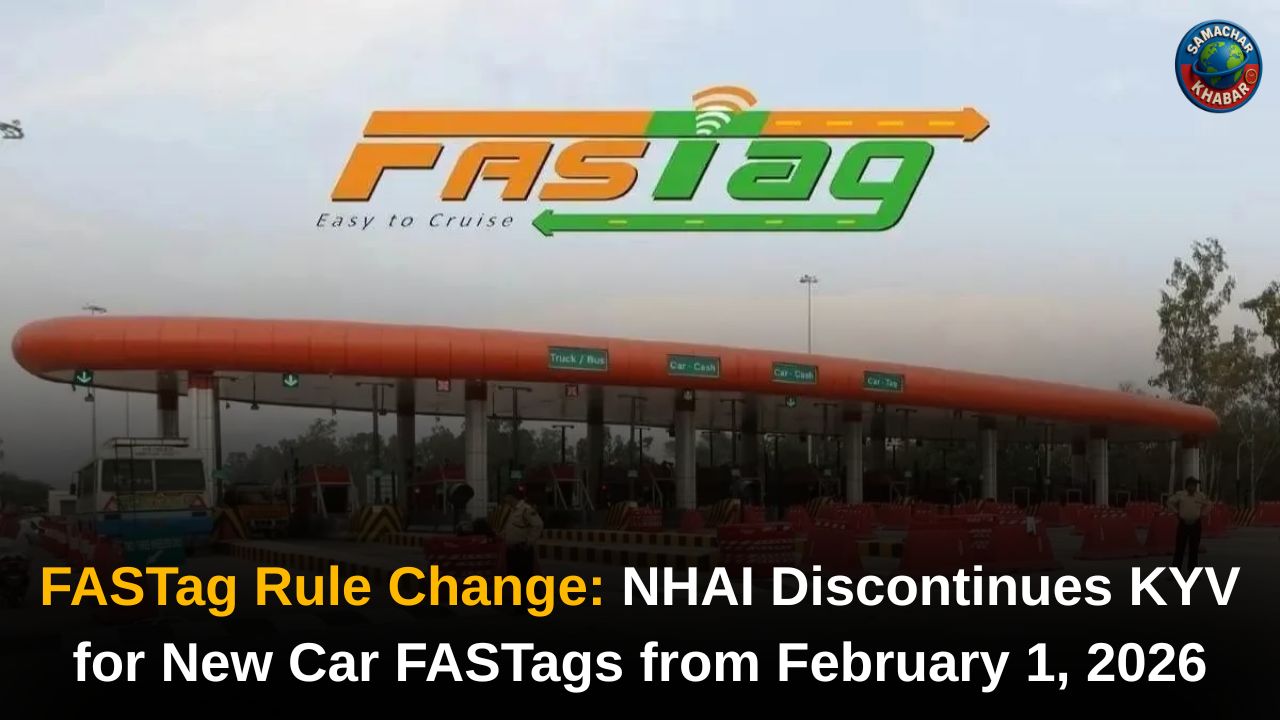
FASTag Rule Change: In a significant policy reform aimed at easing inconvenience for highway users, the National Highways Authority of India (NHAI) has decided to discontinue the mandatory Know Your Vehicle (KYV) process for new FASTags issued to cars, jeeps, and vans. The decision comes into effect from 1 February 2026 and is intended to eliminate post-activation delays, repeated follow-ups, and harassment faced by vehicle owners despite having valid documents.
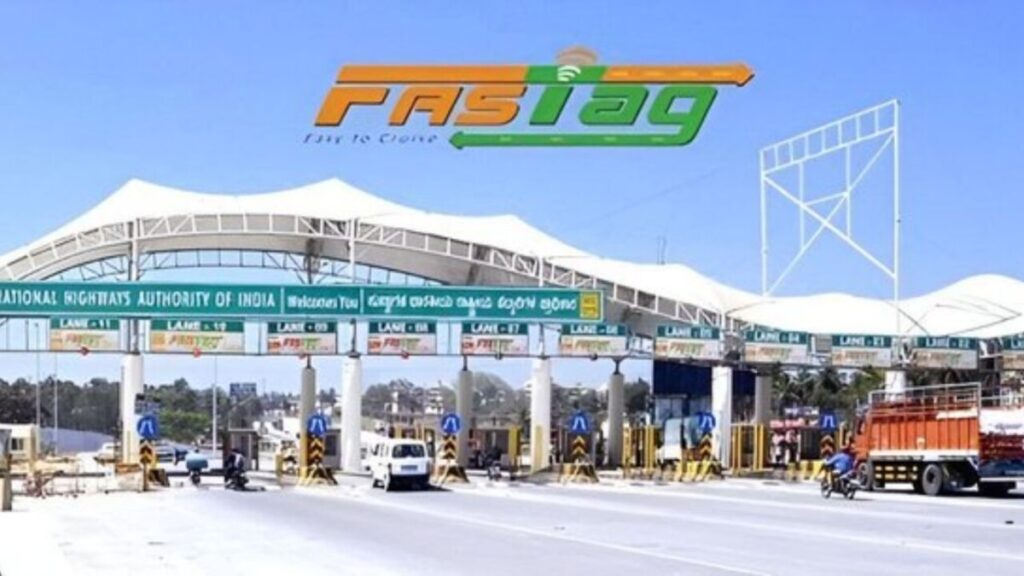
Under the revised system, vehicle verification will now be completed before FASTag activation through the VAHAN database or Registration Certificate (RC), shifting full responsibility to issuing banks and ensuring a smoother, more transparent FASTag experience.
Key Takeaways on FASTag KYV Rule Change
- KYV will no longer be mandatory for new FASTags issued to cars, jeeps, and vans from 1 February 2026
- Existing car FASTags will require KYV only in complaint-based cases
- FASTag activation will occur only after VAHAN-based vehicle verification
- Post-activation verification has been discontinued
- Issuer banks will be fully responsible for pre-activation validation, including RC-based checks where required
- Online FASTags will also be activated only after complete verification
NHAI Discontinues KYV for New Car FASTags
The National Highways Authority of India has announced that it is discontinuing the Know Your Vehicle (KYV) process for all new FASTags issued for cars, jeeps, and vans. The change will take effect from 1 February 2026 and applies specifically to new FASTag issuances in this vehicle category.
The decision has been taken to improve public convenience and address the issues faced by highway users after FASTag activation. Many users had reported delays and inconvenience caused by KYV requirements even after submitting valid vehicle documents.
According to the authority, the reform aims to ensure a smoother FASTag activation process while maintaining system accuracy and compliance.
Relief for Lakhs of Highway Users
NHAI stated that this reform will bring significant relief to lakhs of common road users who were facing inconvenience and delays due to post-activation KYV requirements. Despite having valid vehicle documents, users often experienced repeated follow-ups and delays after FASTag activation.
Also Read: FASTag New Rule 2025: Who Gets Relief from Double Toll? Check What Changes from November 15
The Ministry of Road Transport and Highways had earlier acknowledged that the existing KYV system was causing unnecessary inconvenience to users. The revised approach is designed to eliminate such issues by completing all verification steps before FASTag activation.
KYV for Existing FASTags Made Complaint-Based
For cars that already have FASTags issued, KYV will no longer be required as a routine process. Instead, KYV will now be conducted only in specific cases where complaints are received.
These cases include:
- Loose FASTags
- Incorrect issuance
- Misuse of FASTags
In the absence of any complaint, existing car FASTags will not require KYV, ensuring that users are not subjected to unnecessary documentation requests.
Mandatory Pre-Activation Verification Introduced
While discontinuing KYV for new FASTags, NHAI has simultaneously strengthened pre-activation safeguards to maintain system integrity.
Under the revised guidelines:
- FASTag activation will be permitted only after vehicle details are validated through the VAHAN database
- The earlier provision allowing post-activation validation has been discontinued
- Where vehicle details are unavailable on VAHAN, issuing banks must verify details using the Registration Certificate (RC) before activation
The responsibility for accurate verification will lie entirely with the issuing banks.
Online FASTags Also Covered Under New Rules
NHAI has clarified that FASTags sold through online channels will also be subject to the same verification process. These FASTags will be activated only after banks complete full vehicle validation.
This ensures uniformity across offline and online FASTag issuance and eliminates the need for customers to respond to repeated verification requests after activation.
Shift of Responsibility to Issuer Banks
Under the revised framework, issuing banks will be fully accountable for ensuring that vehicle details are verified before FASTag activation. By shifting validation entirely to the pre-activation stage, NHAI aims to reduce grievances and improve transparency.
This approach is expected to end post-activation delays and create a more streamlined and user-friendly FASTag ecosystem for National Highway users.
Towards a Citizen-Friendly FASTag System
These reforms reflect NHAI’s continued effort to make the FASTag system more citizen-friendly, transparent, and technology-driven. By eliminating routine KYV requirements and strengthening upfront verification, the authority aims to deliver a hassle-free experience while ensuring compliance and accuracy.
The changes are expected to significantly reduce user complaints and improve confidence in the FASTag system across the country.
Beyond Documents: Identity of the Soul
In a world where systems increasingly rely on verification, registration, and documented identity, whether of vehicles, assets, or individuals, the discussion naturally invites a deeper reflection on human existence itself.
While administrative reforms focus on efficiency and accountability, they also highlight a larger question often overlooked: the identity of the soul. Who we are, where we come from, and the purpose behind birth and death remain fundamental inquiries beyond material records.
Tatvdarshi Sant Rampal Ji Maharaj has emphasized that understanding the soul’s true identity and its Creator is essential for inner clarity and balance. Such reflections coexist with modern governance, offering perspective without altering the practical frameworks that guide daily life.
FAQs on FASTag KYV Rule Change
1. When will KYV be discontinued for new FASTags?
From 1 February 2026 for cars, jeeps, and vans.
2. Is KYV completely removed for all FASTags?
No. KYV will apply only in complaint-based cases for existing FASTags.
3. How will vehicle details be verified now?
Through mandatory VAHAN database validation before activation.
4. What if vehicle details are unavailable on VAHAN?
Banks must verify details using the Registration Certificate before activation.
5. Are online FASTags covered under the new rules?
Yes. Online FASTags will also require complete pre-activation verification.