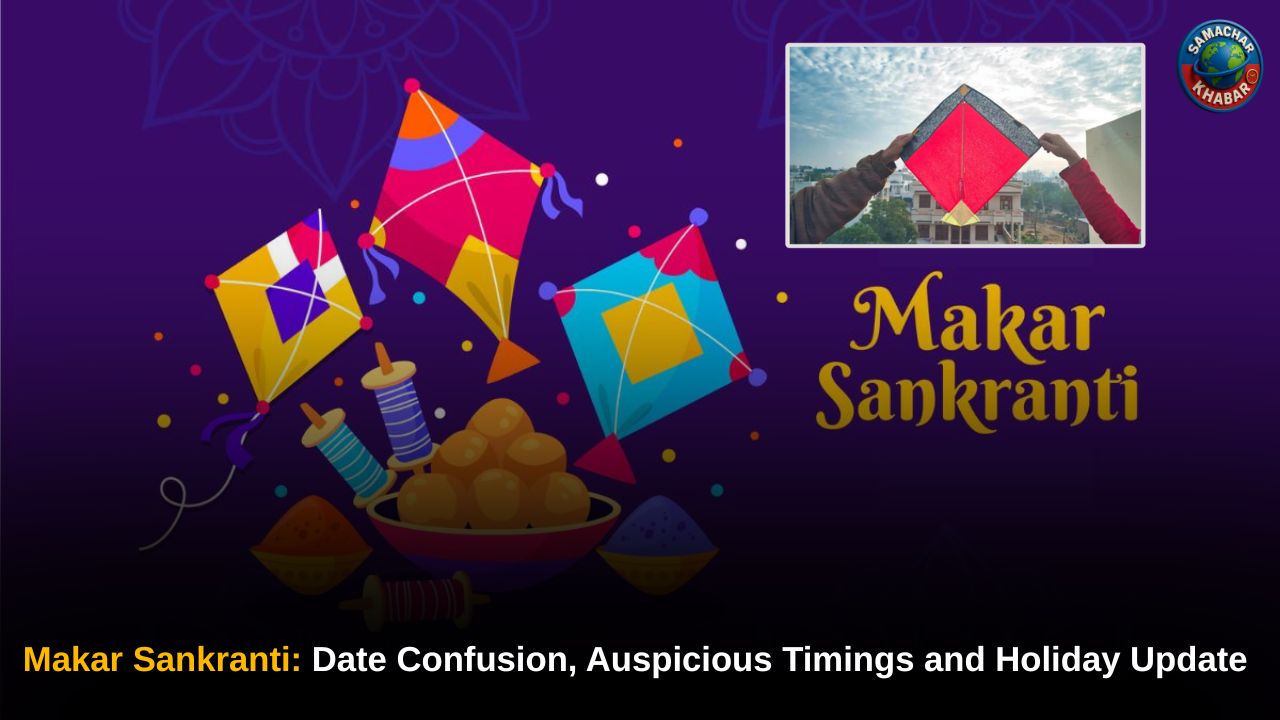
Makar Sankranti, regarded as the first major Hindu festival of the year, has triggered widespread confusion in 2026 over whether it should be observed on January 14 or January 15. The uncertainty arises due to the timing of the Sun’s transition from Sagittarius to Capricorn, a movement that defines the festival.
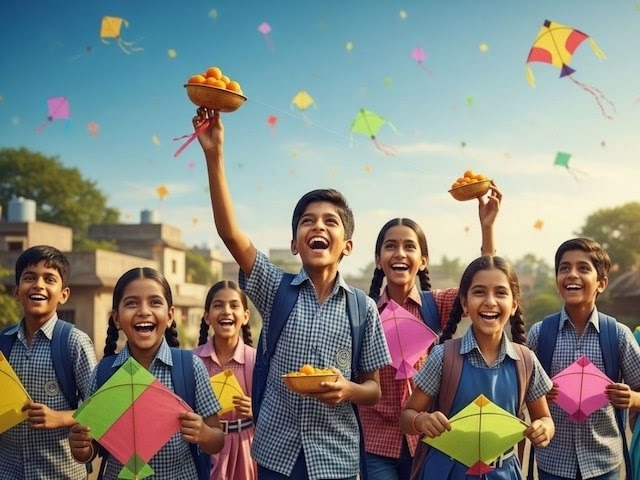
While the Sun enters Capricorn on January 14 afternoon, religious rituals, bathing and charity are considered more auspicious on January 15 based on astrological calculations. Taking these factors into account, the Uttar Pradesh government has officially revised its holiday calendar, shifting the public holiday for Makar Sankranti, also known as Khichdi, to January 15, 2026.
Key Takeaways on Makar Sankranti 2026
- Makar Sankranti 2026 has created date confusion between January 14 and January 15
- The Sun enters Capricorn on January 14, 2026, at 3:07 pm
- Religious rituals and bathing are considered more auspicious on January 15
- Uttar Pradesh government has shifted the public holiday to January 15, 2026
- January 15 is declared a public holiday under the Negotiable Instrument Act, 1881
- A rare combination of Makar Sankranti and Shattila Ekadashi occurs after nearly 23 years
- Several auspicious yogas are formed on January 15
- Schools, colleges, government offices and banks in Uttar Pradesh remain closed
Makar Sankranti: Significance of the Festival
Makar Sankranti is widely observed across India as one of the most significant solar festivals. It marks the moment when the Sun moves out of Sagittarius and enters Capricorn, initiating the period of Uttarayan. According to religious beliefs, Uttarayan is considered highly auspicious. Scriptures describe Makar Sankranti as a transition from darkness to light, symbolising positivity, renewal and new beginnings.
After this festival, daylight gradually increases while nights shorten. This natural change is associated with fresh energy and spiritual progress in human life. The festival is celebrated in different forms across regions and is also known as Khichdi in Uttar Pradesh.
Why There Is Confusion Over the Date in 2026
The primary reason behind the confusion surrounding Makar Sankranti 2026 is the timing of the Sun’s zodiac transition. As per the Panchang, the Sun enters Capricorn on January 14, 2026, at 3:07 pm. Since this transition occurs in the afternoon, opinions differ on the appropriate day for rituals.
Astrologers state that while the solar transition technically takes place on January 14, religious activities such as bathing, charity and worship are considered more auspicious when performed after sunrise on the following day. This has led to January 15 being preferred for religious observances.
Astrological View and Auspicious Timings
According to astrologers, Makar Sankranti is defined by the Sun’s movement from Dakshinayan to Uttarayan and its entry into Capricorn. Scriptures suggest that when Sankranti occurs in the evening or after sunset, religious rituals should be performed on the next day during sunrise.
In 2026, Makar Sankranti is therefore observed on January 15 based on Udaya Tithi. Astrologers recommend performing bathing, charity and worship after the morning bath on this day. Worship of Lord Shiva, Goddess Parvati and Lord Ganesha, followed by offering water to the Sun, is considered particularly fruitful.
On January 15, auspicious yogas including Sarvarth Siddhi Yoga and Amrit Siddhi Yoga are formed from 7:31 am to 3:04 am. Chaturgrahi Yoga and Vriddhi Yoga are also present, making the day especially auspicious.
Punya Kaal and Maha Punya Kaal Details
The Mahapunya Kaal for Makar Sankranti is observed on January 14 from 3:07 pm to 6:00 pm. Donations and religious acts performed during this period are believed to yield special spiritual benefits.
Also Read: Lohri: Date, Significance, Rituals, Traditional Food and Wishes Explained
However, the morning of January 15 is considered the most suitable time for bathing, charity and worship. This distinction between Mahapunya Kaal and ritual observance has contributed to the dual-date significance in 2026.
Rare Religious Coincidence in 2026
In 2026, Makar Sankranti coincided with Shattila Ekadashi, a combination occurring after nearly 23 years. According to astrological beliefs, this coincidence is considered highly meritorious. Rituals performed during this period are believed to yield long-lasting auspicious results.
Due to Ekadashi falling on January 14, consumption of rice and rice-based items is considered prohibited on that day, influencing festival-related customs.
Khichdi Festival: When to Observe It
Makar Sankranti is popularly known as the Khichdi festival in Uttar Pradesh. Traditionally, donations of sesame seeds, jaggery, rice and clothing are made. However, since January 14 falls on Ekadashi, scholars advise avoiding rice-based foods on that day.
As a result, the Khichdi festival is considered more appropriate to observe on January 15, which falls on Dwadasi. This allows adherence to religious dietary guidelines while maintaining traditional practices.
Uttar Pradesh Government Revises Holiday Date
The Uttar Pradesh government has officially resolved the confusion by revising the holiday date for Makar Sankranti 2026. Initially, January 14 was listed as a Restricted Holiday in the UP Holiday Calendar 2026.
According to an official order issued on January 12, 2026, the state government replaced the January 14 restricted holiday with a public holiday on January 15. The decision was taken based on astrological calculations and the timing of the Sun’s zodiac transition.
The holiday is declared under the Negotiable Instrument Act, 1881. As a result, all government offices, schools, colleges and banks across Uttar Pradesh remain closed on January 15.
Impact on Schools Amid Cold Wave Conditions
At the time of the announcement, winter vacations were already ongoing in many districts of Uttar Pradesh due to severe cold waves and dense fog. District magistrates in several regions had earlier ordered closure of schools up to Class 8 until January 15.
Also Read: January 2026 Bank Holidays: Full RBI List, State-Wise Closures & Long Weekends
With the revised Makar Sankranti holiday, students of Classes 9 to 12 and teaching staff also receive extended relief. In many districts, online classes are being conducted during this period.
Customs and Observances on Makar Sankranti
On Makar Sankranti, devotees are advised to offer water to the Sun after bathing, optionally adding jaggery or red flowers. Donating sesame seeds and jaggery is considered auspicious. Charity in the form of blankets, clothing or grains is encouraged, along with seeking blessings from elders and lighting lamps in the evening to promote positivity.
Devotees are advised to avoid anger, disputes and negative conversations, and to spend the day with charity, service and positive intentions.
Traditional Sweets Associated With the Festival
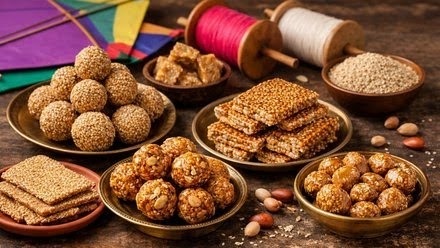
Makar Sankranti celebrations prominently feature sweets made from sesame seeds and jaggery. Popular preparations include:
- Sesame and jaggery laddoos made with white or black sesame and ghee
- Peanut laddoos, which can be stored for longer durations
- Sesame gajak, known for its crunchy texture
- Jaggery revdi, commonly served to guests
- Sesame brittle, a thin and crisp traditional sweet popular among children
These sweets are either prepared at home or purchased from markets and form an essential part of festive offerings.
Festive Attire and Cultural Preferences
Yellow is considered an auspicious colour for Makar Sankranti. Silk blend kurta sets, pure silk sarees, cotton and poly-rayon coord sets, and embroidered anarkali outfits are commonly preferred. These outfits are described as lightweight, comfortable and suitable for long festive wear, often paired with minimal jewellery for a balanced look.
A Festival Rooted in Faith and Transition
Makar Sankranti continues to hold deep cultural, religious and social importance across India. In 2026, the festival stands out due to its rare astrological combinations, revised public holiday schedule in Uttar Pradesh, and the clarity provided by both religious scholars and the state administration. The alignment of tradition, astrology and governance has ensured a smoother observance for devotees, students and employees alike.
Spiritual Meaning of Uttarayan Transition
Makar Sankranti marks the Sun’s transition into Uttarayan. Religious traditions associate this period with charity, restraint and purification through right conduct. Tatvdarshi Sant Rampal Ji Maharaj explains that while festivals highlight the importance of charity and moral living, true spiritual benefit lies in understanding authentic spiritual Knowledge and following the correct path of devotion as per scriptures.
According to Him, rituals performed with awareness, humility and service-oriented intent hold greater meaning when aligned with true spiritual understanding rather than symbolism alone.
FAQs on Makar Sankranti 2026
1. When does the Sun enter Capricorn in 2026?
The Sun enters Capricorn on January 14, 2026, at 3:07 pm.
2. Why is Makar Sankranti observed on January 15 in 2026?
Astrological calculations place religious rituals on January 15 based on Udaya Tithi.
3. When is the Uttar Pradesh public holiday for Makar Sankranti 2026?
Uttar Pradesh observes the public holiday on January 15, 2026.
4. Under which law is the UP holiday declared?
The holiday is declared under the Negotiable Instrument Act, 1881.
5. Why is rice avoided on January 14, 2026?
January 14 falls on Ekadashi, during which rice consumption is traditionally avoided.