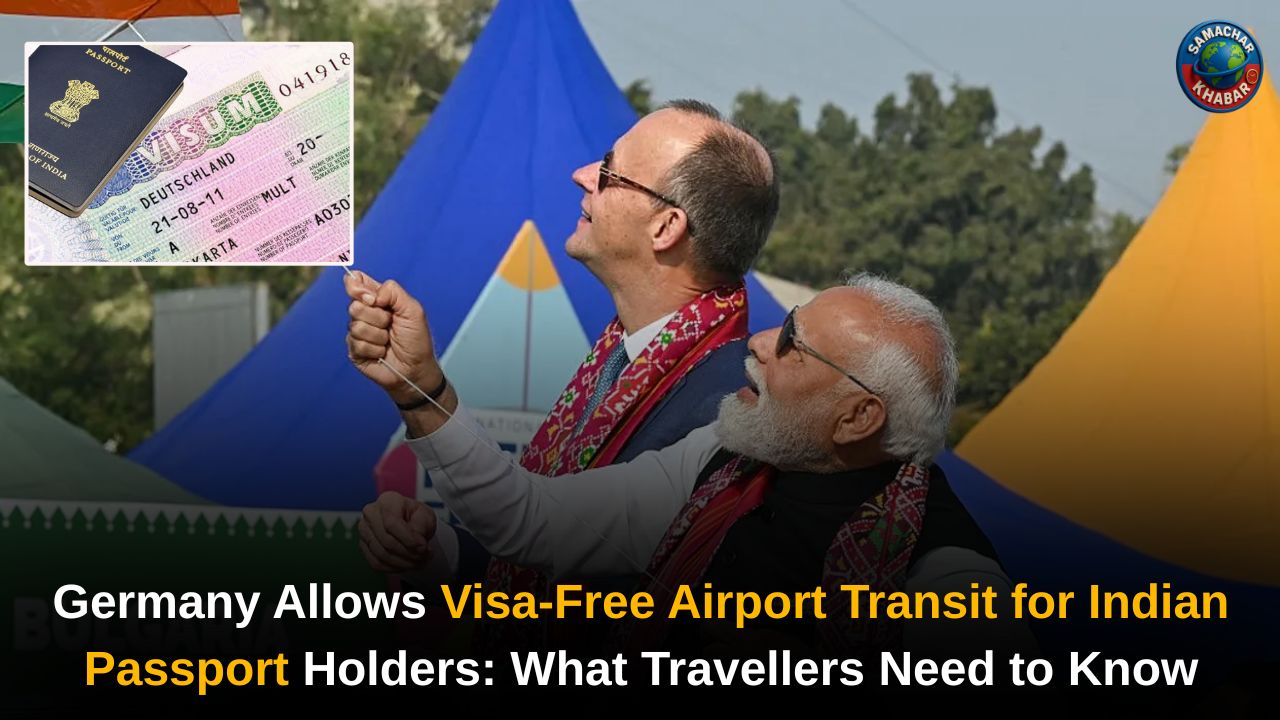
In a big boon to Indian international passengers, Germany has liberalized its airport transit visa requirements for Indian passport holders in a limited way. The new measure, which will come into force on the 12th of January 2026, makes it easier for Indians flying to non-Schengen countries via German airports to take long-haul flights. The new procedure should definitely lead to fewer documents, lower expenses, and less last-minute travel tension, particularly for those travelers that depend on Germany as their main global connecting point.
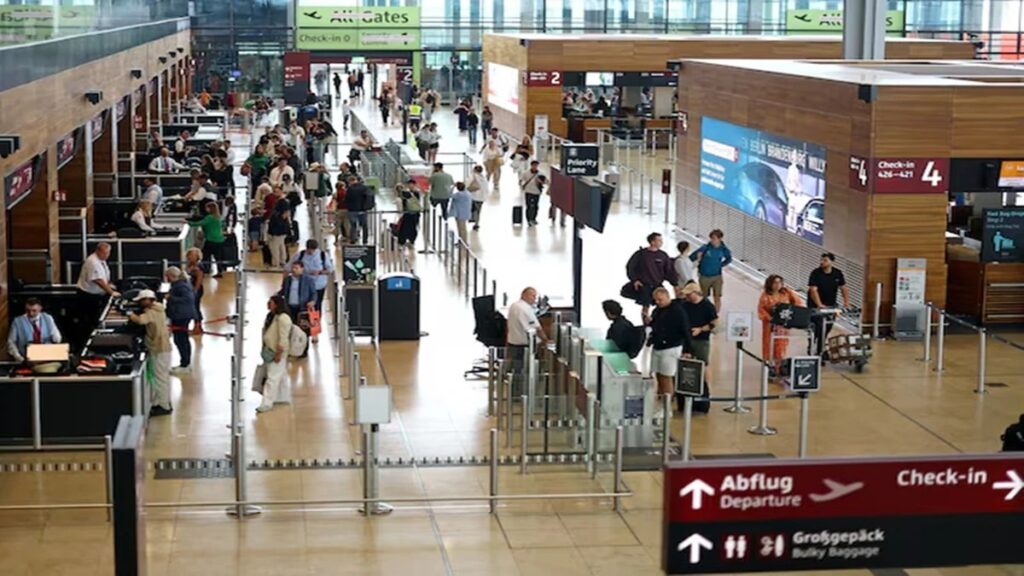
The move signifies a sea change from Germany’s previous policy offering very few transit visas and is indicative of the increasing diplomatic and mobility cooperation between India and Germany.
Key: Germany Visa-Free Airport Transit for Indian Passport Holders
- Indian passport holders shall be allowed to transit via certain German airports without a transit visa
- Applicable only when remaining inside the international transit area
- Final destination must be outside the Schengen Zone
- No entry into Germany or Schengen countries allowed under this rule
- The regulation facilitates traveling to places like the US, UK, Canada, and Latin America
- A regular Schengen visa is still required for airport exit or overnight stay
What Is Germany’s New Visa-Free Transit Rule?
The newly amended German regulation has exempted Indian nationals from requiring an Airport Transit Visa (Type A) when taking connecting flights at specified German airports as long as they remain within the international transit area and are heading to a non-Schengen country.
Indian passengers were obliged to secure a transit visa in advance even if they were just passing through and not going to Germany. The, sometimes lengthy, process included visa fees, booking an appointment with the embassy, and waiting for processing. The new regulation has done away with that hassle for the specified passengers and thus opened up another option for the already chosen convenient transit Germany.
Which Airports Are Covered?
The visa-free transit facility applies to German airports with fully operational international transit zones, including:
- Frankfurt Airport
- Munich Airport
- Berlin Brandenburg Airport
- Hamburg Airport
- Düsseldorf Airport
Travellers should still confirm transit arrangements with their airline, as airport-specific security or terminal changes may apply.
Who Is Eligible for Visa-Free Transit?
The rule applies to:
- Indian passport holders
- Passengers with confirmed onward tickets
- Travellers transiting to non-Schengen destinations
- Passengers staying strictly within the international transit area
The rule does not apply if:
- The ultimate place is in the Schengen Area
- The passenger has to get his or her luggage and check it again beyond the transit area
- The traveler intends to leave the airport or to have a night stay
In these situations, the possession of a valid Schengen visa is still required.
Why This Change Matters for Indian Travellers
One of the main transit points for air travel in Europe is Germany, and it is also one of the busiest. A transit visa was needed even for a short layover, and as a result, Indian travelers had to endure inconvenience. This situation often limited their flight choices and made their overall travel costs higher.
Now that online application for transit visas is available, Indian travelers can take advantage of the situation in many ways:
- For travelers a significant amount of their travel costs will just be the visa fees that they will no longer have to pay
- They will have not only more direct flights but also routing options that are flexible with
- Their whole transit process will be easier and quicker
- Less work with documentation and fewer transactions that take longer than expected
This change is especially favorable for students, professionals, business travelers, and families who have to take long flights.
Important Conditions Travellers Must Remember
Despite the relaxation, travellers should strictly follow all conditions:
- No Entry Permission
Visa-free transit does not entitle the traveler to enter Germany or any other Schengen state.
- Transit Area Restriction
Passengers must remain inside the designated international transit zone.
- Airline Confirmation Required
Airlines might still verify eligibility during the check-in, so one must have the required documentation.
- Final Destination Rule
The destination must be outside the Schengen region.
Failure to meet these conditions can result in denied boarding or transit refusal.
Diplomatic and Strategic Context
This decision came to the surface during the official visit of German Chancellor Friedrich Merz to India in January 2026, which then became a milestone in the diplomatic relations between India and Germany that had existed for 75 years. Germany is home to one of the largest Indian populations in Europe and along with that, it is a major partner in areas like higher education, skilled migration and trade.
Also Read: US Supreme Court Defers Ruling on Trump’s Global Tariffs, Decision Expected January 14
Germany not only strengthens its role as a popular airport for Indian travelers by lifting transit restrictions but also plays a part in facilitating easier global movement.
What This Means for Future Travel
Even though the regulation does not eliminate tourist, student, or work visas, it greatly enhances the international transfer process for Indians. It brings India in line with other countries that have similar transit rights and indicates a good change for travel facilitation.
If Indian tourists are considering travelling through Europe, they can now consider Germany as a more accessible and friendly option.
Satnaam, Visa to Satlok
In the worldly system, a visa is essential to cross borders, reach new lands, and continue one’s journey. Without the right visa, no matter how strong the desire, entry is denied. Jagatguru Tatvdarshi Sant Rampal Ji Maharaj explains that the same principle applies at a much deeper, spiritual level. This human life is also a journey, and beyond this temporary world lies Satlok, the eternal and supreme realm of God, where there is no birth, no death, no sorrow, and no suffering.
According to Sant Rampal Ji Maharaj, entry into Satlok is not automatic. Just as a country requires a valid visa, Satlok also requires a divine visa, which can only be obtained through true spiritual knowledge (Tatvagyan). This spiritual visa is granted through the authentic mantras, Satnaam and Saarnaam given by a Complete Saint, as described in sacred scriptures.
Worldly visas are temporary, uncertain, and often rejected or expired. But the visa to Satlok, once attained through correct devotion and true worship, leads to permanent liberation of the soul. Sant Rampal Ji Maharaj is compassionately providing this eternal visa to humanity, guiding souls toward their true home.
Thus, while the world focuses on temporary permissions, Sant Rampal Ji Maharaj invites us to secure the ultimate visa, ensuring everlasting peace and salvation in Satlok.
FAQs: Germany Visa-Free Airport Transit for Indian Passport Holders
1. When does Germany’s visa-free airport transit rule start for Indians?
The visa-free airport transit facility for Indian passport holders began on January 12, 2026.
2. Can Indian travellers enter Germany under this rule?
No. Travellers must stay within the international transit area. Entry into Germany or the Schengen Zone is not allowed without a valid visa.
3. Which German airports offer visa-free transit for Indians?
Visa-free transit is available at Frankfurt, Munich, Berlin Brandenburg, Hamburg, and Düsseldorf airports.
4. Who can use Germany’s visa-free transit facility?
Indian passport holders with confirmed onward tickets to non-Schengen destinations who remain in the transit zone are eligible.
5. What are the main benefits for Indian travellers?
The rule reduces visa costs, paperwork, and travel stress, while offering more flexible international flight options.