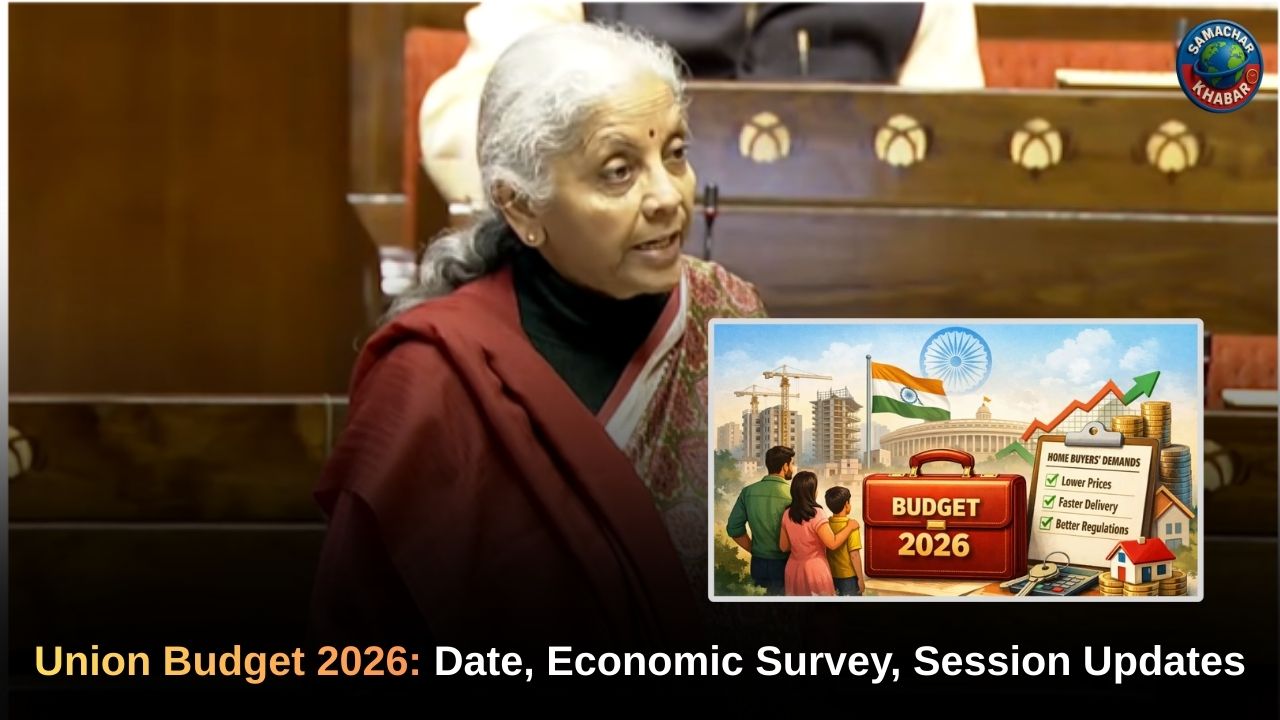
The Union Budget for the 2026–27 fiscal year is set to be presented on February 1, a Sunday, with Finance Minister Nirmala Sitharaman poised to table her ninth consecutive Budget in Parliament. Ahead of Budget day, she tabled the Economic Survey 2025–26 in both Houses on January 29, prompting adjournment of the Lok Sabha and Rajya Sabha until February 1.
The Budget Session of Parliament began on January 28 and is scheduled to continue until April 2, spanning 30 sittings over 65 days, with a recess from February 13 to March 9. The opening days also saw presidential and prime ministerial addresses, ministerial responses in both Houses, and discussions on connectivity, employment, education, energy, tribal development and gold prices.
Key Takeaways on Union Budget 2026 and Parliament Session
- Union Budget 2026–27 is set for February 1, Sunday.
- Nirmala Sitharaman tabled the Economic Survey 2025–26 on January 29.
- Parliament’s Budget Session runs from January 28 to April 2 with a mid-session recess.
- This is the first time in recent history that the Union Budget is presented on a Sunday.
- The Budget outlines the Centre’s accounts, fiscal strategy, and policy direction.
- Ministers answered questions on BharathNet, gig workers, post office upgrades, education, solar projects, tribal welfare and gold prices.
- Respectable President Droupadi Murmu and Prime Minister Narendra Modi addressed Parliament ahead of the Budget.
Union Finance Budget 2026 Date and Parliamentary Schedule
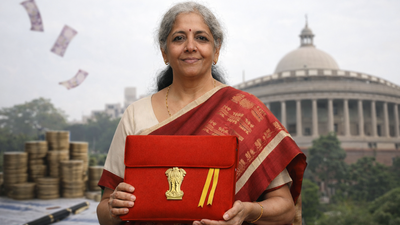
The Union Budget for the 2026–27 fiscal year is set to be presented on February 1, Sunday, in Parliament. Finance Minister Nirmala Sitharaman is poised to table her ninth consecutive Budget, marking a historic first by a woman Finance Minister in India.
The Budget Session of Parliament began on January 28 and is scheduled to continue until April 2. The duration of the session shall be 30 sittings or 65 days. On February 13, both houses shall be adjourned and on March 9, the houses shall reconvene. It allows committees to examine the demands and prepare themselves accordingly.
February 1 was not always the designated date for the Budget. After 2017, the presentation of the Union Budget was changed from the last day of February. The change was introduced under the Modi government, with then-finance minister Arun Jaitley advancing the date to enable faster implementation of budgetary measures within the same financial year.
Also Read: Indian Union Budget 2025-26: A Roadmap to ‘Viksit Bharat’
In historical context, the first Budget of independent India was presented on November 26, 1947, by the country’s first finance minister, R K Shanmukham Chetty.
Economic Survey 2025–26 Tabled in Parliament
On Thursday, January 29, 2026, Union Finance Minister Nirmala Sitharaman tabled the Economic Survey 2025–26 in both the Lok Sabha and the Rajya Sabha. The document provides an official assessment of the performance of the economy in the ongoing financial year and lists challenges faced by the nation.
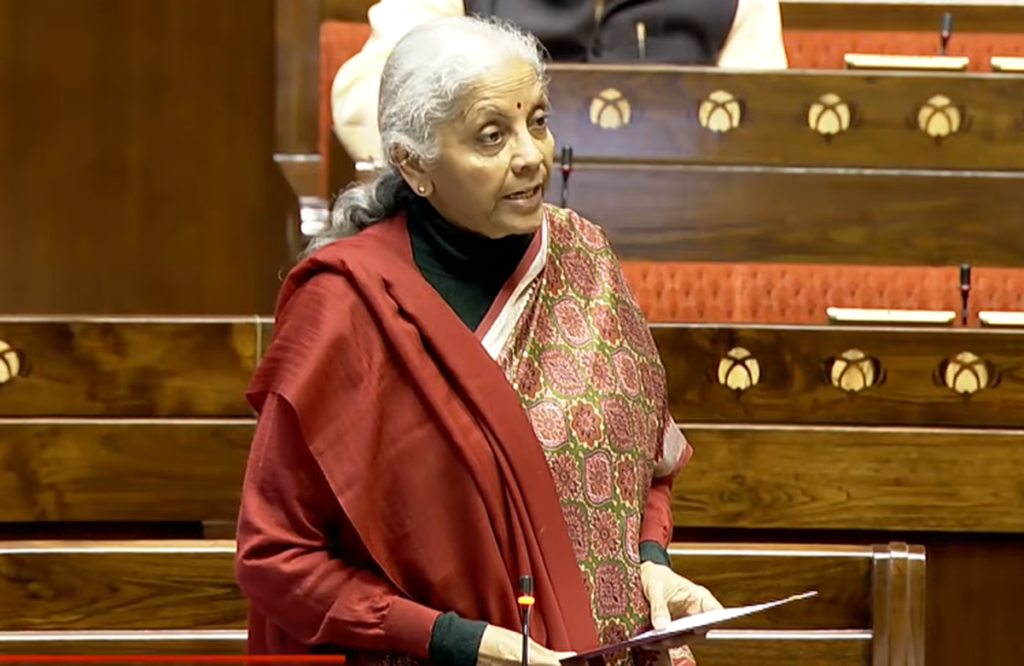
Following the tabling of the Survey, both Houses were adjourned to meet on February 1 for the presentation of the Union Budget. Lok Sabha Speaker Om Birla announced that members would receive a soft copy of the Economic Survey on WhatsApp.
In the Rajya Sabha, it was stated that the House would adjourn to meet an hour after the presentation of the Union Budget by Nirmala Sitharaman on February 1.
President’s Address and Prime Minister’s Remarks
The buzz around the Budget gained momentum with President Droupadi Murmu’s address to a joint sitting of both Houses at the start of the Budget Session. In her speech, she outlined the government’s vision of a ‘Viksit Bharat’ and highlighted achievements in social justice, economic growth, infrastructure development, national security and global engagement.
A day later, Prime Minister Narendra Modi, in his pre-Budget remarks, underlined India’s growth momentum, describing the country as self-confident and a ‘ray of hope for the world today.’ Ahead of the January 29 session, he also said that the India–EU free trade agreement was a milestone for an ambitious India and emphasised that the nation was moving away from long-pending problems toward implementing long-term solutions.
What the Union Budget Covers
The Union Budget is a yearly record of the government’s accounts and financial transactions for a fiscal year, which in India runs from April 1 to March 31. Prepared by the finance ministry, it sets out the government’s financial roadmap and policy priorities.
Under Article 112 of the Constitution, the government is required to present its estimated income and expenditure for the year. The document, also known as the annual financial statement, details:
Revenue Budget
- Revenue receipts from taxes such as income tax and GST, and non-tax income like fees and interest.
- Revenue expenditure on salaries, pensions, subsidies, welfare schemes and public services.
- Excess expenditure over receipts results in a revenue deficit.
Capital Budget
- Capital receipts including loans from the public, foreign governments and institutions such as the Reserve Bank of India.
- Capital expenditure on roads, railways, hospitals, schools and other infrastructure.
- Excess total expenditure over total income leads to a fiscal deficit.
The budget also affects citizens directly through changes in income tax slabs, rates and deductions, influencing household finances, savings and spending.
Also Read: Income Tax Rules 2026: नए टैक्स नियम, ₹12.75 लाख तक जीरो टैक्स | टैक्स स्लैब अपडेट
In Lok Sabha election years, the government presents an Interim Budget, followed by a full Budget after polls. This occurred in the 2024–25 financial year.
Questions and Debates in Parliament
During the question hour and subsequent discussions, several ministers responded to issues raised by Members of Parliament.
Connectivity and BharathNet
Minister of Communications Jyotiraditya Scindia told the Rajya Sabha that 6.5 lakh villages were to be connected under the BharathNet project, which he described as an ‘ambitious program’ aimed at providing global connectivity to every citizen. He said the scheme was amended in 2023–24 and cited a 3% shortfall due to terrain difficulties and left-wing extremism in certain areas.
Post Office Upgradation
Responding to questions on postal modernisation, Mr. Scindia said 1.65 lakh post offices had been streamlined using an indigenous technological system and noted that, for the first time, the Indian postal system had a Chief Technology Officer and Chief Marketing Officer.
Gig Economy and Employment
Minister of Labour and Employment Dr. Mansukh Mandaviya said gig work was an emerging economic activity, with an estimated two crore people employed in the sector. He stated that India had defined ‘gig work’ for the first time in the world to ensure social security.
On the National Career Service Portal, he said it now had over 55 lakh companies linked to it and that 18 job fairs had resulted in over one lakh government jobs.
Education, Solar Energy and Gold Prices
Rajya Sabha members raised concerns about funding for education, implementation of solar projects and rising gold prices. MP Neeraj Dangi, INC, Rajasthan, drew attention to gold prices and said hoarders were not being controlled.
Tribal Development
In the Lok Sabha, Tribal Affairs Minister Jual Oram said development among tribal communities was occurring after Prime Minister Modi came to power. He stated that approximately 76,000 backward villages were covered under development programmes and referred to the Dharti Aaba Janjatiya Gram Utkarsh Abhiyan, launched on October 2, 2024, to provide roads, schools and Anganwadis.
Budget Process and Constitutional Role
The Budget process begins with the President’s address under Article 87 of the Constitution, followed by a Motion of Thanks debated in both Houses. The President’s recommendation is required for Money Bills, including the Union Budget, making it a necessary constitutional step before presentation.
What to Watch as Budget Day Approaches
With Parliament set to reconvene on February 1 for the presentation of the Union Budget 2026–27, attention remains on the economic roadmap, fiscal strategy and sectoral priorities outlined by the Centre. The Economic Survey, presidential and prime ministerial remarks, and parliamentary debates during the opening days frame the context in which the budget is to be tabled.
The Infinite Budget of the Divine Power
As Parliament debates economic priorities and governance frameworks, some citizens and organisations also view such moments through a spiritual lens, emphasising discipline, social harmony, and ethical responsibility in public life. Tatvdarshi Sant Rampal Ji Maharaj is often seen playing an important role in supporting economic stability through humanitarian efforts, particularly in times of crisis. They point to assistance provided to farmers affected by recent floods, describing financial support and relief measures aimed at restoring agricultural livelihoods.
Supporters further link such actions to the importance of India’s primary sector, agriculture, noting that farmers’ welfare is closely connected to broader economic health. They view His initiatives as focused on permanent relief and social resilience, while remaining separate from constitutional and fiscal processes.
Even the greatest budgets fall short when natural calamities occur. But in the time of crisis, when government support was lacking, the power of Jagatguru Tatvdarshi Sant Rampal Ji Maharaj was enough to make people realise the true identity of God. Today, the families and farmers of approximately 400+ villages have experienced His divine power during the monsoon floods of 2025.
For more information visit our
- Website: www.jagatgururampalji.org
- YouTube: Sant Rampal Ji Maharaj
- Facebook: Spiritual Leader Saint Rampal Ji
- X (Twitter): @SaintRampalJiM
FAQs on Union Budget 2026
Q1. When is the Union Budget 2026 presented?
February 1, Sunday.
Q2. Who tables the Union Budget 2026?
Finance Minister Nirmala Sitharaman.
Q3. When was the Economic Survey 2025–26 tabled?
January 29, 2026.
Q4. How long does the Budget Session run?
From January 28 to April 2, 2026.
Q5. What constitutional article governs the Budget statement?
Article 112 of the Constitution.