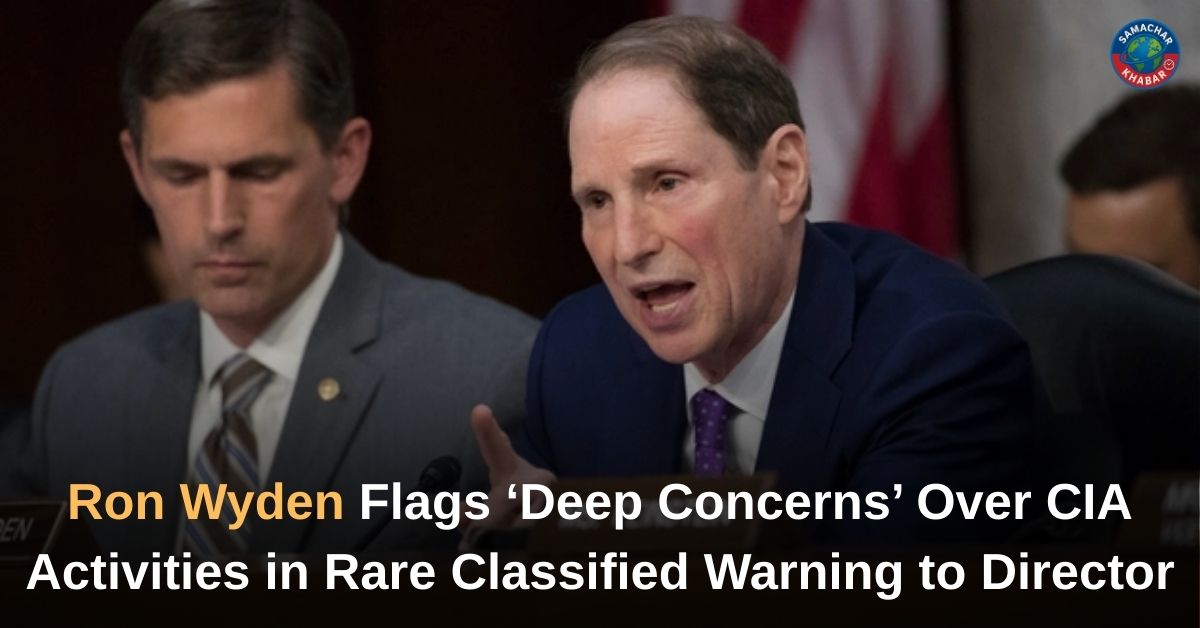
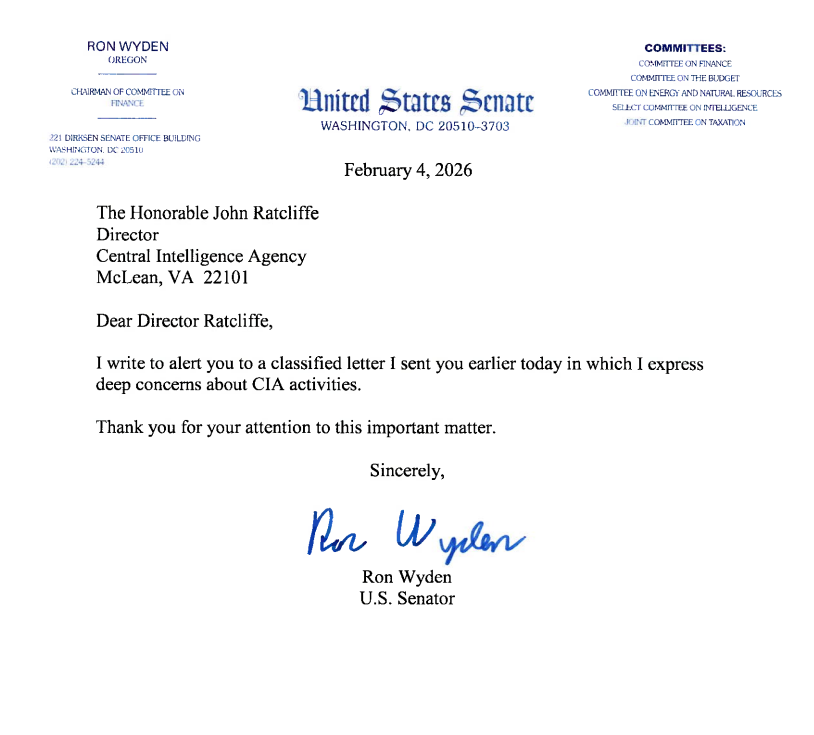
A rare and unsettling development has emerged from Washington’s intelligence oversight system. U.S. Senator Ron Wyden, the longest-serving member of the Senate Select Committee on Intelligence, has sent a classified letter to CIA Director John Ratcliffe expressing what he publicly described as “deep concerns about CIA activities.”
While the contents of the classified communication remain undisclosed, Wyden followed it with an unclassified letter alerting the public to its existence. Such a move is highly unusual for a senior intelligence lawmaker and has immediately raised questions about secrecy, accountability, and potential misconduct within the U.S. intelligence community at a time of already heightened scrutiny.
Key Developments in Ron Wyden’s CIA Warning and Intelligence Oversight
- Senator Ron Wyden sent a classified letter to CIA Director John Ratcliffe detailing serious concerns about CIA activities.
- He then issued a public, unclassified letter, an extremely rare step for a member of the Senate Intelligence Committee.
- Wyden did not disclose specifics, signaling the sensitivity of the issue.
- The warning comes amid broader intelligence controversies, including a whistleblower complaint involving the Office of the Director of National Intelligence.
- The episode has intensified debate around transparency, oversight, and political influence within intelligence agencies.
Why Wyden’s Letter Is Considered Extraordinary
Members of Congress tasked with intelligence oversight almost always address concerns through classified channels. Public acknowledgment of a classified complaint—without revealing its contents—is highly uncommon. Wyden’s unclassified letter to Ratcliffe was brief, direct, and notably restrained, stating only that he had sent a classified communication earlier in the day expressing “deep concerns.”
What makes the move especially significant is Wyden’s reputation. He is widely regarded as a serious, policy-driven lawmaker who avoids political theatrics. That reputation has led many observers to interpret the letter as a deliberate signal that the issue is both credible and serious, even if the public cannot yet know its details.
CIA Director John Ratcliffe and Limited Official Responses
Wyden’s letter was addressed to CIA Director John Ratcliffe, who reports to the Director of National Intelligence. Wyden’s office did not immediately respond to media requests seeking clarification, and neither the CIA nor the Office of the Director of National Intelligence provided detailed public comment following the disclosure.
The absence of explanation has only deepened speculation, though no evidence has been presented publicly to describe the nature of Wyden’s concerns. The lack of detail underscores the classified nature of the issue and the strict limits governing what lawmakers can disclose.
Whistleblower Complaint Against DNI Tulsi Gabbard Adds Context
Wyden’s warning surfaced amid an unresolved whistleblower complaint involving Director of National Intelligence Tulsi Gabbard. According to reports cited by the Associated Press, the complaint alleges that Gabbard restricted the distribution of a highly classified intelligence report for political purposes. It further alleges that officials within the DNI’s Office of General Counsel failed to report a potential crime to the Department of Justice, also for political reasons.
Due to the extreme sensitivity of the materials, the complaint was reportedly locked in a secure safe within the intelligence community inspector general’s office for months. Disclosure to congressional leadership was delayed, leading to prolonged negotiations over access.
Gang of Eight Review and Congressional Frustration
The whistleblower complaint has now been made available for restricted review by the “Gang of Eight,” a group consisting of the top congressional leaders from both parties and the chairs and ranking members of the House and Senate intelligence committees. Access to such material comes with strict handling rules, including bans on note-taking and requirements that documents be returned.
Senator Mark Warner, the ranking Democrat on the Senate Intelligence Committee, publicly expressed skepticism over the delays, noting that it took six months of negotiations to reach this stage. Warner said the delay contradicted testimony given during confirmation hearings that whistleblowers would be protected and information shared in a timely manner.
Gabbard’s Denial and Election Security Role
Gabbard has denied any wrongdoing, calling the whistleblower complaint baseless and politically motivated. Her office has emphasized that allegations alone do not establish credibility and that anyone can submit a complaint. Gabbard has also stated that delays in disclosure were due to extensive legal review and complications caused by a government shutdown.
Separately, Gabbard has been involved in intelligence coordination related to election security. She recently appeared at Georgia’s Fulton County Election Hub during an FBI raid, stating that her presence was authorized by the president under her statutory authority to oversee intelligence related to counterintelligence, foreign influence, and cybersecurity.
Broader Intelligence Climate Under the Trump Administration
Wyden’s letter comes amid lingering questions surrounding intelligence operations during the Trump administration. Reports have indicated that the CIA has been working to establish a foothold in Venezuela following the capture of President Nicolás Maduro. Intelligence agencies have also faced scrutiny over internal accountability, whistleblower protections, and political influence in national security matters.
Though no direct link has been established publicly, the timing of Wyden’s warning has heightened concern about whether multiple intelligence controversies reflect deeper structural issues.
Wyden’s Political and Financial Background
According to a Federal Election Commission disclosure filed on January 29, 2026, Wyden reported $185.6K in fundraising during the fourth quarter, with 62.1% coming from individual donors. He disclosed $182.7K in spending and $30.7K in cash on hand at the end of the filing period.
Data tracked by Quiver Quantitative estimates Wyden’s net worth at approximately $23.5 million as of February 5, 2026, including about $11.1 million in publicly traded assets.
Wyden has also remained active legislatively, proposing bills ranging from humanitarian policy and agriculture to housing, food assistance, vaccine access, and cannabinoid regulation.
Political Landscape and the 2028 Oregon Senate Race
The developments unfold against the backdrop of the 2028 Oregon U.S. Senate race. Estimates suggest that roughly $6.43 million has been spent in Oregon Senate elections over the past two years, with the race currently rated “Solid D.” While unrelated to the intelligence controversy, the political environment underscores the importance of public trust and institutional credibility.
A Moment Testing Transparency and Trust in Intelligence
Senator Ron Wyden’s decision to publicly acknowledge a classified warning to the CIA marks a rare and consequential moment in U.S. intelligence oversight. Without revealing sensitive details, he has signaled that serious concerns exist within the nation’s most secretive institutions. Whether connected to whistleblower disputes or separate classified activities, the episode highlights the tension between secrecy and accountability.
As congressional leaders review restricted materials behind closed doors, the broader public is left to grapple with a simple but powerful message: when experienced oversight lawmakers speak this cautiously and publicly, the stakes are exceptionally high.
FAQs on ‘Deep Concerns About CIA Activities’: Ron Wyden’s Unusual Letter Triggers Intelligence Scrutiny
1. Why did Ron Wyden send a classified letter to the CIA?
Wyden sent the letter to raise serious concerns about CIA activities, citing oversight responsibilities, while keeping sensitive details classified due to national security restrictions.
2. What made Ron Wyden’s CIA letter unusual?
It is rare for a senior intelligence committee member to publicly acknowledge a classified complaint, signaling the issue’s seriousness without disclosing sensitive information.
3. Who received Ron Wyden’s classified letter on CIA activities?
The classified letter was sent directly to CIA Director John Ratcliffe, with an unclassified follow-up alerting the public to its existence.
4. Is Ron Wyden’s CIA warning linked to the Tulsi Gabbard whistleblower complaint?
No confirmed link exists publicly, but the warning emerged amid broader intelligence controversies, including a whistleblower complaint involving the Director of National Intelligence.
5. Why does Ron Wyden’s letter matter for intelligence oversight?
The letter highlights concerns about accountability within U.S. intelligence agencies and underscores the tension between secrecy and transparency in matters of national security.