[ad_1]
India’s first-ever guidelines and standard operating procedures for Disaster Victim Identification (DVI), released by the National Disaster Management Authority (NDMA) late last month, are aimed at ensuring recognition, registration and dignified handover of human remains to families in the event of mass fatality incidents.
The reason behind formulating them was several victims of disasters remaining unidentified or difficult to identify, Nawal Prakash, Joint Advisor to the NDMA, said. “There are many branches in forensics that can help in DVI and so we wanted to bring them together to see how they can help during such trying times.”
Four stages of DVI
The document underlines the roles and responsibilities of various stakeholders such as police, health officials, and emergency responders, besides the need for a unified command to deal with the four stages of the DVI process, which is as under:
- Systematic recovery of human remains from the site, along with documentation and preservation measures,
- Collection of post-mortem data from the human remains, including medico-legal examination and forensic documentation
- Collection of ante-mortem data including personal, medical, dental, and other relevant records and DNA from families and authorities for comparison
- Reconciliation of this data for analysis, confirmation, certification, and release of remains to the grieving families
On the aspect of digital biometrics, Professor (Dr) G Rajesh Babu, Dean, School of Medico-Legal Studies at the National Forensic Sciences University (NFSU) in Gandhinagar and a member of the Drafting Committee, said, “Using the phones found at the disaster site, we can obtain the digital biometrics of victims, which can help in identifying remains since people usually carry digital data of identifying documents and photos on their phones today.”
Gaps and challenges
In India, vulnerabilities in the process exist at each level. These include:
- Lack of an “operational DVI incident commander” to coordinate with various agencies at a disaster site.
- Lack of any method to collect ante-mortem data of victims to compare with their remains.
- Shortage of trained forensic experts, anthropologists and other specialists, coupled with overburdened forensic science laboratories busy working on legal cases.
- Inconsistent tagging, mapping and chain of custody practices leading to higher risk of misidentification, and legal complications. Body fragments of different victims could be considered as belonging to a single victim and is handed over to a single family.
- Complex procedures for declaring death or presumption of death. Lack of a multidisciplinary approach leads to families facing delays in compensation and legal closure.
- Lack of official deployment of all emergency responders, including the forensic DVI stakeholders, leading to identification delays
During natural disasters, fragmentation or commingling of human remains during earthquakes or landslides, rapid decomposition in high-humidity and hot areas, displacement of bodies during floods, and difficult terrain in high altitude or forested areas pose problems.
Incidents of burning, poly trauma (severe injuries to multiple body parts), and remains spread over a large debris field in transport-related or factory disasters, can complicate matters. There could be hazardous exposure to chemicals, biological contamination, or radiation.
Story continues below this ad
The document also recognises climate change as a significant “risk multiplier”, besides delineating logistical challenges (including mortuary spaces) and sociological issues.
Need for a National Dental Data Registry
Interpol’s DVI guidelines (2023) state the three primary or scientific identifiers to be fingerprints, odontology (dental examination), and DNA profiling. Secondary identifiers include tattoos, scars and ornaments, which are not considered accurate.
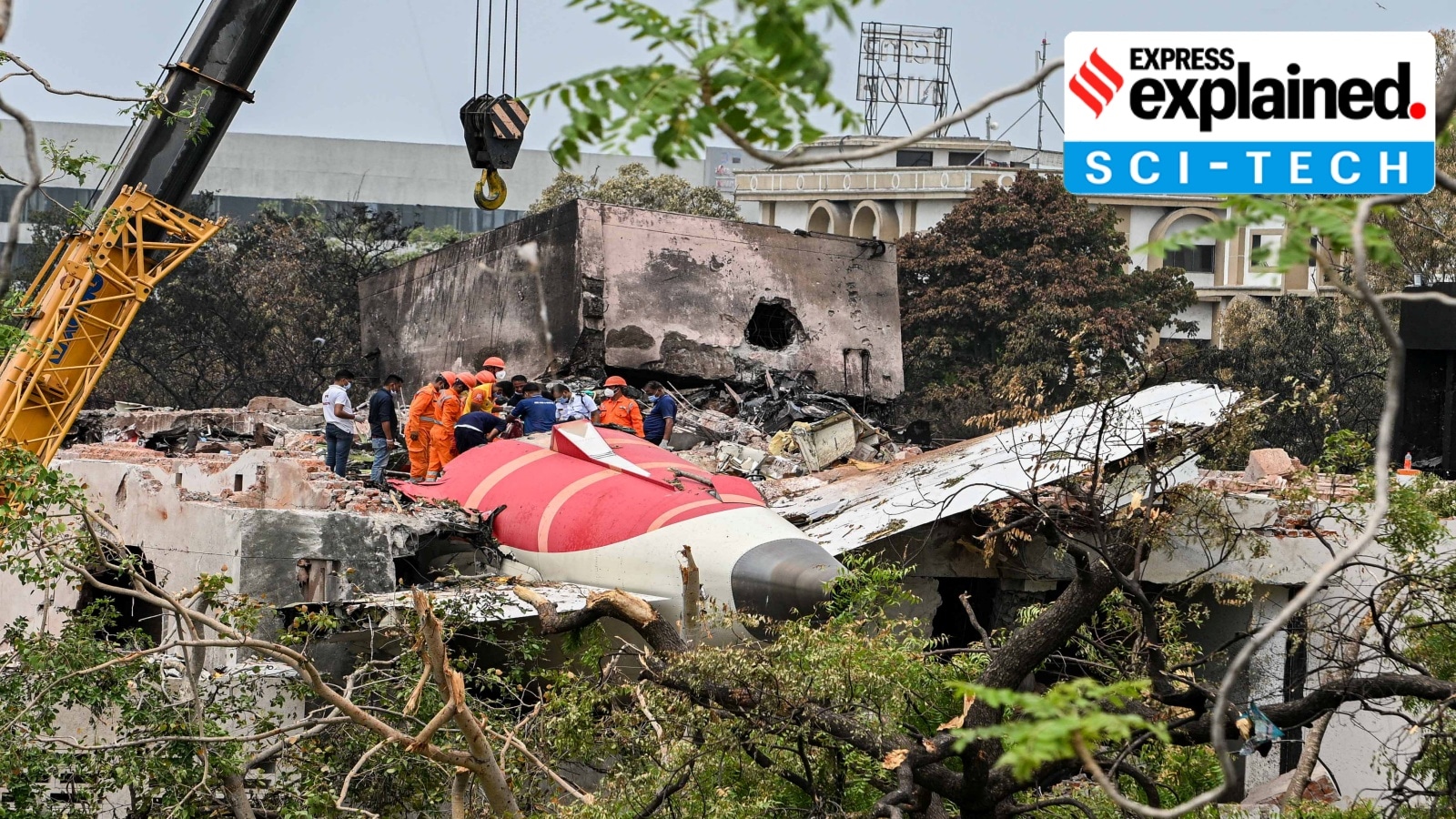
During the AI 171 plane crash in Ahmedabad last year, experts in Gujarat had relied on Interpol guidelines to identify the 260 bodies that were so charred and often commingled that normal identification processes like fingerprinting, visual confirmation and property recovery from them were rendered useless.
This document borrows from lessons learned from the crash: specifically, using forensic odontology, apart from DNA analysis, to identify victims. It recommends creating a “National Dental Data Registry” so that ante-mortem data can be compared with post-mortem data for identification.
Story continues below this ad
Dr Jayasankar Pillai, member of the Drafting Committee and secretary of the Indian Association of Forensic Odontology, said that everyone should have a selfie photograph with their front teeth clearly visible as it would help identification in the event of a disaster. “Further, if dental treatment is carried out, then please preserve those records at home as well. Dental records are reliable and play a very important role in DVI,” he added.
Forensic archaeology
The methods of conducting DVI stated in the guidelines include post-mortem fingerprinting, DNA analysis, forensic odontology, virtual autopsy and, interestingly, forensic archaeology.
Notably, this field of forensics was included from a project currently under way in North East India, where the NFSU is exhuming and identifying bodies of airmen and soldiers of the Allied forces, killed during World War II while fighting the Japanese troops, more than 80 years later. This is being done in Arunachal Pradesh, Manipur, and Tripura in collaboration with the Defense POW/MIA Accounting Agency of the US Department of Defense.
The guidelines state, “Forensic archaeology applies systematic excavation and stratigraphic principles to locate and recover human remains and evidence incorporated into the soil environment over time. These methods are critical for mass fatalities involving landslides, building collapses, etc., where anatomical integrity and the spatial context of evidence are compromised.”
[ad_2]
Source link