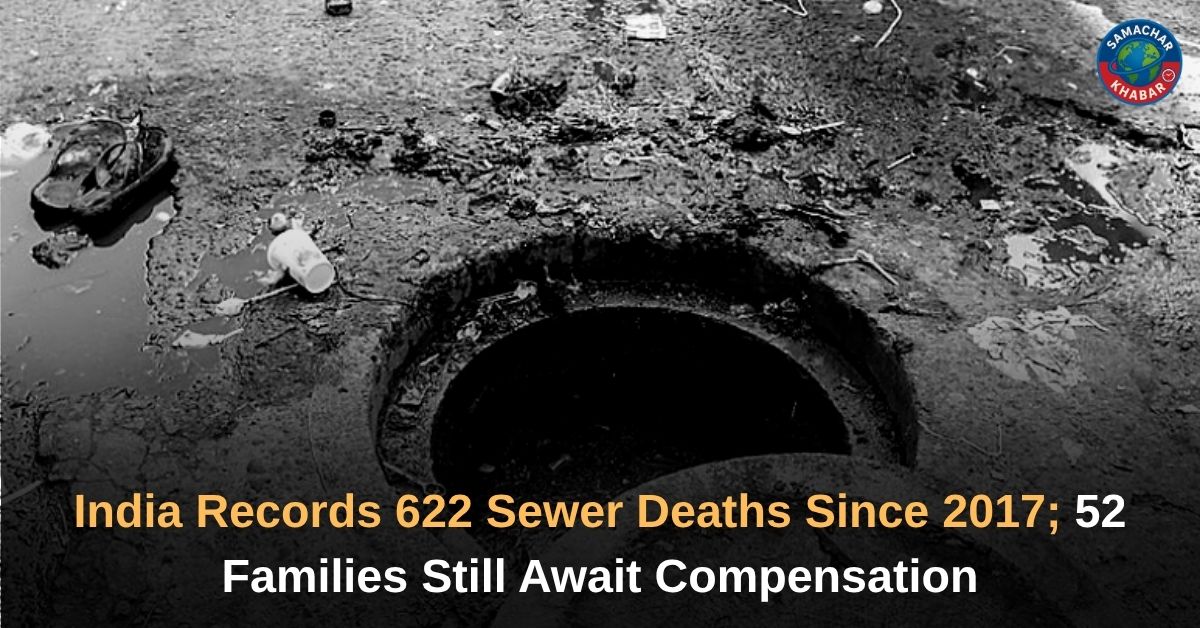
Government data presented in the Lok Sabha shows that at least 622 sanitation workers have died in sewer and septic tank accidents across India since 2017. While most affected families received compensation, 52 families received none and six cases were closed without resolution. The data, shared in response to a parliamentary question, also highlights persistent gaps in compensation, inconsistencies in manual scavenging data, and concerns over implementation outcomes of the NAMASTE scheme aimed at mechanising sanitation work.
Key Takeaways: Sewer Deaths and Compensation in India
- 622 sanitation workers died in sewer/septic tank accidents since 2017
- 52 families received no compensation; 25 received partial payments
- 539 families received full compensation; six cases closed unresolved
- Uttar Pradesh recorded the highest deaths (86)
- NAMASTE scheme promotes mechanisation but lacks measurable outcome data
- 842 complaints reported in 2025 on wages, safety, and discrimination
- Government data shows inconsistencies in manual scavenger identification
622 Deaths Reported in Sewer and Septic Tank Accidents Since 2017
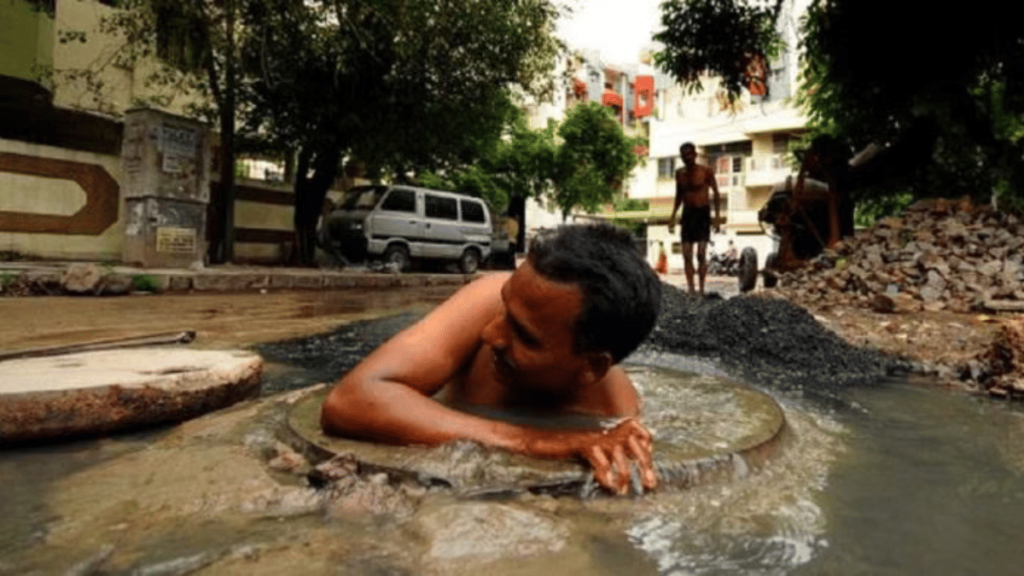
According to government data presented in the Lok Sabha on Tuesday, at least 622 sanitation workers have died in sewer and septic tank accidents across India since 2017. The data was shared in response to a question raised by Samajwadi Party MP Ikra Chaudhary to the Ministry of Social Justice and Empowerment regarding sewer deaths and the rehabilitation of manual scavengers.
Also Read: Lok Sabha Passes Online Gaming Bill 2025: Redefining the Path of India’s Digital Economy
Out of the 622 recorded deaths across 21 states and Union Territories:
| Category | Number of Families |
| Full compensation received | 539 |
| Partial compensation | 25 |
| No compensation | 52 |
| Cases closed unresolved | 6 |
Despite the majority receiving compensation, the data shows that 52 affected families have not received any financial support.
State-wise Data Highlights Highest Deaths in Uttar Pradesh
State-level figures reveal significant variations in both deaths and compensation:
- Uttar Pradesh: 86 deaths (highest)
- Maharashtra: 82 deaths
- Tamil Nadu: 77 deaths
- Haryana: 76 deaths
- Gujarat: 73 deaths
- Delhi: 62 deaths
The gap between deaths and compensation was most pronounced in Uttar Pradesh. Of the 86 affected families:
- 13 received no financial assistance
- 2 received only partial compensation
In Delhi, nine out of 62 affected families did not receive any compensation. Maharashtra reported nine families without payment, while in Gujarat, two families remain uncompensated and one case was closed.
District-Level Data Reveals Localised Gaps in Compensation
District-level data from Uttar Pradesh further highlights disparities:
- Chandauli: 4 deaths, none received compensation
- Ambedkar Nagar: 2 deaths, none compensated
- Gautam Buddh Nagar: 16 deaths
- 8 received full compensation
- 6 received none
- 2 cases were closed
These figures underline inconsistencies in compensation delivery at the district level.
Manual Scavenging Data Shows Contradictions Across Surveys
The government informed Parliament that a 2023 survey conducted under the Prohibition of Employment as Manual Scavengers and their Rehabilitation Act, 2013 found no manual scavengers in any district across the country.
Also Read: Rajya Sabha Elections 2026: NDA Sweeps Bihar, Odisha; Haryana Results Delayed Amid Dispute
However, earlier surveys conducted in 2013 and 2018 identified 58,098 individuals as manual scavengers. Of these:
- 32,473 individuals were from Uttar Pradesh
- This accounted for more than half of the national total
All identified beneficiaries and their dependents received a one-time cash assistance of ₹40,000.
Additional rehabilitation measures included:
- Skill development training provided to 27,928 individuals
- Capital subsidy up to ₹5 lakh for self-employment extended to 2,679 individuals
NAMASTE Scheme Focuses on Mechanisation but Lacks Outcome Data
The government launched the National Action Plan for Mechanised Sanitation Ecosystem (NAMASTE) in 2023–24. The scheme aims to eliminate manual scavenging by promoting mechanised cleaning of sewers and septic tanks.
Its objectives include:
- Rehabilitation and skill development of sanitation workers (SSWs)
- Providing training, financial assistance, and safety equipment
As of December 31, 2025:
- 89,114 SSWs were verified nationally
- Uttar Pradesh led with 12,418 workers
- Followed by Maharashtra (8,595), Gujarat (7,634), West Bengal (7,630), and Tamil Nadu (6,981)
By March 12, 2026, the number increased slightly to 89,248.
In 2024–25, 2,34,425 waste pickers were added as beneficiaries, including 35,641 from Uttar Pradesh.
Gaps in Data on Income, Productivity, and Enforcement
The Ministry informed Parliament that it does not maintain data on increases in average income of sanitation workers following mechanisation. It also stated that no measurable indicators are available to assess improvements in efficiency or productivity.
This absence of data remains a key concern, given that NAMASTE’s stated objective is to ensure safety and dignity through technology.
Additionally, the Ministry clarified that data on action taken against contractors or municipal bodies violating mechanisation mandates is not maintained at the central level, as sanitation falls under the State List in the Seventh Schedule.
Complaints Highlight Issues of Wages, Safety, and Discrimination
In 2025, the National Commission for Safai Karamcharis received 842 complaints related to:
- Non-payment of wages
- Lack of safety equipment
- Caste-based discrimination
State-wise complaint data shows:
- Delhi: 140 complaints (highest)
- Uttar Pradesh: 130 complaints
- Maharashtra: 95 complaints
These complaints indicate continuing challenges in ensuring worker safety, fair wages, and equitable treatment.
Persistent Gaps in Compensation and Data Tracking Remain
The data presented in Parliament reflects both progress and persistent gaps in addressing sewer and septic tank deaths. While compensation has reached most affected families, several cases remain unresolved or unpaid. At the same time, inconsistencies in manual scavenging data, lack of measurable outcomes under mechanisation efforts, and ongoing complaints highlight systemic challenges. The absence of centralised data on enforcement and impact further underscores the need for improved tracking and accountability in sanitation-related interventions.
Life, Death, and True Purpose
The reported deaths highlight a deeper reality that life is uncertain and can end at any moment. In the course of daily work and responsibilities, people often overlook the true purpose of human life.
According to spiritual understanding, human life is meant to seek truth, practice true devotion, and attain liberation, rather than being spent only in worldly struggles. It is believed that guidance from a Tatvdarshi Saint is essential to understand this path. In the present era, Saint Rampal Ji Maharaj Ji is a True Spiritual Guide, who provides True Knowledge and Naam initiation to help individuals work towards spiritual well-being and ultimate salvation.
For more information visit our
Website:www.jagatgururampalji.org
YouTube: Sant Rampal Ji Maharaj
Facebook: Spiritual Leader Saint Rampal Ji
X (Twitter): @SaintRampalJiM
FAQs on Sewer Deaths and Compensation in India
1. How many sanitation workers have died since 2017?
At least 622 sanitation workers died in sewer and septic tank accidents across India since 2017.
2. How many families did not receive compensation?
A total of 52 families received no compensation, while 25 received partial payments.
3. Which state reported the highest deaths?
Uttar Pradesh reported the highest number of deaths, with 86 cases.
4. What is the NAMASTE scheme?
NAMASTE is a government initiative launched in 2023–24 to mechanise sanitation work and rehabilitate sanitation workers.
5. Are there data gaps in implementation?
Yes, the government does not maintain data on income increases or productivity improvements after mechanisation.