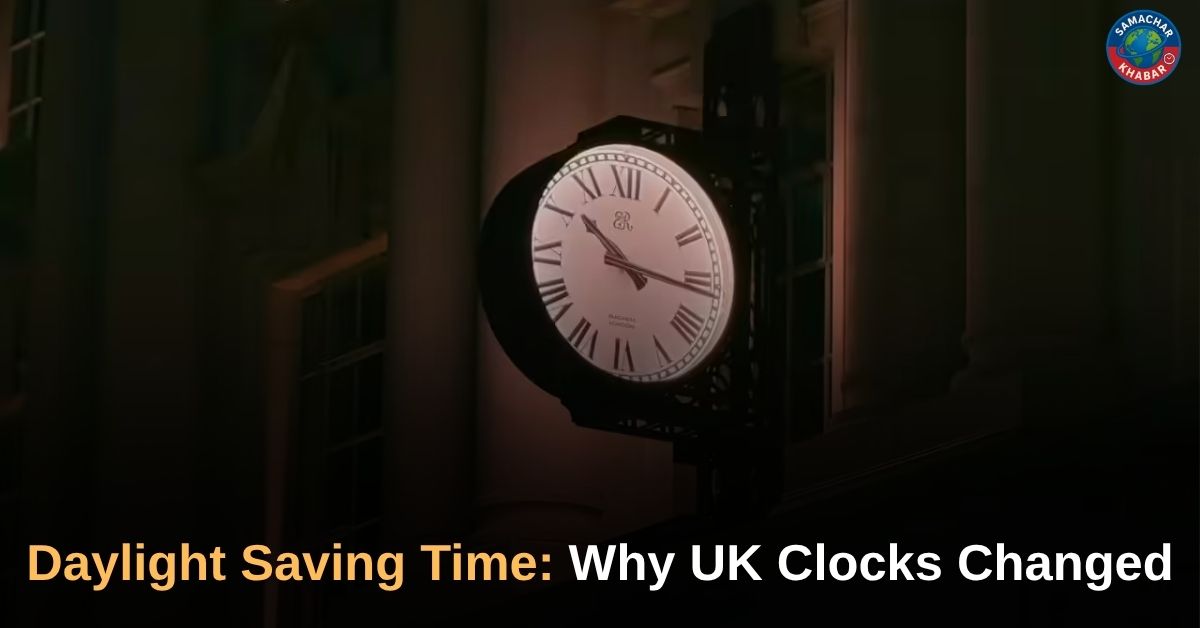
The UK officially entered British Summer Time on March 29, 2026, as clocks moved forward by one hour at 1am. While this seasonal shift brings longer, brighter evenings and marks the transition toward summer, it also comes with an immediate drawback—losing an hour of sleep. For more than a century, daylight saving time has shaped how people interact with daylight, influencing work, health, and daily routines.
Today, however, with growing scientific evidence and changing public opinion, the long-standing practice is under renewed scrutiny, raising questions about whether it still serves its original purpose.
Key Highlights on Daylight Saving Time 2026 and Global Clock Changes
- UK clocks moved forward at 1am on March 29, 2026, switching from GMT to BST
- Daylight shifts from morning to evening, creating longer evenings and darker mornings
- DST will end on October 25, 2026, when clocks go back
- First introduced during World War I to conserve energy and improve productivity
- Health studies link DST to increased risks of heart attacks, strokes, and sleep disruption
- Only about one-third of countries globally observe daylight saving time
- A YouGov poll shows 59% of Britons prefer permanent BST
- European Parliament voted to end DST, but implementation remains stalled
- Countries like Greece and Ireland also follow the same seasonal clock change
When Do the Clocks Go Forward and What Changes?
Every year, the clocks in the UK move forward by one hour at 1am on the last Sunday in March. In 2026, this change took place on March 29, shifting time from Greenwich Mean Time to British Summer Time.
This adjustment redistributes daylight:
- Sunrise occurs later, leading to darker mornings
- Sunset is delayed, resulting in brighter and longer evenings
The system remains in place until October 25, 2026, when clocks “fall back” by one hour.
The phrase “spring forward, fall back” continues to serve as a simple reminder of this seasonal change.
Understanding Daylight Patterns: From Spring Equinox to Summer Solstice
Following the spring equinox on March 20, most of the Northern Hemisphere experiences more than 12 hours of daylight. As the season progresses, daylight hours continue to increase.
By the summer solstice on June 21:
- Cities like London see over 16 hours of daylight
- In northern Scotland, daylight can extend to nearly 19 hours
- Twilight lingers late into the night, with minimal darkness
This gradual increase in daylight is one of the primary reasons DST is valued during summer months.
GMT vs BST: How the Time Shift Works
Greenwich Mean Time is the UK’s standard time during autumn and winter. British Summer Time is one hour ahead and is used during spring and summer.
The shift effectively moves an hour of daylight from the morning to the evening, aligning waking hours with natural light and encouraging outdoor and economic activity later in the day.
The True Origins of Daylight Saving Time
The belief that DST was introduced for farmers is a myth. In reality, many farmers oppose the system because it disrupts routines and affects livestock.
The idea was first seriously proposed by George Hudson in the 1890s, who wanted more evening daylight to study insects.
Later, William Willett promoted the concept in 1907 through his pamphlet The Waste of Daylight. He suggested shifting clocks by 80 minutes in gradual steps, although his proposal was not implemented during his lifetime.
The system was first adopted by Germany in 1916 during World War I to conserve coal. The UK followed shortly after under the Summer Time Act.
Evolution of the System: Experiments and Wartime Adjustments
| Period | System | Description |
| 1916 | Summer Time Act | Introduction of DST in the UK |
| 1939–1945 | British Double Summer Time | Clocks moved two hours ahead in summer |
| 1968–1971 | British Standard Time | No clock change; permanent BST trial |
The 1968–1971 trial aimed to evaluate permanent BST but ended after concerns over darker winter mornings and mixed results across regions.
Why Daylight Saving Time Was Introduced
DST was introduced primarily to:
- Conserve energy, especially coal during wartime
- Reduce reliance on artificial lighting
- Increase productivity during daylight hours
By aligning daily schedules with daylight, countries aimed to make better use of natural resources.
Benefits of Daylight Saving Time
Supporters highlight several advantages:
- Longer evenings encourage outdoor activities and social life
- Increased daylight boosts retail, tourism, and economic activity
- Improved evening visibility may reduce crime rates
- Extended daylight can positively impact mood and well-being
For many, the clock change symbolizes the end of winter and the beginning of brighter days.
The Downsides: Sleep Loss and Daily Disruption
Despite its benefits, DST has notable drawbacks:
- Loss of one hour of sleep during spring transition
- Disruption to circadian rhythms
- Darker mornings affecting early commutes
- Temporary decline in concentration and productivity
Many people experience symptoms similar to mild jet lag in the days following the change.
Health Risks Linked to Clock Changes
Research indicates that the shift to daylight saving time can have measurable health effects.
Sleep expert Charlie Morley highlights that even one hour of lost sleep can significantly affect the body.
Key findings include:
- 24% increase in heart attacks after the spring change
- 8% rise in stroke-related hospital admissions
- Increased amygdala activity leading to irritability and stress
Dr John O’Neill explains that the shift acts like nationwide jet lag, placing additional strain on the cardiovascular system and increasing risks of accidents.
Mental Health and Seasonal Effects
Clock changes can also affect mental well-being. Conditions such as Seasonal Affective Disorder may worsen when daylight patterns shift, particularly during autumn.
Reduced daylight exposure and disrupted sleep cycles can lead to:
- Low mood
- Increased fatigue
- Feelings of isolation
Regional Differences: Why the UK Remains Divided
The impact of DST is not uniform across the UK.
In northern Scotland:
- Winter sunrises can occur around 10am
- Dark mornings have been linked to increased road accidents
These regional differences have played a significant role in debates over maintaining or abolishing DST.
The Global Picture: Who Follows DST and Who Doesn’t
Only about one-third of countries worldwide observe daylight saving time.
In the United States, most states follow DST, but Arizona and Hawaii do not. In Europe, countries such as Iceland have opted out due to unique daylight patterns.
Several nations, including Russia, Turkey, and parts of Mexico, have discontinued DST in recent years.
Countries like Greece and Ireland continue to follow seasonal clock changes in line with European regulations.
European Policy and EU Directive
Daylight saving time across Europe is governed by EU Directive 2000/84, which standardizes the timing of clock changes among member states.
The European Parliament voted in 2019 to abolish seasonal clock changes. However, disagreements among member states have delayed implementation, leaving the current system in place.
Public Opinion and Political Debate
Public opinion in the UK is shifting.
A YouGov poll found that 59% of Britons would prefer permanent BST if the clock changes were abolished.
The British Sleep Society has also called for an end to the twice-yearly time change, citing its negative impact on health.
Internationally, figures like Donald Trump and Marco Rubio have voiced opposition to the practice.
How to Prepare for the Clock Change
Experts recommend several strategies to reduce the impact:
- Prioritize quality sleep before the transition
- Expose yourself to natural morning sunlight
- Maintain consistent meal and exercise schedules
- Limit caffeine intake
Napping can help if done correctly:
- Keep naps between 20 and 60 minutes
- End naps at least six hours before bedtime
Technology and the Modern Experience
Modern technology has reduced the inconvenience of DST. Most smartphones and connected devices automatically update the time.
However, manual adjustments are still required for:
- Car clocks
- Ovens and cookers
- Analog clocks
Weather Conditions During the Transition
The start of British Summer Time in 2026 is accompanied by mixed weather conditions across the UK.
Forecasts indicate:
- Saturday: Sunshine with scattered showers
- Sunday: Wind and rain moving across the country
- Overall temperatures remain below average due to a colder air mass
Spiritual Perspective: Teachings of Saint Rampal Ji Maharaj
While the world adjusts clocks to manage time, true balance in human life goes far beyond physical schedules. According to the spiritual knowledge of Saint Rampal Ji Maharaj, real peace and stability come from aligning life with eternal spiritual truths rather than temporary worldly systems.
Time changes may affect sleep, routine, and health, but the deeper question remains—how well is one using their human life? His teachings emphasize that human birth is rare and should be utilized for attaining salvation through true devotion. Instead of merely adjusting clocks, one must focus on understanding the purpose of life and connecting with the Supreme God for everlasting happiness.
A Defining Moment for Time and Society
Daylight saving time has shaped daily life for more than a century, balancing energy use, productivity, and lifestyle. Yet today, its relevance is increasingly questioned as health concerns, regional differences, and changing public attitudes come into focus.
While longer evenings remain a welcome benefit, the growing evidence of disruption to sleep and well-being continues to fuel debate. For now, the clocks will keep changing—but whether this century-old practice will endure in the future remains an open question.
FAQs on Daylight Saving Time 2026 in the UK
1. When do the clocks go forward in the UK in 2026?
The clocks go forward at 1am on March 29, 2026, shifting from GMT to BST and marking the start of daylight saving time.
2. Why does the UK use daylight saving time?
Daylight saving time was introduced to conserve energy, improve productivity, and make better use of natural daylight during longer summer days.
3. What are the health effects of daylight saving time?
DST can disrupt sleep cycles, increase heart attack and stroke risks, and affect mood, concentration, and overall mental well-being due to sudden time changes.
4. Which countries do not follow daylight saving time?
Countries like Iceland, and regions such as Arizona and Hawaii in the US, do not observe DST due to minimal daylight variation or geographic factors.
5. Should daylight saving time be scrapped in the UK?
Debate continues, with experts citing health risks, while a YouGov poll shows 59% of Britons support permanent BST instead of changing clocks twice yearly.