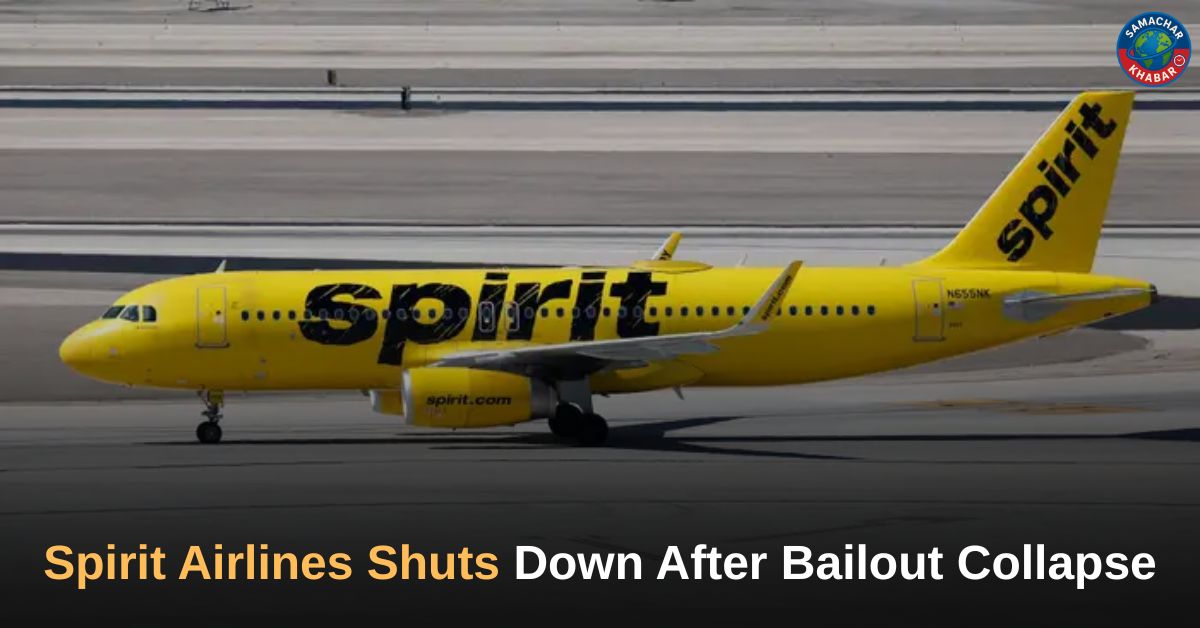
Spirit Airlines Shuts Down: Spirit Airlines has ceased operations with immediate effect after last-minute bailout talks collapsed, marking the end of nearly 34 years of operations. The low-cost carrier cancelled all flights, shut down customer service, and began winding down globally. The shutdown follows prolonged financial struggles, rising fuel costs linked to geopolitical tensions, and failed restructuring efforts. Other major US airlines have stepped in to assist stranded passengers with discounted “rescue fares,” while employees and customers face uncertainty amid refunds and job losses.
Key Takeaways: Spirit Airlines Shutdown Explained
- Spirit Airlines shut down operations effective May 2, 2026
- All flights cancelled and customer service halted immediately
- USD 500 million bailout deal failed due to creditor disagreements
- Rising fuel prices and financial instability worsened the crisis
- Other airlines offered “rescue fares” to stranded passengers
- Around 17,000 employees affected by the shutdown
- The airline had filed bankruptcy twice since 2024
- Refunds promised, but processing varies by payment method
Sudden Shutdown Ends 34-Year Journey
Spirit Airlines abruptly ceased operations in the early hours of May 2, 2026, announcing it was “winding down its global operations, effective immediately.” All flights were cancelled, and customer service was shut down, leaving passengers without assistance and urging them not to head to airports.
Known for its bright yellow planes and ultra-low-cost model, the airline had become a key player in budget travel since its launch in 1992. Between February 2025 and January 2026, it carried around 28 million passengers, according to government data.
Also Read: Peru’s F-16 Fighter Jet Deal Triggers Political Crisis and Ministerial Resignations
The sudden shutdown followed weeks of high-stakes negotiations with the White House, which had proposed a USD 500 million bailout package. However, talks collapsed at the last moment due to creditor disagreements and concerns over financial viability.
Failed Bailout and Financial Collapse
The airline’s final attempt to survive depended on federal support, but creditors ultimately rejected the bailout structure. According to statements cited in the chunks, the company lacked “hundreds of millions of dollars” needed to continue operations.
Dave Davis acknowledged the financial dead end, confirming the airline could not secure the funding required to stay afloat.
US Transportation Secretary Sean Duffy stated that while efforts were made to keep the airline operational, the decision ultimately rested with creditors. He added that the government did not have unlimited funds available for such bailouts.
The failure of a proposed merger with JetBlue in March 2024 further weakened Spirit’s position, removing a potential lifeline.
Key Reasons Behind the Shutdown
Multiple factors combined to push Spirit Airlines into collapse:
1. Rising Fuel Costs
Fuel prices surged significantly due to global tensions, particularly involving Iran, which disrupted oil supply routes and increased jet fuel costs. This severely impacted the airline’s already fragile financial structure.
2. Repeated Bankruptcy
Spirit had filed for bankruptcy twice—once in November 2024 and again in August 2025—reflecting ongoing financial distress and unsuccessful restructuring attempts.
3. Business Model Pressure
The airline’s “no-frills” model, which relied on low base fares and additional charges, lost its competitive edge as larger airlines adopted similar pricing strategies.
4. Debt and Restructuring Failures
Years of accumulated debt and failed restructuring efforts left the company with limited flexibility to respond to rising costs.
5. Bailout Collapse
The inability to secure the USD 500 million bailout proved to be the final trigger, leaving the airline with no viable path forward.
Passengers and Refund Situation
The shutdown created immediate disruption for passengers across multiple regions, including the United States, Caribbean, and Latin America.
- All flights were cancelled without prior notice
- Customers were advised not to go to airports
- Refunds were promised by the airline
- Card payments are being processed automatically
- Other refund claims may proceed through bankruptcy proceedings
Passengers scrambled to find alternatives, often facing significantly higher ticket prices. For example, one traveler reported that alternative flights cost up to $1,000 per ticket.
Also Read: RAF Jets Scrambled as Suspected Russian Bomber Nears UK Airspace Amid Rising Tensions
Airlines Step In with ‘Rescue Fares’
Major US carriers, including:
- United Airlines
- Delta Air Lines
- American Airlines
- JetBlue
quickly responded by offering discounted tickets, widely referred to as “rescue fares.”
United Airlines stated that it helped Spirit customers book 14,000 tickets within just over 12 hours. Some airlines also increased flight capacity or deployed larger aircraft on affected routes.
In addition, carriers initiated efforts to support stranded Spirit employees, including potential hiring opportunities.
Impact on Employees and Industry
The shutdown has had a significant human and economic impact:
| Impact Area | Details |
| Employees | Around 17,000 jobs affected |
| Passengers | Thousands stranded globally |
| Industry | Reduced low-cost competition |
| Market | Potential rise in ticket prices |
Unions, including the Air Line Pilots Association, criticised the failure to reach a rescue deal, highlighting the burden on workers and their families.
Experts noted that Spirit had been “already in a very difficult position,” with rising fuel costs acting as the final blow.
Changing Landscape of Budget Air Travel
Spirit Airlines played a major role in shaping low-cost travel in the United States. Its pricing strategy forced larger carriers to introduce cheaper fares and increased competition in the aviation market.
However, its collapse signals potential changes:
- Fewer low-cost options for travellers
- Increased market share for remaining budget carriers
- Possible rise in airfares due to reduced competition
Carriers such as Frontier and Allegiant may gain strength in the absence of Spirit, but the overall affordability of air travel could decline.
A Defining Moment for the Aviation Sector
The shutdown of Spirit Airlines marks a significant turning point in the US aviation industry. After decades of influencing low-cost travel, the airline’s collapse highlights the challenges of sustaining ultra-budget models amid rising operational costs and financial pressures. With bailout efforts failing and restructuring options exhausted, the industry now faces a shift in competition and pricing dynamics. For passengers, employees, and policymakers, the event underscores the vulnerability of airlines to economic and geopolitical disruptions.
Spiritual Perspective on Uncertainty and Stability
The sudden shutdown of Spirit Airlines reflects how uncertainty and instability can affect even long-standing institutions. In such situations, spiritual understanding encourages individuals to remain balanced and composed despite external disruptions.
According to the teachings of Tatvdarshi Sant Rampal Ji Maharaj, true stability comes from spiritual knowledge, which helps individuals face unexpected challenges with clarity and patience. While industries and systems may fluctuate due to economic or external pressures, a deeper sense of awareness can guide individuals toward resilience and thoughtful decision-making during uncertain times.
For more information visit our
Website: www.jagatgururampalji.org
YouTube: Sant Rampal Ji Maharaj
Facebook: Spiritual Leader Saint Rampal Ji
X (Twitter): @SaintRampalJiM
FAQs on Spirit Airlines Shutdown
1. Why did Spirit Airlines shut down?
It shut down due to rising fuel costs, financial struggles, failed restructuring, and the collapse of a USD 500 million bailout deal.
2. When did Spirit Airlines stop operations?
Spirit Airlines ceased operations on May 2, 2026, with immediate effect.
3. What happened to passengers after the shutdown?
Passengers faced cancellations, received refund promises, and relied on other airlines offering discounted rescue fares.
4. How many employees were affected?
Around 17,000 employees were impacted by the shutdown.
5. Will ticket prices increase after Spirit’s collapse?
The shutdown may lead to higher fares due to reduced competition in the low-cost airline market.