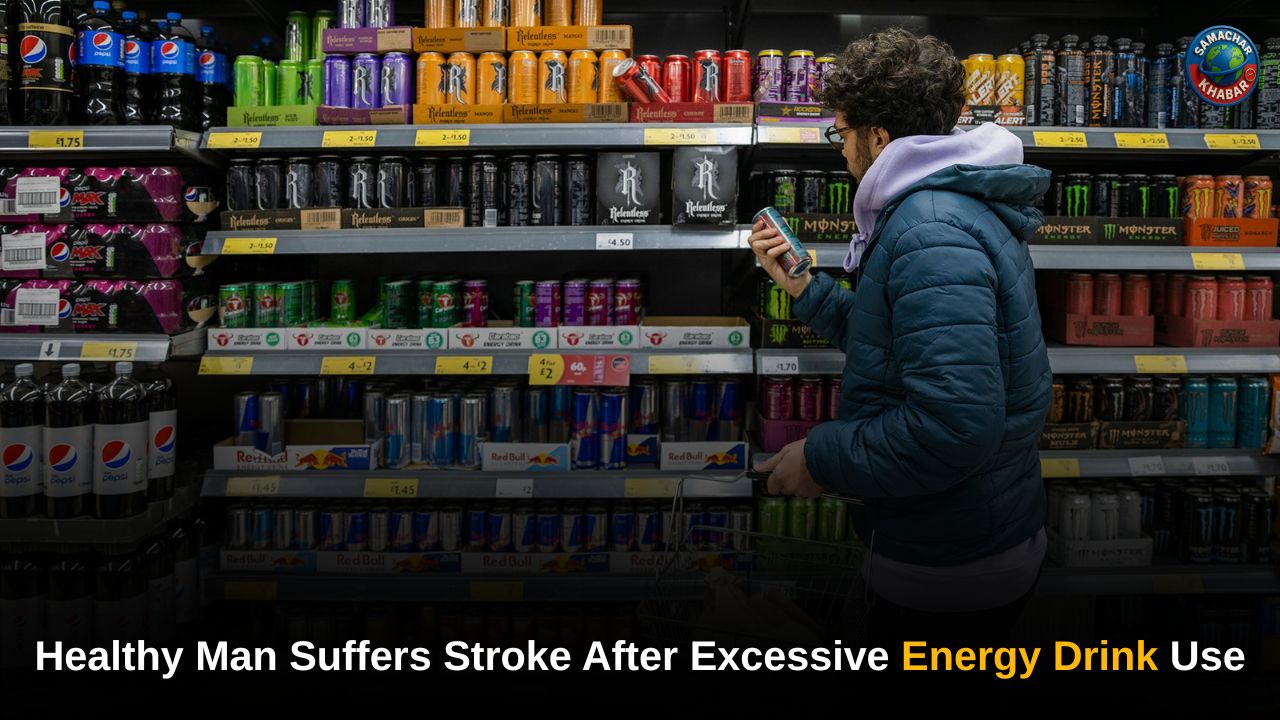
A shocking medical case from Nottingham, England, has reignited global concern over the hidden cardiovascular dangers of energy drinks. A healthy, athletic 54-year-old man — with no history of smoking, alcohol, or drug use — suffered a stroke so severe that it left him with lifelong numbness, despite appearing perfectly fit. The cause stunned even his doctors: a long-term habit of consuming eight high-caffeine energy drinks every day.
His case, now detailed in BMJ Case Reports, has prompted renewed warnings from medical professionals about extreme caffeine intake, “hidden caffeine” from additives, and the potent combination of stimulants found in modern energy drinks.
Key Takeaways: How Excessive Energy Drink Consumption Triggered a Stroke in a Healthy Individual
- Eight energy drinks a day pushed the man’s caffeine intake to 1,200–1,300 mg daily (vs. 400 mg recommended limit).
- He arrived at the hospital with dangerously high blood pressure: 254/150 mmHg.
- Scans showed a thalamic stroke, affecting movement and sensory processing.
- Blood pressure stayed uncontrolled despite medications — until he stopped energy drinks completely.
- Ingredients like taurine, guarana, ginseng, and high sugar amplified cardiovascular strain.
- Doctors warn rising energy drink potency may increase stroke, arrhythmia, and heart disease risks, even in young and healthy people.
- Years later, the man still suffers permanent numbness on his left side.
A Healthy Lifestyle Shattered by a Sudden Stroke
The patient’s lifestyle gave no indication of impending danger. At 54, he was an avid runner, a warehouse worker, and someone who avoided all typical cardiovascular risk factors. But one morning, he suddenly experienced weakness and numbness on the left side of his body. He struggled to maintain balance, found it difficult to walk, and even simple functions like swallowing and speaking became challenging.
A family member immediately took him to a stroke clinic. What doctors discovered there marked the beginning of an alarming medical investigation.
The Silent Killer: A Blood Pressure Reading That Stunned Doctors
When clinicians at Nottingham University Hospitals NHS Trust measured his blood pressure, it registered a shocking 254/150 mmHg.
“His blood pressure was sky high — yet when you looked at him you’d never know it,” said Dr. Sunil Munshi, the consulting physician overseeing his case. “That’s why we call hypertension the silent killer.”
Scans confirmed a stroke in the thalamus, a deep region of the brain responsible for sensory pathways and movement coordination.
Despite administering five different medications, doctors could only bring his systolic pressure down to around 170 mmHg — still far above the safe range. Once discharged, his pressure skyrocketed again, hitting 220 mmHg, leaving doctors puzzled.
The Hidden Habit Doctors Almost Missed
Only after weeks of tests — all returning inconclusive — did the patient reveal what he considered a harmless habit: drinking eight energy drinks every day to stay alert for work.
Unknown to him, he was consuming three times the safe limit of caffeine, with each can containing about 160 mg. In total, this amounted to 1,200–1,300 mg daily, far exceeding the recommended 400 mg/day limit set by UK and US health authorities.
The moment he disclosed this, doctors immediately identified the cause.
“Suddenly the diagnosis was clear,” Munshi said.
Within weeks of quitting energy drinks entirely, his blood pressure returned to normal and stabilized — without medication.
But the damage had already left its mark.
Even After Eight Years, the Stroke’s Impact Remains
Although his blood pressure recovered once the stimulant load was removed, the neurological damage did not. Years after the stroke, the man still lives with persistent numbness in his left hand, fingers, foot, and toes.
“I obviously wasn’t aware of the dangers drinking energy drinks were causing to myself,” he told his doctors.
His story underscores a dangerous truth: cardiovascular effects may reverse, but the consequences of a stroke often do not.
Why Energy Drinks Pose a Bigger Threat Than Consumers Realize
Caffeine Levels Often Exceed Expectations
According to the case report:
- Average energy drink: 80 mg caffeine per 250 ml
- Tea: 30 mg
- Coffee: 90 mg
- Some energy drinks: up to 500 mg per serving
This means a drink that appears equivalent to a cup of coffee may actually contain five times more caffeine.
The Hidden Caffeine Problem
Ingredients like guarana contain extremely high caffeine concentrations — about twice that of coffee beans — adding hidden stimulants beyond the listed amount.
Potent Additive Mix Intensifies Cardiovascular Strain
Energy drinks commonly include:
- Taurine
- Ginseng
- Glucuronolactone
- Theophylline
- Theobromine
“Energy drinks with caffeine plus taurine produce significantly higher blood pressure than caffeine alone,” Munshi explained.
High glucose levels also damage blood vessels, increasing long-term heart risks.
Doctors warn that this combination can:
- Trigger cardiac arrhythmias
- Damage vascular endothelium
- Promote platelet aggregation → blood clots
- Lead to heart attack, stroke, or intracranial hemorrhage
Medical literature already documents multiple such cases.
Young People at Risk as Energy Drinks Become More Potent
Clinicians stress that modern energy drinks are becoming stronger and more dangerous, with marketing increasingly targeting younger consumers.
The UK implemented a voluntary supermarket ban on selling these drinks to under-16s in 2018, initially to combat obesity and tooth decay. Recently, the government announced plans to formally restrict high-caffeine drink sales to under-16s.
Despite these steps, cardiovascular dangers remain widely overlooked.
Munshi urges doctors to ask patients — especially young adults — about energy drink use when diagnosing unexplained hypertension or cardiac issues.
A Strong Reminder That A Small Daily Habit Can Carry Serious Consequences
This case demonstrates how a seemingly harmless routine — grabbing multiple energy drinks to stay alert — can escalate into a life-changing medical emergency. Even in individuals who appear completely healthy, excessive stimulant intake can silently elevate blood pressure and damage the cardiovascular system until it culminates in a catastrophic event like a stroke.
The long-term numbness this patient still experiences eight years later is a powerful reminder of how permanent the effects can be, even when the immediate trigger is removed.
Spiritual Insight from the Teachings of Saint Rampal Ji Maharaj
Saint Rampal Ji Maharaj teaches that human life is meant for attaining true devotion and must not be harmed through unhealthy habits or addictions. His scripture-based guidance emphasizes protecting the body, exercising self-control, and avoiding substances that damage health or distract the mind from spiritual progress. This incident reinforces His message that disciplined living and correct worship help individuals safeguard both physical well-being and spiritual purpose.
What This Case Teaches Us About Hidden Risks of Energy Drinks
Energy drinks are widely seen as quick boosts for long days, workouts, or late-night work. But this real medical case reveals a deeper truth: behind their bright packaging and bold marketing lies the potential for significant harm when consumed excessively or frequently.
Modern energy drinks combine high caffeine, hidden stimulants and heavy sugar — a mix capable of pushing blood pressure to dangerous extremes, straining the heart, and increasing the risk of stroke or cardiac events. This man’s experience serves as a stark warning that even the fittest individuals are not immune. With energy drink potency rising and usage increasing among younger demographics, greater awareness and stronger regulation may be essential to prevent similar incidents in the future.
FAQs on Energy Drinks and Stroke Risk
1. Can energy drinks cause a stroke?
Yes. Excessive energy drink intake can raise blood pressure, trigger blood vessel strain, and increase stroke risk, even in otherwise healthy individuals.
2. How many energy drinks per day are unsafe?
Consuming more than 400 mg caffeine daily is unsafe. Eight energy drinks supplied 1,200–1,300 mg caffeine and contributed to the patient’s stroke.
3. What ingredients in energy drinks increase heart risk?
Stimulants like caffeine, taurine, guarana, ginseng and high sugar can elevate blood pressure, trigger arrhythmias and strain the cardiovascular system.
4. Can blood pressure normalize after quitting energy drinks?
Yes. In this case, blood pressure returned to normal within weeks once the patient stopped consuming energy drinks.
5. Do energy drinks pose risks for healthy or young people?
Yes. Even healthy or young individuals may develop hypertension, arrhythmias or stroke due to high caffeine and stimulant levels in energy drinks.