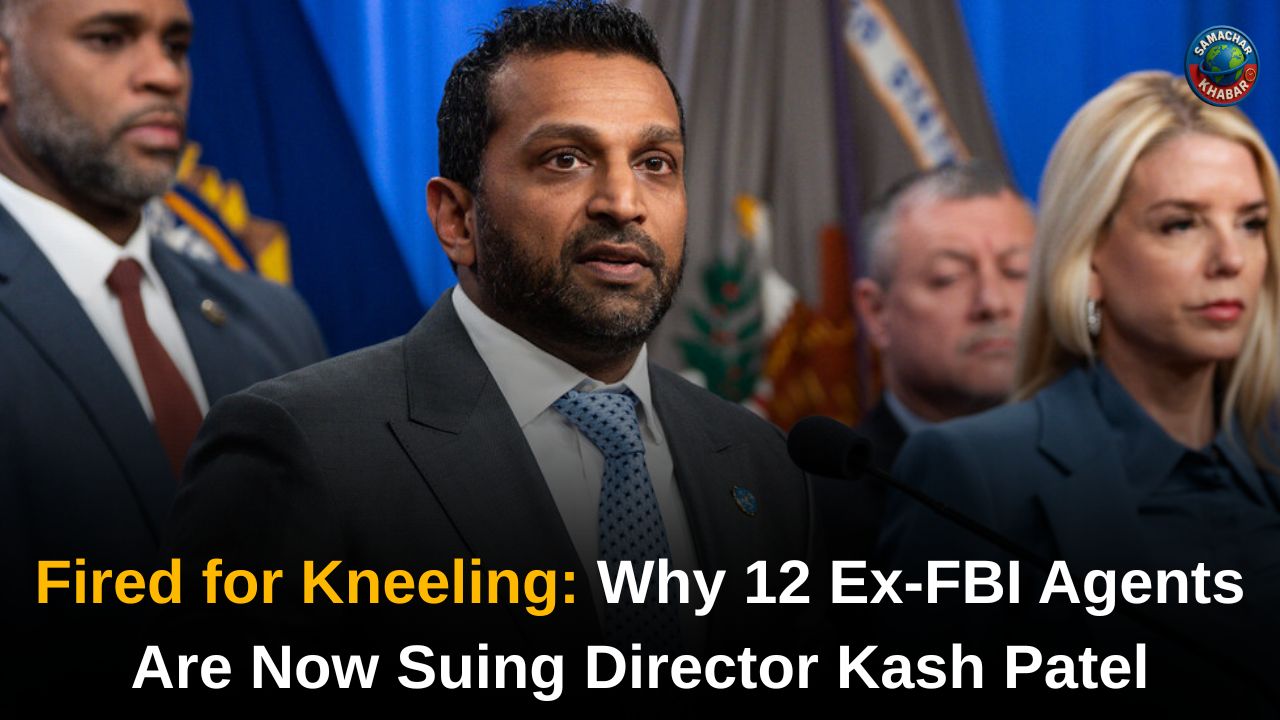
In one of the most consequential legal showdowns to hit the bureau in years, a dozen former FBI agents have filed a sweeping lawsuit alleging they were unlawfully terminated for kneeling during the 2020 George Floyd protest in Washington, DC. The plaintiffs — nine women and three men — argue they made a split-second tactical decision to de-escalate a volatile crowd, only to be dismissed years later under the Trump administration after Director Kash Patel took charge.
They claim Patel bypassed internal procedures, ignored earlier investigative findings, and retaliated against them for actions taken to prevent potential bloodshed.
Key Takeaways: Why the Kneeling Protest Lawsuit Against Kash Patel Matters
• Twelve former FBI agents say they were fired for kneeling during a June 4, 2020 racial-justice protest while attempting to defuse a dangerous crowd confrontation.
• Multiple internal reviews in 2020 and 2024 reportedly cleared the agents of wrongdoing and found no political motive behind their actions.
• The lawsuit alleges the terminations were politically driven, pushed by the Trump administration and executed by FBI Director Kash Patel before internal disciplinary findings were completed.
• Plaintiffs argue their kneeling helped prevent possible violence, including the risk of protesters seizing agents’ firearms.
• The agents seek reinstatement, back pay, expungement of disciplinary records, and a jury trial.
• The case adds to a growing list of lawsuits from FBI personnel dismissed during what critics call a broader “political purge.”
A Protest Decision Reignited Years Later
The lawsuit traces its origins to June 4, 2020, when large-scale demonstrations filled Washington, DC after George Floyd’s killing. The agents, primarily from counterterrorism and counterintelligence units, were assigned crowd-control roles despite lacking riot gear, shields, helmets, and formal training for such operations. As protests swelled near the National Archives, they found themselves backed against a wall by a mass of people that included both hostile individuals and families with young children.
Facing chants demanding they “take a knee,” and worried that any aggressive move could escalate into violence or trigger a struggle over their firearms, the agents decided to kneel. The complaint describes this as a calculated de-escalation method, adopted to prevent a confrontation that might have spiraled into tragedy. According to them, the crowd moved on peacefully — and no force was used.
Internal Reviews Once Cleared the Agents
Shortly after the incident, then-FBI Director Christopher Wray and Deputy Director David Bowdich offered reassurance that the agents’ actions were appropriate under the circumstances. Bowdich concluded the kneeling was not political expression but a tactical response to a dangerous situation.
A Justice Department inspector general review in 2024 reached the same conclusion, finding no misconduct and expressing concern that the agents had been placed in a precarious situation without proper gear or support. Internal records cited in the lawsuit show investigators concluded the agents acted apolitically, committed no Hatch Act violations, and made a reasonable judgment to protect lives.
For years, the matter appeared settled. Then political winds shifted.
Kash Patel’s Appointment and the Disputed Purge
Everything changed after Trump’s return to the White House and the appointment of Kash Patel as FBI Director in early 2025. According to the lawsuit, Patel had already expressed intent to fire the kneeling agents before formally assuming office. Plaintiffs claim the directive to remove them originated in the White House.
Shortly after taking leadership, Patel ordered a new inquiry into the same 2020 incident, despite earlier reviews clearing the agents. Several of the plaintiffs were removed from supervisory roles, including one stationed overseas who had to abruptly relocate her family. The re-investigation process was ongoing when Patel issued termination letters in September, overriding the internal disciplinary system.
Also Read: The Truth About the FBI and George Floyd
Those letters accused the agents of “unprofessional conduct and a lack of impartiality,” alleging their kneeling contributed to the “political weaponization of government.” The plaintiffs argue that Patel circumvented standard FBI procedures, ignored established investigative findings, and acted with political intent rather than administrative necessity.
A Broader Pattern of Retaliatory Dismissals, Lawsuit Says
The lawsuit places the kneeling agents’ dismissal within what it describes as a larger pattern of politically motivated personnel removals inside the FBI and Justice Department. In recent months, several officials tied to investigations involving Trump or his allies were fired. A separate lawsuit by former Acting FBI Director Brian Driscoll and other senior leaders similarly accuses Patel of conducting a politically driven purge.
Internal whistleblowers, including Steven Jensen — the former Assistant Director in Charge of the DC field office who advised that proper procedures be followed — were dismissed as well. Jensen is now suing Patel, claiming he too was targeted for resisting improper political directives.
Plaintiffs argue that firing seasoned counterterrorism and counterintelligence agents without due process not only violated their rights but jeopardized national security. Their abrupt departure disrupted active operations, including evidence collection in Utah after the assassination of conservative activist Charlie Kirk and support efforts tied to a federal initiative titled “Making the District of Columbia Safe and Beautiful.”
What the Lawsuit Seeks
The plaintiffs are asking for reinstatement to their previous positions, back pay, restoration of benefits, and expungement of all disciplinary records. They also seek a judicial declaration that their firings were unconstitutional, alleging violations of their First Amendment rights to free association and their Fifth Amendment due-process protections.
The FBI and Justice Department declined to comment on the ongoing litigation.
A Defining Moment for the Bureau and Its Independence
The legal battle raises fundamental questions about the balance between political authority and institutional independence inside federal law enforcement. Can an apolitical tactical decision made during a tense protest be retroactively reclassified as political conduct? Can an FBI director override established review procedures to remove career agents? And what protections do federal employees have when their actions clash with shifting political expectations?
As the case proceeds, it is poised to test not only the rights of the dismissed agents but also the limits of executive influence over the FBI’s disciplinary processes. The outcome may shape how future administrations navigate dissent, decision-making in crisis situations, and the delicate line between political oversight and the autonomy of federal law enforcement.
FAQs on Ex-FBI Agents’ Lawsuit Over Kneeling Protest Firings
1. Why are 12 former FBI agents suing Director Kash Patel?
They claim they were unlawfully fired for kneeling during a 2020 George Floyd protest, saying it was a tactical de-escalation, not political expression.
2. What do the ex-agents say about the kneeling incident?
Their state kneeling prevented potential violence, controlled firearm risks, and safely dispersed a volatile crowd near the National Archives during nationwide unrest.
3. What did internal FBI and DOJ reviews conclude earlier?
Multiple reviews found no misconduct, no political motive, and confirmed the agents acted within policy to de-escalate the situation in 2020.
4. What does the lawsuit accuse Kash Patel of doing?
The suit alleges Patel bypassed internal processes, acted on political pressure, and fired them before disciplinary reviews concluded.
5. What are the ex-agents demanding in the lawsuit?
They seek reinstatement, back pay, cleared records, constitutional protection, and a court declaration that their terminations were unlawful.