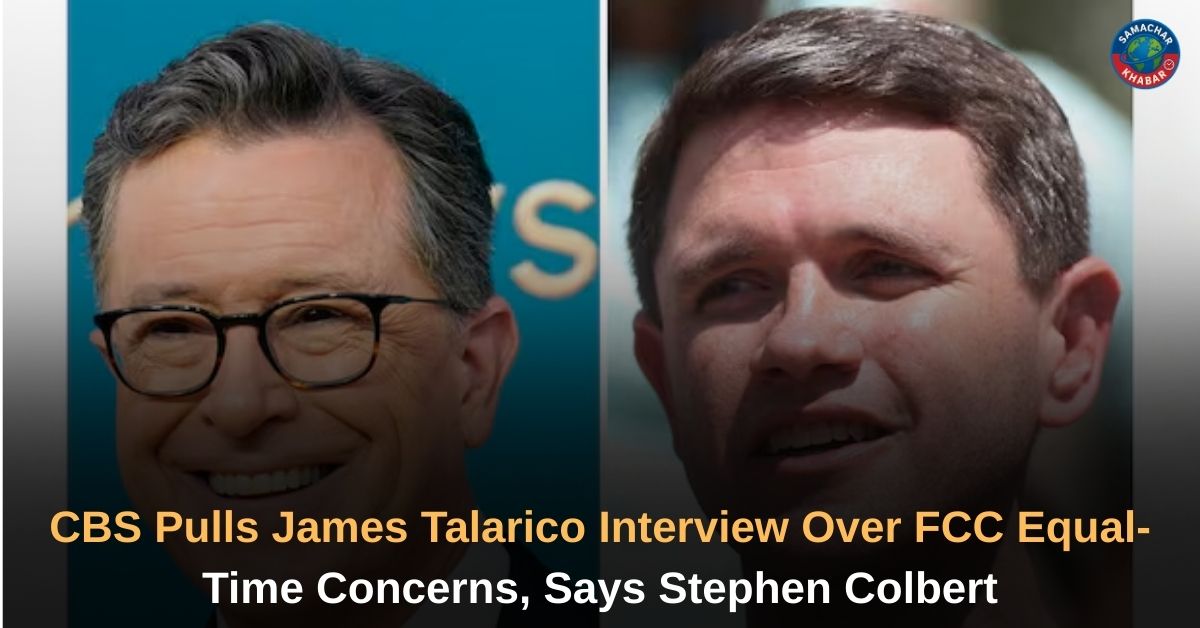
A dispute involving late-night host Stephen Colbert, CBS, and Texas Democratic Senate candidate James Talarico has sparked a national debate over media regulation, political pressure, and free speech. Colbert said his network declined to air a pre-recorded interview with Talarico due to concerns linked to the Federal Communications Commission’s equal-time rule. CBS, however, stated that the interview was not prohibited but that legal guidance was provided regarding potential regulatory implications.
The interview was ultimately released online, drawing widespread attention as discussions intensified over FCC authority, political influence, and the future of political interviews on broadcast television.
Key Takeaways on the CBS Pulls James Talarico Interview and FCC Equal-Time Rule Controversy
- Stephen Colbert said CBS lawyers advised against airing his interview with Senate candidate James Talarico on broadcast television.
- CBS stated the show was not banned from airing the interview but received legal guidance regarding possible FCC equal-time rule obligations.
- The FCC equal-time rule requires broadcast stations to provide equal opportunities to competing political candidates.
- FCC Chairman Brendan Carr questioned whether late-night talk shows qualify for traditional news exemptions.
- The interview was released on YouTube because streaming platforms are not subject to the same FCC regulations.
- FCC Commissioner Anna Gomez and free speech advocates criticized what they described as political pressure on broadcasters.
- The controversy unfolded as early voting began ahead of Texas’ March 3 Democratic Senate primary.
Why the Interview Did Not Air on CBS Broadcast
Stephen Colbert told viewers during “The Late Show” that network attorneys informed him that Texas state Representative James Talarico could not appear on the broadcast. According to Colbert, the directive followed recent FCC guidance regarding political candidate appearances on television.
CBS later issued a statement clarifying that the interview was not prohibited. The network said the show was provided legal guidance because airing the interview could trigger the FCC’s equal-time rule, potentially requiring airtime for other candidates in the same race, including Representative Jasmine Crockett. CBS said the show chose to present the interview online rather than pursue equal-time options.
The interview was subsequently released on the show’s YouTube channel, where it gained millions of views and drew additional attention to the controversy.
FCC Equal-Time Rule and the Debate Over Talk Show Exemptions
The FCC’s equal-time rule requires broadcast television and radio stations to provide equal opportunity to legally qualified candidates if one candidate is featured. For decades, late-night and daytime talk shows have generally operated under a “bona fide news” exemption, allowing interviews with political figures without providing equal airtime to their opponents.
However, FCC Chairman Brendan Carr issued guidance in January suggesting that talk shows should not automatically assume exemption status, particularly if programming appears politically motivated. While no formal rule change has been enacted, the guidance introduced uncertainty among broadcasters and prompted networks to reconsider potential regulatory risks.
FCC Commissioner Anna Gomez disputed the interpretation, stating that the agency had not adopted new rules and warning that pressure on broadcasters could create a chilling effect on free expression.
Political Reactions and Free Speech Concerns
Colbert sharply criticized the situation on air, accusing the Trump administration of attempting to silence criticism on television. Talarico also raised concerns during the interview, describing the issue as part of a broader threat to First Amendment rights and arguing that political leaders were attempting to influence what audiences can watch and hear.
Free speech advocates echoed similar concerns, arguing that applying equal-time requirements to talk shows could discourage political interviews. The White House, however, defended the FCC, saying the agency was enforcing existing regulations.
Also Read: 2025 US Tax Returns: Important Deadlines, Penalties and Refund Details You Must Know
The controversy also unfolded during the final months of “The Late Show,” which CBS announced last year would end in May, citing financial reasons. The timing drew attention because the announcement followed Colbert’s criticism of Paramount’s settlement with Donald Trump related to a “60 Minutes” lawsuit.
Texas Senate Race Adds Political Context to the Controversy
The dispute emerged as early voting began for Texas’ March 3 Democratic Senate primary. Talarico, a state representative from Austin, is competing against U.S. Representative Jasmine Crockett for the party’s nomination. The winner will face the Republican nominee in November, with candidates including incumbent Senator John Cornyn and Texas Attorney General Ken Paxton.
Democrats have not won a statewide election in Texas in more than three decades, making the race closely watched nationally. The controversy surrounding the interview significantly boosted online attention around Talarico’s campaign, with the YouTube release attracting millions of viewers across digital platforms.
Media Regulation, Corporate Decisions and the Changing Landscape of Political Interviews
The incident highlights growing tension between media organizations, regulators, and political figures as traditional broadcasting rules collide with digital distribution. Broadcast television remains subject to FCC oversight, while online platforms are not bound by the same equal-time requirements, allowing political interviews to reach audiences through alternative channels.
The situation has also raised broader questions about whether legal caution or corporate considerations influence editorial decisions when networks face regulatory scrutiny. Supporters of stricter enforcement argue that equal-time rules ensure fairness during elections, while critics warn that aggressive interpretations could limit political discussion and media independence.
A Turning Point in the Debate Over Media Freedom and Broadcast Regulation
The dispute over the James Talarico interview has become a broader symbol of the tension between media freedom, political oversight, and evolving broadcast regulations. While CBS maintains its decision was based on legal considerations, critics argue the episode reflects increasing caution among broadcasters amid political scrutiny.
As the Texas Senate race progresses and discussions about FCC authority continue, the controversy underscores how rapidly changing media dynamics are reshaping the boundaries between entertainment, journalism, and political speech in modern American broadcasting.
FAQs on CBS Pulls James Talarico Interview Over FCC Equal-Time Concerns
1. Why did CBS pull the James Talarico interview from Stephen Colbert’s show?
CBS said the show received legal guidance that airing the interview could trigger the FCC equal-time rule, requiring airtime for other candidates in the same Senate race.
2. What is the FCC equal-time rule mentioned in the controversy?
The FCC equal-time rule requires broadcast stations to provide equal airtime to competing political candidates if one candidate appears during an election period on television or radio.
3. Was Stephen Colbert banned from airing the James Talarico interview?
CBS stated the interview was not prohibited, but legal concerns were raised. The show chose to release the interview on YouTube instead of airing it on broadcast television.
4. Who is James Talarico and why is his interview significant?
James Talarico is a Texas state representative running in the Democratic Senate primary. The interview gained attention due to debates over media regulation, free speech, and FCC guidance.
5. Why was the interview released on YouTube instead of CBS?
Streaming platforms like YouTube are not subject to FCC equal-time rules, allowing the interview to be published online without triggering broadcast regulatory requirements.