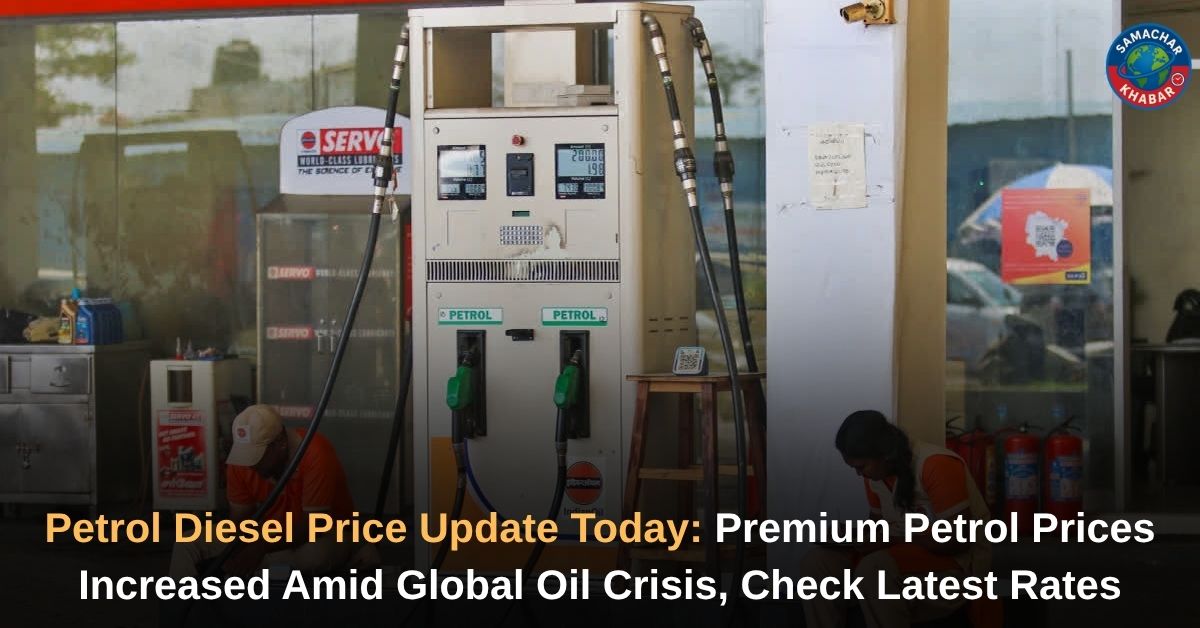
India’s fuel pricing landscape is witnessing a critical shift as oil marketing companies have raised the prices of premium petrol while keeping regular petrol and diesel rates unchanged. The move comes at a time when global crude oil prices have surged sharply due to escalating geopolitical tensions in the Middle East.
While the increase does not directly impact most consumers, it signals growing pressure within India’s fuel ecosystem. With supply disruptions in key global energy routes and rising import costs, the development raises important questions about whether broader fuel price hikes may follow in the near future.
Key Highlights: Premium Petrol Price Hike in India and Global Oil Crisis Impact
- Premium petrol prices increased by ₹2–₹2.35 per litre across India
- Industrial (bulk) diesel prices surged by around ₹22 per litre (about 25%)
- Regular petrol and diesel prices remain unchanged since April 2022
- Brent crude oil prices crossed $100 per barrel amid geopolitical tensions
- Strait of Hormuz disruption impacting global oil and gas supply
- India imports nearly 88% of its crude oil requirements
- Premium fuel accounts for only 2–4% of total petrol consumption
- Oil companies absorbing rising costs to protect consumers
- LPG under-recoveries and negative margins increasing financial pressure
- Future fuel price hike likely if crude oil remains above $110 per barrel
Premium Petrol Prices Increased Across India: What Has Changed
Oil marketing companies—Indian Oil Corporation (IOC), Bharat Petroleum Corporation Limited (BPCL), and Hindustan Petroleum Corporation Limited (HPCL)—have increased prices of high-octane petrol variants such as XP95, Speed, and Power petrol by ₹2 to ₹2.35 per litre.
In Delhi, Indian Oil’s XP95 petrol is now priced at around ₹101.80 to ₹101.89 per litre, while HPCL’s Power petrol has increased to approximately ₹104.49 per litre. These premium fuels are typically used in high-performance vehicles and offer better engine efficiency and mileage.
In addition, industrial or bulk diesel prices have seen a sharp jump from ₹87.67 to ₹109.59 per litre, reflecting a steep increase of nearly ₹22 per litre due to rising global input costs.
Regular Petrol and Diesel Prices Remain Unchanged Across India
Despite the increase in premium fuel prices, regular petrol and diesel prices have remained stable across the country. This includes major cities such as Delhi, Mumbai, Kolkata, Chennai, Hyderabad, and Bengaluru.
Notably, retail fuel prices in India have remained largely unchanged since April 2022. Oil marketing companies have been absorbing fluctuations in global crude oil prices instead of passing them directly to consumers.
City-Wise Fuel Prices in India (March 20 Update)
| City | Petrol (₹/Litre) | Diesel (₹/Litre) |
| Delhi | ₹94.77 | ₹87.67 |
| Mumbai | ₹103.54 | ₹90.03 |
| Kolkata | ₹105.45 | ₹92.02 |
| Chennai | ₹100.84 | ₹92.39 |
| Hyderabad | ₹107.46 | ₹95.70 |
| Bengaluru | ₹102.96 | ₹90.99 |
| Lucknow | ₹94.69 | ₹87.81 |
| Ahmedabad | ₹94.49 | ₹90.17 |
State-Wise Petrol Prices in India (March 20 Update)
| State/UT | Petrol Price (₹/Litre) |
| Andaman & Nicobar | ₹82.46 |
| Andhra Pradesh | ₹109.11 |
| Arunachal Pradesh | ₹92.66 |
| Assam | ₹100.04 |
| Bihar | ₹105.71 |
| Chandigarh | ₹94.30 |
| Chhattisgarh | ₹100.14 |
| Dadra & Nagar Haveli | ₹92.57 |
| Daman & Diu | ₹92.37 |
| Delhi | ₹94.77 |
| Goa | ₹96.61 |
| Gujarat | ₹94.70 |
| Haryana | ₹94.30 |
| Himachal Pradesh | ₹95.06 |
| Jammu & Kashmir | ₹100.70 |
| Jharkhand | ₹97.86 |
| Karnataka | ₹102.96 |
| Kerala | ₹107.33 |
| Madhya Pradesh | ₹106.52 |
| Maharashtra | ₹103.54 |
| Manipur | ₹99.21 |
| Meghalaya | ₹96.20 |
| Mizoram | ₹99.06 |
| Nagaland | ₹97.70 |
| Odisha | ₹101.19 |
| Puducherry | ₹96.26 |
| Punjab | ₹94.30 |
| Rajasthan | ₹104.72 |
| Sikkim | ₹103.35 |
| Tamil Nadu | ₹100.84 |
| Telangana | ₹107.46 |
| Tripura | ₹97.53 |
| Uttar Pradesh | ₹95.34 |
| Uttarakhand | ₹93.43 |
| West Bengal | ₹105.45 |
State-Wise Diesel Prices in India (March 20 Update)
| State/UT | Diesel Price (₹/Litre) |
| Andaman & Nicobar | ₹78.05 |
| Andhra Pradesh | ₹96.22 |
| Arunachal Pradesh | ₹80.50 |
| Assam | ₹89.55 |
| Bihar | ₹91.49 |
| Chandigarh | ₹82.45 |
| Chhattisgarh | ₹93.39 |
| Dadra & Nagar Haveli | ₹88.05 |
| Daman & Diu | ₹87.87 |
| Delhi | ₹87.67 |
| Goa | ₹88.37 |
| Gujarat | ₹90.65 |
| Haryana | ₹82.45 |
| Himachal Pradesh | ₹87.28 |
| Jammu & Kashmir | ₹86.88 |
| Jharkhand | ₹92.62 |
| Karnataka | ₹90.99 |
| Kerala | ₹96.28 |
| Madhya Pradesh | ₹91.89 |
| Maharashtra | ₹90.03 |
| Manipur | ₹85.38 |
| Meghalaya | ₹87.64 |
| Mizoram | ₹87.92 |
| Nagaland | ₹88.83 |
| Odisha | ₹92.69 |
| Puducherry | ₹86.47 |
| Punjab | ₹82.45 |
| Rajasthan | ₹90.21 |
| Sikkim | ₹90.45 |
| Tamil Nadu | ₹92.39 |
| Telangana | ₹95.70 |
| Tripura | ₹86.55 |
| Uttar Pradesh | ₹88.50 |
| Uttarakhand | ₹88.34 |
| West Bengal | ₹92.02 |
Why Premium Petrol Prices Are Rising: Full Explanation
Global Crude Oil Price Surge
Global crude oil prices have crossed the $100 per barrel mark, with Brent crude trading above $108 in recent sessions due to escalating tensions in West Asia.
Also Read: Crude Oil Surge After Israel–Iran Strikes: Will Indian Stock Market Face Fresh Volatility This Week?
Middle East Conflict Impact
The ongoing conflict involving the United States, Israel, and Iran has led to missile and drone attacks on key oil and gas infrastructure, disrupting global energy supply chains.
Strait of Hormuz Crisis: Why It Matters for India
The Strait of Hormuz is one of the world’s most critical energy corridors:
- Handles nearly 20% of global oil supply
- Accounts for around 50–55% of India’s oil and LNG imports
- Carries about 85–90% of India’s LPG imports
Recent tensions have led to disruptions in shipping, with insurers withdrawing coverage and tanker movement being affected. This has significantly increased concerns over global supply stability.
Iran–Qatar Gas Field and LNG Disruptions Explained
The crisis has also impacted the world’s largest natural gas field:
- Known as South Pars (Iran) and North Dome (Qatar)
- Shared between Iran and Qatar
Recent attacks have:
- Damaged infrastructure near Ras Laffan in Qatar
- Impacted LNG production facilities
- Affected key LNG trains (including major production units)
Qatar accounts for a significant share of global LNG exports, and disruptions here have created ripple effects across global energy markets, including India.
Why Regular Fuel Prices Are Still Stable
Despite rising global prices, regular petrol and diesel remain unchanged due to:
- Price freeze-like stability since April 2022
- Oil companies absorbing cost increases
- Inflation concerns and political sensitivity
- Premium fuel being only 2–4% of total consumption
Officials have stated that there is no increase in prices affecting the common consumer at present.
Oil Companies Under Pressure: Margins and Losses
Oil marketing companies are facing increasing financial stress:
- Petrol margins estimated at negative ₹5–₹8 per litre
- Diesel margins estimated at ₹24–₹27 per litre loss
- LPG losses remain high at ₹115–₹180 per cylinder
Despite posting strong profits of around ₹81,000 crore in FY24 and ₹23,743 crore in a recent quarter, current market conditions are putting pressure on profitability.
Supply Situation: Disruption but No Immediate Shortage
While global supply chains are under stress due to geopolitical tensions and shipping disruptions, oil companies have clarified that:
- There is no immediate shortage of crude oil in India
- Additional cargo shipments are already on the way
- Supply remains stable for now despite global uncertainty
Will Petrol and Diesel Prices Rise Next?
The possibility of a broader fuel price hike remains open:
- Above $110 crude → price hikes may become unavoidable
- At $125 → ₹8–₹14/litre increase possible
- At $150 → ₹26–₹30/litre increase required
Experts believe that if current conditions persist, oil companies may not be able to absorb costs indefinitely.
Spiritual Insight by Saint Rampal Ji Maharaj
Rising fuel prices and global crises reflect the instability and temporary nature of the material world. According to Saint Rampal Ji Maharaj, such problems arise due to a lack of true spiritual knowledge and proper devotion based on holy scriptures.
He explains that worldly life is full of uncertainties, and attachment to material comforts often leads to stress, fear, and suffering. In such situations, people search for external solutions but overlook the deeper spiritual cause.
Through true devotion (Satbhakti), as explained in sacred texts, a person can attain inner peace, mental stability, and freedom from worldly worries. His teachings guide individuals to connect with the Supreme God, helping them rise above temporary challenges and move toward lasting happiness and liberation.
Fuel Price Stability Today, But Strong Signals of Future Pressure
The recent increase in premium petrol prices reflects the growing impact of global energy disruptions on India’s fuel market. While regular petrol and diesel prices remain stable for now, rising crude oil costs, supply uncertainties, and financial pressure on oil companies indicate that maintaining this stability may become increasingly difficult.
The current situation highlights a cautious balance between protecting consumers and managing economic realities, with future fuel price movements likely to depend on how global conditions evolve in the coming weeks.
FAQs on Petrol Diesel Price Update Today in India
1. Why have premium petrol prices increased in India today?
Premium petrol prices increased due to rising global crude oil prices, Middle East tensions, supply disruptions in the Strait of Hormuz, and higher import costs for oil companies.
2. Have regular petrol and diesel prices increased in India?
No, regular petrol and diesel prices remain unchanged across India. Oil companies are currently absorbing the cost pressure to avoid burdening common consumers.
3. How much has premium petrol price increased in India?
Premium petrol prices have increased by approximately ₹2 to ₹2.35 per litre across various cities, depending on the oil company and location.
4. Will petrol and diesel prices increase in India soon?
Fuel prices may rise if crude oil stays above $110 per barrel. Oil companies may find it difficult to absorb losses for a prolonged period.
5. What is the impact of the Strait of Hormuz on fuel prices in India?
The Strait of Hormuz handles a major share of India’s oil and LPG imports. Disruptions increase global prices, directly affecting fuel costs in India.