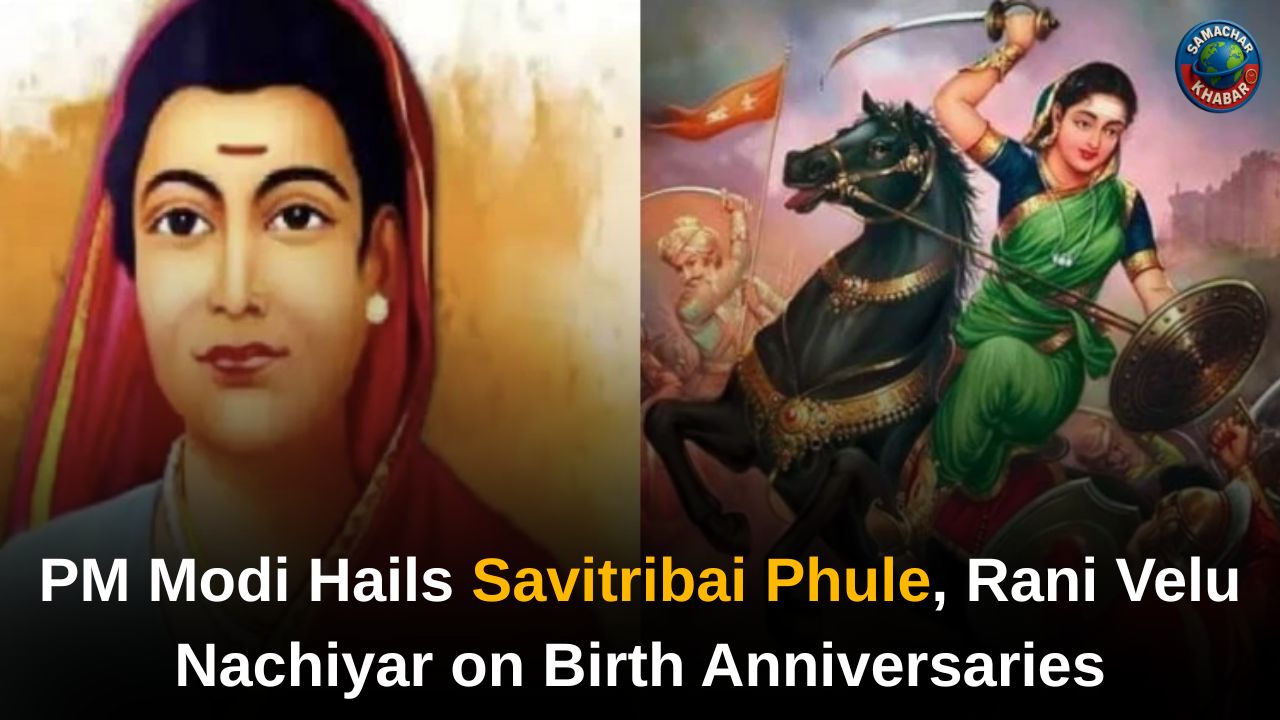
Prime Minister Narendra Modi on Saturday paid tribute to social reformer Savitribai Phule and warrior queen Rani Velu Nachiyar on their birth anniversaries, recalling their enduring contributions to Indian society.
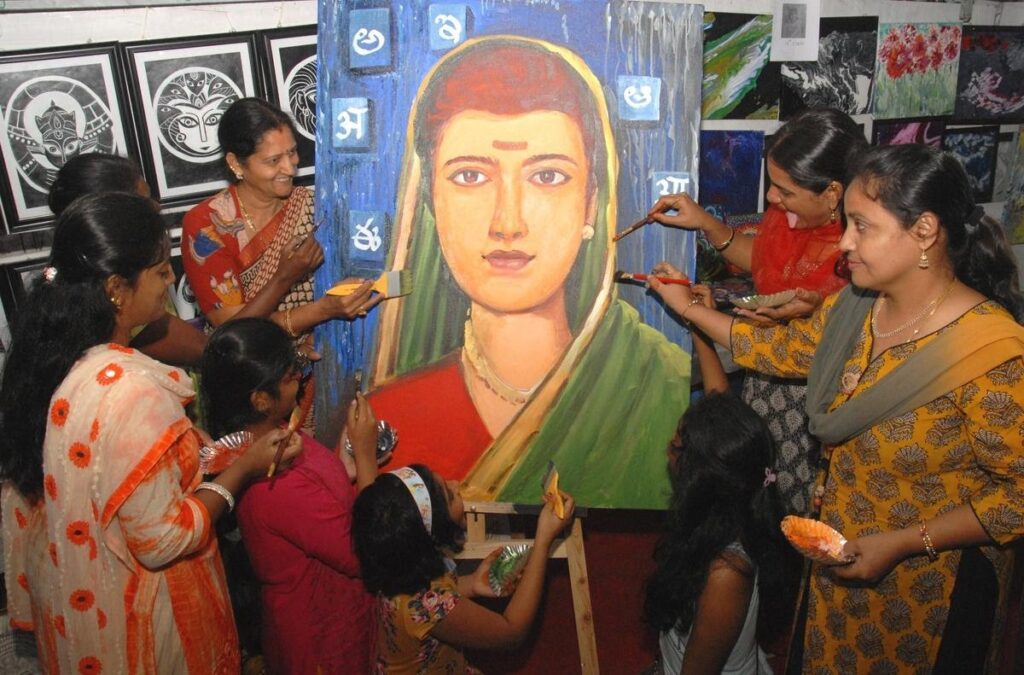
Remembering Savitribai Phule, the Prime Minister described her as a pioneering figure who devoted her life to the transformation of society through service and education, guided by the principles of equality, justice and compassion. He also honoured Rani Velu Nachiyar, calling her one of India’s most valiant warriors who rose against colonial oppression and asserted the right of Indians to govern themselves.
Key Takeaways on PM Modi’s Tributes to Savitribai Phule and Rani Velu Nachiyar
- PM Modi remembered Savitribai Phule as a pioneer of social reform and women’s education.
- He highlighted her belief that education was the most powerful instrument of social change.
- The Prime Minister said her work for the vulnerable and marginalised remains inspiring.
- Savitribai Phule was born in 1831 in Maharashtra and is considered India’s first woman teacher.
- PM Modi also paid tribute to Rani Velu Nachiyar on her birth anniversary.
- He described her as a courageous warrior with tactical mastery who resisted colonial oppression.
- The Prime Minister said her leadership and commitment to good governance continue to motivate generations.
PM Modi Remembers Savitribai Phule on Her Birth Anniversary
Prime Minister Narendra Modi on Saturday remembered Savitribai Phule on her birth anniversary and hailed her as a pioneering social reformer who devoted her life to the transformation of society through service and education.
In a post on X, the Prime Minister said, “On the birth anniversary of Savitribai Phule, we remember a pioneer whose life was devoted to the transformation of society through service and education.” He stated that Savitribai Phule was deeply committed to the principles of equality, justice and compassion.
Commitment to Equality, Justice and Compassion
PM Modi said that Savitribai Phule firmly believed education was the most powerful instrument of social change and dedicated her life to transforming lives through knowledge and learning. He highlighted that her approach to education was rooted in the idea of social equality and empowerment, especially at a time when educating women was widely considered a taboo.
The Prime Minister also noted that Phule’s work in caring for the vulnerable and marginalized remains an inspiring example of service and humanity. According to him, her vision continues to guide the nation’s efforts in building an inclusive and empowered society.
Life and Legacy of Savitribai Phule
Savitribai Phule was born in 1831 in Maharashtra. Married to Jyotiba Phule, who was himself a revered social reformer, she is considered by many as India’s first woman teacher due to her pioneering work in educating women, particularly from deprived groups.
Her efforts to promote education among women marked a significant shift in social thinking at a time when such initiatives faced strong resistance. The Prime Minister’s tribute underscored her lifelong commitment to education as a means of social transformation and her enduring influence on India’s journey towards equality and inclusion.
PM Modi Pays Tribute to Rani Velu Nachiyar
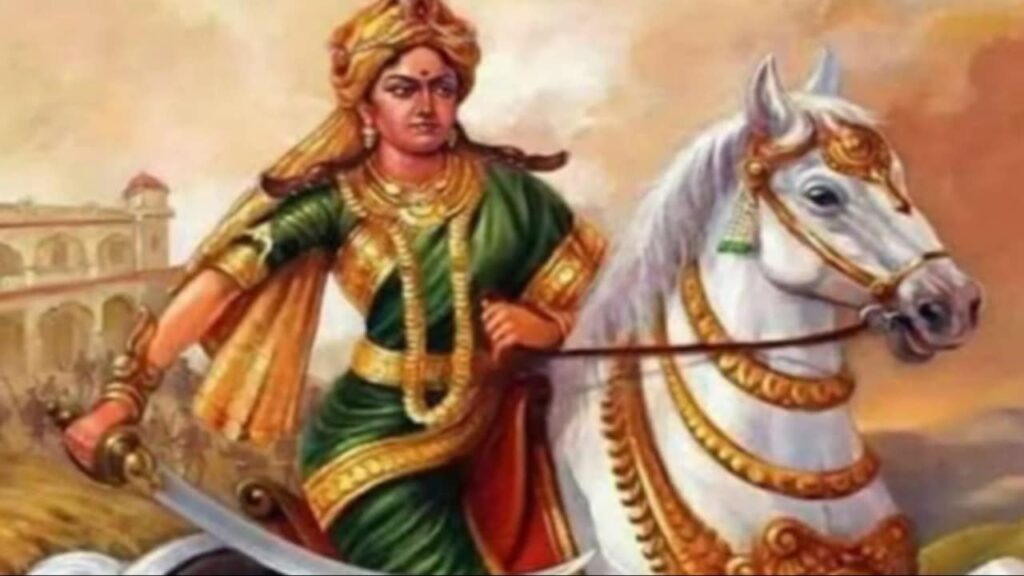
Alongside his tribute to Savitribai Phule, Prime Minister Narendra Modi also paid homage to Rani Velu Nachiyar on her birth anniversary. In another post on X, he remembered her as one of India’s most valiant warriors.
“She is remembered as one of India’s most valiant warriors who embodied courage and tactical mastery,” the Prime Minister said. He added that Rani Velu Nachiyar rose against colonial oppression and asserted the right of Indians to govern themselves.
Courage, Governance and Cultural Pride
PM Modi highlighted that Rani Velu Nachiyar’s commitment to good governance and cultural pride was admirable. He said her sacrifice and visionary leadership will continue to motivate generations.
By recalling her resistance to colonial rule and her emphasis on governance and cultural identity, the Prime Minister placed Rani Velu Nachiyar among the historical figures whose actions and ideals continue to resonate in contemporary India.
Shared Legacy of Social Reform and Resistance
The Prime Minister’s tributes to Savitribai Phule and Rani Velu Nachiyar highlighted two distinct yet equally significant strands of India’s history, social reform through education and resistance through courage and leadership.
Savitribai Phule’s life and work reflected a steadfast belief in education as the foundation of social change, particularly for women and marginalized communities. Rani Velu Nachiyar’s legacy, as remembered by the Prime Minister, symbolised resistance to oppression and the assertion of self-rule, along with a commitment to governance and cultural pride.
Through his messages on X, PM Modi underscored how both figures continue to inspire the nation in different ways, shaping ideals of equality, empowerment, courage and leadership.
Enduring Inspiration from Historical Icons
The Prime Minister’s remarks on the birth anniversaries of Savitribai Phule and Rani Velu Nachiyar reinforced their relevance in present-day India. By highlighting Savitribai Phule’s dedication to education, service and compassion, and Rani Velu Nachiyar’s courage, governance and resistance to colonial oppression, PM Modi connected their historical contributions to ongoing national efforts toward inclusion, empowerment and self-respect. His tributes reflected how their lives and values continue to guide and motivate society, reminding citizens of the transformative power of education, leadership and principled action.
Spiritual Reform and Social Transformation
History shows that individuals who work for social reform often face resistance before their contributions are fully recognised. Figures such as Savitribai Phule chose the path of service and change, often going against prevailing social norms for the larger good.
In the present time, Tatvdarshi Sant Rampal Ji Maharaj is also associated with social initiatives aimed at public welfare. His followers emphasise de-addiction, rejection of dowry, simple living, and ethical conduct in daily life. Such efforts reflect an attempt to encourage a disciplined and socially responsible way of living, highlighting how spiritual guidance is often linked with broader social reform and community transformation.
- For more information visit our
- Website:www.jagatgururampalji.org
- YouTube: Sant Rampal Ji Maharaj
- Facebook: Spiritual Leader Saint Rampal Ji
- X (Twitter): @SaintRampalJiM
FAQs on PM Modi Hails Savitribai Phule, Rani Velu Nachiyar on Birth Anniversaries
1. Why did PM Modi remember Savitribai Phule?
PM Modi remembered her as a pioneering social reformer devoted to transforming society through service, education, and commitment to equality, justice and compassion.
2. When and where was Savitribai Phule born?
Savitribai Phule was born in 1831 in Maharashtra.
3. Why is Savitribai Phule considered India’s first woman teacher?
She is considered India’s first woman teacher for her pioneering work in educating women, especially from deprived groups, when it was a taboo.
4. Who was Rani Velu Nachiyar according to PM Modi?
PM Modi described her as one of India’s most valiant warriors who embodied courage, tactical mastery and resistance to colonial oppression
5. What qualities of Rani Velu Nachiyar did PM Modi highlight?
He highlighted her courage, leadership, commitment to good governance, cultural pride, and her role in asserting the right of Indians to govern themselves.