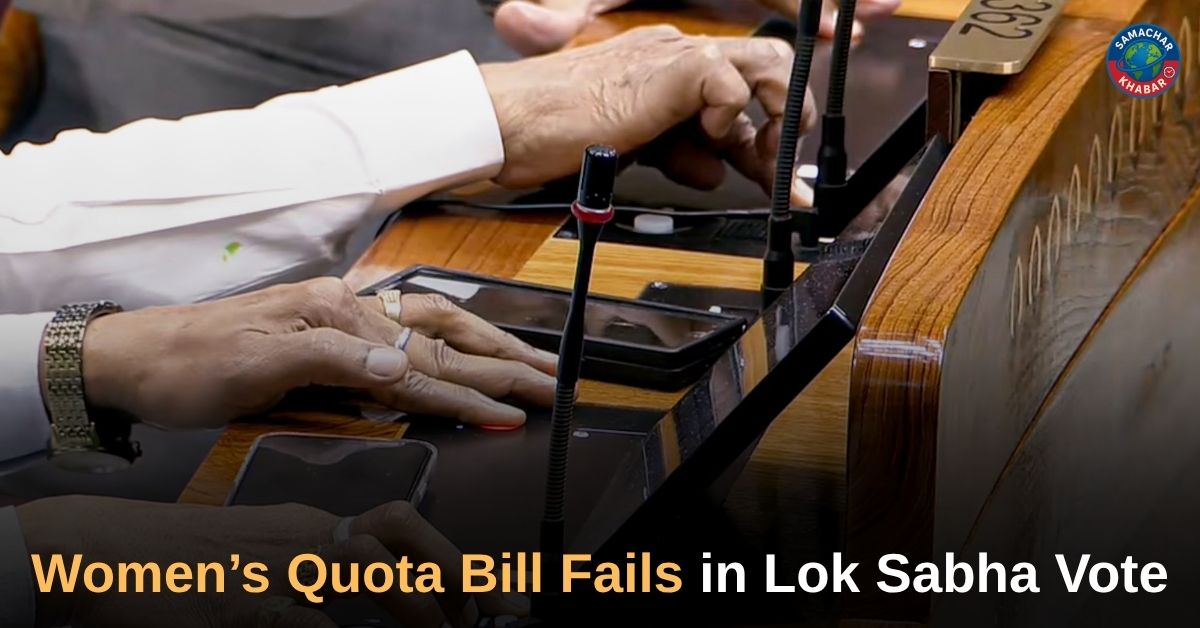
Women’s Reservation Bill 2026: The Constitution (One Hundred and Thirty-First Amendment) Bill, 2026, aimed at providing 33 per cent reservation for women in the Lok Sabha and State Assemblies, failed to pass in the Lok Sabha after the Centre could not secure the required two-thirds majority. The bill received 298 votes in favour and 230 against. The development followed an intense debate marked by sharp exchanges between the government and Opposition, particularly over the linkage of women’s reservation with delimitation.
Key Takeaways: Women’s Reservation Bill 2026
- The Constitution (131st Amendment) Bill, 2026 failed in Lok Sabha
- Required two-thirds majority was not achieved
- 298 MPs voted in favour, while 230 voted against
- Bill aimed to provide 33% reservation to women
- Debate centred around linking reservation with delimitation
- Two related bills were not put to vote after its failure
- Sharp political divide between government and Opposition
Lok Sabha Debate Begins on Women’s Reservation and Related Bills
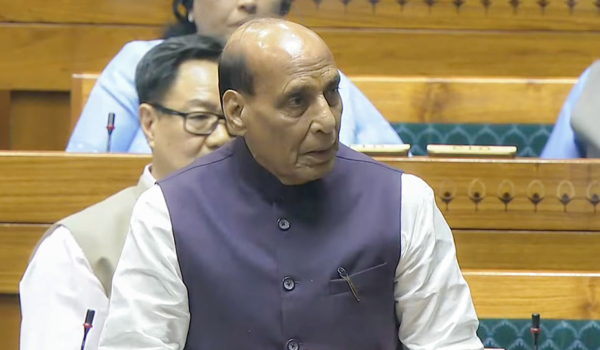
The Lok Sabha resumed discussion on three key legislations — the Constitution (One Hundred and Thirty-First Amendment) Bill, 2026, the Delimitation Bill, 2026, and the Union Territories Laws (Amendment) Bill, 2026. These bills were intended to increase the participation of women in the Lok Sabha and the assemblies of States and Union Territories.
The debate continued past midnight on Thursday and extended into Friday, with the Centre making a strong pitch for reserving 33 per cent of seats for women in Parliament and state assemblies.
Voting Outcome: Bill Falls Short of Required Majority
The Constitution (131st Amendment) Bill, 2026 required a two-thirds majority for passage. However, the government fell short, with:
| Votes | Count |
| In favour | 298 |
| Against | 230 |
Following the failure of the bill, two other legislations — including the Delimitation Bill — were not put to vote, with the Centre stating that they were “intrinsically linked” to the women’s reservation legislation.
Government’s Stand: Historic Opportunity for Women’s Representation
Prime Minister Narendra Modi urged members not to view the bill through a political lens, calling it an important opportunity in national interest. He assured that no injustice would be done to southern states regarding seat increases in the Lok Sabha.
Union Home Minister Amit Shah also stated that the representation of southern states would be preserved or slightly increased if the number of Lok Sabha seats rose from 543 to approximately 816.
Union Minister HD Kumaraswamy described the move as a historic step after nearly 75 years of independence, stating that women’s reservation should be seen as rightful recognition rather than a favour.
Also Read: Assam’s Daughters Rise: CM Himanta Biswa Sarma Expands Nijut Moina Scheme to Empower 3.5 Lakh Girls
Union Women and Child Development Minister Annapurna Devi termed the legislation a historic milestone reflecting India’s commitment to inclusive governance and women-led development.
BJP MP Sandhya Ray said the legislation symbolised dignity and empowered participation, while BJP MP Hema Malini described it as a tribute to the strength and struggle of women.
Panchayati Raj Minister Rajiv Ranjan Singh said the bills aligned with the vision of “Sabka Saath, Sabka Vikas, Sabka Vishwas, Sabka Prayas”.
Opposition’s Objections: Delimitation Link Sparks Controversy
Leader of Opposition Rahul Gandhi strongly opposed the bill, stating that it was not a genuine women’s reservation measure but an attempt to change the electoral map. He alleged that it would deprive Dalits and OBCs of their rightful place and sideline the caste census.
Rahul Gandhi also described the bill as an attack on the Constitution and claimed the government was using women’s reservation as a smokescreen.
Congress MP Shashi Tharoor expressed concern that linking women’s reservation with delimitation and the 2011 Census would delay implementation and hold women’s aspirations hostage to a complex administrative exercise.
DMK MP K Kanimozhi questioned the timing of the bill and alleged that it was introduced to disrupt ongoing elections and undermine the federal structure.
TMC MP Kalyan Bannerjee and SAD leader Harsimrat Kaur Badal also opposed linking reservation with delimitation, demanding implementation based on the current capacity of Parliament.
Samajwadi Party MP Dimple Yadav questioned the government’s commitment to women’s welfare, raising concerns about education for girl children.
YSRCP MP PV Midhun Reddy said delimitation should be a nation-building exercise and not a political tool.
Parliamentary Exchanges and Reactions
During the debate, Lok Sabha Speaker Om Birla objected to remarks made by Rahul Gandhi and asked him to focus on the legislation.
Defence Minister Rajnath Singh and Parliamentary Affairs Minister Kiren Rijiju condemned Rahul Gandhi’s statements, calling them unparliamentary and demanding adherence to procedural rules.
After the bill failed, Kiren Rijiju said it was regrettable that the Opposition did not support the legislation and stated that efforts to provide rights to women would continue.
Home Minister Amit Shah criticised opposition parties, stating that their actions prevented women from receiving 33 per cent reservation.
Rahul Gandhi, however, said the Opposition had defeated what he termed an unconstitutional move and reiterated support for implementing the 2023 women’s reservation law without linking it to delimitation.
Congress MP Priyanka Gandhi stated that linking reservation with delimitation based on an old Census was unacceptable and called the outcome a victory for democracy.
Linked Bills and Broader Legislative Context
The three bills — the Constitution (131st Amendment) Bill, Delimitation Bill, and Union Territories Laws (Amendment) Bill — were introduced together as part of a broader legislative package.
According to the government, these bills were interconnected, which is why the remaining bills were not taken up for voting after the primary bill failed.
Political and Legislative Implications of the Outcome
The failure of the Women’s Reservation Bill 2026 highlights deep political divisions over the implementation of 33 per cent reservation for women. While the government described it as a historic reform aimed at increasing women’s participation in governance, the Opposition raised concerns about its linkage with delimitation and broader constitutional implications. The outcome reflects the complexity of achieving consensus on structural electoral reforms, even when there is broad agreement on the principle of women’s reservation.
Spiritual Perspective on True Equality
The debate on women’s representation and equal participation reflects a broader principle of equality in society. According to the teachings of Tatvdarshi Sant Rampal Ji Maharaj, all human beings are equal, irrespective of gender, status, or background, as everyone is a child of one Supreme God.
He emphasises equal opportunities for all, including women, and promotes systems that support dignity and participation in every sphere. His approach highlights fairness, accessibility, and balanced development, aligning with the idea that true progress comes when equality is practised at every level of society.
FAQs on Women’s Reservation Bill 2026
1. What is the Women’s Reservation Bill 2026?
It is the Constitution (131st Amendment) Bill proposing 33% reservation for women in Lok Sabha and State Assemblies.
2. Why did the bill fail in Lok Sabha?
It failed because it did not secure the required two-thirds majority.
3. How many votes did the bill receive?
The bill received 298 votes in favour and 230 against.
4. What was the main point of disagreement?
The linkage of women’s reservation with delimitation was the key issue.
5. What happened to the other related bills?
They were not put to vote as they were considered intrinsically linked to the main bill.