[ad_1]
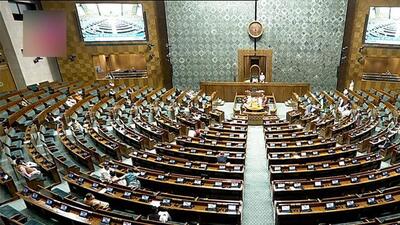
The Parliamentary standing committee on social justice and empowerment has flagged concerns over budget cuts, under-utilisation of funds, and implementation gaps across ministries responsible for welfare schemes for minorities, tribals, persons with disabilities, and other marginalised groups.

The 31-member committee, chaired by Bharatiya Janata Party (BJP) lawmaker P. C. Mohan, said in its report on the demands for grants of the ministry of minority affairs for 2026-27 that the ministry had proposed a budget allocation of ₹4,758.37 crore for various schemes but received only ₹3,400 crore from the ministry of finance — about 28.5% less than the proposed amount.
The committee also highlighted cuts in Waqf-related schemes. The ministry had proposed ₹50.01 crore for the Qaumi Waqf Boards Taraqquiti Scheme and the Sahari Waqf Sampati Vikas Yojana but was allocated only ₹32 crore — a reduction of about 36%. Between 2023-24 and 2025-26, the schemes had a budget estimate of ₹46 crore, which was later revised downward to ₹24.6 crore, while actual spending amounted to only ₹12.28 crore.
Explaining the shortfall, the ministry told the committee that “the reduction at the RE stage was not due to withdrawal of policy support but was primarily attributable to structural, statutory and transitional reforms undertaken during the period.”
It further informed the panel that the schemes are implemented through the Central Waqf Council, which has remained non-constituted since February 3, 2023, leading to delays in approvals and institutional decision-making.
The report also highlighted steps taken by the ministry to improve the utilisation of Waqf-related schemes. These measures include establishing Project Management Units (PMUs) in State Waqf Boards, organising capacity-building workshops and review meetings, and introducing digital reforms such as the Unified Waqf Management, Empowerment, Efficiency, and Development (UMEED) central portal, Artificial Intelligence (AI)-enabled modules, and real-time monitoring dashboards. Additional initiatives include milestone-based fund releases, stricter compliance with utilisation certificates, and Geographic Information System (GIS) mapping of properties with the help of the Survey of India.
The committee also observed a persistent pattern of under-utilisation of funds by the ministry of minority affairs. In 2023-24, only ₹1,032.65 crore was spent out of the revised estimate of ₹2,608.93 crore. In 2024-25, the ministry spent ₹1,396.01 crore against a revised estimate of ₹1,868.18 crore. The trend continued in 2025-26, when ₹1,461.98 crore was spent against the revised estimate of ₹2,160.45 crore.
The panel further said that the pre-matric and post-matric scholarship schemes for minority students have not been approved beyond 2021-22, and scholarships have not been disbursed from 2022-23 onwards due to “gross irregularities” reported by states and Union Territories (UTs). The committee said that withholding the scheme because of recovery of ₹144 crore allegedly embezzled by institutions amounts to injustice to students. It urged the ministry to explore implementing the schemes in states where irregularities were minimal so that minority students are not deprived of educational support.
Tribal Ministry
The committee also expressed dissatisfaction that only ₹8,757.04 crore of the revised estimate of ₹10,824.18 crore for 2025-26 had been utilised by February 23, 2026 — roughly 19% less than the allocation of the Ministry of Tribal Affairs.
The committee said the ministry must take “concrete steps to utilise the unspent portion of RE for 2025-26 within the remaining period of the financial year.”
At the same time, the committee noted that the ministry has been allocated ₹15,421.97 crore for 2026-27 against a proposed demand of ₹17,223.47 crore. While the allocation is higher than the budgets for the previous two years, the panel said the responsibility now lies with the ministry to ensure that funds allocated at the budget estimate stage are not reduced later at the revised estimate stage.
Ministry of Social Justice and Empowerment
In the ministry of social justice and empowerment, the committee flagged recurring gaps between allocations and actual expenditure in the ministry’s department of empowerment of persons with disabilities. In 2023-24, actual expenditure stood at ₹1,143.89 crore against the revised estimate of ₹1,225.01 crore, while in 2024-25 it was ₹1,112.61 crore against ₹1,167.27 crore. In 2025-26, expenditure as of February 26 was ₹1,008.49 crore against the revised estimate of ₹1,291.60 crore, amounting to only about 78% utilisation.
Under the Assistance to Persons with Disabilities for Purchase/Fitting of Aids and Appliances (ADIP) Scheme, the committee observed fluctuating beneficiary coverage. While 3.46 lakh beneficiaries were covered against a target of 2.15 lakh in 2023-24, the number dropped to 2.51 lakh against a target of 3.15 lakh in 2024-25. In 2025-26, 1.91 lakh beneficiaries had been covered so far against a target of 2.05 lakh.
The committee also found that the number of Scheduled Caste students who received post-matric scholarships dropped to 36.07 lakh in 2025-26 against a target of 76.55 lakh — an achievement of 47.1%.
The committee observed that “recurring gaps between allocations and actual expenditure across ministries point to shortcomings in planning and implementation.” It recommended that the ministries “strengthen monitoring mechanisms, set quarterly expenditure targets and improve coordination with States/UTs” to ensure that welfare schemes meant for disadvantaged sections are implemented effectively and funds are utilised in a timely manner.
[ad_2]
Source link