Prime Minister Narendra Modi’s appeal to revive work from home practices and reduce fuel consumption amid the continuing Iran crisis has triggered widespread discussion across India’s corporate sector and financial markets. Speaking in Secunderabad during the inauguration of projects worth around Rs 9,400 crore in Telangana, Modi urged citizens to adopt austerity measures similar to the Covid-era period to conserve fuel and save foreign exchange. His remarks came as rising global energy prices, disruptions in oil supply, and the prolonged closure of the Strait of Hormuz continued to pressure India’s economy.
Key Takeaways on PM Modi’s WFH Appeal and India’s Fuel-Saving Measures
- Prime Minister Narendra Modi urged Indians to revive work from home and virtual meetings.
- The appeal was linked to rising fuel prices caused by the Iran conflict and disruption in the Strait of Hormuz.
- Modi asked citizens to reduce unnecessary travel, use public transport, and conserve petrol and diesel.
- India imports 90% of its oil, increasing economic pressure amid global supply disruptions.
- Corporate India remains divided over long-term readiness for remote work models.
- Industry leaders said hybrid work could improve productivity, wellbeing, and fuel conservation.
- Manufacturing and SME sectors warned that WFH readiness varies significantly by industry.
- The International Energy Agency described the crisis as the “largest supply disruption in history.”
PM Modi Calls for Fuel Conservation Amid Middle East Crisis
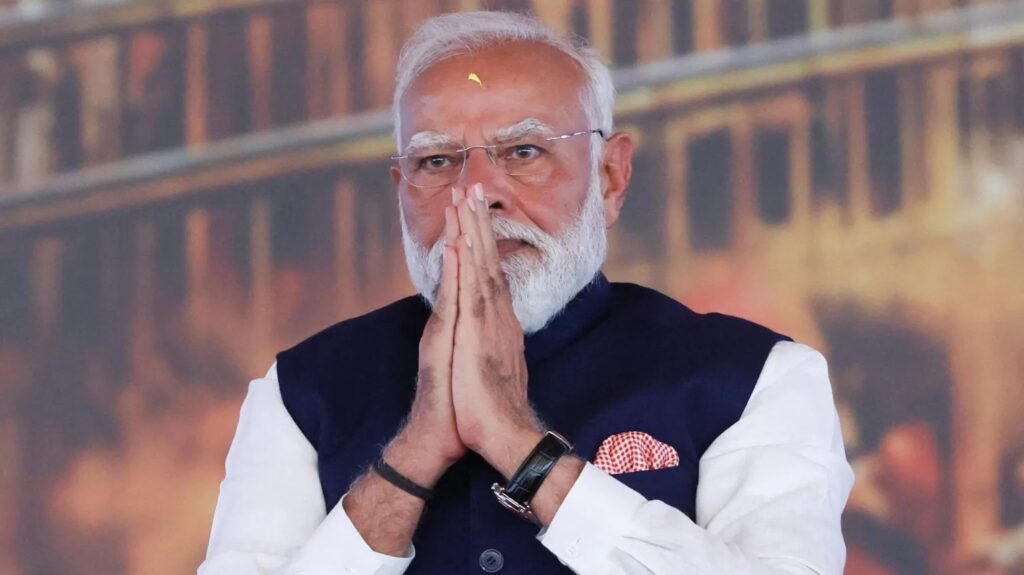
Prime Minister Narendra Modi appealed to Indians to adopt work from home practices again as global energy prices continued rising due to the ongoing crisis involving Iran, the United States, and Israel.
Addressing a public gathering in Secunderabad after inaugurating projects worth around Rs 9,400 crore in Telangana, Modi linked reduced commuting and lower fuel consumption to national economic stability. He urged people to prioritise virtual meetings, online conferences, public transport, and carpooling wherever possible.
“Patriotism is not only about the willingness to sacrifice one’s life on the border. In these times, it is about living responsibly and fulfilling our duties to the nation in our daily lives,” Modi said.
“In the current situation, we must place great emphasis on saving foreign exchange,” he added.
The Prime Minister also advised citizens to limit foreign travel and postpone unnecessary gold purchases. Farmers were asked to reduce fertiliser use by half in order to conserve resources during the ongoing global crisis.
Strait of Hormuz Disruption Raises Pressure on India
India imports nearly 90% of its oil requirements, making the country highly vulnerable to disruptions in global crude supply. The prolonged closure of the Strait of Hormuz, a key Gulf oil chokepoint, has contributed to a multi-billion dollar rise in India’s crude import bill.
The continuing conflict has also created pressure on several sectors of the Indian economy. Analysts reported concerns over rising inflation, weakening currency value, and growing pressure on fuel retailers.
The impact became visible in financial markets as well. Analysts said Modi’s remarks contributed to investor concerns, with the benchmark Sensex index falling more than 1,000 points during early trading on Monday amid fears of prolonged economic disruption.
The Indian rupee also touched record lows in recent weeks, increasing the cost of imports and intensifying inflationary concerns.
Also Read: Met Gala 2026: When “Fashion as Art” Meets the Illusion of Reality
The International Energy Agency described the current global energy situation as the “largest supply disruption in history”.
Corporate India Debates Return to Covid-Era Work Patterns

Modi’s appeal triggered an immediate debate across corporate India regarding the feasibility of large-scale remote work if the crisis continues.
Many employees said organisations are now better prepared compared to the Covid period.
Shruti Pal, a Mumbai-based communications professional, said work today depends more on outcomes than physical presence.
“The Prime Minister’s appeal has sparked a much-needed conversation around flexibility, productivity, and wellbeing. If organisations can balance business priorities with employee needs, hybrid and remote work can continue to make sense,” she said.
Abhishek T, who works at a telecom company in Gurugram, said offices appeared reasonably prepared for remote work despite possible coordination challenges.
From the employer side, several business leaders supported flexible work models.
Also Read: Indian Railways to Shift to Upgraded Passenger Reservation System From August
Raghunandan Saraf, Founder and CEO of Saraf Furniture, said remote and hybrid models help create a resilient and productive workforce while improving mental wellbeing and accountability.
Nikhar Arora, CEO of Mentoria and BOTS.AI, said productivity should be measured through outcomes rather than time spent at office desks.
Yogish Arora, former VP HR at ING Investment Management and CEO of HR Anexi, stated that flexible work policies improve time management and employee engagement while reducing daily stress.
Dipal Dutta, CEO at RedoQ, described the situation as an opportunity to integrate remote work into a broader national energy-saving strategy through digital-first systems and outcome-based performance models.
Industry Leaders Warn Readiness Varies Across Sectors
Despite growing support for hybrid work, some industry leaders warned that not all sectors could transition equally.
Balasubramanian A, Senior Vice President at TeamLease Services, said organisations would likely adopt role-specific remote work models instead of universal policies.
“Employers are more open to WFH today, but the shift is nuanced,” he said.
Anil Agarwal, Founder of InCruiter, said readiness differs sharply between sectors such as technology and manufacturing.
“Tech firms can pivot quickly. SMEs and manufacturing cannot. Remote work needs trust, technology, and process discipline,” he said.
Analysts suggested Modi’s remarks may indicate possible government directives to curb energy consumption if the crisis deepens further.
Global Impact of the Iran Conflict and Energy Crisis
The ongoing conflict and disruption in the Strait of Hormuz have affected economies across Asia and beyond.
Several countries introduced measures aimed at reducing fuel consumption and limiting economic pressure:
| Country | Measures Introduced |
| China | Ordered refineries to temporarily stop fuel exports; some airlines cut flights |
| Australia | Some states reduced public transport fares or made transport free |
| Philippines | Declared national emergency; introduced subsidies and four-day work week |
| Sri Lanka | Introduced fuel rationing and temporary four-day work week |
The situation has increased concerns about fuel prices, supply chains, industrial production, and economic growth across multiple economies.
Also Read: Robert Kiyosaki Warns of 2026–27 Global Market Crash, Cites Rising Debt and Uncertainty
Economic Challenges Continue to Build Across India
The prolonged energy disruption has already affected several Indian industries, including glass manufacturing, plastic production, and tile factories, where hundreds of thousands of jobs were reported to be at risk.
Dwindling fertiliser supplies also raised concerns over lower agricultural output and increasing food prices.
Opposition leaders criticised the Prime Minister’s remarks, arguing that the government was shifting responsibility onto citizens instead of addressing policy shortcomings.
Rahul Gandhi said the government was attempting to escape accountability by placing the burden on ordinary people.
India Faces Growing Questions Over Energy Preparedness
As the Middle East conflict continues with no immediate resolution visible, India’s discussions around fuel conservation, work from home, and economic preparedness are becoming increasingly significant.
While many companies appear more prepared for hybrid work than during the Covid era, experts and business leaders continue debating whether remote work can serve as a sustainable long-term response to an international energy crisis. The coming months may determine whether Modi’s appeal remains advisory or evolves into broader policy action tied to fuel conservation and economic management.
Spiritual Reflection on National Responsibility
As discussions around fuel conservation, responsible living, and economic stability continue across the country, spiritual thinkers and social reform voices have also emphasised the importance of disciplined and value-based living. Followers of Tatvdarshi Sant Rampal Ji Maharaj believe that society can achieve long-term balance through simplicity, reduced material dependence, and collective responsibility toward the nation.
Sant Rampal Ji Maharaj says that India will become self-reliant and agriculture-focused once again. They also state that He inspires farmers through social welfare efforts and motivates people toward a life based on spiritual awareness, social harmony, and responsible resource usage. According to His followers, adopting moral discipline alongside practical responsibility can help strengthen both society and the nation during challenging times.
For more information visit our
Website: www.jagatgururampalji.org
YouTube: Sant Rampal Ji Maharaj
Facebook: Spiritual Leader Saint Rampal Ji
X (Twitter): @SaintRampalJiM
FAQs on PM Modi’s Work From Home Appeal
1. Why did PM Modi urge people to work from home?
PM Modi linked work from home to fuel conservation and saving foreign exchange during the ongoing Iran-related energy crisis.
2. What caused the global fuel supply disruption?
The crisis intensified after conflict involving Iran, the US, and Israel disrupted oil movement through the Strait of Hormuz.
3. Did the government announce mandatory work from home rules?
No. The Prime Minister issued an appeal and advisory, not a mandatory nationwide order.
4. Which sectors may struggle with remote work?
Manufacturing industries and SMEs were identified as sectors facing challenges in adopting remote work models.
5. How did markets react to Modi’s remarks?
Analysts said the Sensex fell more than 1,000 points amid concerns over prolonged economic disruption and rising energy costs.