[ad_1]
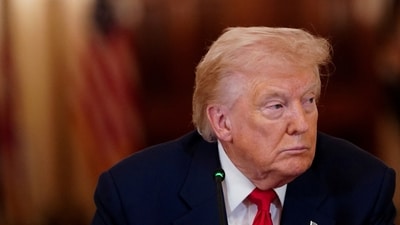
US President Donald Trump posted another update on the Iran war on Truth Social, stating that the US has totally destroyed the ‘terrorist regime’ of Iran on both fronts – militarily and economically. Trump claims that Iran’s defence forces are decimated and wiped out from the face of the earth. He added that the US will continue its attack as it has ‘unparalleled firepower, unlimited ammunition, and plenty of time’.

Going by his updates, it appears that the US is not going to stop anytime soon in its quest to ‘destroy’ Iran. While Trump says that Iran is economically weaker now due to the war, some reports hint that even the US is feeling the heat as the expenses go up due to the war.
According to a Guardian report, the US spent over $11 billion in just the first six days of the war, and the true cost may be far more. It has been 12 days now since the war started, and going by the comments from Trump and the new supreme leader of Iran, Mojtaba Khamenei, the war is not appearing to be ending any time soon.
It is also reported that the White House will soon submit a new request to Congress for additional funding for the war. “Some officials have said the request could be for $50 billion, while others have said that estimate seems low,” an AFP report said.
Also Read: Here’s why the US-Israel-Iran war should be an eye-opener for India
Administration officials have also told lawmakers that $5.6 billion worth of munitions were used during the first two days of strikes. The Guardian reported last week that the US spent about $2 billion per day on munitions at the beginning of the conflict, before the figure fell to around $1 billion per day. The daily cost is expected to decline further as the war continues, unless the situation escalates.
The US used some of its most expensive weapons in the initial days of the war, but soon switched to less expensive ammunition as the conflict stretched on. The Guardian reported that the US used the AGM-154 Joint Standoff Weapon, a glide bomb that can cost between $578,000 and $836,000 per unit. It has now shifted to the Joint Direct Attack Munition, or JDAM. It should be noted that the smallest JDAM warhead costs about $1,000, while the guidance kit that converts conventional bombs into precision weapons costs roughly $38,000.
No one, even in the Trump administration, knows how long the war will last or the exact amount spent on it so far. Members of Congress, AFP reported, are concerned that with weapon stocks depleting, they may have to approve a large budget for the purchase of more weapons. At the same time, the defence industry is under immense pressure to meet the demand created by ongoing wars.
Impact on financial markets
The war has triggered a surge in oil prices, raising concerns about inflation. Higher energy costs affect the country’s economy, and households bear the brunt of the impact. Governments try to reduce these effects through subsidies or relief measures to shield households, but this eventually increases government spending and further expands fiscal deficits.
Also Read: Surging oil prices amid US-Iran war could impact India’s vulnerable economy: Report
That is why the war is also putting massive pressure on financial markets. According to a Bloomberg report, investors are worried that military operations will lead to a sell-off in long-term government bonds, as governments will require more money to spend on defence, energy subsidies and economic support measures, widening already large fiscal deficits. The same report also says that the US has already seen a nearly 4.9 percent jump in the yield on the 30-year Treasury bond. When budget deficits increase, investors demand higher yields on long-term bonds.
If governments continue borrowing heavily to fund military operations and economic support, investors may demand even higher yields as compensation for the increased risks.
[ad_2]
Source link