Hyperlocal businesses are changing the way we think about commerce. In a world that once celebrated global markets and globalization, something interesting is happening. Business is slowly moving back to the local level. This is not the old version of local trade. It is more structured, faster, and deeply connected with technology. This is what we now call the hyperlocal business model.
Consumers today are not just looking for products, they are also looking for speed, ease, and reliability. Waiting for days no longer feels acceptable when something can be delivered within hours. In many cases, the most efficient solution is not far away. It exists within the same locality. This shift in mindset has created a foundation for hyperlocalbusinesses to grow.
What makes this transition more noticeable is the change in lifestyle. People are busier, expectations are higher, and patience has decreased significantly. Hyperlocal businesses fit perfectly into this rhythm of life. They offer reliable services that make life easier for consumers.
Why Hyperlocal Businesses Matter for Economic Growth
Hyperlocal businesses contribute significantly to strengthening economies. When people choose local services, the money stays within the community and continues to circulate locally. This creates a chain reaction. Employment increases, small vendors get consistent demand, and new businesses find opportunities to emerge.
Unlike corporations, where profits often move outward, hyperlocal businesses tend to distribute benefits within the same area. Another important aspect is resilience. Localized supply systems are less affected by disruptions, such as global supply chain breakdowns. This makes hyperlocal economies more stable in uncertain times.
Overview of Hyperlocal Business Model
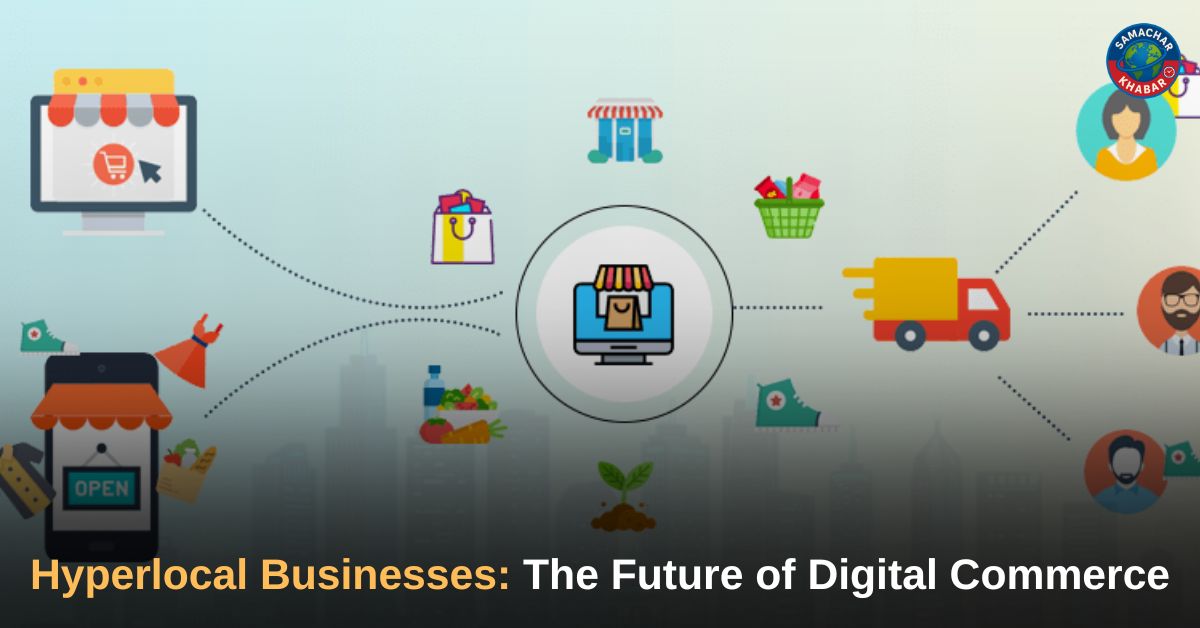
The hyperlocal business model is built around proximity and efficiency. It focuses on delivering goods and services within a defined area, usually within a few kilometers. What makes this model stand out is the combination of local businesses with modern digital tools.
Small shops that once relied on walk-in customers are now connected to online platforms, expanding their reach without changing their core structure. Examples include local grocery stores offering app-based delivery, nearby professionals providing services through digital bookings, and small retailers using online marketplaces. The model is simple yet highly effective.
Key Features of Hyperlocal Businesses
Hyperlocal businesses are defined by strong characteristics, which are as follows:
- Location-Based Services: They operate within a defined area, allowing faster response times
- Quick Delivery: Products and services reach customers on time
- Personalized Experience: Businesses understand customer preferences better
- Digital Integration: Orders, payments, and tracking are handled through technology
- Lower Logistics Complexity: Short distances reduce costs and delays
These features make hyperlocal businesses not just efficient but also more adaptable to changing customer needs. They offer a combination of speed, reliability, and personalization that is hard to find in larger businesses.
How Hyperlocal Businesses Benefit Consumers and Entrepreneurs
For consumers, the biggest advantage is convenience combined with familiarity. Services are not only quick but also more reliable because they come from nearby providers. There is a sense of trust that large, distant companies often struggle to build.
At the same time, hyperlocal businesses make everyday life smoother. Urgent needs can be met quickly without waiting times or complicated processes. For entrepreneurs, this model opens up possibilities. It reduces the need for heavy investments and allows small businesses to compete using speed and personalization.
Challenges Faced by Hyperlocal Businesses
Despite their potential, hyperlocal businesses are not without challenges. One of the major issues is scalability. Expanding beyond a local area without losing efficiency can be difficult. Competition is another factor. Since multiple businesses operate within the same locality, standing out requires consistent quality and service.
There is also a dependency on platforms. While these platforms provide visibility, they can also control pricing, margins, and customer access. Maintaining service quality while managing increasing demand is another challenge that many hyperlocal businesses face as they grow.
Role of Technology in Hyperlocal Growth
Technology plays a crucial role in making hyperlocal businesses viable in today’s environment. Without digital tools, managing orders, tracking deliveries, and handling payments would be far more complicated. Mobile apps, GPS systems, and digital payment platforms have simplified the process.
Customers can place orders instantly, track them in real time, and receive updates without effort. Data also plays a role. Businesses can understand customer preferences and improve their services accordingly. However, reliance on technology also brings risks, such as technical issues, platform dependency, and intense competition from aggregator apps.
Common Issues in the Hyperlocal Economy
While the model is efficient, certain issues remain:
- Intense price competition affecting profits
- High expectations for instant service
- Dependence on delivery workforce
- Difficulty in maintaining service standards
These challenges indicate that growth must be balanced with sustainability. Hyperlocal businesses need to find ways to address these issues while maintaining their advantages.
Future Outlook of Hyperlocal Businesses
The future of hyperlocal businesses appears strong and promising. As digital adoption increases in smaller towns, more people will rely on local services. Consumer behavior is also shifting toward more reliable options, which naturally supports this model.
Businesses that can combine efficiency with quality are likely to succeed. There is also potential for innovation, particularly in logistics, eco-friendly practices, and improved service models. Over time, hyperlocal businesses may become an essential part of everyday commerce.
How to Use Pinterest for Business Marketing: A Complete and Practical Guide
Where It All Leads
Hyperlocal businesses represent a shift in the way modern commerce is evolving. They Hyperlocal businesses represent a shift in the way modern commerce is evolving. They bring together the trust of local systems and the efficiency of digital platforms. While they face limitations, their ability to provide quick, personalized, and accessible services makes them highly relevant.
Importantly, they create opportunities for small entrepreneurs and strengthen community-based economies. In a way, hyperlocal businesses remind us that progress does not always mean going bigger, it means going closer.
Beyond Business: A Shift Toward Community-Centered Living
If we look at the economic side, the growth of local businesses shows a bigger change in how people connect with their area. It shows how community, trust, and mutual support are becoming more important.
The ideas of Sant Rampal Ji Maharaj focus on simple living, working together, and finding balance in life. These ideas fit well with supporting local businesses.
When people choose services near them, they are not just making a deal—they are helping their community. This creates a cycle of support and shared growth where everyone gains in some way.
This approach also reminds us to cut down on unnecessary consumption and focus on what really matters. We should not let convenience take us away from our values—it should go hand in hand with them.
As Sant Rampal Ji Maharaj often says: “Live simply, stay truthful, and support what is right around you—this leads to peace and stability.”