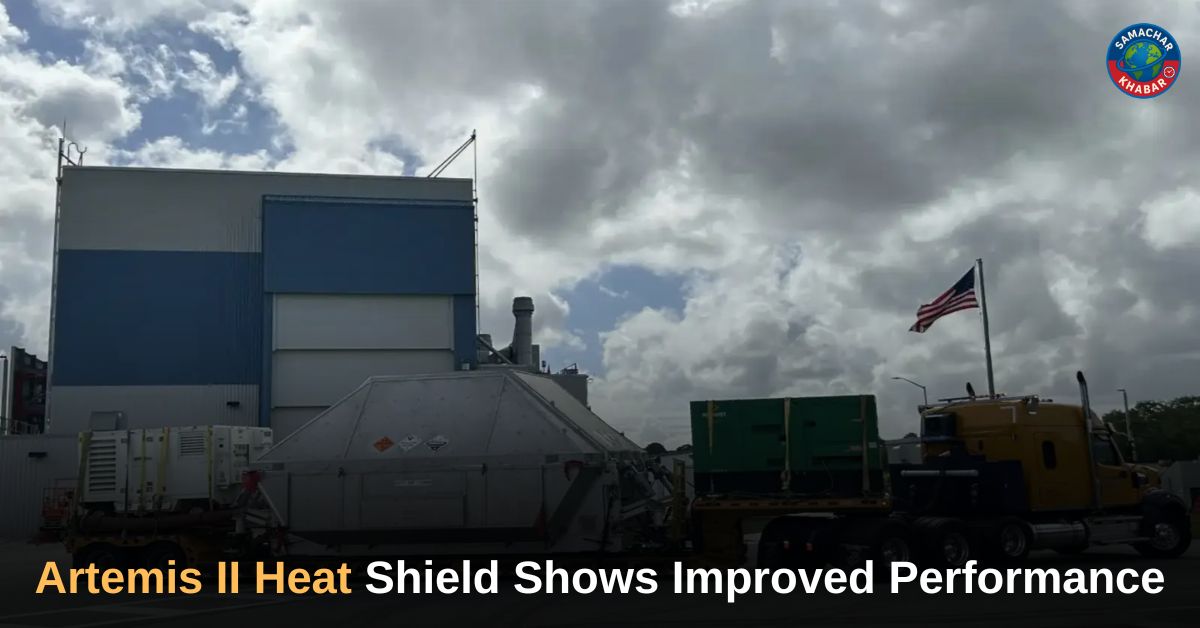
Artemis II Heat Shield: NASA’s Artemis II Orion capsule has returned to Florida after completing a nearly 10-day crewed journey around the Moon, marking humanity’s first such mission in over 50 years. Early analysis shows the spacecraft’s heat shield performed as expected and even better than during Artemis I, with significantly reduced char loss. The capsule, named Integrity, splashed down on April 10 and is now undergoing detailed inspections as NASA advances preparations for Artemis III, currently targeted for launch in 2027.
Key Takeaways: Artemis II Heat Shield Performance and Mission Update
- Artemis II completed a nearly 10-day crewed lunar mission
- Splashdown occurred on April 10 in the Pacific Ocean
- Orion capsule returned to Kennedy Space Center, Florida
- Heat shield showed significantly reduced char loss vs Artemis I
- NASA confirmed performance was consistent with ground testing
- Minor issue reported: toilet system malfunction
- Artemis III preparations underway with SLS core stage and boosters arriving
- Target for Artemis III launch: 2027
Artemis II Mission Returns After Historic Lunar Journey
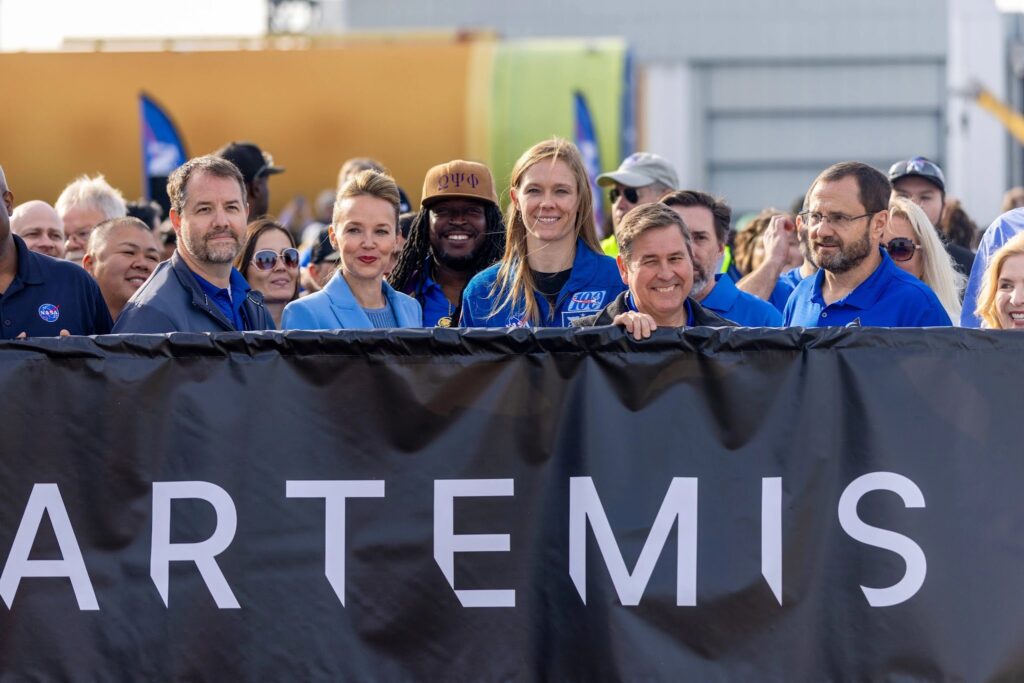
NASA’s Artemis II Orion capsule has returned to the Kennedy Space Center nearly a month after completing a landmark crewed mission around the Moon. The spacecraft, named Integrity by its US-Canadian crew, splashed down in the Pacific Ocean on April 10 before being transported from San Diego back to Cape Canaveral for post-flight inspections.
The mission marked a significant milestone, as it carried astronauts farther into deep space than humans had ever traveled before. It also represented the first crewed lunar journey in more than five decades, reinforcing NASA’s long-term lunar exploration goals.
Also Read: Artemis II Flight Day 5: Crew Prepares for Historic Lunar Flyby and Record-Breaking Milestones
Heat Shield Performance Exceeds Artemis I Results
Early analysis from NASA indicates that the Orion capsule’s heat shield performed as expected and even better than during the Artemis I mission. Engineers observed that the amount of char loss on the heat shield was “significantly reduced” compared to the earlier uncrewed flight.
According to NASA’s April 21 blog:
- Char loss was reduced in both quantity and size
- Observations were based on diver imagery and recovery ship inspections
- Performance matched results from arc jet facility ground testing
The heat shield played a critical role during re-entry, protecting the spacecraft and crew from extreme conditions as it passed through Earth’s atmosphere. Initial findings show that the system maintained structural integrity and behaved within expected parameters.
Post-Flight Inspections and System Analysis Underway
Following its return, engineers are conducting detailed examinations of the spacecraft. These inspections include:
- Heat shield evaluation
- Internal systems and avionics checks
- Analysis of onboard research equipment
NASA has also confirmed plans to remove and recycle the capsule’s electronic boxes as part of post-mission processing.
Aside from what NASA described as a “finicky” toilet issue, the Orion capsule performed well throughout the mission, demonstrating reliability across its major systems.
Artemis III Preparations Progress at Kennedy Space Center
While Artemis II analysis continues, NASA teams are actively preparing for the next phase of the program. On April 28, technicians moved the core stage of the Space Launch System (SLS) rocket into the Vehicle Assembly Building at Kennedy Space Center.
SLS Core Stage Details
| Feature | Specification |
| Height | 212 feet |
| Propellant Capacity | 733,000 gallons |
| Engines | 4 RS-25 engines |
This marks the first time core stage assembly operations are taking place at Kennedy. The stage will be positioned horizontally before being lifted into High Bay 2, where it will connect with previously integrated components from August 2025.
Booster Segments Arrive for Artemis III
Additional Artemis III hardware has also reached Florida. The first shipment of booster motor segments arrived at Kennedy Space Center on April 13.
Key details include:
- Manufactured by Northrop Grumman in Utah
- Transported across eight states by rail
- Being processed at the Rotation, Processing, and Surge Facility
Once assembled, these boosters will:
- Stand 17 stories tall
- Provide more than 75% of total thrust at liftoff
- Generate 8.8 million pounds of thrust
Each segment will undergo inspection and preparation before stacking.
Orion Upgrades and Testing for Artemis III
NASA is also completing final preparations for the Artemis III Orion spacecraft. The upgraded heat shield now includes:
- 186 Avcoat blocks installed, cured, and inspected
- Completed thermal cycle testing
- Completed ultrasonic inspections
The service module has successfully passed:
- Thermal cycle testing
- Deployment checks of all four solar array wings
NASA plans to integrate the crew and service modules with the launch abort system later this year.
Future Mission Plans and Timeline
The Artemis III mission is currently targeted for launch in 2027. The mission will send astronauts into Earth orbit aboard Orion to test:
- Rendezvous operations
- Docking with commercial spacecraft
These technologies are essential for Artemis IV, which aims to land astronauts on the Moon in 2028.
NASA’s long-term objective remains to return humans to the lunar surface and establish a sustained presence for future exploration.
What Artemis II Findings Mean for Future Lunar Missions
The early performance data from Artemis II, particularly the improved heat shield behavior, provides encouraging signals for upcoming missions. Reduced char loss and consistent performance with ground testing suggest increased reliability in Orion’s thermal protection system.
As engineers continue detailed analysis, these findings will play a critical role in shaping mission readiness and advancing NASA’s broader goals of sustained lunar exploration.
Science Progress and Spiritual Perspective
The Artemis II mission reflects humanity’s continuous effort to explore beyond known boundaries with precision, discipline, and responsibility. Such advancements highlight not only scientific capability but also the deeper need for clarity, purpose, and direction in human actions.
According to the teachings of Tatvdarshi Sant Rampal Ji Maharaj, true progress is achieved when material knowledge is guided by spiritual understanding. He explains that while science expands external reach, true knowledge helps individuals understand life’s purpose and maintain balance between advancement and inner awareness.
For more information visit our:
Website: www.jagatgururampalji.org
YouTube: Sant Rampal Ji Maharaj
Facebook: Spiritual Leader Saint Rampal Ji
X (Twitter): @SaintRampalJiM
FAQs on Artemis II Heat Shield
1. How did the Artemis II heat shield perform?
It performed as expected and better than Artemis I, with significantly reduced char loss.
2. When did Artemis II splash down?
The Orion capsule splashed down on April 10 in the Pacific Ocean.
3. What issue occurred during the mission?
A minor toilet system issue was reported, but overall performance remained strong.
4. What improvements were seen compared to Artemis I?
Char loss was significantly reduced in both size and quantity.
5. When is Artemis III expected to launch?
NASA currently targets Artemis III for launch in 2027.