[ad_1]
War in the Middle East and surging oil prices mean it’s time to ponder, once again: Should you buy an EV?
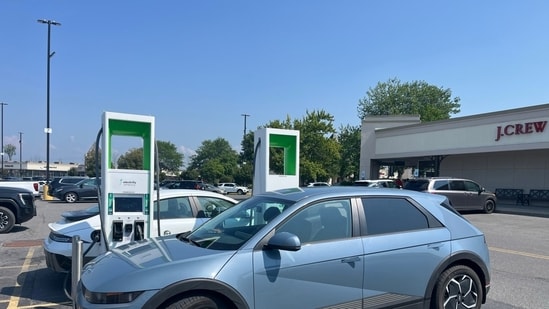
After a year of ups and downs with my own electric vehicle—which I still love overall—here are the downsides people should consider before taking the leap.
They’re harder to fix than they should be
EVs require far less maintenance than conventional autos. But a few months into my love affair with my 2024 Hyundai Ioniq 5, a repair and insurance nightmare began.
In a minor accident, part of the rear bumper tore loose. Given today’s spiraling vehicle-repair costs—and the fact that bumpers are full of sensors—I made a claim with my insurer, USAA, and brought it to one of its recommended auto-body shops. Days later, the shop called to say they couldn’t fix it, because their mechanics weren’t EV certified.
What followed was unlike anything I’ve experienced in 20 years of car ownership: a three-month fight to convince my insurer to pay for a repair from a qualified mechanic.
A spokesman for USAA said it is committed to resolving claims quickly and fairly, and that the company works with a network of repair shops certified to service EVs.
“Your experience is not unique,” says Erin Keating, an executive analyst at the services firm Cox Automotive. Mechanics must be certified to work safely around that high-voltage battery, and must have the know-how to deal with the complexity of these new computers on wheels, she adds. Dealerships might understand the vehicle, but insurers often use their own go-to body shops, which offer competitive pricing to do repairs after an accident.
“You’re dealing with cars that have really high tech integrated into all body parts,” Keating says.
The fuel-savings reality is complicated
Over the past year, I calculate I’ve saved about $453 on gasoline, having put about 11,000 miles on the vehicle. That’s not bad, and represents a 45% savings vs. a comparable gas-electric hybrid like the Hyundai Tucson or Toyota RAV4.
The question I can’t answer is whether the savings will continue. Yes, the war with Iran is driving up prices at the pump, but I live near a booming data-center corridor that has played a role in a string of electricity-rate increases.
Depreciation on new EVs has been brutal
Thankfully I leased an EV before the federal tax credit disappeared, and there were deals on new vehicles to be had. Normally, leasing a vehicle is more expensive in the long run, but in this case it was the right thing to do. A typical car takes about five years to fall to 50% of its original value, but recently the value of some EVs had fallen 50% within two years.
One reason for the rapid depreciation of my 2024 Ioniq 5 is that in October, Hyundai slashed the price of the 2025 and 2026 models by around $9,000, says a company spokesman.
As prices and features level off, depreciation likely won’t be as dramatic in the future, says Keating. Meanwhile, there’s a glut of affordable used EVs. Indeed, a low-mileage used EV may be one of the best car deals right now.
As for me, when I return the car at the end of my lease, Hyundai of America will end up with a car worth about $7,000 less than what I paid over those three years. (Translation: I win.)
Road trips aren’t always simple
For a car and tech nerd like me, road trips aren’t a problem. I don’t mind plotting my route in advance using the one app every EV owner should have, the accurately named A Better Routeplanner. Chargeway is a competitor some drivers prefer. (Most EVs also have built-in route planners, though they can be inconsistent.) America’s highways are now dotted with fast-charging stations at regular intervals, even in rural areas.
But these kinds of trips still annoy my less-tech-enthusiastic spouse, because she can’t just pull over at the next exit to recharge. And due to America’s aging, overtaxed electrical grid and our continuing dependence on fossil fuels, we likely won’t soon see the kind of five-minute charging now making its debut in China.
Charging at home—especially someone else’s—can be tricky
While many EV owners opt to upgrade their outlet and add a fast charger at home, I didn’t. Topping up overnight on the same outlet we plug our outdoor Christmas lights into has been just fine.
But I did make two unfortunate discoveries. The first is that, if you use a home charger along with a standard extension cord that isn’t designed to carry all those amps, you can overheat your outlet. I had to call an electrician to fix it.
The other issue: If you visit friends who aren’t EV owners, you’re rolling the dice on whether their home’s electrical system can charge your vehicle, even if you bring your own charger. Some outlets on older homes can’t drive enough current even to trickle-charge an EV.
Final thought: I still wouldn’t hesitate to go electric
Annoyances aside, I don’t regret our decision. With an EV, we no longer have to deal with many legacy irritants and inconveniences.
Never having to go to a gas station is amazing. Never having to huff your own engine exhaust is even better—you just don’t notice how smelly gas cars can be until you’ve been out of one for a while.
It’s true that some exotic fluids like battery coolant need to be monitored on an EV, and if you have a lead foot, you might burn through tires faster. But overall, EVs are as close to zero maintenance as you can get. They never need oil changes. On account of regenerative braking, I might not have to change the brake pads until my vehicle hits 70,000 miles or more.
And the fears about rapid battery degradation? Batteries in modern EVs are so durable that some may outlast just about every other part on the car, says Keating.
More than anything else, driving an EV makes me feel like I’ve come from the future: that low center of gravity, the neck-snapping acceleration and all the advanced sensors and safety features. I actually pity other drivers on the road—and I pity myself, when I’m relegated to our gas-powered vehicle. Which is often, since our EV has passed the ultimate test: My non-tech-savvy, non-car-nerd spouse won’t drive anything else.
Write to Christopher Mims at christopher.mims@wsj.com
[ad_2]
Source link